
BuddhistCatholicContemplativeEvangelicalGeneral ChristianHinduJewishLatter-day SaintMuslimNew VisionsProgressive Christian
Beliefs
- Buddhist
- Catholic
- Contemplative
- Evangelical
- General Christian
- Hindu
- Jewish
- Latter-day Saint
- More Voices
- Muslim
- New Visions
- Pagan
- Progressive Christian
Topics
- Religion News
- Food and Religion
- Sports and Religion
- Religious Art
- Religious Music and Entertainment
- Religious Events
- History and Religion
- Style and Religion
- Politics and Religion
- Women in Religion
- Recreation Outdoors and Religion
- Business Finance and Religion
- Careers Workplace and Religion
- Education and Religion
- Family Parenting and Religion
- Health Fitness and Religion
- Home and Religion
- Relationships and Religion
- Technology and Religion
- Travel and Religion
Columnists
- Buddhist Columnists
- Business Finance and Religion Columnists
- Careers Workplace and Religion Columnists
- Catholic Columnists
- Contemplative Columnists
- Education and Religion Columnists
- Evangelists Columnists
- Family Parenting and Religion Columnists
- General Christian Columnists
- Health Fitness and Religion Columnists
- Hindu Columnists
- History and Religion Columnists
- Home and Religion Columnists
- Jewish Columnists
- More Voices Columnists
- Latter Day Columnists
- Muslim Columnists
- New Visions Columnists
- Nonreligious Columnists
- Pagan Columnists
- Politics and Religion Columnists
- Progressive Columnists
- Recreation Outdoors and Religion Columnists
- Relationships and Religion Columnists
- Religion News Columnists
- Religious Art Columnists
- Religious Events Columnists
- Religious Music and Entertainment Columnists
- Sports and Religion Columnists
- Style and Religion Columnists
- Technology and Religion Columnists
- Travel and Religion Columnists
- Women in Religion Columnists
Resource Library
- 2026 Calendar
- Library of World Religions
- The 100 Most Holy Places on Earth
- Patheos Answers
- Podcasts
- Videos
- Faith Leaders Database
- Anglican Episcopalian
- Bahai
- Baptist
- Buddhism
- Christianity
- Confucianism
- Eastern Orthodoxy
- Hinduism
- Holiness and Pentecostal
- ISKCON
- Islam
- Judaism
- Lutheran
- Methodist
- The Church of Jesus Christ of Latter-day Saints
- New Age
- Paganism
- Presbytarian and Reformed
- Protestantism
- Religion Behind the Scenes
- Roman Catholic
- Scientology
- Shia Islam
- Sikhism
- Sufism
- Sunni Islam
- Taoism
- Zen
- See all religions
Research Tools
 Ad-Free & Subscriber Log-In Subscription Support
Ad-Free & Subscriber Log-In Subscription Support
Follow Patheos 

- Trending:
- Forgiveness
- |
- Marriage
- |
- Consciousness
- |
- Death Penalty
- |
- Election
- |
- Halloween
 Black, White and Gray
-
About the Authors
- Home
- Evangelical
- Race, Culture and Character: Seeing Jesus
Race, Culture and Character: Seeing Jesus
Last updated on: May 9, 2012 at 1:45 am by Jerry Park
Race, Culture and Character: Seeing Jesus 2012-05-09T01:45:47-05:00 Jerry Park
Patheos Explore the world's faith through different perspectives on religion and spirituality! Patheos has the views of the prevalent religions and spiritualities of the world.
Recently painter Thomas Kinkade, “painter of light” passed away at the early age of 54. While many viewers have decided views of what they think about this art, whether it suits them or not, one thing is certain: his work was decidedly informed by his faith. Kinkade had a particular theology about his art work and tried to convey his understanding of his faith through his art.
Kinkade’s passing coincided with my preparation for a class session on understanding religion and race. One of the themes I begin with is to ask students what Jesus and Mary look like. To this day, many students might remember seeing a Thomas Kinkade painting at a doctor’s office or in the hall of some academic or religious building. 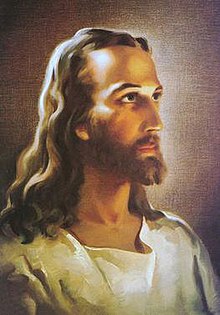
But many more students recall seeing Warner Sallman’s “Head of Jesus” painting. Believe it or not, this painting was done in 1941, as World War II ravaged Europe and Asia. America at that time was still largely white, with its largest racial minority population being African American, with no other competing minority. So at that time it would not be surprising that Sallman’s Jesus looked like a young-ish white male with a beard and long hair. As many have noted, he essentially appears as a middle class male when you trim his hair and beard. This is not surprising since Jesus embodies divinity made imminent – “God for us.” So it’s not surprising that God, as imaged in Jesus, tends to have the features of the artist’s understanding of how God is accessible to him or her. As such, Jesus looks white since race often matters even to white artists. Similarly Mary, as an advocate for believers tends to appear like the people who visualize her.

What gets interesting then is how Jesus and Mary appear when Christianity shows up after the “new immigration” of 1965. Immigrants from Latin America and Asia started arriving in numbers far larger than were known before. Most of those who migrated have been Catholic or Protestant, and in some cases were a larger religious group compared to their presence in their home country. For example, there are proportionally more Taiwanese American Christians compared to Taiwanese Christians. Did Jesus look like them? If the earlier observation is consistent we would guess that Jesus appears as Asian and Latino to many new immigrants coming from these parts of the world.
Indeed I found some examples of how Jesus and Mary are depicted in some of these other nations.


But reality is a lot messier than many of these assumptions. For many Christians in Asia and Latin America their main encounter of Christianity came through missionaries from the US, the largest sender of these kinds of religious workers. Not surprisingly, most of these workers are white and non-Hispanic. But interestingly many were presented with a Jesus that looks like the missionaries and less like the indigenous people. This incongruity did not deter many from converting of course, but it bears considering what is happening when someone sees God embodied in Jesus and racially resembling the missionaries. It makes sense that many might make subtle associations between the culture of the missionaries as somehow being more godly since God looks more like them.
 Recent evidence suggests that this might not entirely be the case. In a comparison study of South Korean and US Christian college students, it turns out that respondents understand Jesus’ character in different ways. One of the more striking differences is that Jesus is happy in the minds of the US Christians, but he is more sober and serious to the Korean students. We don’t know how these students were shown Jesus growing up but it seems that the students impose their cultural temperamental traits regardless.
What’s more is how these dynamics travels back to the US context. Imagine these believers now migrating to the US and raising their kids with their faith. How is Jesus pictured for these young non-white children?  It’s been a question in my mind as I reflected on my own growing up experiences in Catholic and Protestant environments. I knew logically that Jesus was not from Europe but pretty much every image I saw of Jesus was white. I wonder if non-white Christians who have had similar experiences tend to make associations between Jesus’ race and the culture that surrounds them which is largely white. Does their ethnicity seem subtly inferior since Jesus was not Korean, Chinese, Colombian or Mexican? We know consciously that Jesus isn’t white and yet our most consistent image of Jesus is. What do you think?
Previous Post

April 19, 2012
The Changing Understanding of Evangelical Conversion
Next Post
April 21, 2012 Map of US Religious Affiliation by County
Browse Our Archives
Select a Category Amy Reynolds Becky Hsu Brad Wright critical realism George Yancey Gerardo Marti Jeremy Rhodes Jerry Park John Schmalzbauer Margarita Mooney Mark Regnerus Nicolette Manglos positive sociology Richard Flory Robert Woodberry Uncategorized
Select a Month April 2017 August 2016 April 2016 March 2016 February 2016 January 2016 December 2015 November 2015 October 2015 September 2015 August 2015 July 2015 June 2015 May 2015 April 2015 March 2015 February 2015 January 2015 December 2014 November 2014 October 2014 September 2014 August 2014 July 2014 June 2014 May 2014 April 2014 March 2014 February 2014 January 2014 December 2013 November 2013 October 2013 September 2013 August 2013 July 2013 June 2013 May 2013 April 2013 March 2013 February 2013 January 2013 December 2012 November 2012 October 2012 September 2012 August 2012 July 2012 June 2012 May 2012 April 2012 March 2012 February 2012 January 2012 December 2011 November 2011 October 2011
Follow Us!
TAKE THE
Religious Wisdom Quiz
Who said, "Surely this man was the Son of God!" at Jesus' crucifixion?
Select your answer to see how you score.
Peter Pilate A Roman centurion Judas
Related posts from Black, White and Gray

American and Chinese ways of mourning

One Step Forward, but Now What?

Greater Acceptance, Persisting Antipathy: 50 Years of Religious...

Keeping (and Losing) Faith, the Asian American Way...
TRENDING AT PATHEOS Evangelical

The REST of Your Life: A Creative Wrestles...
This week I had a conversation with a good friend from church....

How the author of the world's best hymn...
I've been working with John Newton for a while now. This makes...

Long before this Lectio Divina, Psalm 130 - the song - started...

What About the Trees? Another Living Parable
After I finished writing the last article about falling leaves as a...

Why Classical Education Is a Conversation, Not a...
Come and Read: Joy in Classical Education When I was a little...

Cornell University has received a great deal of negative publicity and intense...
view all Evangelical blogs
Ad-Free & Subscriber Log-In Subscription Support
- About Us
- 2026 Calendar
- Videos
- Podcasts
- Library of World Religions
- Faith In Media Tracker
- Advertise With Us
- Write for Us
- Privacy Policy
- Terms of Service
- Do Not Sell My Data
- Contact Us
- Radiant Digital
- Manage Newsletter Subscriptions
- Unsubscribe From Notifications
- Sitemap
Copyright 2008-2026, Patheos. All rights reserved.
Subscription Support Ad-Free & Subscriber Log-In
Follow Patheos