
BuddhistCatholicContemplativeEvangelicalGeneral ChristianHinduJewishLatter-day SaintMuslimNew VisionsProgressive Christian
Beliefs
- Buddhist
- Catholic
- Contemplative
- Evangelical
- General Christian
- Hindu
- Jewish
- Latter-day Saint
- More Voices
- Muslim
- New Visions
- Pagan
- Progressive Christian
Topics
- Religion News
- Food and Religion
- Sports and Religion
- Religious Art
- Religious Music and Entertainment
- Religious Events
- History and Religion
- Style and Religion
- Politics and Religion
- Women in Religion
- Recreation Outdoors and Religion
- Business Finance and Religion
- Careers Workplace and Religion
- Education and Religion
- Family Parenting and Religion
- Health Fitness and Religion
- Home and Religion
- Relationships and Religion
- Technology and Religion
- Travel and Religion
Columnists
- Buddhist Columnists
- Business Finance and Religion Columnists
- Careers Workplace and Religion Columnists
- Catholic Columnists
- Contemplative Columnists
- Education and Religion Columnists
- Evangelists Columnists
- Family Parenting and Religion Columnists
- General Christian Columnists
- Health Fitness and Religion Columnists
- Hindu Columnists
- History and Religion Columnists
- Home and Religion Columnists
- Jewish Columnists
- More Voices Columnists
- Latter Day Columnists
- Muslim Columnists
- New Visions Columnists
- Nonreligious Columnists
- Pagan Columnists
- Politics and Religion Columnists
- Progressive Columnists
- Recreation Outdoors and Religion Columnists
- Relationships and Religion Columnists
- Religion News Columnists
- Religious Art Columnists
- Religious Events Columnists
- Religious Music and Entertainment Columnists
- Sports and Religion Columnists
- Style and Religion Columnists
- Technology and Religion Columnists
- Travel and Religion Columnists
- Women in Religion Columnists
Resource Library
- 2026 Calendar
- Library of World Religions
- The 100 Most Holy Places on Earth
- Patheos Answers
- Podcasts
- Videos
- Faith Leaders Database
- Anglican Episcopalian
- Bahai
- Baptist
- Buddhism
- Christianity
- Confucianism
- Eastern Orthodoxy
- Hinduism
- Holiness and Pentecostal
- ISKCON
- Islam
- Judaism
- Lutheran
- Methodist
- The Church of Jesus Christ of Latter-day Saints
- New Age
- Paganism
- Presbytarian and Reformed
- Protestantism
- Religion Behind the Scenes
- Roman Catholic
- Scientology
- Shia Islam
- Sikhism
- Sufism
- Sunni Islam
- Taoism
- Zen
- See all religions
Research Tools
 Ad-Free & Subscriber Log-In Subscription Support
Ad-Free & Subscriber Log-In Subscription Support
Follow Patheos 

- Trending:
- Forgiveness
- |
- Marriage
- |
- Consciousness
- |
- Death Penalty
- |
- Election
- |
- Halloween
 Black, White and Gray
-
About the Authors
- Home
- Evangelical
- On Hitchens, Apologetics, and the Strangeness of Christianity
On Hitchens, Apologetics, and the Strangeness of Christianity
Last updated on: December 28, 2011 at 2:13 pm by Mark Regnerus
On Hitchens, Apologetics, and the Strangeness of Christianity 2011-12-28T14:13:06-05:00 Mark Regnerus
Patheos Explore the world's faith through different perspectives on religion and spirituality! Patheos has the views of the prevalent religions and spiritualities of the world.
So Christopher Hitchens is dead. Waste no time speculating about his end, or what happened next. It is empirically unknowable. While Hitch’s pen was a sharp one, and I occasionally read his work, I confess I didn’t pay a great deal of attention to his antagonism toward religion, apart from reading the first 60 pages of God is not Great. No new arguments there, so far as I could tell.
For a time after the book was released Hitchens took to debating well-known Christian apologists in public forums. Of course Hitch thought Christianity—and religion in general—was more a force of darkness than light. The first few pages of the book let readers know that in no uncertain terms. His critics often retorted with comparative claims, saying things like, “Yes, Christians have done some bad stuff, but Pol Pot and Joseph Stalin were atheists, and behaved far worse than any of ours ever have.” Perhaps, but when we start comparing body counts, nobody looks appealing anymore.
Apologetics, be it of the positive or negative sort, has never much appealed to me. Not sure why. I slogged my way through Mere Christianity, with effort, and finally completed it on the third or fourth try. Upon our confirmation, a friend gifted me with Peter Kreeft’s Handbook of Catholic Apologetics. While his Catholic Christianity was elemental for me, this one’s collecting dust. In a past life I provided an audience for William Lane Craig and Josh McDowell; nothing but mild irritation resulted.
And yet I think it’s extremely important to plumb the depths of one’s religious faith, to learn it and live it. I’ve just never been drawn to debating the guts of Christianity with those who claim they aren’t interested. Explaining it to the curious? Love it. Defending it against the hostile? Meh.
To me, you either find the general narrative of Christianity winsome and get on board, or you don’t. Unfortunately, there’s more to it than a general narrative. Details, details. The denominational divisiveness of Christianity is arguably its worst testimony, its most foul apologetic. Hitch knew that too, and shrewdly exploited it.
Perhaps my aversion to apologetics is because I share his sentiment that Christianity is indeed odd.
Admit it. It’s strange stuff, no matter if you’re Christian, Muslim, Jew, or some other offspring of Abraham. We’re talking about degrees of oddness. Too strange, for many: commitment to one’s religious faith and practice is decreasingly common today. Christian devotion is becoming a little like 50th anniversaries, virginity, and good working-class jobs. (My own) analyses of new nationally-representative data from Americans under 40 reveals that large numbers of them are disengaging the faith; when asked whether they are “more or less active in organized religion” today compared to when they were growing up, 53 percent said they were less active; only 12 percent responded that they were more active. (The rest said “about the same.”) The gushing public praise we’ve witnessed upon the recent deaths of two secular figures—Jobs and Hitchens—make sense. Americans are becoming more like them. Short of that, Christians often morph into Moralistic Therapeutic Deists. In light of all this, why so little impetus to defend my faith?
Duke theologian Stan Hauerwas asserted, “I’m not interested in what I believe….I am not even sure what I believe. I am more interested in what the church believes.” Bingo. The idea of plumbing the depths of what I myself might come to conclude about God, Jesus, expiations, resurrections, justifications, sanctifications, sacraments, vestments, eschatology, and a host of other strange terms and odd ideas simply does not interest me. What the Church asserts about them—now that’s a different story. I have grown tired of the burden of personally discerning truth. It only leads to the divisions Hitch so eloquently articulated. Church-shopping reveals it: when you just can’t quite find the place you’re looking for, consider whether the problem lies on the demand side, not the supply side. The challenge, I came to find, isn’t epistemological, as in “How would I know what’s true?” It is autobiographical: “How would I know what’s true?” The older I’ve become—and the more I sensed that nuance, dilemma, loss, and mystery weren’t variables in life anymore, but were now constants—the more I wondered just how wise it is to arbitrate them all myself.
We never actually do that anyway. We all have a social “magisterium” of some sort—a living, breathing authority system. People we trust. If you’re foolish enough to make yourself defense attorney, judge, witness, and jury, or to vest it all in some compelling hero—be it Hitchens, Dawkins, Piper, Chan, Warren, Lewis, or whomever–you’re a more daring soul than I am.
In the end, despite what Hitch thought, it may well be rational to believe—and believe I do—but it’s still pretty wild, pretty mysterious, and always interesting.
Previous Post

December 17, 2011
Christianity and Islam throughout the World (map)
Next Post
December 20, 2011 Sociological rules of Christmas gift giving
Browse Our Archives
Select a Category Amy Reynolds Becky Hsu Brad Wright critical realism George Yancey Gerardo Marti Jeremy Rhodes Jerry Park John Schmalzbauer Margarita Mooney Mark Regnerus Nicolette Manglos positive sociology Richard Flory Robert Woodberry Uncategorized
Select a Month April 2017 August 2016 April 2016 March 2016 February 2016 January 2016 December 2015 November 2015 October 2015 September 2015 August 2015 July 2015 June 2015 May 2015 April 2015 March 2015 February 2015 January 2015 December 2014 November 2014 October 2014 September 2014 August 2014 July 2014 June 2014 May 2014 April 2014 March 2014 February 2014 January 2014 December 2013 November 2013 October 2013 September 2013 August 2013 July 2013 June 2013 May 2013 April 2013 March 2013 February 2013 January 2013 December 2012 November 2012 October 2012 September 2012 August 2012 July 2012 June 2012 May 2012 April 2012 March 2012 February 2012 January 2012 December 2011 November 2011 October 2011
Follow Us!
TAKE THE
Religious Wisdom Quiz
Which book comes last in the New Testament?
Select your answer to see how you score.
Revelation Jude 2 Peter Acts
Related posts from Black, White and Gray



Revisiting Catholicism in Asia
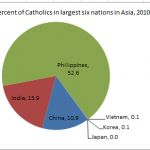
Asian and Asian American Catholicism
TRENDING AT PATHEOS Evangelical

The REST of Your Life: A Creative Wrestles...
This week I had a conversation with a good friend from church....

How the author of the world's best hymn...
I've been working with John Newton for a while now. This makes...

Long before this Lectio Divina, Psalm 130 - the song - started...

What About the Trees? Another Living Parable
After I finished writing the last article about falling leaves as a...

Why Classical Education Is a Conversation, Not a...
Come and Read: Joy in Classical Education When I was a little...

Cornell University has received a great deal of negative publicity and intense...
view all Evangelical blogs
Ad-Free & Subscriber Log-In Subscription Support
- About Us
- 2026 Calendar
- Videos
- Podcasts
- Library of World Religions
- Faith In Media Tracker
- Advertise With Us
- Write for Us
- Privacy Policy
- Terms of Service
- Do Not Sell My Data
- Contact Us
- Radiant Digital
- Manage Newsletter Subscriptions
- Unsubscribe From Notifications
- Sitemap
Copyright 2008-2026, Patheos. All rights reserved.
Subscription Support Ad-Free & Subscriber Log-In
Follow Patheos