
BuddhistCatholicContemplativeEvangelicalGeneral ChristianHinduJewishLatter-day SaintMuslimNew VisionsProgressive Christian
Beliefs
- Buddhist
- Catholic
- Contemplative
- Evangelical
- General Christian
- Hindu
- Jewish
- Latter-day Saint
- More Voices
- Muslim
- New Visions
- Pagan
- Progressive Christian
Topics
- Religion News
- Food and Religion
- Sports and Religion
- Religious Art
- Religious Music and Entertainment
- Religious Events
- History and Religion
- Style and Religion
- Politics and Religion
- Women in Religion
- Recreation Outdoors and Religion
- Business Finance and Religion
- Careers Workplace and Religion
- Education and Religion
- Family Parenting and Religion
- Health Fitness and Religion
- Home and Religion
- Relationships and Religion
- Technology and Religion
- Travel and Religion
Columnists
- Buddhist Columnists
- Business Finance and Religion Columnists
- Careers Workplace and Religion Columnists
- Catholic Columnists
- Contemplative Columnists
- Education and Religion Columnists
- Evangelists Columnists
- Family Parenting and Religion Columnists
- General Christian Columnists
- Health Fitness and Religion Columnists
- Hindu Columnists
- History and Religion Columnists
- Home and Religion Columnists
- Jewish Columnists
- More Voices Columnists
- Latter Day Columnists
- Muslim Columnists
- New Visions Columnists
- Nonreligious Columnists
- Pagan Columnists
- Politics and Religion Columnists
- Progressive Columnists
- Recreation Outdoors and Religion Columnists
- Relationships and Religion Columnists
- Religion News Columnists
- Religious Art Columnists
- Religious Events Columnists
- Religious Music and Entertainment Columnists
- Sports and Religion Columnists
- Style and Religion Columnists
- Technology and Religion Columnists
- Travel and Religion Columnists
- Women in Religion Columnists
Resource Library
- 2026 Calendar
- Library of World Religions
- The 100 Most Holy Places on Earth
- Patheos Answers
- Podcasts
- Videos
- Faith Leaders Database
- Anglican Episcopalian
- Bahai
- Baptist
- Buddhism
- Christianity
- Confucianism
- Eastern Orthodoxy
- Hinduism
- Holiness and Pentecostal
- ISKCON
- Islam
- Judaism
- Lutheran
- Methodist
- The Church of Jesus Christ of Latter-day Saints
- New Age
- Paganism
- Presbytarian and Reformed
- Protestantism
- Religion Behind the Scenes
- Roman Catholic
- Scientology
- Shia Islam
- Sikhism
- Sufism
- Sunni Islam
- Taoism
- Zen
- See all religions
Research Tools
 Ad-Free & Subscriber Log-In Subscription Support
Ad-Free & Subscriber Log-In Subscription Support
Follow Patheos 

- Trending:
- Forgiveness
- |
- Marriage
- |
- Consciousness
- |
- Death Penalty
- |
- Election
- |
- Halloween
 The Bite in the Apple
- Home
- Progressive Christian
- Who Do You Say I Am?
Who Do You Say I Am?
Last updated on: August 16, 2014 at 10:41 pm by Nancy Rockwell
Who Do You Say I Am? 2014-08-16T22:41:04-04:00 Nancy Rockwell
Patheos Explore the world's faith through different perspectives on religion and spirituality! Patheos has the views of the prevalent religions and spiritualities of the world.
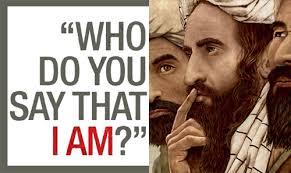 For all the Hallelujah choruses, creeds, basilicas and general hoopla that celebrate the name, Messiah, isn’t it, now and forever, the question in our hearts and cultures: Who is Jesus?
In Matthew’s gospel, Jesus asks the disciples, Who do people say I am? And they offer a number of names: Some say John, some say Elijah, some say Jeremiah or one of the prophets. And then Jesus asks, Who do you say I am? And Peter blurts: the Messiah! And then: Jesus blesses him for the revelation; names him the Rock on which the church will be founded, and tells him, for Pete’s sake, to hush it up.
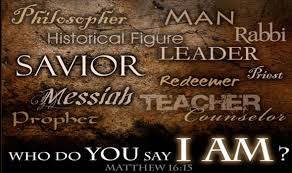 Messiah is a dangerous name, he knows. And in indescribable ways we still know that name to be dangerous, though perhaps we consider it more dangerous to us, and to general sanity in the culture, and to conventional churchiness, than to God. Perhaps the name is hard to say because we don’t really expect a Messiah anytime soon. Or perhaps we can’t bring ourselves to invoke such a profound altering of life’s possibilities, as a Messiah would bring.
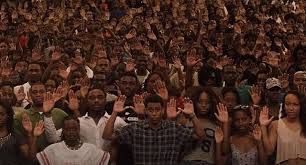 In these days of rioting in Ferguson, MO, after the death of young Michael Brown – in these days when we aren’t clear in our national mind whether that death was a breach of justice or an appropriate police action – in these days, when people of color in America experience this tragedy over and over, without any change in the way order is administered among us – in these days, there is a longing akin to the longing felt in Jesus’ era in Caesar’s order, for a new order.
That very longing, that agony of tense living through days encrusted with salt tears and blood in the streets, was real when Moses was born in Pharoah’s empire. The story bears a similar outline to Matthew’s story of the revelation of the Messiah, and the two stories are to be read this week.
 Pharoah feared an uprising, and ordered the midwives to kill male babies to prevent a Messiah (for that is really what Moses was) from arising. The Hebrew midwives, Shiphrah and Puah, resisted. What courage! For, if found out, they would have paid dearly, and their families, too.
They let male babies live. And so the child Moses, like the Baby Jesus, was a hidden infant. At age two, when he can no longer be hidden from view, his mother puts him in the Nile in a basket, and Pharoah’s daughter fishes him out, saying, Look, here is one of the Jewish boys who didn’t die, and she takes him into Pharoah’s palace and raises him as her own son. What courage! Why is she not a Named Saint?
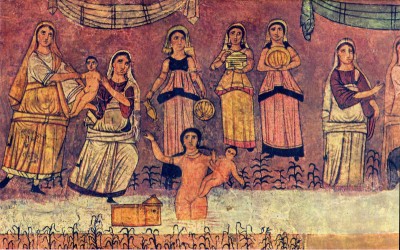 She engages Moses’ own mother as his nurse. Together, these two women raise up a man who will deliver his people from bondage. What an extraordinary household! In it they teach him what he must know to become Moses. They form his heart for his own people and his soul for naming the suffering of his people. Episcopal Bishop Michael Curry, in his book Crazy Christians, points out that Exodus honors a household of two women joined in raising a child for God – and by this sign all same gender couples raising children are blessed as families.
Here then are two readings about moments that point to a new order. Both call for the courage to resist the present order as unjust. And each moment is very aware of God’s messianic hope, and of grave danger.
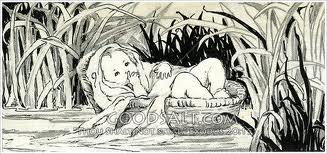 In Matthew’s story, Peter is Pharoah’s Daughter, fishing the name Messiah out of the river of possibilities. Peter and the disciples will midwive the birth of Jesus’ spirit into new bodies and into a new era. The raising of Jesus was done by his mother, who sang her fierce song dedicating his soul to the scattering of the proud, the felling of the mighty, the emptying of the rich and the filling of the hungry, before his birth. She was joined in raising him by the Archangel Gabriel and Joseph, in houses where Joseph contrived to hide him.
Moses and Jesus each had several occasions of naming and revelation. And still it is difficult for us to name them. Each, in our own time, is difficult to name as well. Part of the difficulty is that when we name them we have to name ourselves. Do we deny having faith? Do we have faith? Are we free? Have we courage to cross the waters of death? Are we in, or on the way to, the kingdom? Or are we in bondage here? Will we walk away from the body of Michael Brown in the street – or will we find some way to raise him?
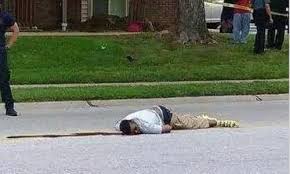 Who do you say I am? Michael Brown, in death, is asking us that, as are the people of Ferguson, MO. As are the people of Syria, Iraq, the Yazidis, the Kurds, and yes, Isis.
We are all mothers of God, wrote the German medieval mystic, Meister Eckert, for God is always waiting to be born. And he meant this for our times of conflict and terror, and for the bringing forth of a new order. He did not mean this as a Christmas greeting. He meant this.
Our desperation for deliverance, and God’s responsive moments of birth are eternal and eternally recurring, and they ask us to name them.
So: What Exodus are we willing to make? What Kingdom do we want to enter? Where are we now? And where are we heading? Who do we say Jesus is?
__________________________________________________
Illustrations:
1. Poster. Google Images.
2. Poster, Names. Google Images.
3. Demonstration in Ferguson, MO. Google Images.
4. Moses in the Bulrushes. Drawing. Google Images**.**
5. Sura-Europos Synagogue, Syria. Before 245. Shiphrah, Puah, Jocheved, Miriam, Pharoahs Daughter and the infant Moses. Mural. Vanderbilt Divinity School Library, Art in the Christian Tradition.
6. Moses in the Bulrushes. Drawing. Google Images.
7. Michael Brown in death, Ferguson, MO. Google Images.
Previous Post

August 11, 2014
Out of the Heart
Next Post
August 23, 2014 Facing Toward Jerusalem
Browse Our Archives
Select a Category Bites Uncategorized
Select a Month December 2017 November 2017 October 2017 September 2017 August 2017 July 2017 June 2017 May 2017 April 2017 March 2017 February 2017 January 2017 December 2016 November 2016 October 2016 September 2016 August 2016 July 2016 June 2016 May 2016 April 2016 March 2016 February 2016 January 2016 December 2015 November 2015 October 2015 September 2015 August 2015 July 2015 June 2015 May 2015 April 2015 March 2015 February 2015 January 2015 December 2014 November 2014 October 2014 September 2014 August 2014 July 2014 June 2014 May 2014 April 2014 March 2014 February 2014 January 2014 December 2013 November 2013 October 2013 September 2013 August 2013 July 2013 June 2013 May 2013 April 2013 March 2013 February 2013 January 2013 December 2012
Follow Us!
TAKE THE
Religious Wisdom Quiz
True or False: Paul wrote to the Philippians while he was imprisoned.
Select your answer to see how you score.
TRUE FALSE
Related posts from The Bite in the Apple




TRENDING AT PATHEOS Progressive Christian

Why Christians Have a Sacred Duty to Vote:...
The Bible offers strong support for the sacred duty to vote. Here...

What Being a Modern-Day Apostle Means to Me
In my last column, I discussed the ins and outs of modern-day...

Did Ancient China Once Worship the God of...
Across human history, a common thread weaves through the origins of the...

Love Your Neighbor – Including Earth-Kin: Lev. 19,...
God’s command to love your neighbor means acting in an ethical and...

Lead a Church Study of “Jesus and Lao...
Guest writer Jack Thomas (The Irreverent Reverend) reflects on leading his church...

Principles for Understanding the Apostolic Ministry Today
Whenever people discover that my formal ministry title is "apostle," as in...
view all Progressive Christian blogs
Ad-Free & Subscriber Log-In Subscription Support
- About Us
- 2026 Calendar
- Videos
- Podcasts
- Library of World Religions
- Faith In Media Tracker
- Advertise With Us
- Write for Us
- Privacy Policy
- Terms of Service
- Do Not Sell My Data
- Contact Us
- Radiant Digital
- Manage Newsletter Subscriptions
- Unsubscribe From Notifications
- Sitemap
Copyright 2008-2026, Patheos. All rights reserved.
Subscription Support Ad-Free & Subscriber Log-In
Follow Patheos