
BuddhistCatholicContemplativeEvangelicalGeneral ChristianHinduJewishLatter-day SaintMuslimNew VisionsProgressive Christian
Beliefs
- Buddhist
- Catholic
- Contemplative
- Evangelical
- General Christian
- Hindu
- Jewish
- Latter-day Saint
- More Voices
- Muslim
- New Visions
- Pagan
- Progressive Christian
Topics
- Religion News
- Food and Religion
- Sports and Religion
- Religious Art
- Religious Music and Entertainment
- Religious Events
- History and Religion
- Style and Religion
- Politics and Religion
- Women in Religion
- Recreation Outdoors and Religion
- Business Finance and Religion
- Careers Workplace and Religion
- Education and Religion
- Family Parenting and Religion
- Health Fitness and Religion
- Home and Religion
- Relationships and Religion
- Technology and Religion
- Travel and Religion
Columnists
- Buddhist Columnists
- Business Finance and Religion Columnists
- Careers Workplace and Religion Columnists
- Catholic Columnists
- Contemplative Columnists
- Education and Religion Columnists
- Evangelists Columnists
- Family Parenting and Religion Columnists
- General Christian Columnists
- Health Fitness and Religion Columnists
- Hindu Columnists
- History and Religion Columnists
- Home and Religion Columnists
- Jewish Columnists
- More Voices Columnists
- Latter Day Columnists
- Muslim Columnists
- New Visions Columnists
- Nonreligious Columnists
- Pagan Columnists
- Politics and Religion Columnists
- Progressive Columnists
- Recreation Outdoors and Religion Columnists
- Relationships and Religion Columnists
- Religion News Columnists
- Religious Art Columnists
- Religious Events Columnists
- Religious Music and Entertainment Columnists
- Sports and Religion Columnists
- Style and Religion Columnists
- Technology and Religion Columnists
- Travel and Religion Columnists
- Women in Religion Columnists
Resource Library
- 2026 Calendar
- Library of World Religions
- The 100 Most Holy Places on Earth
- Patheos Answers
- Podcasts
- Videos
- Faith Leaders Database
- Anglican Episcopalian
- Bahai
- Baptist
- Buddhism
- Christianity
- Confucianism
- Eastern Orthodoxy
- Hinduism
- Holiness and Pentecostal
- ISKCON
- Islam
- Judaism
- Lutheran
- Methodist
- The Church of Jesus Christ of Latter-day Saints
- New Age
- Paganism
- Presbytarian and Reformed
- Protestantism
- Religion Behind the Scenes
- Roman Catholic
- Scientology
- Shia Islam
- Sikhism
- Sufism
- Sunni Islam
- Taoism
- Zen
- See all religions
Research Tools
 Ad-Free & Subscriber Log-In Subscription Support
Ad-Free & Subscriber Log-In Subscription Support
Follow Patheos 

- Trending:
- Forgiveness
- |
- Marriage
- |
- Consciousness
- |
- Death Penalty
- |
- Election
- |
- Halloween
 The Bite in the Apple
- Home
- Progressive Christian
- Walking Easter’s Emmaus Road in Angus MacLachlan’s Film, Abundant Acreage
Walking Easter’s Emmaus Road in Angus MacLachlan’s Film, Abundant Acreage
Last updated on: April 27, 2017 at 8:48 pm by Nancy Rockwell
Walking Easter’s Emmaus Road in Angus MacLachlan’s Film, Abundant Acreage 2017-04-27T20:48:16-04:00 Nancy Rockwell
Patheos Explore the world's faith through different perspectives on religion and spirituality! Patheos has the views of the prevalent religions and spiritualities of the world.
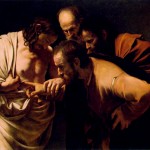
 It’s a well-worn story, the day-long walk from Jerusalem to Emmaus, hours of plodding along on sore feet by disciples with sore souls. A stranger joins them early, drawing them out of their silent brooding, getting them to talk.
The day is spent in victim mode, as the disciples spill out all that has been done to Jesus and to them. The stranger interjects rays of hope, but they are overshadowed by the gray grief of the grieving men.
And then, at sunset, in a roadside Inn, the stranger breaks bread and vanishes before their eyes. And the disciples suddenly know that Christ had been with them, all that day.
Letting go then, of everything they had known: terror, tears, suffering, death, silence, life’s love lost; sore feet, sore hearts; their need for rest and their fear of the open road at night: letting go of all this, they ran back to Jerusalem.
And they were filled with sunshine, hope, and joy, as they sped along the unseeable road into an unknowable story.
Abundant Acreage, Angus MacLachlan’s new film, traces the footsteps of Emmaus on a small tobacco farm in North Carolina. Death has just been here, ending the life of the father of a middle-aged Ledbetter brother and sister, and the film opens with them arguing in the stubble of an old field, arguing about where to bury his ashes. But the real issue is, what happens now?
Soon, they are joined by three Triggerstrom sons of the former owner of the farm, who are also on a journey to bury their father’s ashes, and to find a final resting place for their own – tow of the sons are dying now.
Over several days, a conversation of sorts develops, punctuated by fears, which emerge as hands thrown up, backs turned, leaving the house for a while, piling things on the lawn in anger, eating lunch, demanding the farm be sold, given back, become a memorial, grow tobacco again.
Truths are whispered: the oldest of the three sons has cancer and their father was an alcoholic; the daughter was adopted; her brother in a drunken stupor did not guard his small son, who drowned.
At night, in their tent, and while washing up in the morning, the three Triggerstrom brothers sing old songs – You Are My Sunshine, etc. At predictable moments the Ledbetter son, a reformed alcoholic and fearfully pious, prays short, staccato prayers.
They all end up in the house, for one night or so. And on the last morning, the daughter and one of the three sons each brings a box of Krispy Kreme Donuts back from town, for an Emmaus breakfast of sorts.
But there is no revelation at this table, nor from conversation among these farm-made, land-furrowed, despairing people, though bits of possibility have broken through. The brothers return to their home, and soon the older two die, and the younger one writes, asking to bury their ashes in the stubble field.
After this wryly comedic interment, the surviving Triggerstrom son departs, dashing the daughter’s hopes of romance. And her brother announces his intention of reburying all these ashes in an old cemetery on the farm, in ‘consecrated ground.’
And it is then that the daughter has her Emmaus moment: she finds her father’s ashes, opens the box, tears the bag open with her teeth and her fingers, and scatters his ashes on the land.
At last, she is free. Having lost everything, the life she knew, the father who adopted her and for whom she cared deeply, all hope of family and a continuing world, she is at last free, to move into the beckoning road of tomorrow, and God knows where it will lead.
She laments to herself that even the name Ledbetter, which will now die out, was never really hers. But she does so with eager, almost joyful determination, scattering those ashes with an abandon, a head-back, arms out, offering of them to the wind and the unknown, to the good earth which the Triggerstroms have reminded her was there long before the tobacco farm.
The good earth, how many bones does it hold? And whose? The long-ago Indians? Before them, the Ice-Age nomads? Dinosaurs? Farm animals? Birds of the field?
What is, vanishes, even before our eyes. What is becomes what was, and we, who walk forever backwards in our minds, remembering what is no longer, must shake those cobwebs off, in order to turn around and be free.
The road back to the joyful place and the retelling is dark, but not lonely because joy is never lonely. It was the daylit road, in which we were dragging everything behind us, that was lonely, even with a companionable stranger.
Each Easter story has its Letting Go commandment.
Letting go is the hardest thing we have ever to do. And it is the thing we all must do in order to walk into Easter’s new life.
What will become of the daughter now? MacLachlan gives us no clue, other than the joyful stride and tossing hair she shows us, as she walks back to the For-Sale farmhouse, leaving her brother the Triggerstrom ashes to carry off to holy ground.
Perhaps all our cemeteries are foolish places, crafted on the false hope that memory can keep the past alive.
What do you really learn from who you were? Jesus asks us this. Compared to who you may become, is who you were and still want tobe, worth a backwards glance? And off he goes, to God knows where, some say with angels lifting him and some say on a cloud of light, and some say, Vanishing, before our very eyes.
We fool ourselves into thinking this is about a place. But the kingdom he proclaims is no place, it is Spirit, blowing here and there on the breezes that cross over the world and even between worlds.
No container, no house, no plowed field, no offspring, no songs and no prayers can root the Spirit anywhere, though in all of these it may, for a time, bring fresh air and sweet hope.
Dylan Thomas describes this Easter jourrney as ‘the sky-stride of the always slain in battle, the happening of saints to their vision, the world winding home.’ (from his poem, Vision and Prayer). Alleluia, then, and Amen.
__________________________________________________________________
Image: Amy Ryan, in Abundant Acreage Available, from teaser-trailer.com
Previous Post
April 15, 2017
The Skeptic
Next Post

April 30, 2017 Easter and the Bandit Shepherd
Browse Our Archives
Select a Category Bites Uncategorized
Select a Month December 2017 November 2017 October 2017 September 2017 August 2017 July 2017 June 2017 May 2017 April 2017 March 2017 February 2017 January 2017 December 2016 November 2016 October 2016 September 2016 August 2016 July 2016 June 2016 May 2016 April 2016 March 2016 February 2016 January 2016 December 2015 November 2015 October 2015 September 2015 August 2015 July 2015 June 2015 May 2015 April 2015 March 2015 February 2015 January 2015 December 2014 November 2014 October 2014 September 2014 August 2014 July 2014 June 2014 May 2014 April 2014 March 2014 February 2014 January 2014 December 2013 November 2013 October 2013 September 2013 August 2013 July 2013 June 2013 May 2013 April 2013 March 2013 February 2013 January 2013 December 2012
Follow Us!
TAKE THE
Religious Wisdom Quiz
I am the resurrection and the life. Whoever believes in me will live, even though they do what?
Select your answer to see how you score.
Sin Suffer Die Fall
Related posts from The Bite in the Apple



TRENDING AT PATHEOS Progressive Christian

Why Christians Have a Sacred Duty to Vote:...
The Bible offers strong support for the sacred duty to vote. Here...

What Being a Modern-Day Apostle Means to Me
In my last column, I discussed the ins and outs of modern-day...

Did Ancient China Once Worship the God of...
Across human history, a common thread weaves through the origins of the...

Love Your Neighbor – Including Earth-Kin: Lev. 19,...
God’s command to love your neighbor means acting in an ethical and...

Lead a Church Study of “Jesus and Lao...
Guest writer Jack Thomas (The Irreverent Reverend) reflects on leading his church...

Principles for Understanding the Apostolic Ministry Today
Whenever people discover that my formal ministry title is "apostle," as in...
view all Progressive Christian blogs
Ad-Free & Subscriber Log-In Subscription Support
- About Us
- 2026 Calendar
- Videos
- Podcasts
- Library of World Religions
- Faith In Media Tracker
- Advertise With Us
- Write for Us
- Privacy Policy
- Terms of Service
- Do Not Sell My Data
- Contact Us
- Radiant Digital
- Manage Newsletter Subscriptions
- Unsubscribe From Notifications
- Sitemap
Copyright 2008-2026, Patheos. All rights reserved.
Subscription Support Ad-Free & Subscriber Log-In
Follow Patheos