
BuddhistCatholicContemplativeEvangelicalGeneral ChristianHinduJewishLatter-day SaintMuslimNew VisionsProgressive Christian
Beliefs
- Buddhist
- Catholic
- Contemplative
- Evangelical
- General Christian
- Hindu
- Jewish
- Latter-day Saint
- More Voices
- Muslim
- New Visions
- Pagan
- Progressive Christian
Topics
- Religion News
- Food and Religion
- Sports and Religion
- Religious Art
- Religious Music and Entertainment
- Religious Events
- History and Religion
- Style and Religion
- Politics and Religion
- Women in Religion
- Recreation Outdoors and Religion
- Business Finance and Religion
- Careers Workplace and Religion
- Education and Religion
- Family Parenting and Religion
- Health Fitness and Religion
- Home and Religion
- Relationships and Religion
- Technology and Religion
- Travel and Religion
Columnists
- Buddhist Columnists
- Business Finance and Religion Columnists
- Careers Workplace and Religion Columnists
- Catholic Columnists
- Contemplative Columnists
- Education and Religion Columnists
- Evangelists Columnists
- Family Parenting and Religion Columnists
- General Christian Columnists
- Health Fitness and Religion Columnists
- Hindu Columnists
- History and Religion Columnists
- Home and Religion Columnists
- Jewish Columnists
- More Voices Columnists
- Latter Day Columnists
- Muslim Columnists
- New Visions Columnists
- Nonreligious Columnists
- Pagan Columnists
- Politics and Religion Columnists
- Progressive Columnists
- Recreation Outdoors and Religion Columnists
- Relationships and Religion Columnists
- Religion News Columnists
- Religious Art Columnists
- Religious Events Columnists
- Religious Music and Entertainment Columnists
- Sports and Religion Columnists
- Style and Religion Columnists
- Technology and Religion Columnists
- Travel and Religion Columnists
- Women in Religion Columnists
Resource Library
- 2026 Calendar
- Library of World Religions
- The 100 Most Holy Places on Earth
- Patheos Answers
- Podcasts
- Videos
- Faith Leaders Database
- Anglican Episcopalian
- Bahai
- Baptist
- Buddhism
- Christianity
- Confucianism
- Eastern Orthodoxy
- Hinduism
- Holiness and Pentecostal
- ISKCON
- Islam
- Judaism
- Lutheran
- Methodist
- The Church of Jesus Christ of Latter-day Saints
- New Age
- Paganism
- Presbytarian and Reformed
- Protestantism
- Religion Behind the Scenes
- Roman Catholic
- Scientology
- Shia Islam
- Sikhism
- Sufism
- Sunni Islam
- Taoism
- Zen
- See all religions
Research Tools
 Ad-Free & Subscriber Log-In Subscription Support
Ad-Free & Subscriber Log-In Subscription Support
Follow Patheos 

- Trending:
- Forgiveness
- |
- Marriage
- |
- Consciousness
- |
- Death Penalty
- |
- Election
- |
- Halloween
 The Bite in the Apple
- Home
- Progressive Christian
- The Voice in the Wilderness
The Voice in the Wilderness
Last updated on: December 11, 2017 at 3:20 pm by Nancy Rockwell
The Voice in the Wilderness 2017-12-11T15:20:48-04:00 Nancy Rockwell
Patheos Explore the world's faith through different perspectives on religion and spirituality! Patheos has the views of the prevalent religions and spiritualities of the world.
Bear’s Ears and Biblical Wildness
Becoming Children of God
Wilderness. An uncultivated, uninhabited, inhospitable region, says Google’s online dictionary.
Or, it can be a neglected or abandoned area in a place that shouldn’t be neglected or abandoned in a town: a slum, or a vacant lot, an alley, or a dump.
And that translates, often in fact, into any position of disfavor, in a political or corporate context – a no man’s land.
We’ve all been there. We’ve been lost, for an hour, a day, or a very long time, in inhospitable places. We’ve felt neglected or abandoned, our lives no more than a vacant lot full of discards from life’s failed attempts.
The Bible, though, considers wilderness a holy place. A place where God – and angels – may be found.
Moses and his people spent forty years there. Most of them didn’t like it. Some of them longed for the pleasures of Egypt, as they wandered through the strange and unknown wilds. It felt inhospitable to them most of the time. They could count on nothing, other than God’s grace. And by God, after great thirst and fear of death, they found water in the rock. Morning and evening, the dew of manna came to them. But it did not make the wilderness their home.
Also, the word of God came to them there, in the inhospitable regions of the wild world. The word of God came in tablets of commands which they prayed for. The word of God came in Moses’ wrath, which they had not prayed for, when he found them worshipping idols. And in a myriad of other times, when they sought God’s guidance, words came.
The wilderness was fruitful with holiness for them – as it had been for Abraham and Sarah, as it was for Elijah by the brook Cherith, and as it would be for Ezekiel, in exile in the slums of Babylon.
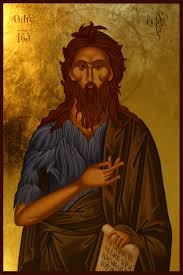
So when John goes out to the wilderness, donning his camel skin, eating locusts and wild honey, he knows The Holy is there. He knows the enshrined names of the places where holiness was manifest: on Sinai, at the rocks called Massah and Meribah, on and on. John knows he is not alone there. Whereas, in Jerusalem, he had been in the darkness of disfavor and had found no light.
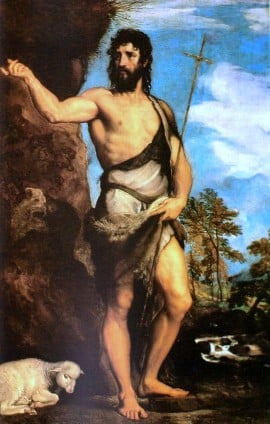
He lifts up his voice. The Voice. The voice still remembered in Christian testimony, the voice that drew thousands out into the wilderness to hear him. The voice that held the power of an angel and spoke the power to become children of God.
Bear’s Ears is land which holds a history of holiness nearly identical to the wilderness in which John spoke the power to become Children of God. Bear’s Ears is a national monument to this holiness, created by President Obama as 1,351,849 acres to be preserved as sacred to America. It was reduced to 201,876 acres by President Trump on December 4.
Bears Ears is a pair of mesas, and a surrounding Indian Creek corridor rock climbing area. There are over 100,000 archaeological sites protected within this monument.
The buttes and surroundings have long been held as sacred by a number of the region’s Native American tribes. The Bears Ears Intertribal Coalition describes the land as ancestral and as the most significant unprotected cultural landscape in the U.S.
As early as 13,000 years ago, Clovis people, who are considered to be the ancestors of most of the indigenous cultures of the Americas, hunted in there. Their tools have been found there.
Ancient Puebloans, who lived there 5000 – 2500 years ago, left behind baskets, pottery, and weapons. These are the ancestors of the Hopi and Zuni people who moved from foraging to farming about 3,500 years ago. Archaeological sites of prehistoric culture dating 3,000 to 2,000 ago, contain a large number of baskets used for storage of corn and for burial.
The complex cultural history of the next groups, who became early farmers, is visible in the remains of single family dwellings, granaries, kivas, towers, and large villages and roads linking them together.
In the 1880s, in 1906 under President Theodore Roosevelt, and in the 1930s, attempts to protect this land as a national monument were made, and did result in acts protecting antiquities, but not in protective forces to stop continual raiding of the treasures that belong at this point to the whole world as treasures of the human family story.
Bears Ears has been regularly looted and vandalized for many years. In 2009, FBI and Bureau of Land Management agents raided 16 homes in Blanding, following a two-year federal investigation. 24 people were indicted for stealing, receiving or trying to sell Native American artifact from the hundreds of archaeological sites in the area. This incident became an early flashpoint in the struggle over control of public lands in the western United States.
Painfully sadly, those who now desire to mine the area for uranium deposits prevailed on President Trump to reduce the monument’s protected acreage by half.
Painful: because the speaking of holy words, words with the power to help us become God’s children again, still live in these lands, and can continue to be spoken as long as the lands are a wilderness.
The Voices of holy lands, which are always wilderness lands, do not lose their power to transform. And they can only be silenced by the slaying, by powerful and power hungry people, of what is wild, uninhabited, and unfavored .
John himself said as much, when he railed against Herod the King’s policies and taught those who heard him to consider themselves brothers and sisters of God’s creation, not subjects of Rome, of Caesar, or of Herod.
It is John’s voice, proclaiming generosity and relationship, rather than wealth or allegiance to strong men, which echoes still in our memory, as faithful and prophetic.
Bear’s Ears. The Scottish moors. The Steppes. The Amazon jungle. The Inuit fishing grounds. All hold the holiness of the Voices that teach us how to be human, how to be beloved, how to find our way to the light that is coming into the world and can save us.
May we never forget that John was more than a Wild Man. He was a Voice in – and for us – from the Wilderness, where God has traveled with people since the beginning of time.
_________________________________________________________________________________________
Images: Russian Icon of John the Baptist. Vanderbilt Divinity School Library, Art in the Christian Tradition.
St. John, by Titian. enwikipedi.org.
Previous Post

December 7, 2017
No More Lying About Mary
Next Post

December 16, 2017 The Words of Angels
Browse Our Archives
Select a Category Bites Uncategorized
Select a Month December 2017 November 2017 October 2017 September 2017 August 2017 July 2017 June 2017 May 2017 April 2017 March 2017 February 2017 January 2017 December 2016 November 2016 October 2016 September 2016 August 2016 July 2016 June 2016 May 2016 April 2016 March 2016 February 2016 January 2016 December 2015 November 2015 October 2015 September 2015 August 2015 July 2015 June 2015 May 2015 April 2015 March 2015 February 2015 January 2015 December 2014 November 2014 October 2014 September 2014 August 2014 July 2014 June 2014 May 2014 April 2014 March 2014 February 2014 January 2014 December 2013 November 2013 October 2013 September 2013 August 2013 July 2013 June 2013 May 2013 April 2013 March 2013 February 2013 January 2013 December 2012
Follow Us!
TAKE THE
Religious Wisdom Quiz
True or False: 1 Peter teaches that believers are living stones being built into a spiritual house.
Select your answer to see how you score.
TRUE FALSE
Related posts from The Bite in the Apple

TRENDING AT PATHEOS Progressive Christian

What Being a Modern-Day Apostle Means to Me
In my last column, I discussed the ins and outs of modern-day...

Did Ancient China Once Worship the God of...
Across human history, a common thread weaves through the origins of the...

Love Your Neighbor – Including Earth-Kin: Lev. 19,...
God’s command to love your neighbor means acting in an ethical and...

Lead a Church Study of “Jesus and Lao...
Guest writer Jack Thomas (The Irreverent Reverend) reflects on leading his church...

Pastoral Wisdom for Responding to Sermon Pushback
Getting sermon pushback on your social justice sermon? Learn practical, Proverbs-based strategies...

Principles for Understanding the Apostolic Ministry Today
Whenever people discover that my formal ministry title is "apostle," as in...
view all Progressive Christian blogs
Ad-Free & Subscriber Log-In Subscription Support
- About Us
- 2026 Calendar
- Videos
- Podcasts
- Library of World Religions
- Faith In Media Tracker
- Advertise With Us
- Write for Us
- Privacy Policy
- Terms of Service
- Do Not Sell My Data
- Contact Us
- Radiant Digital
- Manage Newsletter Subscriptions
- Unsubscribe From Notifications
- Sitemap
Copyright 2008-2026, Patheos. All rights reserved.
Subscription Support Ad-Free & Subscriber Log-In
Follow Patheos