
BuddhistCatholicContemplativeEvangelicalGeneral ChristianHinduJewishLatter-day SaintMuslimNew VisionsProgressive Christian
Beliefs
- Buddhist
- Catholic
- Contemplative
- Evangelical
- General Christian
- Hindu
- Jewish
- Latter-day Saint
- More Voices
- Muslim
- New Visions
- Pagan
- Progressive Christian
Topics
- Religion News
- Food and Religion
- Sports and Religion
- Religious Art
- Religious Music and Entertainment
- Religious Events
- History and Religion
- Style and Religion
- Politics and Religion
- Women in Religion
- Recreation Outdoors and Religion
- Business Finance and Religion
- Careers Workplace and Religion
- Education and Religion
- Family Parenting and Religion
- Health Fitness and Religion
- Home and Religion
- Relationships and Religion
- Technology and Religion
- Travel and Religion
Columnists
- Buddhist Columnists
- Business Finance and Religion Columnists
- Careers Workplace and Religion Columnists
- Catholic Columnists
- Contemplative Columnists
- Education and Religion Columnists
- Evangelists Columnists
- Family Parenting and Religion Columnists
- General Christian Columnists
- Health Fitness and Religion Columnists
- Hindu Columnists
- History and Religion Columnists
- Home and Religion Columnists
- Jewish Columnists
- More Voices Columnists
- Latter Day Columnists
- Muslim Columnists
- New Visions Columnists
- Nonreligious Columnists
- Pagan Columnists
- Politics and Religion Columnists
- Progressive Columnists
- Recreation Outdoors and Religion Columnists
- Relationships and Religion Columnists
- Religion News Columnists
- Religious Art Columnists
- Religious Events Columnists
- Religious Music and Entertainment Columnists
- Sports and Religion Columnists
- Style and Religion Columnists
- Technology and Religion Columnists
- Travel and Religion Columnists
- Women in Religion Columnists
Resource Library
- 2026 Calendar
- Library of World Religions
- The 100 Most Holy Places on Earth
- Patheos Answers
- Podcasts
- Videos
- Faith Leaders Database
- Anglican Episcopalian
- Bahai
- Baptist
- Buddhism
- Christianity
- Confucianism
- Eastern Orthodoxy
- Hinduism
- Holiness and Pentecostal
- ISKCON
- Islam
- Judaism
- Lutheran
- Methodist
- The Church of Jesus Christ of Latter-day Saints
- New Age
- Paganism
- Presbytarian and Reformed
- Protestantism
- Religion Behind the Scenes
- Roman Catholic
- Scientology
- Shia Islam
- Sikhism
- Sufism
- Sunni Islam
- Taoism
- Zen
- See all religions
Research Tools
 Ad-Free & Subscriber Log-In Subscription Support
Ad-Free & Subscriber Log-In Subscription Support
Follow Patheos 

- Trending:
- Forgiveness
- |
- Marriage
- |
- Consciousness
- |
- Death Penalty
- |
- Election
- |
- Halloween
 The Bite in the Apple
- Home
- Progressive Christian
- The Power of Words
The Power of Words
Last updated on: August 31, 2014 at 7:43 pm by Nancy Rockwell
The Power of Words 2014-08-31T19:43:36-04:00 Nancy Rockwell
Patheos Explore the world's faith through different perspectives on religion and spirituality! Patheos has the views of the prevalent religions and spiritualities of the world.
 The moral life, says American Catholic poet Marie Howe, is lived out in what we say as much as what we do — and so words have a power to save us.
And because words have power that can save us, words can also condemn us. Power tends to corrupt, as Lord Acton observed.
Jesus, according to Matthew, said as much: Truly I tell you, whatever you bind on earth will be bound in heaven, and whatever you loose on earth will be loosed in heaven. Again, truly I tell you, if two of you agree on earth about anything you ask, it will be done for you by my Father in heaven. For where two or three are gathered in my name, I am there among them.”
 Speaking of dangerous words, Ann Lamott , in her book Bird by Bird, talks about drive-by shootings of the mouth, words by which, in the course of an ordinary day, we take one another down. Friends, strangers, family members, we are all survivors of these, and we are, when we least expect it, shooters.
Relating, reacting, refuting, reporting, rehearsing, redefining: these are the uses of words; and these are the spiritual exercises we daily practice.
No wonder Jesus admonishes us, saying it is not what we put into our mouths that pollutes us, but what comes out of our mouths, for, he says, what comes out of the mouth comes out of the heart, and shows the condition of the heart.
 We pour over Jesus’ words, examining stories in detail to help us navigate the dangerous journey of our lives, the journey we are making between heaven and hell, between salvation and ruin, between God and the Devil. And all the while we are using words, making and breaking relationships, straining to tell the truth as we know it
I’m struck by Jesus’ plea, that if two of us, if only two of us, can agree about what we long for, it will be done. Clearly he doesn’t have high expectations of unity from us. Nor does he substitute choired recitations for heartfelt prayers. If two of you agree on earth . . .
Looking around our earth, his assessment of the difficulty of human agreement seems on the mark. Who would have imagined this century would begin with holy wars, that the label infidel would be invested with so much meaning, that the destruction of infidels would become a legitimation for warfare centuries after we thought that was over?
 And who would have thought the political divisions in America and most European countries as well would take on such rancorous character?
Most of the public rhetoric is about steps on the journey to hell or heaven, with emphasis on hell. Rarely do we hear the words that families speak to each other all the time: It will be all right . . . . whatever happens, it will be all right.
According to Matthew Jesus gave pretty specific instructions about resolving arguments. You sit down and talk about it. And if there is no listening, you bring in someone else to sit down with you.
But this is not so easy as it sounds. Ask the Market Basket cousins, Arthur T and Arthur S. Endless boardroom meetings seemed to only make it worse. Ask Congress. Ask any couple, getting a divorce, if they tried talking, and most will say talking was what ended the marriage.
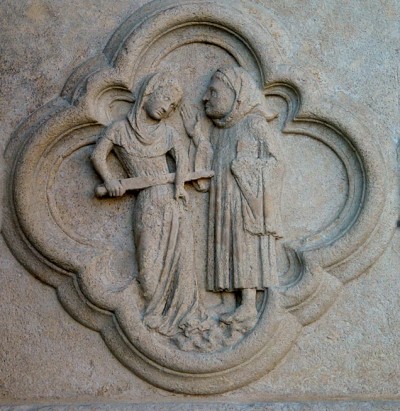
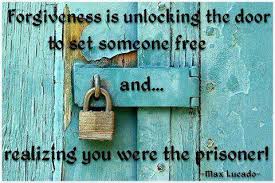 As for listening, well, it depends on how your heart hears the other person: as an enemy, as a wrong-doer, as someone you need to instruct, as a betrayer . . . or as a friend.
Frederick Buechner says of forgiveness, To accept forgiveness means to admit that you’ve done something wrong that needs to be forgiven . . . When somebody you’ve wronged forgives you, you’re spared the dull and self-diminishing throb of a guilty conscience.
When you forgive somebody who has wronged you, you’re spared the dismal corrosion of bitterness and wounded pride.
For both parties, forgiveness means the freedom again to be at peace inside their own skins and to be glad in each other’s presence.
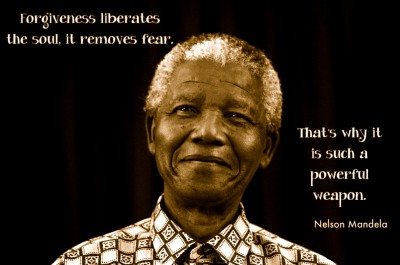 Marie Howe, in her poem The Meadow, writes:
Bedeviled,
human, your plight, in waking, is to choose from the words
that even now sleep on your tongue, and to know that tangled
among them and terribly new is the sentence that could change your life.
May we learn new words.
_______________________________________________
Illustrations:
1. Argument. Google Images.
2. Example of Anger. 1220. Cathedrale d’Amiens, France. Relief Sculpture in Stone. Vanderbilt Divinity School Library, Art in the Christian Tradition.
3. Wrath, by Hieronymous Bosch, Early 15th c. Vanderbilt Divinity School Library, Art in the Christian Tradition.
4. Bin Laden Poster. Google Images***.***
5. Door of Forgiveness. Poster. Google Images.
6. Mandela Poster. Google Images.
Previous Post

August 23, 2014
Facing Toward Jerusalem
Next Post
September 6, 2014 Forgiving
Browse Our Archives
Select a Category Bites Uncategorized
Select a Month December 2017 November 2017 October 2017 September 2017 August 2017 July 2017 June 2017 May 2017 April 2017 March 2017 February 2017 January 2017 December 2016 November 2016 October 2016 September 2016 August 2016 July 2016 June 2016 May 2016 April 2016 March 2016 February 2016 January 2016 December 2015 November 2015 October 2015 September 2015 August 2015 July 2015 June 2015 May 2015 April 2015 March 2015 February 2015 January 2015 December 2014 November 2014 October 2014 September 2014 August 2014 July 2014 June 2014 May 2014 April 2014 March 2014 February 2014 January 2014 December 2013 November 2013 October 2013 September 2013 August 2013 July 2013 June 2013 May 2013 April 2013 March 2013 February 2013 January 2013 December 2012
Follow Us!
TAKE THE
Religious Wisdom Quiz
True or False: 2 John is addressed to Gaius, the beloved friend.
Select your answer to see how you score.
TRUE FALSE
Related posts from The Bite in the Apple




TRENDING AT PATHEOS Progressive Christian

Why Christians Have a Sacred Duty to Vote:...
The Bible offers strong support for the sacred duty to vote. Here...

What Being a Modern-Day Apostle Means to Me
In my last column, I discussed the ins and outs of modern-day...

Did Ancient China Once Worship the God of...
Across human history, a common thread weaves through the origins of the...

Love Your Neighbor – Including Earth-Kin: Lev. 19,...
God’s command to love your neighbor means acting in an ethical and...

Lead a Church Study of “Jesus and Lao...
Guest writer Jack Thomas (The Irreverent Reverend) reflects on leading his church...

Principles for Understanding the Apostolic Ministry Today
Whenever people discover that my formal ministry title is "apostle," as in...
view all Progressive Christian blogs
Ad-Free & Subscriber Log-In Subscription Support
- About Us
- 2026 Calendar
- Videos
- Podcasts
- Library of World Religions
- Faith In Media Tracker
- Advertise With Us
- Write for Us
- Privacy Policy
- Terms of Service
- Do Not Sell My Data
- Contact Us
- Radiant Digital
- Manage Newsletter Subscriptions
- Unsubscribe From Notifications
- Sitemap
Copyright 2008-2026, Patheos. All rights reserved.
Subscription Support Ad-Free & Subscriber Log-In
Follow Patheos