
BuddhistCatholicContemplativeEvangelicalGeneral ChristianHinduJewishLatter-day SaintMuslimNew VisionsProgressive Christian
Beliefs
- Buddhist
- Catholic
- Contemplative
- Evangelical
- General Christian
- Hindu
- Jewish
- Latter-day Saint
- More Voices
- Muslim
- New Visions
- Pagan
- Progressive Christian
Topics
- Religion News
- Food and Religion
- Sports and Religion
- Religious Art
- Religious Music and Entertainment
- Religious Events
- History and Religion
- Style and Religion
- Politics and Religion
- Women in Religion
- Recreation Outdoors and Religion
- Business Finance and Religion
- Careers Workplace and Religion
- Education and Religion
- Family Parenting and Religion
- Health Fitness and Religion
- Home and Religion
- Relationships and Religion
- Technology and Religion
- Travel and Religion
Columnists
- Buddhist Columnists
- Business Finance and Religion Columnists
- Careers Workplace and Religion Columnists
- Catholic Columnists
- Contemplative Columnists
- Education and Religion Columnists
- Evangelists Columnists
- Family Parenting and Religion Columnists
- General Christian Columnists
- Health Fitness and Religion Columnists
- Hindu Columnists
- History and Religion Columnists
- Home and Religion Columnists
- Jewish Columnists
- More Voices Columnists
- Latter Day Columnists
- Muslim Columnists
- New Visions Columnists
- Nonreligious Columnists
- Pagan Columnists
- Politics and Religion Columnists
- Progressive Columnists
- Recreation Outdoors and Religion Columnists
- Relationships and Religion Columnists
- Religion News Columnists
- Religious Art Columnists
- Religious Events Columnists
- Religious Music and Entertainment Columnists
- Sports and Religion Columnists
- Style and Religion Columnists
- Technology and Religion Columnists
- Travel and Religion Columnists
- Women in Religion Columnists
Resource Library
- 2026 Calendar
- Library of World Religions
- The 100 Most Holy Places on Earth
- Patheos Answers
- Podcasts
- Videos
- Faith Leaders Database
- Anglican Episcopalian
- Bahai
- Baptist
- Buddhism
- Christianity
- Confucianism
- Eastern Orthodoxy
- Hinduism
- Holiness and Pentecostal
- ISKCON
- Islam
- Judaism
- Lutheran
- Methodist
- The Church of Jesus Christ of Latter-day Saints
- New Age
- Paganism
- Presbytarian and Reformed
- Protestantism
- Religion Behind the Scenes
- Roman Catholic
- Scientology
- Shia Islam
- Sikhism
- Sufism
- Sunni Islam
- Taoism
- Zen
- See all religions
Research Tools
 Ad-Free & Subscriber Log-In Subscription Support
Ad-Free & Subscriber Log-In Subscription Support
Follow Patheos 

- Trending:
- Forgiveness
- |
- Marriage
- |
- Consciousness
- |
- Death Penalty
- |
- Election
- |
- Halloween
 The Bite in the Apple
- Home
- Progressive Christian
- The Legacy
The Legacy
Last updated on: May 17, 2015 at 4:49 pm by Nancy Rockwell
The Legacy 2015-05-17T16:49:59-04:00 Nancy Rockwell
Patheos Explore the world's faith through different perspectives on religion and spirituality! Patheos has the views of the prevalent religions and spiritualities of the world.
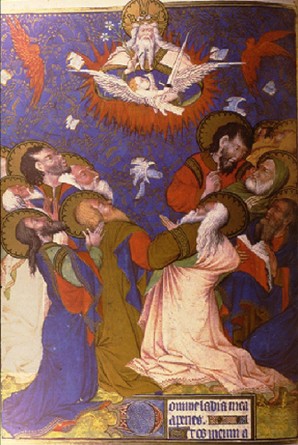 According to John: Jesus, in many speeches, prepares those he loves for his impending departure by naming the things he will leave behind – his legacy. Peace I leave with you, he says, on Easter Day and often after. His love, hope, joy. These are an inheritance he transmits. Repeatedly, he names The Truth as what he lives in always, as what he gives to them and as what the Advocate (the Spirit) will give them always.
The Truth, Jesus tells them, will prove the world is wrong about sin and righteousness and judgment. Wrong about sin, because the world does not believe Jesus, or anyone, can offer forgiveness. Wrong about righteousness, because Jesus’ rising, at Easter, and again now at the Ascension, are acts of justice that the world cannot see and so disbelieves, instead thinking that justice was what they could see: the power of the ruler who put him to death, and the power of the charges for which he was put to death. And, Jesus continues, the world is wrong about judgment, because the ruler of this world has been condemned, in this world, by his false judgment and his injustice and lack of mercy.
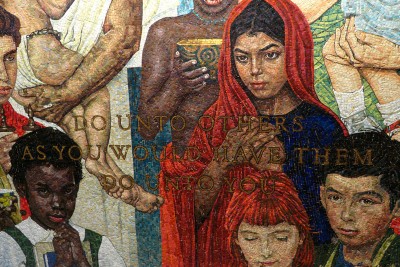 This week, the jury empaneled to decide the fate of the surviving marathon bomber, Dzhokhar Tsarnaev, sentenced him to death, for four murders , dozens of maimings, hundreds of shrapnel and other injuries, including persistent deafness in many from the noise of the bombs. They felt that he showed no remorse in his months of sitting before them while the testimony of these injuries was given.
There was no argument about his guilt: his lawyers admitted that from the start, and we had all seen the ubiquitous videotapes that showed us Dzhokhar Tsarnaev and his brother in the crowd, placing their bombs behind the Richard family and their three children, returning to the subway as if nothing were on their minds. The jury was given strict instructions for making decisions on each charge, and I have no doubt these were legally framed.
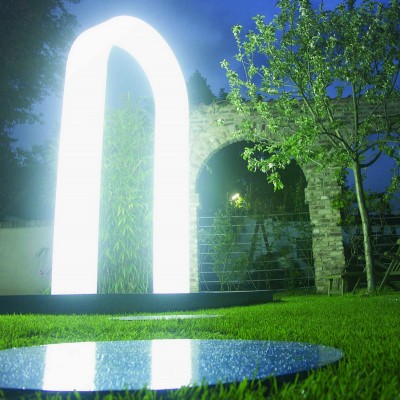 But missing from all this was the consideration of the Truth Jesus speaks about, that proves the world wrong about sin and righteousness and judgment. From the man on the street to the jury in the court, the common argument was that forgiveness was impossible here. Even Dzhokhar Tsarnaev’s lawyers agreed with that. And for many there was accord that the ’righteousness’ (meaning: justice) in this situation was the penalty of death.
There were some exceptions: polls of Boston’s citizens were overwhelmingly in favor of life in prison rather than death (polls of the nation, though, were more than two thirds for death); and some notable Catholic laity, the Chief of the Boston Police, for one, and the family of Martin Richards, the boy who died, whose sister and mother were badly injured , whose brother has PTSD and whose father has shrapnel wounds and some hearing loss, declared that not only their faith, but also their peace of mind, needed a sentence of life in prison.
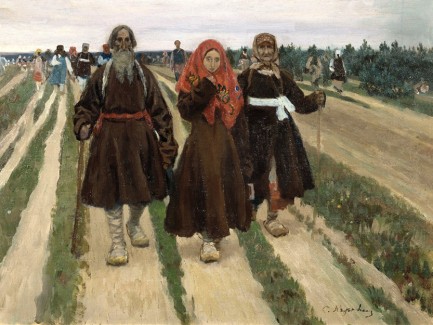 One lonely Catholic keeping vigil outside the courtroom, an Iraq war vet, said No one should be sentenced to death for the worst day in his life, echoing Jesus’ assertion that the world is wrong about judgment.
There was a battle in the court over allowing anti-death-penalty nun, Sr. Helen Prejean, testify. In the end, she was allowed to speak to questions about her visit with Tsarnaev, but not to speak about the Truth as she understands it, not to speak about mercy, justice, judgment, or the Truth of the Spirit of Jesus.
There was complaint among many that Tsarnaev showed tender feelings only once, when his elderly aunt, who had travelled from Russia to speak about his childhood, was so overcome with panic and hyperventilation that she could not speak. Tears came to his eyes, and he sobbed once. And people said, he only had tears for himself. But his tears were really for her, it seems to me, and in her he had to face the Truth, that what he and his brother thought they were doing for justice for her and her people, had actually caused her great pain.
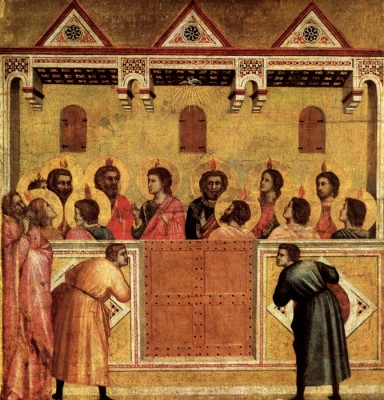 Belief in Dzhokhar’s common humanity; belief in the possibility of his human transformation; belief that, at 21, he could still grow in spirit and in heart; belief that he is a child of God; belief in his sorrow, for all that he has lost that he did love; even belief in the community of those he grew up among, who liked him then: all these beliefs were pushed away. The scrum of reporters covering the trial declared these things unconvincing.
We are accustomed to proclaiming that Jesus committed no crime; but what he wanted us to see was his insistence that no one should be destroyed, that he embraced the guilty man beside him and the guilt in us all, offering the thing we ruled inadmissible here in Boston, belief in redemption.
Well, now we have to live with what has been done.
Frederick Buechner, some years ago, wrote:
Does the Spirit of God move over the face of the turbulent waters of our age? The Hebrew word for “move”, merahepeth, means to “brood” as a bird broods over its nest until finally new life begins to stir beneath the sheltering wings. Is new life stirring in this death-ridden world? Is light about to be created out of our darkness? This is the only question that matters. And this is the question before us, at Pentecost.
_____________________________________________________
Illustrations:
1. Pentecost, by the Rohan Master, 1340. Bibliotheque Nationale de France, Paris. Vanderbilt Divinity School Library, Art in the Christian Tradition.
2. The Golden Rule, 1985 Mosaic in the United Nations, based on a painting by Norman Rockwell. UN, New York. Vanderbilt Divinity School Library, Art in the Christian Tradition.
3. Knocking on Heaven’s Door. Freestanding Sculpture by Kinga Dunikowska – Vanderbilt Divinity School Library, Art in the Christian Tradition
4. To the Pentecost, Sergei Korovin, Tretiakov Gallery, Moscow. 1902. Vanderbilt Divinity School Library, Art in the Christian Tradition.
5. Pentecost. Giotto di Bondone, 1320-25. National Gallery, Great Britain.
5.
Previous Post

May 10, 2015
Ascending Requires Letting Go
Next Post
May 30, 2015 Blasphemy
Browse Our Archives
Select a Category Bites Uncategorized
Select a Month December 2017 November 2017 October 2017 September 2017 August 2017 July 2017 June 2017 May 2017 April 2017 March 2017 February 2017 January 2017 December 2016 November 2016 October 2016 September 2016 August 2016 July 2016 June 2016 May 2016 April 2016 March 2016 February 2016 January 2016 December 2015 November 2015 October 2015 September 2015 August 2015 July 2015 June 2015 May 2015 April 2015 March 2015 February 2015 January 2015 December 2014 November 2014 October 2014 September 2014 August 2014 July 2014 June 2014 May 2014 April 2014 March 2014 February 2014 January 2014 December 2013 November 2013 October 2013 September 2013 August 2013 July 2013 June 2013 May 2013 April 2013 March 2013 February 2013 January 2013 December 2012
Follow Us!
TAKE THE
Religious Wisdom Quiz
What does the Bible say about greed?
Select your answer to see how you score.
It is best It helps you win It leads to ruin It is always wise
Related posts from The Bite in the Apple




TRENDING AT PATHEOS Progressive Christian

Why Christians Have a Sacred Duty to Vote:...
The Bible offers strong support for the sacred duty to vote. Here...

What Being a Modern-Day Apostle Means to Me
In my last column, I discussed the ins and outs of modern-day...

Did Ancient China Once Worship the God of...
Across human history, a common thread weaves through the origins of the...

Love Your Neighbor – Including Earth-Kin: Lev. 19,...
God’s command to love your neighbor means acting in an ethical and...

Lead a Church Study of “Jesus and Lao...
Guest writer Jack Thomas (The Irreverent Reverend) reflects on leading his church...

Principles for Understanding the Apostolic Ministry Today
Whenever people discover that my formal ministry title is "apostle," as in...
view all Progressive Christian blogs
Ad-Free & Subscriber Log-In Subscription Support
- About Us
- 2026 Calendar
- Videos
- Podcasts
- Library of World Religions
- Faith In Media Tracker
- Advertise With Us
- Write for Us
- Privacy Policy
- Terms of Service
- Do Not Sell My Data
- Contact Us
- Radiant Digital
- Manage Newsletter Subscriptions
- Unsubscribe From Notifications
- Sitemap
Copyright 2008-2026, Patheos. All rights reserved.
Subscription Support Ad-Free & Subscriber Log-In
Follow Patheos