
BuddhistCatholicContemplativeEvangelicalGeneral ChristianHinduJewishLatter-day SaintMuslimNew VisionsProgressive Christian
Beliefs
- Buddhist
- Catholic
- Contemplative
- Evangelical
- General Christian
- Hindu
- Jewish
- Latter-day Saint
- More Voices
- Muslim
- New Visions
- Pagan
- Progressive Christian
Topics
- Religion News
- Food and Religion
- Sports and Religion
- Religious Art
- Religious Music and Entertainment
- Religious Events
- History and Religion
- Style and Religion
- Politics and Religion
- Women in Religion
- Recreation Outdoors and Religion
- Business Finance and Religion
- Careers Workplace and Religion
- Education and Religion
- Family Parenting and Religion
- Health Fitness and Religion
- Home and Religion
- Relationships and Religion
- Technology and Religion
- Travel and Religion
Columnists
- Buddhist Columnists
- Business Finance and Religion Columnists
- Careers Workplace and Religion Columnists
- Catholic Columnists
- Contemplative Columnists
- Education and Religion Columnists
- Evangelists Columnists
- Family Parenting and Religion Columnists
- General Christian Columnists
- Health Fitness and Religion Columnists
- Hindu Columnists
- History and Religion Columnists
- Home and Religion Columnists
- Jewish Columnists
- More Voices Columnists
- Latter Day Columnists
- Muslim Columnists
- New Visions Columnists
- Nonreligious Columnists
- Pagan Columnists
- Politics and Religion Columnists
- Progressive Columnists
- Recreation Outdoors and Religion Columnists
- Relationships and Religion Columnists
- Religion News Columnists
- Religious Art Columnists
- Religious Events Columnists
- Religious Music and Entertainment Columnists
- Sports and Religion Columnists
- Style and Religion Columnists
- Technology and Religion Columnists
- Travel and Religion Columnists
- Women in Religion Columnists
Resource Library
- 2026 Calendar
- Library of World Religions
- The 100 Most Holy Places on Earth
- Patheos Answers
- Podcasts
- Videos
- Faith Leaders Database
- Anglican Episcopalian
- Bahai
- Baptist
- Buddhism
- Christianity
- Confucianism
- Eastern Orthodoxy
- Hinduism
- Holiness and Pentecostal
- ISKCON
- Islam
- Judaism
- Lutheran
- Methodist
- The Church of Jesus Christ of Latter-day Saints
- New Age
- Paganism
- Presbytarian and Reformed
- Protestantism
- Religion Behind the Scenes
- Roman Catholic
- Scientology
- Shia Islam
- Sikhism
- Sufism
- Sunni Islam
- Taoism
- Zen
- See all religions
Research Tools
 Ad-Free & Subscriber Log-In Subscription Support
Ad-Free & Subscriber Log-In Subscription Support
Follow Patheos 

- Trending:
- Forgiveness
- |
- Marriage
- |
- Consciousness
- |
- Death Penalty
- |
- Election
- |
- Halloween
 The Bite in the Apple
- Home
- Progressive Christian
- The Good Shepherd
The Good Shepherd
Last updated on: April 19, 2015 at 2:52 pm by Nancy Rockwell
The Good Shepherd 2015-04-19T14:52:03-04:00 Nancy Rockwell
Patheos Explore the world's faith through different perspectives on religion and spirituality! Patheos has the views of the prevalent religions and spiritualities of the world.
 Heroes, in the biblical tradition, are not heroic.
There’s just no way of getting around it. Heroes are like shepherds who rescue a lost sheep. You can carry on all you want about the unwisdom of chasing after lost lambs, the reckless leaving of the flock, and the large heartedness involved here, but, though classic heroes do rush in where angels fear to tread, you just can’t make the reckless shepherd into a figure of valor, noble action, battle beauty, and glorious victory.
Heroes, in the biblical tradition, are shepherds. Literal shepherds in the Old Testament. And thanks largely to the gospel of John, luminously symbolic shepherds in the New Testament. There’s no getting around the biblical fact, presented in story after story after story: the heart of God hankers after shepherds.
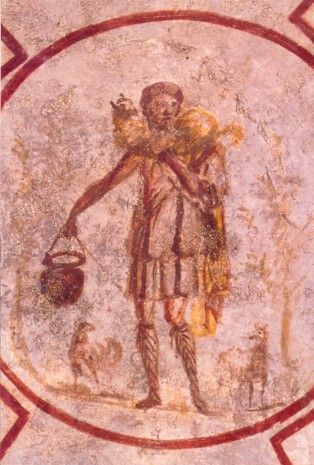 The Lord is my shepherd, according to the 23rd Psalm, and this image of God is cast with a care and devotion that extends to Jesus, born in the presence of shepherds and growing into the Good Shepherd of the world.
It’s easy to undervalue the image. Israel’s long history of living as semi-nomadic herders made sheep central to their economy, and so the image of God as shepherd is a reasonable one. But dependence on herds was also huge in much of Europe, yet the Roman pantheon of Gods leaned toward warriors, and their warrior gods dominated their empire. And the Celtic pantheon, which filled the religious imagination of Greece, Spain, France and the British Isles, extolled the warrior to such a degree that the chief of all gods, Lugh or Lleu, was known for his magical spear, his legendary sword, chariot and horse, and his many warring adventures.
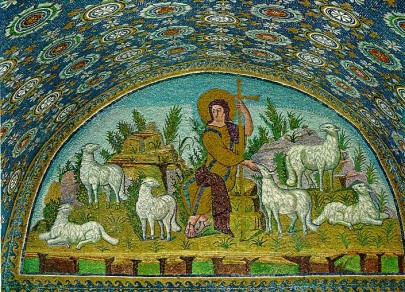 The God of Israel is no warrior. The Shepherd God of Israel herds the people safely through perils: floods, famine, bondage, fear of strong men with powerful spears and swords, who may win a battle here and there, who may even march the people into exile in Babylon, but the Shepherd God will rescue them in the days to come.
At the start, there was Abel, the beloved and eternally innocent son, whose offering of a sheep pleased God deeply and whose blood and purity are part of our souls forever.
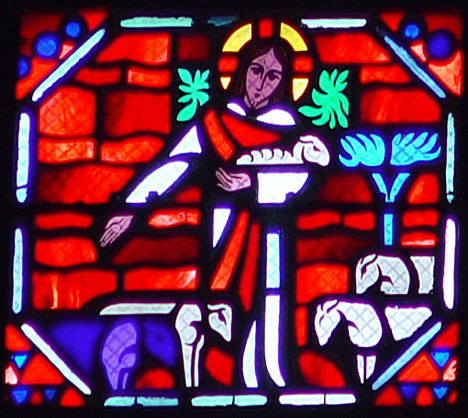 Noah, the Shepherd Archetype, herded all God’s creatures safely to the New Earth, then got drunk and lay around naked and besotted, God’s beloved who is remembered forever for his great deed-doing, but never seen as a divine hero.
And then there was Abraham, a nomadic herder to whom, despite his erring ways, God gave the promise of offspring numbering more than the stars.
Abraham’s twin grandsons, Esau and Jacob, begin adult life as shepherd and cook; and Jacob the cook was a bad guy, while Esau the herder was beloved; but in exile Jacob became a shepherd of reknown, and in that new identity Jacob received God’s particular blessing.
In the era of the kings, David, the greatest King, was a shepherd boy who wrote love songs to God, and all his older, stronger, more handsome brothers were passed over for the kingship till God’s eye fell on this young shepherd. God’s heart was smitten.
T urning the pages to the New Testament, lo! here are shepherds in the stable, viewing the Christ Child – shepherds, who received an invitation to see the Babe from the entire heavenly chorus. Only shepherds were invited, no one else. And this is the first time in the biblical record that angels sang to people — and it is shepherds to whom they sing.
John’s gospel names Jesus the Lamb of God, and also describes him as the Gate and the Gatekeeper to the sheepfold, and most powerfully, as the Good Shepherd. But now the name Shepherd has become symbolic, for Jesus’ trade was carpentry, and perhaps he fished a time or two, but he spent no time among the sheep. And the sheep are also symbolic, the sheep are the people of God.
And now there is a distinction between shepherds. Before John’s gospel, there have been no bad shepherds. The various villains were mainly kings but also some queens, prophets of Baal, drunken sots, court betrayers. John adds a shadow to the shepherd image. Good shepherd, bad shepherd, there are to be distinctions.
 But John does not point to other religious figures, other prophets of Israel, or even foreign gods, as the bad shepherds. Those who desert the people in times of trouble are the same evildoers the people have known of old, corrupt politicians, wicked kings, religious fakirs: Pilate, Herod, and Caesar. They usurp the role of shepherd, leading the people into places and times which are snares, and they abandon the people to face falling fortunes helplessly.
The essential quality of true shepherds never leads to abandonment. The shepherd shares with the sheep a fundamental knowledge that there can never really be any peace and joy for the shepherd until there is peace and joy finally for the sheep, too.
This quality, this compassion, is the vaunted quality of the Shepherd God, and is the quality the Shepherd God seeks in everyone. The Good Shepherd stays with the sheep, in all that befalls. This staying, this Presence, is what is holy. Not valor. Not swordsmanship. Not battle glory. Not beauty of weaponry, nor even skill. Presence, even in the valley of the shadow of death, offering the hope of return from peril. These are the leaders the Shepherd God seeks for this world, and this is the holiness the Shepherd God bestows.
_______________________________________________________
Illustrations:
1. The Young Christ as the Good Shepherd, Murillo, Bartolomé Esteban, 1617-1682, Museum of Fine Arts,Boston. Vanderbilt Divinity School Library, Art in the Christian Tradition.
2. Good Shepherd Mosaic. Catacomb of Callixtus, Mid 3rd Century, Rome. Vanderbilt Divinity School Library, Art in the Christian Tradition.
3. Good Shepherd Mosaic. 5th Cent. Ravenna, Italy. Vanderbilt Divinity School Library, Art in the Christian Tradition.
4. The Good Shepherd, Le Breton, Jacques, 1508-1519, Cathedrale dAmiens, Amiens, France. Vanderbilt Divinity School Library, Art in the Christian Tradition.
5. Jesus as Shepherd of Lost Sheep, unidentified 20th c, Bibliothèque Nationale de France, Paris. Vanderbilt Divinity School Library, Art in the Christian Tradition.
6. Good Shepherd. Dupre, Julien, late 19th c. California Palace of the Legion of Honor, San Francisco. Vanderbilt Divinity School Library, Art in the Christian Tradition.
Previous Post

April 12, 2015
Scared Sick
Next Post
April 27, 2015 Fruitful
Browse Our Archives
Select a Category Bites Uncategorized
Select a Month December 2017 November 2017 October 2017 September 2017 August 2017 July 2017 June 2017 May 2017 April 2017 March 2017 February 2017 January 2017 December 2016 November 2016 October 2016 September 2016 August 2016 July 2016 June 2016 May 2016 April 2016 March 2016 February 2016 January 2016 December 2015 November 2015 October 2015 September 2015 August 2015 July 2015 June 2015 May 2015 April 2015 March 2015 February 2015 January 2015 December 2014 November 2014 October 2014 September 2014 August 2014 July 2014 June 2014 May 2014 April 2014 March 2014 February 2014 January 2014 December 2013 November 2013 October 2013 September 2013 August 2013 July 2013 June 2013 May 2013 April 2013 March 2013 February 2013 January 2013 December 2012
Follow Us!
TAKE THE
Religious Wisdom Quiz
What does Paul tell Timothy to guard in 1 Timothy?
Select your answer to see how you score.
The church The gospel His heart What has been entrusted to his care
Related posts from The Bite in the Apple




TRENDING AT PATHEOS Progressive Christian

Why Christians Have a Sacred Duty to Vote:...
The Bible offers strong support for the sacred duty to vote. Here...

What Being a Modern-Day Apostle Means to Me
In my last column, I discussed the ins and outs of modern-day...

Did Ancient China Once Worship the God of...
Across human history, a common thread weaves through the origins of the...

Love Your Neighbor – Including Earth-Kin: Lev. 19,...
God’s command to love your neighbor means acting in an ethical and...

Lead a Church Study of “Jesus and Lao...
Guest writer Jack Thomas (The Irreverent Reverend) reflects on leading his church...

Principles for Understanding the Apostolic Ministry Today
Whenever people discover that my formal ministry title is "apostle," as in...
view all Progressive Christian blogs
Ad-Free & Subscriber Log-In Subscription Support
- About Us
- 2026 Calendar
- Videos
- Podcasts
- Library of World Religions
- Faith In Media Tracker
- Advertise With Us
- Write for Us
- Privacy Policy
- Terms of Service
- Do Not Sell My Data
- Contact Us
- Radiant Digital
- Manage Newsletter Subscriptions
- Unsubscribe From Notifications
- Sitemap
Copyright 2008-2026, Patheos. All rights reserved.
Subscription Support Ad-Free & Subscriber Log-In
Follow Patheos