
BuddhistCatholicContemplativeEvangelicalGeneral ChristianHinduJewishLatter-day SaintMuslimNew VisionsProgressive Christian
Beliefs
- Buddhist
- Catholic
- Contemplative
- Evangelical
- General Christian
- Hindu
- Jewish
- Latter-day Saint
- More Voices
- Muslim
- New Visions
- Pagan
- Progressive Christian
Topics
- Religion News
- Food and Religion
- Sports and Religion
- Religious Art
- Religious Music and Entertainment
- Religious Events
- History and Religion
- Style and Religion
- Politics and Religion
- Women in Religion
- Recreation Outdoors and Religion
- Business Finance and Religion
- Careers Workplace and Religion
- Education and Religion
- Family Parenting and Religion
- Health Fitness and Religion
- Home and Religion
- Relationships and Religion
- Technology and Religion
- Travel and Religion
Columnists
- Buddhist Columnists
- Business Finance and Religion Columnists
- Careers Workplace and Religion Columnists
- Catholic Columnists
- Contemplative Columnists
- Education and Religion Columnists
- Evangelists Columnists
- Family Parenting and Religion Columnists
- General Christian Columnists
- Health Fitness and Religion Columnists
- Hindu Columnists
- History and Religion Columnists
- Home and Religion Columnists
- Jewish Columnists
- More Voices Columnists
- Latter Day Columnists
- Muslim Columnists
- New Visions Columnists
- Nonreligious Columnists
- Pagan Columnists
- Politics and Religion Columnists
- Progressive Columnists
- Recreation Outdoors and Religion Columnists
- Relationships and Religion Columnists
- Religion News Columnists
- Religious Art Columnists
- Religious Events Columnists
- Religious Music and Entertainment Columnists
- Sports and Religion Columnists
- Style and Religion Columnists
- Technology and Religion Columnists
- Travel and Religion Columnists
- Women in Religion Columnists
Resource Library
- 2026 Calendar
- Library of World Religions
- The 100 Most Holy Places on Earth
- Patheos Answers
- Podcasts
- Videos
- Faith Leaders Database
- Anglican Episcopalian
- Bahai
- Baptist
- Buddhism
- Christianity
- Confucianism
- Eastern Orthodoxy
- Hinduism
- Holiness and Pentecostal
- ISKCON
- Islam
- Judaism
- Lutheran
- Methodist
- The Church of Jesus Christ of Latter-day Saints
- New Age
- Paganism
- Presbytarian and Reformed
- Protestantism
- Religion Behind the Scenes
- Roman Catholic
- Scientology
- Shia Islam
- Sikhism
- Sufism
- Sunni Islam
- Taoism
- Zen
- See all religions
Research Tools
 Ad-Free & Subscriber Log-In Subscription Support
Follow Patheos 

- Trending:
- Advent
- |
- Forgiveness
- |
- Thanksgiving
- |
- Election
- |
- Seasonal Holidays
- |
- Marriage
 The Bite in the Apple
- Home
- Progressive Christian
- The Economics of Hope
The Economics of Hope
Last updated on: November 29, 2015 at 2:27 pm by Nancy Rockwell
The Economics of Hope 2015-11-29T14:27:00-04:00 Nancy Rockwell
Patheos Explore the world's faith through different perspectives on religion and spirituality! Patheos has the views of the prevalent religions and spiritualities of the world.
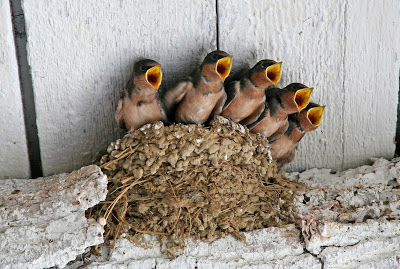
 Here comes John the Baptist again. He’s as regular as swallows returning to Capistrano, as salmon swimming upstream to spawn. John steps up each Advent in the knick of time, announcing, always announcing, that all hell is breaking loose and God is in no mood to hand out free passes to anyone anymore.
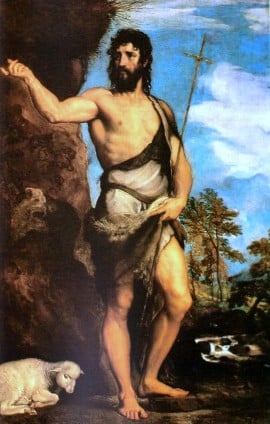
John says the axe (and he means God’s axe) is laid at the root of the tree (and he means Israel). He warns us how easily we can all be replaced: God can raise up children from these stones, he says, pointing to the rocky road they’ve travelled on.
People listened to him because they already suspected it was true, and they’d come to hear him because they were damned angry about it. And scared. So, in some ways, John the Baptist is a first century Donald Trump, speaking to folks who are fed up.
John’s loud. He regularly had crowds of tens of thousands, the Roman historian Josephus said, so he had to have a voice that could fill a stadium. And he’s incredibly sure of himself. You can’t read the passages about him without hearing that arrogance in him. He curses, he denounces, he decries. He rings down destruction. His critiques of the government are devastating.
 When he has everybody’s attention, when a hush has fallen over the aching, angry crowd, someone calls out: What shall we do? And he answers. But this isn’t Donald Trump speaking, now. No, he’s turned into — Bernie Sanders. His answer is practical, reasonable, economic, and most of all, full of hope*: You who have two coats, give one away to someone who has none,* he says. You who have two loaves of bread, do likewise. Behave fairly, treat people justly, no matter what job you have.
The tree root he is pointing to is the economy. The system is corrupt, he has preached, over and over. And they know it is. Change the economy, he urges them, starting now, where you are, with what you have. When you do that, you will no longer be enslaved to the unjust system that has been oppressing you. You will be building a better world. You will be doing what you can, you newly-minted brothers and sisters, and you will no longer be enemies or rivals or unholy to each other. You will be invested in making the crooked places straight and the rough ways smooth. And then you will begin to see the salvation of God.
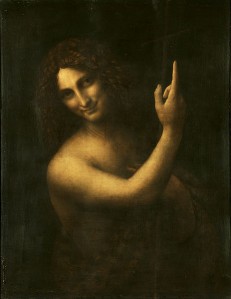 We’ve gotten ourselves mired in John’s words about the One who is coming whose shoes he isn’t fit to untie, and we’ve told ourselves this was all he was talking about, that the whole of the man’s message was to point toward Jesus. In this we sell him very short. His message, powerful enough to attract outsized crowds, had to have been far more than “not me, the next guy”. And the gospels record far more of his fiery conviction than that.
The corruption of the economy was at the center of his attention. Leaving Jerusalem was leaving the economy. His camel skin clothing and his diet of honey and locusts were signs of his refusal to participate in the economy. Consider: he does not advise people to eat as he does, nor to wear animal skins, as he does, nor to come and live where he is living. Changing the economy is his answer. We can build a world of hope among us, John is saying, by meeting each other’s needs with our abundance, by removing the terrors of desperation and hatred among us.

Neither does John advise fear or a frenzied, angry response. Changing the economy is the answer to acts of terror, he says, acts such as Herod’s. Mary of Nazareth, Jesus’ mother and John’s cousin, and the other Forerunner who is our Advent guide, rings out the same message*: My soul is magnifying God*, she says. And she does not leave it at that, but declares the very aspects of God she intends, in this Child, to increase: the God who scatters the proud in the imaginations of their hearts, who brings down the powerful from their thrones and lifts up the lowly, who fills the hungry with good things and sends the rich empty away.
We sell her very short in our preoccupation with her sexuality, and in our refusal to acknowledge in her a first century Elizabeth Warren, a woman who belongs in the prophetic tradition along with Jeremiah and Elijah and John, a woman who moves her motherhood outside the conventional economy of housewifery. She leaves home and bears her child in a stable, among animals. No grandmother, no chums gather round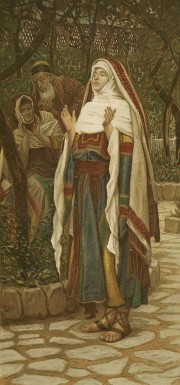 , but a group of gnarly, unkempt shepherds from the fields beyond Bethlehem. She then flees Israel altogether for a few years, living on money from foreign kings until there can be a regime change. She is not meek and she is not submissive. Neither does she advise these actions to any. Her advice is economic justice.
The repentance John advises to the crowds is economic change. The dedication Mary sings about is the same. These actions are hopeful, and in their view, fit preparation for the redemption of the world. Behold: the Lamb of God.
Our destination is never a place, but always a new way of looking at things — Henry Miller
__________________________________________________________________________________________
Illustrations:
1. Swallow – sand marten. Image from Wikipedia, Swallow page.
2. Saint John. by Titian. en.wikipedia.org
3. Capstrano-swallows-babies, Melanie Link Taylor, M.Ed., on the blog Mz Teachuh, educational materials for professional needs.
4. Saint John the Baptist. by Leonardo DaVinci, en.wikipedia.org
5. Salmon Swimming Upstream. Image from commons.wikipedia.org.
6. Mary Singing the Magnificat, by James Tissot. Brroklyn Museum. en.wikipedia.org image.
Previous Post
November 26, 2015
In the Borderlands
Next Post
December 3, 2015 No More Lying About Mary
Browse Our Archives
Select a Category Bites Uncategorized
Select a Month December 2017 November 2017 October 2017 September 2017 August 2017 July 2017 June 2017 May 2017 April 2017 March 2017 February 2017 January 2017 December 2016 November 2016 October 2016 September 2016 August 2016 July 2016 June 2016 May 2016 April 2016 March 2016 February 2016 January 2016 December 2015 November 2015 October 2015 September 2015 August 2015 July 2015 June 2015 May 2015 April 2015 March 2015 February 2015 January 2015 December 2014 November 2014 October 2014 September 2014 August 2014 July 2014 June 2014 May 2014 April 2014 March 2014 February 2014 January 2014 December 2013 November 2013 October 2013 September 2013 August 2013 July 2013 June 2013 May 2013 April 2013 March 2013 February 2013 January 2013 December 2012
Follow Us!
TAKE THE
Religious Wisdom Quiz
I am a book of sermons and laws, Moses' final words before entering the Promised Land. What book am I?
Select your answer to see how you score.
The law Moses' testimony Deuteronomy The second law
Related posts from The Bite in the Apple
TRENDING AT PATHEOS Progressive Christian

Can a Chatbot Touch Your Soul?
Can a chatbot offer genuine spiritual counsel? One conversation brought me to...

Religion and Politics: How Should We Then Live?
Two cultural axioms get repeated in polite company. Don't mix religion and...

7 Things We Get Wrong About Giving Thanks
It's a time of year when many of us turn to the...

Uncaging Truth: Spirituality Beyond Institutions
The Lost Connection: Why True Spirituality, Not Religion, Is the Key to...

Christ the King? Maybe We've Misunderstood the Crown
What do we mean when we say that Jesus is King? What...

Counter “Christ Is King” Nationalism with Christ THE...
Christ the King Sunday is an ideal time to address the heresy...
view all Progressive Christian blogs
Ad-Free & Subscriber Log-In Subscription Support
- About Us
- 2026 Calendar
- Videos
- Podcasts
- Library of World Religions
- Faith In Media Tracker
- Advertise With Us
- Write for Us
- Privacy Policy
- Terms of Service
- Do Not Sell My Data
- Contact Us
- Radiant Digital
- Manage Newsletter Subscriptions
- Unsubscribe From Notifications
- Sitemap
Copyright 2008-2026, Patheos, part of the Radiant Digital network of media brands. All rights reserved.
Subscription Support Ad-Free & Subscriber Log-In
Follow Patheos