
BuddhistCatholicContemplativeEvangelicalGeneral ChristianHinduJewishLatter-day SaintMuslimNew VisionsProgressive Christian
Beliefs
- Buddhist
- Catholic
- Contemplative
- Evangelical
- General Christian
- Hindu
- Jewish
- Latter-day Saint
- More Voices
- Muslim
- New Visions
- Pagan
- Progressive Christian
Topics
- Religion News
- Food and Religion
- Sports and Religion
- Religious Art
- Religious Music and Entertainment
- Religious Events
- History and Religion
- Style and Religion
- Politics and Religion
- Women in Religion
- Recreation Outdoors and Religion
- Business Finance and Religion
- Careers Workplace and Religion
- Education and Religion
- Family Parenting and Religion
- Health Fitness and Religion
- Home and Religion
- Relationships and Religion
- Technology and Religion
- Travel and Religion
Columnists
- Buddhist Columnists
- Business Finance and Religion Columnists
- Careers Workplace and Religion Columnists
- Catholic Columnists
- Contemplative Columnists
- Education and Religion Columnists
- Evangelists Columnists
- Family Parenting and Religion Columnists
- General Christian Columnists
- Health Fitness and Religion Columnists
- Hindu Columnists
- History and Religion Columnists
- Home and Religion Columnists
- Jewish Columnists
- More Voices Columnists
- Latter Day Columnists
- Muslim Columnists
- New Visions Columnists
- Nonreligious Columnists
- Pagan Columnists
- Politics and Religion Columnists
- Progressive Columnists
- Recreation Outdoors and Religion Columnists
- Relationships and Religion Columnists
- Religion News Columnists
- Religious Art Columnists
- Religious Events Columnists
- Religious Music and Entertainment Columnists
- Sports and Religion Columnists
- Style and Religion Columnists
- Technology and Religion Columnists
- Travel and Religion Columnists
- Women in Religion Columnists
Resource Library
- 2026 Calendar
- Library of World Religions
- The 100 Most Holy Places on Earth
- Patheos Answers
- Podcasts
- Videos
- Faith Leaders Database
- Anglican Episcopalian
- Bahai
- Baptist
- Buddhism
- Christianity
- Confucianism
- Eastern Orthodoxy
- Hinduism
- Holiness and Pentecostal
- ISKCON
- Islam
- Judaism
- Lutheran
- Methodist
- The Church of Jesus Christ of Latter-day Saints
- New Age
- Paganism
- Presbytarian and Reformed
- Protestantism
- Religion Behind the Scenes
- Roman Catholic
- Scientology
- Shia Islam
- Sikhism
- Sufism
- Sunni Islam
- Taoism
- Zen
- See all religions
Research Tools
 Ad-Free & Subscriber Log-In Subscription Support
Ad-Free & Subscriber Log-In Subscription Support
Follow Patheos 

- Trending:
- Forgiveness
- |
- Marriage
- |
- Consciousness
- |
- Death Penalty
- |
- Election
- |
- Halloween
 The Bite in the Apple
- Home
- Progressive Christian
- The Bent Over Woman
The Bent Over Woman
Last updated on: August 18, 2013 at 8:00 am by Nancy Rockwell
The Bent Over Woman 2013-08-18T08:00:30-04:00 Nancy Rockwell
Patheos Explore the world's faith through different perspectives on religion and spirituality! Patheos has the views of the prevalent religions and spiritualities of the world.
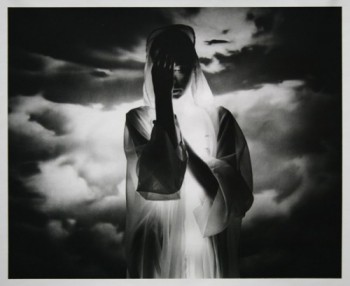 Sabbath. The seventh day alone is not enough to bring Sabbath to us. Sabbath arrives by the Presence of God, the Indwelling Spirit. In Hebrew, her name is Shekhina, a feminine blessing who enters as the presence of God into the midst of the faithful. She is often called the Sabbath Bride, coming into the homes of the faithful at evening, and filling hearts with her presence through the Sabbath day.
Shekhina is understood as the transformational spirit of God, the source of prophecy. And the Spirit of the Lord will come upon thee, is a prelude to most prophetic visions and mysticism, and for Christians, these words are prelude to the Annunciation and Pentecost. The Shekhina is also Wisdom, the feminine Presence of God.
There is much mysticism about Shekhina in Judaism: it is said that she enters Jerusalem through the Beautiful Gate. It is said that the Messiah will enter through that very gate with her. This is the gate tradition says Jesus used to enter the city on Palm Sunday. This gate has been walled up for nearly a thousand years, and was walled up for fear those sayings might be true.
Still, Shekhina comes into this world. She comes all around the world, to tables with lit candles where Sabbath bread is blessed by women bending over it. She comes to the pure of heart and the prayerful, to the humble and the weeping. She comes to the Wailing Wall in Jerusalem, and to places of weeping anywhere.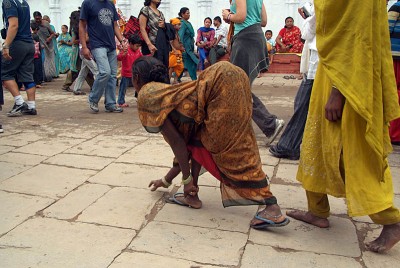
Leonard Nimoy, known to most of us as Star Trek’s Spock, was raised an Orthodox Jew, and wrote a book about her – Shekhina – in 2002. In it he wrote: A feminine word in Hebrew, Shekhina is the Talmudic term for the visible and audible manifestations of the Deity’s presence on Earth. Over time, Shekhina came to represent much more — a softer, empathetic feminine counterpart to God, who could argue for humanity’s sake, comfort the poor and sick, and stand as the mother of Israel.
Luke wrote this story: Jesus was preaching in a synagogue. A woman so bent-over she could not stand up appeared. Everyone knew she had been like this for eighteen years, and everyone knew it was a Spirit that was bending her so. Jesus freed her. And an argument began. Was he breaking Sabbath by doing this work? Sabbath is kept as a day of rest. Jesus argued he was doing Sabbath, being Sabbath. He pointed out that those who were there would not hesitate to help their animals, if they were cruelly burdened on the Sabbath. How could they not help her?
 In Luke’s tale she has no name, this woman whom Jesus unburdens and sets free, but isn’t she Shekhina? An ordinary woman, yes, for God is always among us as an ordinary being. But isn’t she also the presence of God, burdened and bent? By what is she bent? Perhaps she is bent by occupation of Israel – has it been 18 years that Pilate has been in Jerusalem when Jesus preaches this day? Perhaps she is bent by the flagging hope of the prayerful. Perhaps by the limited spiritual vision of the leaders of this time. Perhaps by secret sins.
In Jewish commentaries, sins that keep the Shekinah away are listed, as well as pieties that bring her near. The minyan (10 men praying in the synagogue) brings her near, it is written. And among the sins that drive her off: the shedding of blood, idolatry, and whoever sins in secret or walks with a proud and haughty bearing crowds out the feet of the Shekhina.
Jesus spends much of his ministry setting the Sabbath free. He stretches the spirits of the people to make room for the possibility that Sabbath is more than dull repetition of mindless prayers. He stretches the hope of the people to imagine what they have never seen. He stretches the health of the people so that they may mount up on wings like eagles, may run and not be afraid. And many are alarmed. Fear of falling has made them more careful than watchful, more careful that eager, more careful than adventuresome. He calls them hypocrites, for preaching what they will not practice, teaching what they do not believe.
In our 21st century, we live out this ritual argument Sunday by Sunday. The faithful and many pastors, too, rise up against new music, new prayers, new furniture, new images of God, as woman, as poor, as creatures, as water and trees pleading. And especially hard to present on Sunday is the recognition of too much pain. Pain, the indignity of those bent over by injustice (like those living in new forms of family) is unwelcome by those who, on Sabbath, expect to be cheered up. Inured to the sight of the bent and the broken, many churchgoers have come to consider this acceptable. Yet the most ancient of commentaries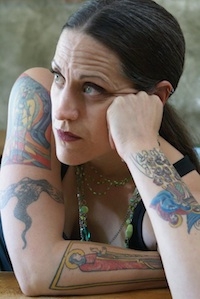 about Sabbath make it clear that we bring the Presence of God to us by our Welcome, our Hope, and our Help. And for Christians, the wounded body is the ever-aching Divine appeal to faithful hearts.
On Sunday morning, many who are not in church will hear Krista Tippett of NPR interview Rev. Nadia Bolz-Weber, a Lutheran pastor in Colorado, whom some call the Tattoed Lady. Her arms and neck are covered with tats, and she wears her hair in a faux-hawk do. She has started a church called Church for All Sinners and Saints, which is now attended by hundreds who would never enter a traditional church, who look more like her than like church-folks, who have no tolerance for sedate middle class ways. Asked about her appearance on NPR, Rev. Bolz-Weber said, The places I hang out in Denver, in some ways, I look like a soccer mom. In the Sabbath debate, she is standing with Jesus. And she is standing upright, in her full stature, as a bringer of Sabbath in this world, as Shekhina.
____________________________________________________
Illustrations
1. Shekhina. Photo by Lenoard Nimoy, 2002, in his book, Shekhina. Vanderbilt Divinity School Library, Art in the Christian Tradition.
2. Crippled Woman. Jai Gatri, India. Google images.
3. Bent Over Woman. Google images.
4. Rev. Nadia Bolz-Weber, who now has more tats and a hawk hairdo. Sojurners Magazine, her own page image, blog on 2/5/14.
Previous Post

August 11, 2013
Signs of the Times
Next Post
August 24, 2013 Beasts of Sabbath
Browse Our Archives
Select a Category Bites Uncategorized
Select a Month December 2017 November 2017 October 2017 September 2017 August 2017 July 2017 June 2017 May 2017 April 2017 March 2017 February 2017 January 2017 December 2016 November 2016 October 2016 September 2016 August 2016 July 2016 June 2016 May 2016 April 2016 March 2016 February 2016 January 2016 December 2015 November 2015 October 2015 September 2015 August 2015 July 2015 June 2015 May 2015 April 2015 March 2015 February 2015 January 2015 December 2014 November 2014 October 2014 September 2014 August 2014 July 2014 June 2014 May 2014 April 2014 March 2014 February 2014 January 2014 December 2013 November 2013 October 2013 September 2013 August 2013 July 2013 June 2013 May 2013 April 2013 March 2013 February 2013 January 2013 December 2012
Follow Us!
TAKE THE
Religious Wisdom Quiz
What food did Jesus say He is, symbolically?
Select your answer to see how you score.
Fruit of the Vine Salt of the Earth Honey from the Rock Bread of Life
Related posts from The Bite in the Apple




TRENDING AT PATHEOS Progressive Christian

Why Christians Have a Sacred Duty to Vote:...
The Bible offers strong support for the sacred duty to vote. Here...

What Being a Modern-Day Apostle Means to Me
In my last column, I discussed the ins and outs of modern-day...

Did Ancient China Once Worship the God of...
Across human history, a common thread weaves through the origins of the...

Love Your Neighbor – Including Earth-Kin: Lev. 19,...
God’s command to love your neighbor means acting in an ethical and...

Lead a Church Study of “Jesus and Lao...
Guest writer Jack Thomas (The Irreverent Reverend) reflects on leading his church...

Principles for Understanding the Apostolic Ministry Today
Whenever people discover that my formal ministry title is "apostle," as in...
view all Progressive Christian blogs
Ad-Free & Subscriber Log-In Subscription Support
- About Us
- 2026 Calendar
- Videos
- Podcasts
- Library of World Religions
- Faith In Media Tracker
- Advertise With Us
- Write for Us
- Privacy Policy
- Terms of Service
- Do Not Sell My Data
- Contact Us
- Radiant Digital
- Manage Newsletter Subscriptions
- Unsubscribe From Notifications
- Sitemap
Copyright 2008-2026, Patheos. All rights reserved.
Subscription Support Ad-Free & Subscriber Log-In
Follow Patheos