
BuddhistCatholicContemplativeEvangelicalGeneral ChristianHinduJewishLatter-day SaintMuslimNew VisionsProgressive Christian
Beliefs
- Buddhist
- Catholic
- Contemplative
- Evangelical
- General Christian
- Hindu
- Jewish
- Latter-day Saint
- More Voices
- Muslim
- New Visions
- Pagan
- Progressive Christian
Topics
- Religion News
- Food and Religion
- Sports and Religion
- Religious Art
- Religious Music and Entertainment
- Religious Events
- History and Religion
- Style and Religion
- Politics and Religion
- Women in Religion
- Recreation Outdoors and Religion
- Business Finance and Religion
- Careers Workplace and Religion
- Education and Religion
- Family Parenting and Religion
- Health Fitness and Religion
- Home and Religion
- Relationships and Religion
- Technology and Religion
- Travel and Religion
Columnists
- Buddhist Columnists
- Business Finance and Religion Columnists
- Careers Workplace and Religion Columnists
- Catholic Columnists
- Contemplative Columnists
- Education and Religion Columnists
- Evangelists Columnists
- Family Parenting and Religion Columnists
- General Christian Columnists
- Health Fitness and Religion Columnists
- Hindu Columnists
- History and Religion Columnists
- Home and Religion Columnists
- Jewish Columnists
- More Voices Columnists
- Latter Day Columnists
- Muslim Columnists
- New Visions Columnists
- Nonreligious Columnists
- Pagan Columnists
- Politics and Religion Columnists
- Progressive Columnists
- Recreation Outdoors and Religion Columnists
- Relationships and Religion Columnists
- Religion News Columnists
- Religious Art Columnists
- Religious Events Columnists
- Religious Music and Entertainment Columnists
- Sports and Religion Columnists
- Style and Religion Columnists
- Technology and Religion Columnists
- Travel and Religion Columnists
- Women in Religion Columnists
Resource Library
- 2026 Calendar
- Library of World Religions
- The 100 Most Holy Places on Earth
- Patheos Answers
- Podcasts
- Videos
- Faith Leaders Database
- Anglican Episcopalian
- Bahai
- Baptist
- Buddhism
- Christianity
- Confucianism
- Eastern Orthodoxy
- Hinduism
- Holiness and Pentecostal
- ISKCON
- Islam
- Judaism
- Lutheran
- Methodist
- The Church of Jesus Christ of Latter-day Saints
- New Age
- Paganism
- Presbytarian and Reformed
- Protestantism
- Religion Behind the Scenes
- Roman Catholic
- Scientology
- Shia Islam
- Sikhism
- Sufism
- Sunni Islam
- Taoism
- Zen
- See all religions
Research Tools
 Ad-Free & Subscriber Log-In Subscription Support
Ad-Free & Subscriber Log-In Subscription Support
Follow Patheos 

- Trending:
- Forgiveness
- |
- Marriage
- |
- Consciousness
- |
- Death Penalty
- |
- Election
- |
- Halloween
 The Bite in the Apple
- Home
- Progressive Christian
- Seeds
Seeds
Last updated on: June 8, 2015 at 6:19 pm by Nancy Rockwell
Seeds 2015-06-08T18:19:15-04:00 Nancy Rockwell
Patheos Explore the world's faith through different perspectives on religion and spirituality! Patheos has the views of the prevalent religions and spiritualities of the world.
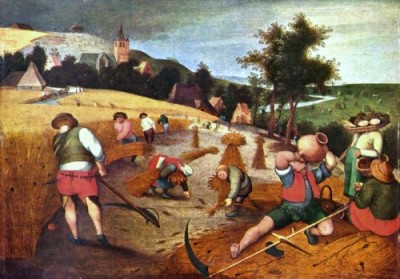 Seeds are a focal image for Jesus, an icon of the kingdom of God. It was seeds that invented sex, in the course of evolutionary life. Planting, sowing, tending, growing — all of these are Jesus’ images for the work of bringing the kingdom to fullness on earth. At times he spoke about the kingdom as good seed growing among weeds, as seed growing in all kinds of inhospitable places, as a good and fruitful tree, as an unfruitful tree given another year, a second chance — and as harvest.
And so it is important that we understand the true power of seeds, and not romanticize them as tiny things with no power that just need love.
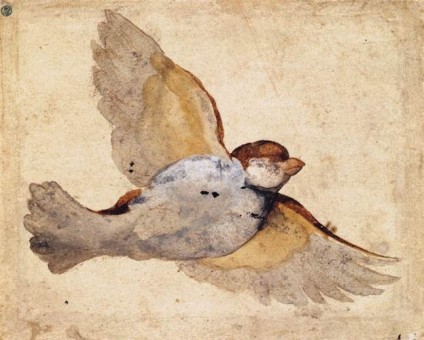 In fact, seeds invented sex. And in doing so, seeds expanded the possibility for life in so many forms, as flowering things, as animals in all their many forms, and in human beings.
Before seeds, there was no such thing as male and female on this earth. For ever so very long, for eons, reproduction on this earth occurred through cell division and through spores. Neither of these is related to gender, and neither produces off spring that differ from the parent. Cells – and ferns, and spore-reproducing plants – clone themselves. Ancient reproduction still exists, cells still divide and many plants clone themselves through spores.
The ancient earth was green, a large variety of shades of a single color. The Garden of Creation then lacked the fruits of temptation in those days (those eons), and lacked all the color that fruits, flowers, and animals in their colorful coats and feathers, provide this world.
 Then came seeds – which, in their miraculous ability to store energy and to let it out in sudden bursts that allowed for rapid growth, allowing so much that was new to come into this world. Scientists tell us that plants began this, with flowers. So we owe it all to flowers – the birds, the bees, and us.
All manner of creatures that needed to consume and expend came into being, with their varying gestation cycles, and their relation to seasons. Cycles of life, stages of life changed remarkably. And the key to all this was the energy plants had learned to develop in their seeds, which allowed the plants to blossom, which allowed them to reproduce more quickly, and to multiply in this world.
We like to talk about ourselves as seed planters, sowers, broadcasters. In truth, it was seeds that planted us in this earth, seeds that made our life form, and so many others, possible. The earth became colorful, and we emerged in the colorful garden the world had become.
 So it is true in ways we don’t usually think about, when on Ash Wednesday we are blessed with the words; Remember, O Man, that thou are dust, and to dust thou shalt return. We are made creatures, made by a new possibility that was sown into this world by seeds. And we return to become food for the making of new creatures, in their time and in their seasons.
Seeds are wonders and also mysteries: within the acorn lives the entire design of a mature oak, a plan that can only unfold one leaf at a time; and within each of us, written into our DNA, lives far more than we yet know about our own design. Yet seeds also make it possible for the unknown to emerge, as offspring that are the product of a blending of male and female produce their own inexplicable design, made from the traits of many ancestors.
DNA seems so much more sophisticated than seeds. Yet seeds are containers for DNA, and in this, seeds contain entire kingdoms. The past, present and future of each species is in its seeds. Jesus spoke often of the kingdom as sprouting from seed.
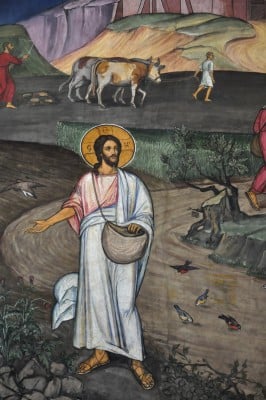
 In other parables, Jesus emphasized the qualities with which seeds had endowed the world: the sudden bursts of energy that break forth in the world as goodness, as hope shared, as courage, as peace. And Jesus spoke of the imperative role of desire in kingdom life, of fervent choices made. He spoke of the strong colors of the kingdom, which is not a bland place for nice people who are never bolder than beige, but is vibrantly colorful, in larger-than-life possibilities, boldly announcing themselves as ready to be born (as the peacock fans his feathers before mating, as the finch turns gold, as the deer grows antlers, as the human male brings roses to his sweetheart,) all of this color aimed at finding new life.
Mostly, Jesus spoke of the kingdom as a way of radically altering the world to allow a lot of life that hasn’t happened before to emerge. Seeds bring us endless easters as they rise from the earth into which they have fallen.
Aren’t these the questions the church needs to answer? What are we seeding? Is it bold enough to bring new color and new form to the earth? Is it varied enough to be truly human? Does it merge past, present, and future into a new beginning, or does it merely use the past to beat up the present and predict a dire future if too much energy, too much desire, too much color, is brought forth?
Seeds ask us all to remember the power we have within us, and to let it explode, quickly, imaginatively, awesomely, for Christ’s sake.
_____________________________________________________
Illustrations:
1. Harvest. Abel Grimmer, 1607, Antwerp, Belgium. Vanderbilt Divinity School Library, Art in the Christian Tradition.
2. Study of a Flying Sparrow, by Giovanna da Udine, 1415-1420, National Museum of Art, Stockholm, Sweden. Vanderbilt Divinity School Library, Art in the Christian Tradition.
3. Intense Apple, Sally Belshaw, used by permission of the artist.
4. Sower Went Out to Sow, Mural, Brasov, Romania. Vanderbilt Divinity School Library, Art in the Christian Tradition.
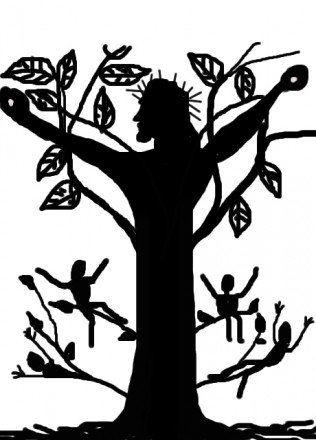
5. Jesus, the True Vine. Free Graphics, Google Image.
Previous Post

May 30, 2015
Blasphemy
Browse Our Archives
Select a Category Bites Uncategorized
Select a Month December 2017 November 2017 October 2017 September 2017 August 2017 July 2017 June 2017 May 2017 April 2017 March 2017 February 2017 January 2017 December 2016 November 2016 October 2016 September 2016 August 2016 July 2016 June 2016 May 2016 April 2016 March 2016 February 2016 January 2016 December 2015 November 2015 October 2015 September 2015 August 2015 July 2015 June 2015 May 2015 April 2015 March 2015 February 2015 January 2015 December 2014 November 2014 October 2014 September 2014 August 2014 July 2014 June 2014 May 2014 April 2014 March 2014 February 2014 January 2014 December 2013 November 2013 October 2013 September 2013 August 2013 July 2013 June 2013 May 2013 April 2013 March 2013 February 2013 January 2013 December 2012
Follow Us!
TAKE THE
Religious Wisdom Quiz
Which book of the Bible contains the most chapters of any prophetic book?
Select your answer to see how you score.
Isaiah Daniel Ezekiel Jeremiah
Related posts from The Bite in the Apple




TRENDING AT PATHEOS Progressive Christian

Why Christians Have a Sacred Duty to Vote:...
The Bible offers strong support for the sacred duty to vote. Here...

What Being a Modern-Day Apostle Means to Me
In my last column, I discussed the ins and outs of modern-day...

Did Ancient China Once Worship the God of...
Across human history, a common thread weaves through the origins of the...

Love Your Neighbor – Including Earth-Kin: Lev. 19,...
God’s command to love your neighbor means acting in an ethical and...

Lead a Church Study of “Jesus and Lao...
Guest writer Jack Thomas (The Irreverent Reverend) reflects on leading his church...

Principles for Understanding the Apostolic Ministry Today
Whenever people discover that my formal ministry title is "apostle," as in...
view all Progressive Christian blogs
Ad-Free & Subscriber Log-In Subscription Support
- About Us
- 2026 Calendar
- Videos
- Podcasts
- Library of World Religions
- Faith In Media Tracker
- Advertise With Us
- Write for Us
- Privacy Policy
- Terms of Service
- Do Not Sell My Data
- Contact Us
- Radiant Digital
- Manage Newsletter Subscriptions
- Unsubscribe From Notifications
- Sitemap
Copyright 2008-2026, Patheos. All rights reserved.
Subscription Support Ad-Free & Subscriber Log-In
Follow Patheos