
BuddhistCatholicContemplativeEvangelicalGeneral ChristianHinduJewishLatter-day SaintMuslimNew VisionsProgressive Christian
Beliefs
- Buddhist
- Catholic
- Contemplative
- Evangelical
- General Christian
- Hindu
- Jewish
- Latter-day Saint
- More Voices
- Muslim
- New Visions
- Pagan
- Progressive Christian
Topics
- Religion News
- Food and Religion
- Sports and Religion
- Religious Art
- Religious Music and Entertainment
- Religious Events
- History and Religion
- Style and Religion
- Politics and Religion
- Women in Religion
- Recreation Outdoors and Religion
- Business Finance and Religion
- Careers Workplace and Religion
- Education and Religion
- Family Parenting and Religion
- Health Fitness and Religion
- Home and Religion
- Relationships and Religion
- Technology and Religion
- Travel and Religion
Columnists
- Buddhist Columnists
- Business Finance and Religion Columnists
- Careers Workplace and Religion Columnists
- Catholic Columnists
- Contemplative Columnists
- Education and Religion Columnists
- Evangelists Columnists
- Family Parenting and Religion Columnists
- General Christian Columnists
- Health Fitness and Religion Columnists
- Hindu Columnists
- History and Religion Columnists
- Home and Religion Columnists
- Jewish Columnists
- More Voices Columnists
- Latter Day Columnists
- Muslim Columnists
- New Visions Columnists
- Nonreligious Columnists
- Pagan Columnists
- Politics and Religion Columnists
- Progressive Columnists
- Recreation Outdoors and Religion Columnists
- Relationships and Religion Columnists
- Religion News Columnists
- Religious Art Columnists
- Religious Events Columnists
- Religious Music and Entertainment Columnists
- Sports and Religion Columnists
- Style and Religion Columnists
- Technology and Religion Columnists
- Travel and Religion Columnists
- Women in Religion Columnists
Resource Library
- 2026 Calendar
- Library of World Religions
- The 100 Most Holy Places on Earth
- Patheos Answers
- Podcasts
- Videos
- Faith Leaders Database
- Anglican Episcopalian
- Bahai
- Baptist
- Buddhism
- Christianity
- Confucianism
- Eastern Orthodoxy
- Hinduism
- Holiness and Pentecostal
- ISKCON
- Islam
- Judaism
- Lutheran
- Methodist
- The Church of Jesus Christ of Latter-day Saints
- New Age
- Paganism
- Presbytarian and Reformed
- Protestantism
- Religion Behind the Scenes
- Roman Catholic
- Scientology
- Shia Islam
- Sikhism
- Sufism
- Sunni Islam
- Taoism
- Zen
- See all religions
Research Tools
 Ad-Free & Subscriber Log-In Subscription Support
Ad-Free & Subscriber Log-In Subscription Support
Follow Patheos 

- Trending:
- Forgiveness
- |
- Marriage
- |
- Consciousness
- |
- Death Penalty
- |
- Election
- |
- Halloween
 The Bite in the Apple
- Home
- Progressive Christian
- Saints in the Shadows
Saints in the Shadows
Last updated on: October 27, 2014 at 11:07 pm by Nancy Rockwell
Saints in the Shadows 2014-10-27T23:07:37-04:00 Nancy Rockwell
Patheos Explore the world's faith through different perspectives on religion and spirituality! Patheos has the views of the prevalent religions and spiritualities of the world.
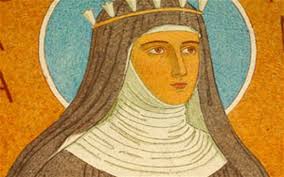 We cannot live in a world that is interpreted for us by others. An interpreted world is not a hope. Part of the terror is to take back our own listening. To use our own voice. To see our own light. – Hildegard of Bingen, quoted by Barbara Brown Taylor, in Learning to Walk in the Dark.
Saints are luminous. In our iconography, they wear haloes. And in our story-telling, they shed light upon the world around them, and the light they shed reveals God.
They have long been suspect, though, among Protestants, whose Reformers preferred to lift into the light the lives of ordinary folks, and call them Holy, and People of God. New England, especially, has been anti-heroic in its religion. Congregationalists had no Main Man, no Founding Father, no doctrinal yardstick by which to measure lives, ideas.
A pastiche, a quilt, a stew of theologies form the platform for holiness, and the ingredients change 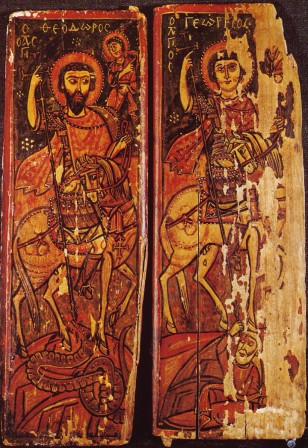 often, as the schools and the preachers themselves change. A dash of Luther, a dollop of Cranmer, a pinch of Calvin, a cupful of Renaissance humanism, an equal amount of Celtic nature devotion, an adoration of the printed word, all these remain in the blend now, and have been there since the earliest preachers stepped ashore. Yet there is no doffing of the cap to any of them in particular, rather a continued wrestling with them all. And the flavor of the age is in there, too: perhaps a Beecher, or a William Sloane Coffin, or the Dalai Lama, or the Beatles.
Yet for all our piety of ordinariness, the idolatry of heroism does creep in. The calendar of saints in liturgical churches is made from lives as ordinary and faithful and human as any reformer could want. Yet time and the imagination of our hearts transforms them into paragons of achievement. And in the non-liturgical churches we do the same.
Jesus, though, lifted up the lives of those from whom we’d rather look away: the lost, the lame, the lonely, the lovelorn, the left-behind. A blind beggar from the streets of Jericho. A Samaritan who helped a beaten man. A father with two troublesome sons and a weary heart. A woman bent-over for eighteen years. Another with twelve demons in her spirit. Peter, the fool, who loved Jesus and almost never understood him.
 Jesus never climbed the ladder of success. In fact, he warned against even a step-stool of status in the preaching of the kingdom. Don’t take special names of honor for yourself, he said to the disciples, and don’t call anyone Father, for only God gives you life, and deserves that honor.
We do, though. We use Reverend, and Pastor, and Friend with a capital. When I was a child, we had a minister who had us call him Pa! And he called everyone Dearie.
Jesus pronounced us Blessed, not when we were achieving things, and not when our lives were going splendidly, not on graduation days and not when we paid off the mortgage, but when we were lost and lonely and loveless:
Blessed are you, he said, when you are poor in spirit; when you are laid low by mourning; when you are meek, and unheard; when you long for justice with all your heart; when you are merciful; when your heart is pure enough to see the good in people; when you are peacemakers; when you are persecuted and when you are reviled. For, he said, the kingdom of heaven is yours. You shall be comforted and your hearts shall lift up. Your hunger for justice shall be filled. You shall see God with your pure heart. And enter the kingdom in your peacemaking. And be alive with me, for I, too was persecuted and reviled, as were the prophets.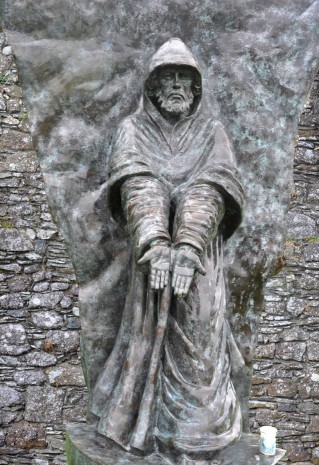
Jesus treasures in those who hurt so, their ability to survive with their own humanity intact despite the way they have been treated by the world. This part of themselves becomes a shining light, becomes the window of their souls, and a lighted path for all our souls.
And by choosing no others to hold up to us than these, who have been despised and for long, Jesus is teaching that Saints do not come into this world apart from their suffering.
Nor will we be able to find the light of God in our own lives, apart from ours. For the saints are not among us to show us the way into easy, comfortable lives. They are here to show us how to keep going in deep darkness, how to survive the bullies, how to have hope in mean times.
 It is November. The spooks and hobgoblins, the ghouls and ghosts, are abroad in the dark of the year. And so are the Saints, whose cauldrons are full of the tastes of their adventures, and the fire of their spirits, and the light that they have seen in this world, with the eyes of their hearts.
_______________________________________
Illustrations:
1. Contemporary Icon, Hildegard of Bingen. Google Images.
2. St. George Sinai, doors, St. Catherine’s-Monastery-9th-c. Vanderbilt Divinity School Library, Art in the Christian Tradition.
3. Two Saints: Peter and Martha. Caravaggio, 1517. Metropolitan Museum of Art, New York. Vanderbilt Divinity School Library, Art in the Christian Tradition.
4. St. Brendan. Freestanding Sculpture, Knock, County Mayo. Ireland. Vanderbilt Divinity School Library, Art in the Christian Tradition.
6. Disciples John and Peter walking on the beach. Burnand, Eugène. 1898. Musee-D’Orsay, Paris. Vanderbilt Divinity School Library, Art in the Christian Tradition.
Previous Post

October 18, 2014
The Test
Next Post
November 1, 2014 Wise and Foolish
Browse Our Archives
Select a Category Bites Uncategorized
Select a Month December 2017 November 2017 October 2017 September 2017 August 2017 July 2017 June 2017 May 2017 April 2017 March 2017 February 2017 January 2017 December 2016 November 2016 October 2016 September 2016 August 2016 July 2016 June 2016 May 2016 April 2016 March 2016 February 2016 January 2016 December 2015 November 2015 October 2015 September 2015 August 2015 July 2015 June 2015 May 2015 April 2015 March 2015 February 2015 January 2015 December 2014 November 2014 October 2014 September 2014 August 2014 July 2014 June 2014 May 2014 April 2014 March 2014 February 2014 January 2014 December 2013 November 2013 October 2013 September 2013 August 2013 July 2013 June 2013 May 2013 April 2013 March 2013 February 2013 January 2013 December 2012
Follow Us!
TAKE THE
Religious Wisdom Quiz
What does Jude say certain individuals have secretly slipped in to do?
Select your answer to see how you score.
Change the grace of God into a license for immorality Steal from the church Deny the resurrection Persecute believers
Related posts from The Bite in the Apple




TRENDING AT PATHEOS Progressive Christian

Why Christians Have a Sacred Duty to Vote:...
The Bible offers strong support for the sacred duty to vote. Here...

What Being a Modern-Day Apostle Means to Me
In my last column, I discussed the ins and outs of modern-day...

Did Ancient China Once Worship the God of...
Across human history, a common thread weaves through the origins of the...

Love Your Neighbor – Including Earth-Kin: Lev. 19,...
God’s command to love your neighbor means acting in an ethical and...

Lead a Church Study of “Jesus and Lao...
Guest writer Jack Thomas (The Irreverent Reverend) reflects on leading his church...

Principles for Understanding the Apostolic Ministry Today
Whenever people discover that my formal ministry title is "apostle," as in...
view all Progressive Christian blogs
Ad-Free & Subscriber Log-In Subscription Support
- About Us
- 2026 Calendar
- Videos
- Podcasts
- Library of World Religions
- Faith In Media Tracker
- Advertise With Us
- Write for Us
- Privacy Policy
- Terms of Service
- Do Not Sell My Data
- Contact Us
- Radiant Digital
- Manage Newsletter Subscriptions
- Unsubscribe From Notifications
- Sitemap
Copyright 2008-2026, Patheos. All rights reserved.
Subscription Support Ad-Free & Subscriber Log-In
Follow Patheos