
BuddhistCatholicContemplativeEvangelicalGeneral ChristianHinduJewishLatter-day SaintMuslimNew VisionsProgressive Christian
Beliefs
- Buddhist
- Catholic
- Contemplative
- Evangelical
- General Christian
- Hindu
- Jewish
- Latter-day Saint
- More Voices
- Muslim
- New Visions
- Pagan
- Progressive Christian
Topics
- Religion News
- Food and Religion
- Sports and Religion
- Religious Art
- Religious Music and Entertainment
- Religious Events
- History and Religion
- Style and Religion
- Politics and Religion
- Women in Religion
- Recreation Outdoors and Religion
- Business Finance and Religion
- Careers Workplace and Religion
- Education and Religion
- Family Parenting and Religion
- Health Fitness and Religion
- Home and Religion
- Relationships and Religion
- Technology and Religion
- Travel and Religion
Columnists
- Buddhist Columnists
- Business Finance and Religion Columnists
- Careers Workplace and Religion Columnists
- Catholic Columnists
- Contemplative Columnists
- Education and Religion Columnists
- Evangelists Columnists
- Family Parenting and Religion Columnists
- General Christian Columnists
- Health Fitness and Religion Columnists
- Hindu Columnists
- History and Religion Columnists
- Home and Religion Columnists
- Jewish Columnists
- More Voices Columnists
- Latter Day Columnists
- Muslim Columnists
- New Visions Columnists
- Nonreligious Columnists
- Pagan Columnists
- Politics and Religion Columnists
- Progressive Columnists
- Recreation Outdoors and Religion Columnists
- Relationships and Religion Columnists
- Religion News Columnists
- Religious Art Columnists
- Religious Events Columnists
- Religious Music and Entertainment Columnists
- Sports and Religion Columnists
- Style and Religion Columnists
- Technology and Religion Columnists
- Travel and Religion Columnists
- Women in Religion Columnists
Resource Library
- 2026 Calendar
- Library of World Religions
- The 100 Most Holy Places on Earth
- Patheos Answers
- Podcasts
- Videos
- Faith Leaders Database
- Anglican Episcopalian
- Bahai
- Baptist
- Buddhism
- Christianity
- Confucianism
- Eastern Orthodoxy
- Hinduism
- Holiness and Pentecostal
- ISKCON
- Islam
- Judaism
- Lutheran
- Methodist
- The Church of Jesus Christ of Latter-day Saints
- New Age
- Paganism
- Presbytarian and Reformed
- Protestantism
- Religion Behind the Scenes
- Roman Catholic
- Scientology
- Shia Islam
- Sikhism
- Sufism
- Sunni Islam
- Taoism
- Zen
- See all religions
Research Tools
 Ad-Free & Subscriber Log-In Subscription Support
Ad-Free & Subscriber Log-In Subscription Support
Follow Patheos 

- Trending:
- Forgiveness
- |
- Marriage
- |
- Consciousness
- |
- Death Penalty
- |
- Election
- |
- Halloween
 The Bite in the Apple
- Home
- Progressive Christian
- The Rich and Holy Eves
The Rich and Holy Eves
Last updated on: April 8, 2017 at 8:56 pm by Nancy Rockwell
The Rich and Holy Eves 2017-04-08T20:56:23-04:00 Nancy Rockwell
Patheos Explore the world's faith through different perspectives on religion and spirituality! Patheos has the views of the prevalent religions and spiritualities of the world.
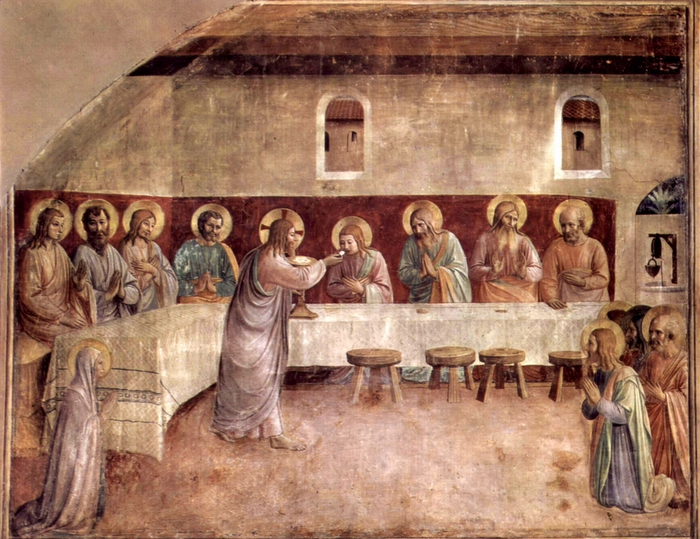 All the awe and magic that the last half of the 20th century allowed, that post-Apocalyptic, pragmatic age when everything had to be provable, that era before cyberspace and CGI technology and magical realism introduced us to deep mystery again – all the awe and magic came into the world on the rich and holy Eves.
The rich and holy Eves had come into the keeping of the years at least a thousand years before. Maybe three or four thousand, for some. No one really knows.
But the Eves are still calendared and still kept everywhere, despite so many changes in the world. The babble of dispute, the disinterest in piety, the exodus from ritual Sundays has not affected the rich and holy Eves one bit.
The Eves are what they always were – times of wonder and power, times when people go out in darkness and gather by candlelight – times when prayer is powerful, and the presence of God can be sensed, whether you believe in God or not.
There are rich and holy Eves in all the religious cultures of this world, and in Christianity there are several, and theyteach us that we cannot find God simply in light alone.
The wonder of the Christian Eves repeatd through the year: Christmas Eve, Easter Eve, All Hallow’s Eve – and Good Friday Eve. The power of God reaches us in the dark Eves, and they commemorate miracles that happen in dark times. Holy birth – Incarnation. Resurrection. The continued presence of the dead among the living. And the beloved gathering in the dark that brings us strength to survive the violent evil which brings death in the Day.
We don’t call it Good Friday Eve. We call it Maundy Thursday or Holy Thursday, as if we could separate it from the Day it brings us into. As if we could erase the pain, the violent death, and just keep the belovedness we share.
We choose another name, as if all the rich and holy Eves and Days should only bring us joy. As if death were not a necessary part of the story.
Of all the Eves, this brings out the smallest crowds. Yet it is this Eve and the following Day that will bring us to Easter. Resurrection occurs only after pain and separation, only after betrayal and death.
Easter assures us the power of holy darkness, even when shrouded in daylit public violence, is unabated.
And here we are: holding our breath to see if there will be new war; waking to terror day after day; fearing the immigrants among us and the hatred of us that lives across the seas. We would do anything to reach a merry and carefree age, an innocent age, but alas, we cannot. For us, a holy Eve is like a cloak we wrap around ourselves as we face the darkness of this world.
But we are forever hesitant, forever torn between the desire for Easter’s new life, that requires us to live through Friday’s pain, and the temptation instead to run behind the mighty power of weapons and war, so that we will not have to live through Good Friday.
Death is no stranger, taking from us on every day the famous and the familiar, our own dear ones and the unnamed dead who are found brutally killed. The local news gets far more views when there’s a murder, when there are pictures of the pain.
Still, our tentative faith is tested by the tale of Jesus, whipped and scorned, nailed to his cross, dying with few words.
Why can’t he be – Harrison Ford? Hugh Jackman? Chris Hemsworth? Lachy Hulme? The many Batmen?
We all know why – because we can’t, we ourselves cannot make it through life without being betrayed, scorned, mocked, maltreated, abused, without, in the end, being done in.
And the Holy Eve that Jesus sets before us is the sharing of his suffering so that we can also share in his resurrection.
Easter will come. In holy darkness, muddled in mystery, he will arise, not spectacularly but surprising us with joy.
The door is open, and we are invited to come in to holy darkness, to find each other there and to share the blessing of bread and wine and brokenness, till the candles are extinguished, and the good dark gathers us into the long waiting for Easter Eve.
Every good thing God does among us arises in the dark. Slaves leave Egypt. Jonah discovers faith inside the whale. The Ark bobbles on the sea of survival in forty dark days. A child is born. And Easter happens.
Hasten, then, into the gathering of Thursday’s rich and holy Eve. And let Friday come.
_____________________________________________________________________________
Image: Last Supper, by Fra Angelico. 1450. Florence, Italy. Vanderbilt Divinity School Library, Art in the Christian Tradition.
Previous Post

April 7, 2017
Syria’s Children
Next Post
April 9, 2017 Easter's Alleluias Belong to Jesus' Kingdom Vision
Browse Our Archives
Select a Category Bites Uncategorized
Select a Month December 2017 November 2017 October 2017 September 2017 August 2017 July 2017 June 2017 May 2017 April 2017 March 2017 February 2017 January 2017 December 2016 November 2016 October 2016 September 2016 August 2016 July 2016 June 2016 May 2016 April 2016 March 2016 February 2016 January 2016 December 2015 November 2015 October 2015 September 2015 August 2015 July 2015 June 2015 May 2015 April 2015 March 2015 February 2015 January 2015 December 2014 November 2014 October 2014 September 2014 August 2014 July 2014 June 2014 May 2014 April 2014 March 2014 February 2014 January 2014 December 2013 November 2013 October 2013 September 2013 August 2013 July 2013 June 2013 May 2013 April 2013 March 2013 February 2013 January 2013 December 2012
Follow Us!
TAKE THE
Religious Wisdom Quiz
Who said, "The Lord said to my Lord, ‘Sit at my right hand’"?
Select your answer to see how you score.
Moses Solomon Isaiah David
Related posts from The Bite in the Apple



TRENDING AT PATHEOS Progressive Christian

Why Christians Have a Sacred Duty to Vote:...
The Bible offers strong support for the sacred duty to vote. Here...

What Being a Modern-Day Apostle Means to Me
In my last column, I discussed the ins and outs of modern-day...

Did Ancient China Once Worship the God of...
Across human history, a common thread weaves through the origins of the...

Love Your Neighbor – Including Earth-Kin: Lev. 19,...
God’s command to love your neighbor means acting in an ethical and...

Lead a Church Study of “Jesus and Lao...
Guest writer Jack Thomas (The Irreverent Reverend) reflects on leading his church...

Principles for Understanding the Apostolic Ministry Today
Whenever people discover that my formal ministry title is "apostle," as in...
view all Progressive Christian blogs
Ad-Free & Subscriber Log-In Subscription Support
- About Us
- 2026 Calendar
- Videos
- Podcasts
- Library of World Religions
- Faith In Media Tracker
- Advertise With Us
- Write for Us
- Privacy Policy
- Terms of Service
- Do Not Sell My Data
- Contact Us
- Radiant Digital
- Manage Newsletter Subscriptions
- Unsubscribe From Notifications
- Sitemap
Copyright 2008-2026, Patheos. All rights reserved.
Subscription Support Ad-Free & Subscriber Log-In
Follow Patheos