
BuddhistCatholicContemplativeEvangelicalGeneral ChristianHinduJewishLatter-day SaintMuslimNew VisionsProgressive Christian
Beliefs
- Buddhist
- Catholic
- Contemplative
- Evangelical
- General Christian
- Hindu
- Jewish
- Latter-day Saint
- More Voices
- Muslim
- New Visions
- Pagan
- Progressive Christian
Topics
- Religion News
- Food and Religion
- Sports and Religion
- Religious Art
- Religious Music and Entertainment
- Religious Events
- History and Religion
- Style and Religion
- Politics and Religion
- Women in Religion
- Recreation Outdoors and Religion
- Business Finance and Religion
- Careers Workplace and Religion
- Education and Religion
- Family Parenting and Religion
- Health Fitness and Religion
- Home and Religion
- Relationships and Religion
- Technology and Religion
- Travel and Religion
Columnists
- Buddhist Columnists
- Business Finance and Religion Columnists
- Careers Workplace and Religion Columnists
- Catholic Columnists
- Contemplative Columnists
- Education and Religion Columnists
- Evangelists Columnists
- Family Parenting and Religion Columnists
- General Christian Columnists
- Health Fitness and Religion Columnists
- Hindu Columnists
- History and Religion Columnists
- Home and Religion Columnists
- Jewish Columnists
- More Voices Columnists
- Latter Day Columnists
- Muslim Columnists
- New Visions Columnists
- Nonreligious Columnists
- Pagan Columnists
- Politics and Religion Columnists
- Progressive Columnists
- Recreation Outdoors and Religion Columnists
- Relationships and Religion Columnists
- Religion News Columnists
- Religious Art Columnists
- Religious Events Columnists
- Religious Music and Entertainment Columnists
- Sports and Religion Columnists
- Style and Religion Columnists
- Technology and Religion Columnists
- Travel and Religion Columnists
- Women in Religion Columnists
Resource Library
- 2026 Calendar
- Library of World Religions
- The 100 Most Holy Places on Earth
- Patheos Answers
- Podcasts
- Videos
- Faith Leaders Database
- Anglican Episcopalian
- Bahai
- Baptist
- Buddhism
- Christianity
- Confucianism
- Eastern Orthodoxy
- Hinduism
- Holiness and Pentecostal
- ISKCON
- Islam
- Judaism
- Lutheran
- Methodist
- The Church of Jesus Christ of Latter-day Saints
- New Age
- Paganism
- Presbytarian and Reformed
- Protestantism
- Religion Behind the Scenes
- Roman Catholic
- Scientology
- Shia Islam
- Sikhism
- Sufism
- Sunni Islam
- Taoism
- Zen
- See all religions
Research Tools
 Ad-Free & Subscriber Log-In Subscription Support
Ad-Free & Subscriber Log-In Subscription Support
Follow Patheos 

- Trending:
- Forgiveness
- |
- Marriage
- |
- Consciousness
- |
- Death Penalty
- |
- Election
- |
- Halloween
 The Bite in the Apple
- Home
- Progressive Christian
- Rain and Bread
Rain and Bread
Last updated on: August 2, 2015 at 4:06 pm by Nancy Rockwell
Rain and Bread 2015-08-02T16:06:00-04:00 Nancy Rockwell
Patheos Explore the world's faith through different perspectives on religion and spirituality! Patheos has the views of the prevalent religions and spiritualities of the world.
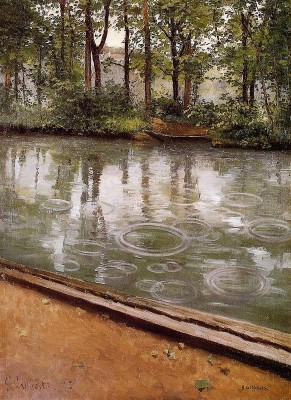 Manna from heaven, so the story tells us, rained down, so that the Israelites, in their long wandering journey to an unknown destination, had each day enough bread for that day. Our imagination is caught by this bread, which Jesus calls the bread of eternal life, and which he also says he is. But in the ongoing journey of human life – and all life – on this planet, we need to pay attention to its raining, and we need to wonder about rain.
It is preposterous to think about a raining of bread. It is magical thinking. Some few faithful souls have valiantly tried to find a way to fuse the scientific with the legendary here, but I am unconvinced. But then, I always thought the companion tale in the Exodus story, the rain of frogs upon Egypt, one of the ten plagues, was magical thinking, too.
Cynthia Barnett, in her captivating book Rain: A Natural and Cultural History, records that “hundreds of tiny frogs or fish sometimes fall in a rainstorm, as they have since the beginning of recorded history.” I am astonished. Rain, then, is not limited to just what I know of it: the gentle shower on my garden, or the gale force storms of winter sleeting snow.
Even more important, rain is not an incidental detail in our world. 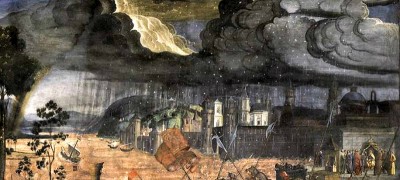 Barnett convincingly summarizes the explorations of science that have shown how rain, over billions of years, created and now sustains the liveable world we know. Rain is the source of rivers and then oceans, rain cooled the ‘red-faced and hellish infant Earth’, and continues to constitute the atmosphere in which Earth remains a green-blue planet. She cites David Grinspoon, chair of astrobiology at the Library of Congress: Water alone is not enough. Water is ‘out there,’ too, — in the atmosphere of Venus and in the polar caps of Mars—but it does not sustain a living world on either of those planets. To become our life force, water also had to build up in the skies, move along with the wind, and pour back to the surface, replenishing the waters, lands, and beings again and again.
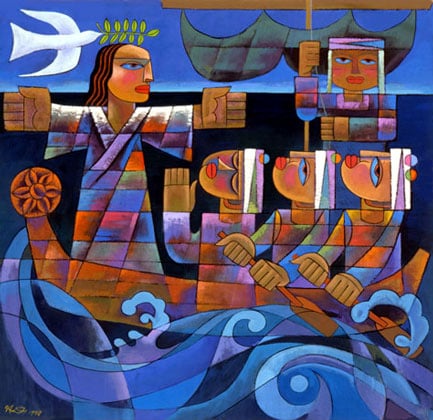 Rain, then, is the mother of life, and the legends are not wrong when they tell us that, in a disastrous time, people were saved by some form of rain, as well as saved from other forms of rain. Barnett notes that in every culture there is a form of worship for rain, prayers, dances, incantations, attempts to induce rain. In our age, chemical cloud-seeding occupies human attention, yet has failed to be an answer to the drying up of the Yangtze River in China or the terrific drought happening in California, where the Colorado River’s drying up has turned lush croplands to dust, while other parts of this nation suffer from ominous superstorms: Katrina, Sandy.
We misunderstand rain, Barnett argues, pointing out that we don’t even imagine water drops in the right shape, and we plan badly around our water needs.
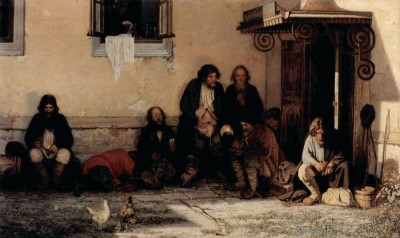 Which is what Jesus said about the bread of heaven: We misunderstand it. We misuse it. We fail to comprehend its potential or our need for it, and instead we engage in magical thinking. Climate change, Barnett says, frightens and divides us, to such an extent that many people simply refuse to talk about it. But everyone loves to talk about the rain.
Rain, she writes, is an opening to connect—in ways as profound as prayer, as practical as economics, or as casual as an exchange between strangers on a stormy day. Rain brings us together in one of the last untamed encounters with nature that we experience routinely . . . we are bound in the memory and mystery of exhilarating, confounding, life-giving rain.
And all of this is true of the manna in the wilderness, which rained down from heaven. And all of this is true of the bread of eternal life, which Jesus said he was, and which he identified with the manna of heaven. It is an opening to connect, it is as profound as prayer, as practical as economics, and as casual as an exchange between strangers in a difficult time.
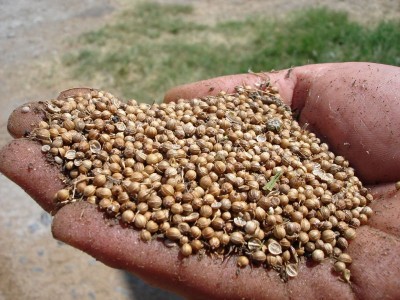 The raining aspect of holy bread should change our thinking about it – from a thing you can hold in your hand, to a thing that holds you in its living. From a thing you can make to a thing that will sustain you but you cannot hold onto it, cannot store it up, cannot paint a still life of its life-force, cannot, in fact, worship it. It is its motility, moving with the wind, moving from the atmosphere, moving again and again into us and replenishing us (us includes the rivers, lakes, and streams from which we drink) that is its power, its life-sustaining essence. I am who I am becoming, said God, who holds this very power indescribably and in motion. And in this we may come closest to understanding Jesus’ self-definition as eternal bread.
Hungry, we, like the Israelites, like folks around Jesus, just want to get some bread, and he warns us we need more than this. Whoever comes to me will never be hungry, and whoever believes in me will never be thirsty, and he assures us that nothing that has the taste of him, or the droplet of him, in it, will ever be lost.
It is great hope for the blue-green planet Earth, that its life-giving rain may never be lost. It is also a great work of understanding for us all – and we are in as much of a division over it as were those who heard Jesus’ words, his mystifying, mysterious, exhilarating, confounding, memorable words.
________________________________________________________
Illustrations
1. Yerres – The Effect of Rain, G.Caillebotte, 1875,, Indiana University Art Museum, Bloomington. Vanderbilt Divinity School Library, Art in the Christian Tradition.
2, Crossing the Red Sea Rosselli, Cosimo, 1481, Cappella Sistina Vatican Palace, Vatican City. Vanderbilt Divinity School Library, Art in the Christian Tradition.
3. Peace, Be Still. He Qi. Nanjing, China. 2001 Vanderbilt Divinity School Library, Art in the Christian Tradition.
4. Breadline. 1872. Mjassojedow, Grigorij Grigorjewitsch, Moscow. (This painting, according to the artist, illustrates this text from John’s gospel). Vanderbilt Divinity School Library, Art in the Christian Tradition.
5. Manna, from Biblical Foods and Herbs, Part 6, Yasha Health Blog.
Previous Post

July 27, 2015
Hunger
Next Post
August 9, 2015 Eternal Life
Browse Our Archives
Select a Category Bites Uncategorized
Select a Month December 2017 November 2017 October 2017 September 2017 August 2017 July 2017 June 2017 May 2017 April 2017 March 2017 February 2017 January 2017 December 2016 November 2016 October 2016 September 2016 August 2016 July 2016 June 2016 May 2016 April 2016 March 2016 February 2016 January 2016 December 2015 November 2015 October 2015 September 2015 August 2015 July 2015 June 2015 May 2015 April 2015 March 2015 February 2015 January 2015 December 2014 November 2014 October 2014 September 2014 August 2014 July 2014 June 2014 May 2014 April 2014 March 2014 February 2014 January 2014 December 2013 November 2013 October 2013 September 2013 August 2013 July 2013 June 2013 May 2013 April 2013 March 2013 February 2013 January 2013 December 2012
Follow Us!
TAKE THE
Religious Wisdom Quiz
How many years between Abraham and David?
Select your answer to see how you score.
800 years 1000 years 600 years 1200 years
Related posts from The Bite in the Apple




TRENDING AT PATHEOS Progressive Christian

Why Christians Have a Sacred Duty to Vote:...
The Bible offers strong support for the sacred duty to vote. Here...

What Being a Modern-Day Apostle Means to Me
In my last column, I discussed the ins and outs of modern-day...

Did Ancient China Once Worship the God of...
Across human history, a common thread weaves through the origins of the...

Love Your Neighbor – Including Earth-Kin: Lev. 19,...
God’s command to love your neighbor means acting in an ethical and...

Lead a Church Study of “Jesus and Lao...
Guest writer Jack Thomas (The Irreverent Reverend) reflects on leading his church...

Principles for Understanding the Apostolic Ministry Today
Whenever people discover that my formal ministry title is "apostle," as in...
view all Progressive Christian blogs
Ad-Free & Subscriber Log-In Subscription Support
- About Us
- 2026 Calendar
- Videos
- Podcasts
- Library of World Religions
- Faith In Media Tracker
- Advertise With Us
- Write for Us
- Privacy Policy
- Terms of Service
- Do Not Sell My Data
- Contact Us
- Radiant Digital
- Manage Newsletter Subscriptions
- Unsubscribe From Notifications
- Sitemap
Copyright 2008-2026, Patheos. All rights reserved.
Subscription Support Ad-Free & Subscriber Log-In
Follow Patheos