
BuddhistCatholicContemplativeEvangelicalGeneral ChristianHinduJewishLatter-day SaintMuslimNew VisionsProgressive Christian
Beliefs
- Buddhist
- Catholic
- Contemplative
- Evangelical
- General Christian
- Hindu
- Jewish
- Latter-day Saint
- More Voices
- Muslim
- New Visions
- Pagan
- Progressive Christian
Topics
- Religion News
- Food and Religion
- Sports and Religion
- Religious Art
- Religious Music and Entertainment
- Religious Events
- History and Religion
- Style and Religion
- Politics and Religion
- Women in Religion
- Recreation Outdoors and Religion
- Business Finance and Religion
- Careers Workplace and Religion
- Education and Religion
- Family Parenting and Religion
- Health Fitness and Religion
- Home and Religion
- Relationships and Religion
- Technology and Religion
- Travel and Religion
Columnists
- Buddhist Columnists
- Business Finance and Religion Columnists
- Careers Workplace and Religion Columnists
- Catholic Columnists
- Contemplative Columnists
- Education and Religion Columnists
- Evangelists Columnists
- Family Parenting and Religion Columnists
- General Christian Columnists
- Health Fitness and Religion Columnists
- Hindu Columnists
- History and Religion Columnists
- Home and Religion Columnists
- Jewish Columnists
- More Voices Columnists
- Latter Day Columnists
- Muslim Columnists
- New Visions Columnists
- Nonreligious Columnists
- Pagan Columnists
- Politics and Religion Columnists
- Progressive Columnists
- Recreation Outdoors and Religion Columnists
- Relationships and Religion Columnists
- Religion News Columnists
- Religious Art Columnists
- Religious Events Columnists
- Religious Music and Entertainment Columnists
- Sports and Religion Columnists
- Style and Religion Columnists
- Technology and Religion Columnists
- Travel and Religion Columnists
- Women in Religion Columnists
Resource Library
- 2026 Calendar
- Library of World Religions
- The 100 Most Holy Places on Earth
- Patheos Answers
- Podcasts
- Videos
- Faith Leaders Database
- Anglican Episcopalian
- Bahai
- Baptist
- Buddhism
- Christianity
- Confucianism
- Eastern Orthodoxy
- Hinduism
- Holiness and Pentecostal
- ISKCON
- Islam
- Judaism
- Lutheran
- Methodist
- The Church of Jesus Christ of Latter-day Saints
- New Age
- Paganism
- Presbytarian and Reformed
- Protestantism
- Religion Behind the Scenes
- Roman Catholic
- Scientology
- Shia Islam
- Sikhism
- Sufism
- Sunni Islam
- Taoism
- Zen
- See all religions
Research Tools
 Ad-Free & Subscriber Log-In Subscription Support
Ad-Free & Subscriber Log-In Subscription Support
Follow Patheos 

- Trending:
- Forgiveness
- |
- Marriage
- |
- Consciousness
- |
- Death Penalty
- |
- Election
- |
- Halloween
 The Bite in the Apple
- Home
- Progressive Christian
- Of Weddings and Cakes
Of Weddings and Cakes
Last updated on: July 6, 2015 at 11:37 am by Nancy Rockwell
Of Weddings and Cakes 2015-07-06T11:37:14-04:00 Nancy Rockwell
Patheos Explore the world's faith through different perspectives on religion and spirituality! Patheos has the views of the prevalent religions and spiritualities of the world.
 This question was making the rounds on Facebook on July 4:
if selling a wedding cake to a gay couple makes a ‘Christian’ a participant in gay marriage, does selling a gun to someone make a Christian a participant in a murder?
There are large holes in this comparison, but despite that I like it, because I am so sick of hearing of ‘traditional Christian marriage’, as if Christianity has a basic definition of marriage, with Jesus’ stamp of approval on its injunctions: conformity of desire, heterosexuality, and pre-marital virginity. No such words ever came from Jesus’ mouth.
We are reminded, ad nauseum, by those who say they speak for Christian marriage, that Christians have a moral duty to be able to engage in active disapproval of other people’s sexual lives – active disapproval – the tut-tutting, gaze-averting, sniffing-in-disdain kind of behavior for which Christians, sadly, have become all too well known; and the enactment and defense of laws that exact penalties on those who live differently. It has taken decades to undo laws forbidding marriage between races and between same gender people, and the hard-won freedom to obtain abortions is still embattled in churches. It has taken decades to win the freedom – first for married women, and then for unmarried women, to obtain birth control.
 Christian sniffing around other people’s bedrooms has moved from one fixation to another over the centuries, and not one of these so-called damnable sins has come out of the gospels. It was adultery in the court of Henry VIII that held public fascination and allowed Henry to behead a couple of wives. Jesus, though, actively defended a woman caught in adultery, according to John, and shamed those who were attacking her.
In other ages, divorce, birth control, abortion, sex between men and women of different races, pregnancy before marriage, single motherhood, and most recently, gay sex, have come under the magnifying glass of Christian teaching and preaching. And sniffing.
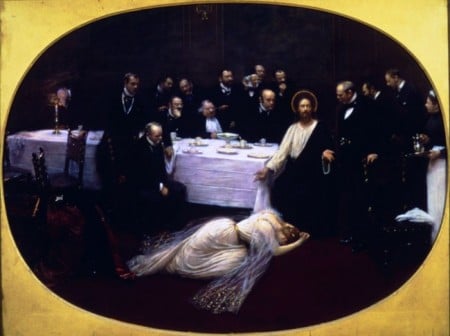 Jesus, according to the gospels, never uttered a definition of marriage, was largely uninterested in sexual sinning, and was quite interested in defending the honor and faithful hearts of prostitutes, adulteresses, single women, and other morally unacceptables (foreign born or visibly ill). He was keenly concerned with putting the lie to honor codes, held up by the religious establishment of his time.
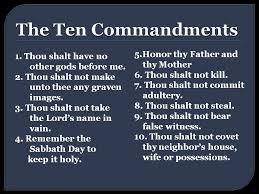 The Ten Commandments, the highest law of Judaism, mention only one sexual sin, adultery. Yes, there are other biblical legal injunctions that mention a variety of sexual practices as taboo, but scholars have pointed out that these laws are considered minor laws, easily able to be changed, and are codified in lists that also include such infractions as eating shellfish. Something most Christians do with relish in the summer.
In the Ten Commandments adultery is a biggie, yet it is not a biggie in modern Christian social concern.
It was adultery that cost John the Baptist his head. Not his adultery, but King Herod’s, which John dared to mention publicly. John called out the king for having an affair with his brother’s wife, murdering his brother, assuming the throne, and marrying his brother’s widow, all in short order. Shakespeare took this plot and developed it in Hamlet, with such complexity of detail that we all know the damage that was happening in John’s time, the political intrigue, murky money, betrayal and shame Herod sowed.
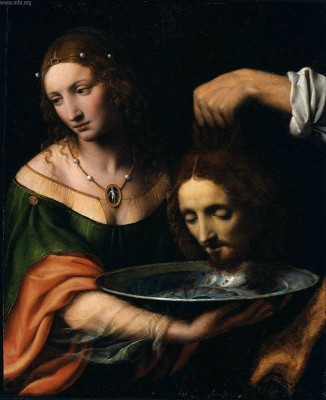 As Mark told it: Herod sent men who arrested John, bound him, and put him in prison, on account of Herodias, his brother Philip’s wife, because Herod had married her. For John had been telling Herod, “It is not lawful for you to have your brother’s wife.” . . . Herod feared John, knowing that he was a righteous and holy man, and he protected him. When he heard him, he was greatly perplexed; and yet he liked to listen to him. But an opportunity came when Herod on his birthday gave a banquet for his courtiers and officers and for the leaders of Galilee. When his daughter Herodias came in and danced, she pleased Herod and his guests; and the king said to the girl, “Ask me for whatever you wish, and I will give it.”
Prompted by her mother, Mark says, the girl asked for John’s head. And Herod granted her request. Shall we blame the wife? After all, she would bear the most humiliation for the marriage, in which she may have been a prisoner of sorts, trading her legitimacy for safety. Or was Herod grateful for the opportunity to get rid of John, whom he had already thrown in prison?
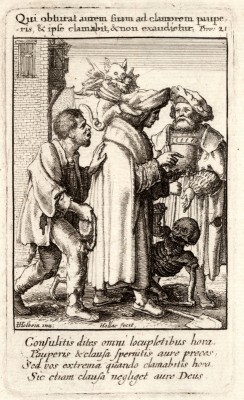 What Jesus exposed in the rich and the pious was their insufferable self-righteousness, their ignobility in comparison to those who knew themselves to be great sinners and loved God still. God’s grace would be poured out, Jesus taught, not on those who ‘earn’ it but on those whose hearts were open and who were not proud.
Far from defining holiness as a relationship between couples, Jesus redefined family itself as a non-biological relationship between an unlimited number of people who were bound to one another only by love of God. These, he said, were his mother and brothers.
And what Jesus required of the ‘family’ of God was to do good even to their enemies, to forgive seventy times seven, to meet needs rather than judge character, to let the whole motley world grow together, like a field of weedy wheat, and leave God to sort it all out.
According to the Scriptures, corruption occurs in relationships when lies and betrayal, scheming and selfishness enter. And according to Jesus, there is no corruption in true love, gay or straight, married or unmarried, or in any definition of family. All of whom deserve celebratory cakes.
________________________________________________________
Illustrations:
1. Gay Wedding Cake. Baker’s photo, Google Images.
2. Lesbian Wedding Cake. Baker’s photo. Google Images.
3. Feast at the House of Simon the Pharisee, Jean Baraud, 1865-1935, Wikepedia,US-public domain. (Jesus defends prostitute, who has come in uninvited, to be near him.)
4. Salome with the Head of John the Baptist – Luini, Bernardino, 1512, Museum of Fine Arts, Boston. Vanderbilt Divinity School Library, Art in the Christian Tradition.
5. Rich Man Ignoring Beggars. Hollar, Wenceslaus, 1607-1677, Thomas Fisher Rare Book Library, Toronto. Vanderbilt Divinity School Library, Art in the Christian Tradition.
Previous Post

June 28, 2015
Unbelief
Next Post
July 12, 2015 Miracles Require Hope
Browse Our Archives
Select a Category Bites Uncategorized
Select a Month December 2017 November 2017 October 2017 September 2017 August 2017 July 2017 June 2017 May 2017 April 2017 March 2017 February 2017 January 2017 December 2016 November 2016 October 2016 September 2016 August 2016 July 2016 June 2016 May 2016 April 2016 March 2016 February 2016 January 2016 December 2015 November 2015 October 2015 September 2015 August 2015 July 2015 June 2015 May 2015 April 2015 March 2015 February 2015 January 2015 December 2014 November 2014 October 2014 September 2014 August 2014 July 2014 June 2014 May 2014 April 2014 March 2014 February 2014 January 2014 December 2013 November 2013 October 2013 September 2013 August 2013 July 2013 June 2013 May 2013 April 2013 March 2013 February 2013 January 2013 December 2012
Follow Us!
TAKE THE
Religious Wisdom Quiz
Why did Jesus often use parables?
Select your answer to see how you score.
To show off To entertain only To reveal truths to those open to God To confuse listeners
Related posts from The Bite in the Apple




TRENDING AT PATHEOS Progressive Christian

Why Christians Have a Sacred Duty to Vote:...
The Bible offers strong support for the sacred duty to vote. Here...

What Being a Modern-Day Apostle Means to Me
In my last column, I discussed the ins and outs of modern-day...

Did Ancient China Once Worship the God of...
Across human history, a common thread weaves through the origins of the...

Love Your Neighbor – Including Earth-Kin: Lev. 19,...
God’s command to love your neighbor means acting in an ethical and...

Lead a Church Study of “Jesus and Lao...
Guest writer Jack Thomas (The Irreverent Reverend) reflects on leading his church...

Principles for Understanding the Apostolic Ministry Today
Whenever people discover that my formal ministry title is "apostle," as in...
view all Progressive Christian blogs
Ad-Free & Subscriber Log-In Subscription Support
- About Us
- 2026 Calendar
- Videos
- Podcasts
- Library of World Religions
- Faith In Media Tracker
- Advertise With Us
- Write for Us
- Privacy Policy
- Terms of Service
- Do Not Sell My Data
- Contact Us
- Radiant Digital
- Manage Newsletter Subscriptions
- Unsubscribe From Notifications
- Sitemap
Copyright 2008-2026, Patheos. All rights reserved.
Subscription Support Ad-Free & Subscriber Log-In
Follow Patheos