
BuddhistCatholicContemplativeEvangelicalGeneral ChristianHinduJewishLatter-day SaintMuslimNew VisionsProgressive Christian
Beliefs
- Buddhist
- Catholic
- Contemplative
- Evangelical
- General Christian
- Hindu
- Jewish
- Latter-day Saint
- More Voices
- Muslim
- New Visions
- Pagan
- Progressive Christian
Topics
- Religion News
- Food and Religion
- Sports and Religion
- Religious Art
- Religious Music and Entertainment
- Religious Events
- History and Religion
- Style and Religion
- Politics and Religion
- Women in Religion
- Recreation Outdoors and Religion
- Business Finance and Religion
- Careers Workplace and Religion
- Education and Religion
- Family Parenting and Religion
- Health Fitness and Religion
- Home and Religion
- Relationships and Religion
- Technology and Religion
- Travel and Religion
Columnists
- Buddhist Columnists
- Business Finance and Religion Columnists
- Careers Workplace and Religion Columnists
- Catholic Columnists
- Contemplative Columnists
- Education and Religion Columnists
- Evangelists Columnists
- Family Parenting and Religion Columnists
- General Christian Columnists
- Health Fitness and Religion Columnists
- Hindu Columnists
- History and Religion Columnists
- Home and Religion Columnists
- Jewish Columnists
- More Voices Columnists
- Latter Day Columnists
- Muslim Columnists
- New Visions Columnists
- Nonreligious Columnists
- Pagan Columnists
- Politics and Religion Columnists
- Progressive Columnists
- Recreation Outdoors and Religion Columnists
- Relationships and Religion Columnists
- Religion News Columnists
- Religious Art Columnists
- Religious Events Columnists
- Religious Music and Entertainment Columnists
- Sports and Religion Columnists
- Style and Religion Columnists
- Technology and Religion Columnists
- Travel and Religion Columnists
- Women in Religion Columnists
Resource Library
- 2026 Calendar
- Library of World Religions
- The 100 Most Holy Places on Earth
- Patheos Answers
- Podcasts
- Videos
- Faith Leaders Database
- Anglican Episcopalian
- Bahai
- Baptist
- Buddhism
- Christianity
- Confucianism
- Eastern Orthodoxy
- Hinduism
- Holiness and Pentecostal
- ISKCON
- Islam
- Judaism
- Lutheran
- Methodist
- The Church of Jesus Christ of Latter-day Saints
- New Age
- Paganism
- Presbytarian and Reformed
- Protestantism
- Religion Behind the Scenes
- Roman Catholic
- Scientology
- Shia Islam
- Sikhism
- Sufism
- Sunni Islam
- Taoism
- Zen
- See all religions
Research Tools
 Ad-Free & Subscriber Log-In Subscription Support
Ad-Free & Subscriber Log-In Subscription Support
Follow Patheos 

- Trending:
- Forgiveness
- |
- Marriage
- |
- Consciousness
- |
- Death Penalty
- |
- Election
- |
- Halloween
 The Bite in the Apple
- Home
- Progressive Christian
- More Than Enough
More Than Enough
Last updated on: July 26, 2014 at 7:26 pm by Nancy Rockwell
More Than Enough 2014-07-26T19:26:48-04:00 Nancy Rockwell
Patheos Explore the world's faith through different perspectives on religion and spirituality! Patheos has the views of the prevalent religions and spiritualities of the world.
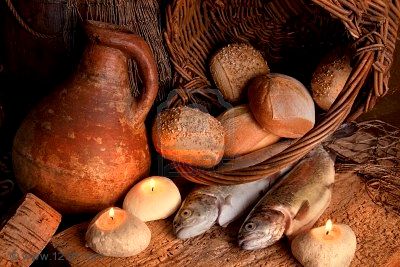 In a dream, the Prophet Ezekiel ate a Torah scroll, to show how sweet as honey was the word of God (3: 1-3)
Perhaps also in a dream, the prophet Elisha saw his teacher Elijah lifted into heaven in a chariot , and he begged him, leave me a double portion of your spirit, and Elijah threw him his mantle (his spiritual power) that day, because his work was not done. Every year, in the Seder dream of fulfilment, a place is set at every table for Elijah, a plate of food and a cup of wine, and there is a moment when the front door is opened, and a hymn is sung, inviting Elijah in.
In still another vision, the unknown writer of the last part of Isaiah came to understand that the Chosen People were not chosen to overwhelm the world in triumph, but to suffer and die for the world in love. And this third author of the book of Isaiah gave us words so often used for Jesus: a man of sorrows and acquainted with grief.
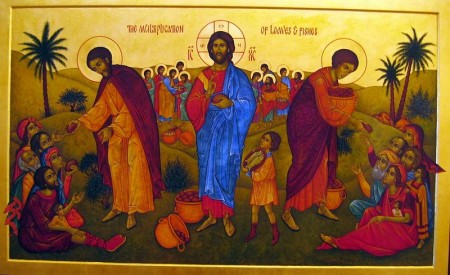 Jesus, when he preached to an unexpectedly large crowd, so large he had to climb into a boat and preach from the water in order to be heard, fed their hunger for God with stories and wisdom about the abundant presence of God. But their hunger was physical as well as spiritual, they were poor, and hunger went deep down to the bone in them and their stomachs growled. The pervasive sense of not-enough, of scarcity and grimness, was everywhere. The disciples saw it, felt it, and urged Jesus to send them away, for the hour was late, and these people needed to buy food.
Jesus, who knew that the presence of God is rife with abundance and teeming with fruitfulness, said to the disciples, They don’t need to go anywhere. Bring what we have (five loaves and two fish) and offer it to them.
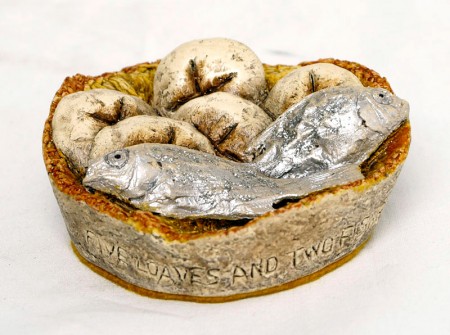 And incredulously, disbelieving, somewhat apologetic, they offered the not-enough that was theirs, and it was enough, in fact, it was more than enough. When everyone had been fed, there were twelve baskets leftover.
Small, memorable signs of great justice are part of the works of all of God’s prophets, and Jesus, who was a prophet and more than a prophet, made bread and wine, and bread and tears, bits of bread and broken fish, his small, memorable signs. Remember, say these signs, how incredulous with disbelief you were in a hungry time, and how you were filled.
Today is part of the festival of Ramadan for Muslims, a month in which they fast all day, then break their fast with dates and honey at 10 at night, then eat a full meal with neighbors and family. For a month, all the days and all work, are like this, panged with increasing hunger. And the nights, filled with the moon and stars, are filled with sweetness. Part of the ritual month is the giving of food and money for the feeding of the poor, whose hunger everyone is experiencing in Ramadan, for the love of God.
 Orthodox Christians maintain the custom of fasting before receiving the Eucharist on Sundays, thereby experiencing some twinging of the stomach that is met by holy bread, so that their communion is more than gesture and words, but is sensed by the body as well.
Years ago a German professor spoke to us one day about the hunger people knew at the end of WW2, when food was scarce in the final weeks of the war. He was 14 then, and he remembered receiving communion in the bomb damaged church in his village, how the Pastor had only part of a piece of bread, and meted it out in crumbs to them, how sweet it tasted on their hungry tongues and how unforgettable that ritual moment was in those days of utter defeat.
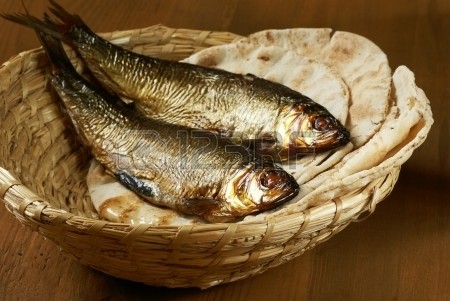 In the new Polish film Ida, a Jewish baby is saved by being given to a convent to raise, and she chooses to become a nun, but is required first to go and meet her one remaining relation, an aunt who is a lawyer and a judge and an atheist, after all that happened. The aunt, quite broken in spirit and a heavy drinker, gives the young woman what memories she can, using alcohol to bear the pain, and reaching for the joy buried in the sorrow. Though there is an overwhelming sense of Nothing and No More, the two women experience a great abundance together in the days they share, and awaken in one another a love neither of them had wanted, and also the rich loss both of them bear.
We churchgoers are as hungry for signs of the presence of God as any of the crowds who came to Ezekiel or Elijah or Jesus. Food is not scarce here, yet we ache for holiness, and are incredulous about miracles, and about the earth as God’s. We have, like Ida, lost the part of ourselves and our history that links us to the sacred.
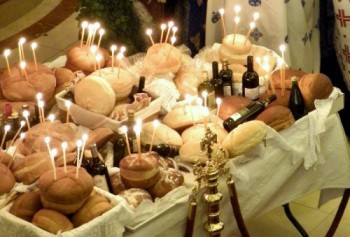 The regular practice of Sacrament, as an outward and visible sign of inward and spiritual grace, lacks the pang, punch, and palpable presence of God in our own lives, but only because we do not tell our own stories and our spiritual hungers as part of the ritual. Yet, the ritual holds a great truth, that we are fed as nourishment for hard times, filling us with the presence of God, whose abundance is without end. We are not, by this Sign, chosen for triumph, but for suffering and love. If we can taste abundance, then we will bend our hearts to feed the world’s hungers, here and everywhere.
________________________________________________________
Illustrations:
1. Loaves and Fishes, Google Images.
2. Multiplication of Loaves, Contemporary Icon, Google Images.
3. Five Loaves and Two Fish, carving, Google Images.
4. Loaves and Fish, United Reformed Church, Brighton, Great Britain, Anders Sandberg photo, late 20th c. Vanderbilt Divinity School Library, Art in the Christian Tradition.
5. Pita Loaves and Fish. Google Images.
6. Breaking of Bread Service, Annunciation of St. Mary Greek Orthodox Cathedral, Toronto, Canada, 2014 photo. Vanderbilt Divinity School Library, Art in the Christian Tradition.
Previous Post

July 19, 2014
Treasures
Next Post
August 2, 2014 Storm at Sea
Browse Our Archives
Select a Category Bites Uncategorized
Select a Month December 2017 November 2017 October 2017 September 2017 August 2017 July 2017 June 2017 May 2017 April 2017 March 2017 February 2017 January 2017 December 2016 November 2016 October 2016 September 2016 August 2016 July 2016 June 2016 May 2016 April 2016 March 2016 February 2016 January 2016 December 2015 November 2015 October 2015 September 2015 August 2015 July 2015 June 2015 May 2015 April 2015 March 2015 February 2015 January 2015 December 2014 November 2014 October 2014 September 2014 August 2014 July 2014 June 2014 May 2014 April 2014 March 2014 February 2014 January 2014 December 2013 November 2013 October 2013 September 2013 August 2013 July 2013 June 2013 May 2013 April 2013 March 2013 February 2013 January 2013 December 2012
Follow Us!
TAKE THE
Religious Wisdom Quiz
Who was the king that the angel of the Lord struck because he did not give God glory, but received the worship of the people, and who was eaten by worms?
Select your answer to see how you score.
Haddam Herod Saul Hezekiah
Related posts from The Bite in the Apple




TRENDING AT PATHEOS Progressive Christian

Why Christians Have a Sacred Duty to Vote:...
The Bible offers strong support for the sacred duty to vote. Here...

What Being a Modern-Day Apostle Means to Me
In my last column, I discussed the ins and outs of modern-day...

Did Ancient China Once Worship the God of...
Across human history, a common thread weaves through the origins of the...

Love Your Neighbor – Including Earth-Kin: Lev. 19,...
God’s command to love your neighbor means acting in an ethical and...

Lead a Church Study of “Jesus and Lao...
Guest writer Jack Thomas (The Irreverent Reverend) reflects on leading his church...

Principles for Understanding the Apostolic Ministry Today
Whenever people discover that my formal ministry title is "apostle," as in...
view all Progressive Christian blogs
Ad-Free & Subscriber Log-In Subscription Support
- About Us
- 2026 Calendar
- Videos
- Podcasts
- Library of World Religions
- Faith In Media Tracker
- Advertise With Us
- Write for Us
- Privacy Policy
- Terms of Service
- Do Not Sell My Data
- Contact Us
- Radiant Digital
- Manage Newsletter Subscriptions
- Unsubscribe From Notifications
- Sitemap
Copyright 2008-2026, Patheos. All rights reserved.
Subscription Support Ad-Free & Subscriber Log-In
Follow Patheos