
BuddhistCatholicContemplativeEvangelicalGeneral ChristianHinduJewishLatter-day SaintMuslimNew VisionsProgressive Christian
Beliefs
- Buddhist
- Catholic
- Contemplative
- Evangelical
- General Christian
- Hindu
- Jewish
- Latter-day Saint
- More Voices
- Muslim
- New Visions
- Pagan
- Progressive Christian
Topics
- Religion News
- Food and Religion
- Sports and Religion
- Religious Art
- Religious Music and Entertainment
- Religious Events
- History and Religion
- Style and Religion
- Politics and Religion
- Women in Religion
- Recreation Outdoors and Religion
- Business Finance and Religion
- Careers Workplace and Religion
- Education and Religion
- Family Parenting and Religion
- Health Fitness and Religion
- Home and Religion
- Relationships and Religion
- Technology and Religion
- Travel and Religion
Columnists
- Buddhist Columnists
- Business Finance and Religion Columnists
- Careers Workplace and Religion Columnists
- Catholic Columnists
- Contemplative Columnists
- Education and Religion Columnists
- Evangelists Columnists
- Family Parenting and Religion Columnists
- General Christian Columnists
- Health Fitness and Religion Columnists
- Hindu Columnists
- History and Religion Columnists
- Home and Religion Columnists
- Jewish Columnists
- More Voices Columnists
- Latter Day Columnists
- Muslim Columnists
- New Visions Columnists
- Nonreligious Columnists
- Pagan Columnists
- Politics and Religion Columnists
- Progressive Columnists
- Recreation Outdoors and Religion Columnists
- Relationships and Religion Columnists
- Religion News Columnists
- Religious Art Columnists
- Religious Events Columnists
- Religious Music and Entertainment Columnists
- Sports and Religion Columnists
- Style and Religion Columnists
- Technology and Religion Columnists
- Travel and Religion Columnists
- Women in Religion Columnists
Resource Library
- 2026 Calendar
- Library of World Religions
- The 100 Most Holy Places on Earth
- Patheos Answers
- Podcasts
- Videos
- Faith Leaders Database
- Anglican Episcopalian
- Bahai
- Baptist
- Buddhism
- Christianity
- Confucianism
- Eastern Orthodoxy
- Hinduism
- Holiness and Pentecostal
- ISKCON
- Islam
- Judaism
- Lutheran
- Methodist
- The Church of Jesus Christ of Latter-day Saints
- New Age
- Paganism
- Presbytarian and Reformed
- Protestantism
- Religion Behind the Scenes
- Roman Catholic
- Scientology
- Shia Islam
- Sikhism
- Sufism
- Sunni Islam
- Taoism
- Zen
- See all religions
Research Tools
 Ad-Free & Subscriber Log-In Subscription Support
Ad-Free & Subscriber Log-In Subscription Support
Follow Patheos 

- Trending:
- Forgiveness
- |
- Marriage
- |
- Consciousness
- |
- Death Penalty
- |
- Election
- |
- Halloween
 The Bite in the Apple
- Home
- Progressive Christian
- Money, Manna, Marriage, Mercy
Money, Manna, Marriage, Mercy
Last updated on: September 14, 2014 at 2:05 pm by Nancy Rockwell
Money, Manna, Marriage, Mercy 2014-09-14T14:05:57-04:00 Nancy Rockwell
Patheos Explore the world's faith through different perspectives on religion and spirituality! Patheos has the views of the prevalent religions and spiritualities of the world.
 If the government declared that the leaves of the trees were money, wrote Frederick Buechner in Whistling in the Dark, so there would be enough for everybody, money would be worthless. It has worth only if there is not enough for everybody. It has worth only because the government declares that it has worth and because people trust the government in that one particular although, in every other particular, they wouldn’t trust the government around the corner.
 Jesus’ story about money says there was an employer who cared about everybody having enough. This employer hired workers at dawn for what they agreed was quite a fair wage, and then he kept on hiring more workers all day long, even late into the afternoon. At dusk he paid them all the same. And the ones who had worked all day, instead of feeling proud that they had earned good wages, were furious because everybody got as much as they did. Everybody didn’t deserve this much money, they said. And the employer said this argument wasn’t about worth, it was about generosity, his generosity. And I’ve yet to meet anyone who was convinced by this argument.
Frederick Buechner is correct, money has value when there isn’t enough for everyone. And that’s what the all-day workers felt: devalued. From the employer’s point of view, this abundance was about his generosity. From the worker’s point of view, it should have been about what they had done.
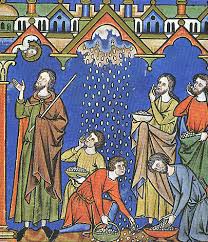 The lectionary pairs this reading with the story of manna in the wilderness, which the people following Moses were given in response to their complaining, their grumbling that they longed for the food they had had in Egypt, when they were slaves. There they worked morning till night in misery, and they had been happy to leave. But now they remembered the food had been plentiful. In the wilderness, it was hard times, and uncertain meals.
The manna came, morning and evening, in answer to their prayers and pangs. At first they were grateful. But then some wanted to have more. They got up earlier and worked faster at gathering it. And they tried to hoard it, but they couldn’t. Everyone got the same share, when it came to eating. The stored up manna rotted, and the emptiest jars were full. Not being able to control the manna made people angry. So food became a form of money. Poor people have always known that. But this was holy food, so no one got rich.
And we tend to do this with almost everything. Monetizing everything. Who’s got the bigger car, better house, nicer clothes, etc. And we tell ourselves we’ve earned what we have, and if we have more we can be proud of our hard work. And if we have less, it shows we didn’t work hard enough.
S ome men value women and children in this way, monetizing them as assets – valued in the getting, then devalued when no longer prized. We’ve spent the week watching replays of football player Ray Rice punching his woman on an elevator, and hearing about football player Adrian Peterson switch whipping his child. The details of their personal situations are not, to me, as relevant as the statistics that, in the US, 30% of women and 10% of men are subjected to physical abuse in intimate relationships. And 12 out of every 1000 children under 18 suffer some form of physical abuse. Abuse occurs in every social category and all races.
 Not long ago plenty of Christian preachers argued that marriages should be preserved no matter what was going on in them. Physical abuse was hidden, no one spoke about such things, except perhaps to sigh and say, Poor woman. Now we ask, in horror, why does anyone stay in such a relationship? But we still don’t address the question Jesus raises: why are we ungenerous toward one another? Why do we look away from one another’s suffering and lacks? Why do we want to have more than our neighbors? Why do we hate the people we love?
Our culture evaluates marriages in the same way the workers in Jesus’ parable evaluated their pay, and the manna hoarders their supplies: who has the most? who worked hardest? who gets the prize? In marriages, the most and the hardest working are seen in how many years you’ve been married; how many children you have; how much prosperity you enjoy; how the kids turn out. And the prize is the Trophy Wife or the Rich Husband. All of these are forms of hoarding, really, and they become the basis of awarding marriage value. None of these standards were held up by Jesus, who spent most of his time with people who were not married, or had left their families (Peter), or were afflicted with disease or had ill children.
Of marriage, Jesus said, in the kingdom it doesn’t exist. Of money, he said why not pay everyone the same? Of manna (bread) he said, this is my body broken for you, remember that every time you eat it. And of abuse he said, The Samaritan, who tended to the beaten man’s wounds, did what God wants.
Why are we wanting the stories to end differently? Why do we want it to be that the one who has the most things, wins? Or that love belongs to one group and not another? Or that some marriages are shameful while others are honorable? Why are we so cocksure in our pieties, saying, in Jesus’ name, that winners deserve their prizes?
The last shall be first, Jesus said. May it be so.
_________________________________________________________
Illustrations:
1. Parable of the Compassionate Employer. Poster. Google Images.
2. The Help movie poster. Google Images.
3. Manna in the Wilderness icon. Google Images.
4. Marriage egg photo. Google Images.
5. Could Silence Protect Us? Vanderbilt Divinity School Library, Art in the Christian Tradition
6. Manna Loaves. Google Images.
Previous Post

September 6, 2014
Forgiving
Next Post
September 21, 2014 Authority Questions
Browse Our Archives
Select a Category Bites Uncategorized
Select a Month December 2017 November 2017 October 2017 September 2017 August 2017 July 2017 June 2017 May 2017 April 2017 March 2017 February 2017 January 2017 December 2016 November 2016 October 2016 September 2016 August 2016 July 2016 June 2016 May 2016 April 2016 March 2016 February 2016 January 2016 December 2015 November 2015 October 2015 September 2015 August 2015 July 2015 June 2015 May 2015 April 2015 March 2015 February 2015 January 2015 December 2014 November 2014 October 2014 September 2014 August 2014 July 2014 June 2014 May 2014 April 2014 March 2014 February 2014 January 2014 December 2013 November 2013 October 2013 September 2013 August 2013 July 2013 June 2013 May 2013 April 2013 March 2013 February 2013 January 2013 December 2012
Follow Us!
TAKE THE
Religious Wisdom Quiz
What does James say shows someone their faith by?
Select your answer to see how you score.
Their words Their deeds (works) Their knowledge Their worship
Related posts from The Bite in the Apple




TRENDING AT PATHEOS Progressive Christian

Why Christians Have a Sacred Duty to Vote:...
The Bible offers strong support for the sacred duty to vote. Here...

What Being a Modern-Day Apostle Means to Me
In my last column, I discussed the ins and outs of modern-day...

Did Ancient China Once Worship the God of...
Across human history, a common thread weaves through the origins of the...

Love Your Neighbor – Including Earth-Kin: Lev. 19,...
God’s command to love your neighbor means acting in an ethical and...

Lead a Church Study of “Jesus and Lao...
Guest writer Jack Thomas (The Irreverent Reverend) reflects on leading his church...

Principles for Understanding the Apostolic Ministry Today
Whenever people discover that my formal ministry title is "apostle," as in...
view all Progressive Christian blogs
Ad-Free & Subscriber Log-In Subscription Support
- About Us
- 2026 Calendar
- Videos
- Podcasts
- Library of World Religions
- Faith In Media Tracker
- Advertise With Us
- Write for Us
- Privacy Policy
- Terms of Service
- Do Not Sell My Data
- Contact Us
- Radiant Digital
- Manage Newsletter Subscriptions
- Unsubscribe From Notifications
- Sitemap
Copyright 2008-2026, Patheos. All rights reserved.
Subscription Support Ad-Free & Subscriber Log-In
Follow Patheos