
BuddhistCatholicContemplativeEvangelicalGeneral ChristianHinduJewishLatter-day SaintMuslimNew VisionsProgressive Christian
Beliefs
- Buddhist
- Catholic
- Contemplative
- Evangelical
- General Christian
- Hindu
- Jewish
- Latter-day Saint
- More Voices
- Muslim
- New Visions
- Pagan
- Progressive Christian
Topics
- Religion News
- Food and Religion
- Sports and Religion
- Religious Art
- Religious Music and Entertainment
- Religious Events
- History and Religion
- Style and Religion
- Politics and Religion
- Women in Religion
- Recreation Outdoors and Religion
- Business Finance and Religion
- Careers Workplace and Religion
- Education and Religion
- Family Parenting and Religion
- Health Fitness and Religion
- Home and Religion
- Relationships and Religion
- Technology and Religion
- Travel and Religion
Columnists
- Buddhist Columnists
- Business Finance and Religion Columnists
- Careers Workplace and Religion Columnists
- Catholic Columnists
- Contemplative Columnists
- Education and Religion Columnists
- Evangelists Columnists
- Family Parenting and Religion Columnists
- General Christian Columnists
- Health Fitness and Religion Columnists
- Hindu Columnists
- History and Religion Columnists
- Home and Religion Columnists
- Jewish Columnists
- More Voices Columnists
- Latter Day Columnists
- Muslim Columnists
- New Visions Columnists
- Nonreligious Columnists
- Pagan Columnists
- Politics and Religion Columnists
- Progressive Columnists
- Recreation Outdoors and Religion Columnists
- Relationships and Religion Columnists
- Religion News Columnists
- Religious Art Columnists
- Religious Events Columnists
- Religious Music and Entertainment Columnists
- Sports and Religion Columnists
- Style and Religion Columnists
- Technology and Religion Columnists
- Travel and Religion Columnists
- Women in Religion Columnists
Resource Library
- 2026 Calendar
- Library of World Religions
- The 100 Most Holy Places on Earth
- Patheos Answers
- Podcasts
- Videos
- Faith Leaders Database
- Anglican Episcopalian
- Bahai
- Baptist
- Buddhism
- Christianity
- Confucianism
- Eastern Orthodoxy
- Hinduism
- Holiness and Pentecostal
- ISKCON
- Islam
- Judaism
- Lutheran
- Methodist
- The Church of Jesus Christ of Latter-day Saints
- New Age
- Paganism
- Presbytarian and Reformed
- Protestantism
- Religion Behind the Scenes
- Roman Catholic
- Scientology
- Shia Islam
- Sikhism
- Sufism
- Sunni Islam
- Taoism
- Zen
- See all religions
Research Tools
 Ad-Free & Subscriber Log-In Subscription Support
Ad-Free & Subscriber Log-In Subscription Support
Follow Patheos 

- Trending:
- Forgiveness
- |
- Marriage
- |
- Consciousness
- |
- Death Penalty
- |
- Election
- |
- Halloween
 The Bite in the Apple
- Home
- Progressive Christian
- Luther – Resetting the Christian Compass
Luther – Resetting the Christian Compass
Last updated on: October 27, 2017 at 10:07 pm by Nancy Rockwell
Luther – Resetting the Christian Compass 2017-10-27T22:07:55-04:00 Nancy Rockwell
Patheos Explore the world's faith through different perspectives on religion and spirituality! Patheos has the views of the prevalent religions and spiritualities of the world.
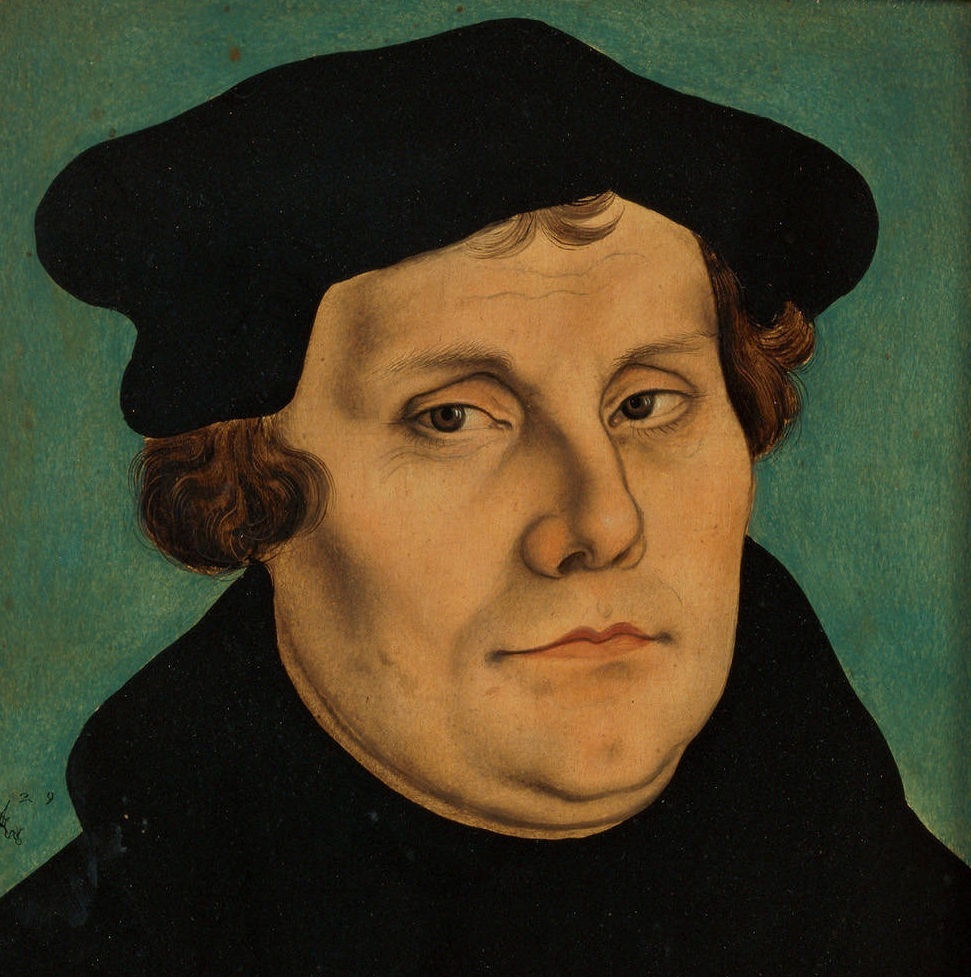
We Are All Explorers, and Doctrines Cannot Be Our Guide
Sola Fide
On November 1, All Saints Day, it will be 500 years since Martin Luther began his effective works of destruction, splitting the thousand-year-old Roman Catholic Church in two, by assigning Pinocchio’s, or labels of untruth, to many of its doctrines, on the basis of his studies of the Bible, and especially the Gospels.
Luther was a professor of New Testament, and an Augustinian monk, who lived in the hinterlands of Germany, in dirty small towns with uncleaned roads, where men lived in hovels, worked in mines, and spent their evenings in bars, drinking and brawling.
Clang, clang, clang went the hammer, according to legend, as Luther nailed his 95 arguments against the sale of indulgences to the door of the Cathedral at Wittenburg. But many scholars doubt the truth of the myth. Nonetheless, Luther did set down his complaints, and the printers, using the brand new technology of the day, the press, made copies that traveled far and wide.
Most of Luther’s arguments were against insincerity, and he argued that the Christ of the gospels called for sincerity of the soul above all else.
So, Luther argued, you need a sincere faith to approach God – not the absurd practice of bargaining, using your good deeds, or your promises to do good deeds, or your prayers counter off on rosaries, to jockey for favors from God.
Likewise, Luther found you needed to know the Scriptures in order to understand God, God’s will, Christ’s kingdom, and in fact, the sacraments. Luther found in the Bible that only two of the existing seven sacraments passed muster in the pages of the Gospels – baptism and the Lord’s supper.
All the rest were not sacraments, in Luther’s understanding, they were blessings. And Luther was quite correct in saying that Jesus commissioned every believer to engage in bestowing blessings on everyone.
Sola Scriptura, Luther taught: only Scripture can be the basis of understanding for the faithful. And we all should be able to read the Bible in our own language. Luther himself translated the Bible into German.
Sola Fide, faith alone was salvific. Not works. And everyone had to make this journey, discovering faith in the pages of Scripture, not in the doctrines of the church, to which Luther assigned many Pinnochios.
Celibacy, for instance. Luther found no mention, nor any recommendation for celibacy in the pages of the Gospels. And he encouraged priests and nuns to leave their orders, which they did, in droves. Eventually Luther married one of the nuns who had left the Cistercians, and they moved into the ruins of the Ausgustinian monastery, now emptied.
It was huge, filthy, and a comfortless place, but his wife managed it marvelously well, running a kitchen garden, a considerable amount of livestock, and feeding, daily, herself and her husband, their six children, the four children of his dead sister Margarete, whom Luther adopted, plus four more from family on both sides. Between ten and twenty students lodged with them, and they took in a family fleeing the plague. Their refectory table seated 50, and Katharina daily fed fifty.
She also brewed beer and ale, which they sold and Luther delivered around the towns, increasing his audience, who drank in his criticisms of the Vatican and especially the Pope.
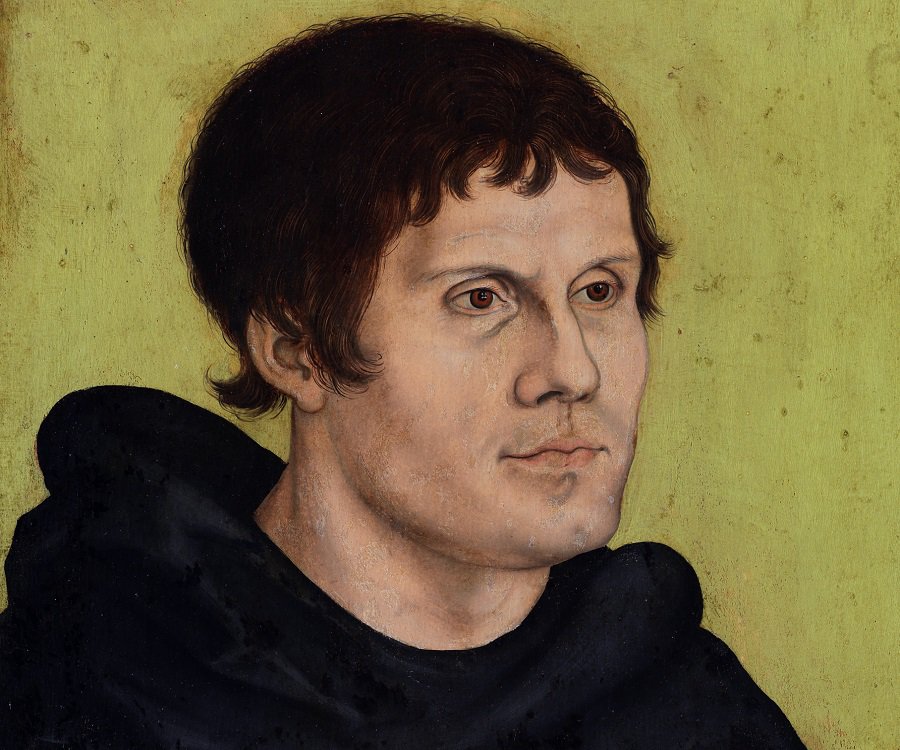
Luther was not the first reformer, nor was he the last, but he was the most successful, because of the joy he took in disputation, his charismatic high energy for the task. He wrote copiously, publishing more than one hundred books, and they were sold across Europe.
Sadly, Luther also wrote condemningly about the Jews. Anti-Semitism was rife in his time, but he became a vociferous articulator. And in print. And Hitler used his arguments. So a line can be drawn from Luther to Hitler. But another one can also be drawn from the Vatican to Hitler, and Hitler was himself raised Catholic.
We are still living our way into the truth Luther gave us. And we are still living our way out of his shameful contempt for Jews.
We have developed disputation into a number of high callings: the law, sciences, theology, and even history are remarkably Lutheran in their temperaments as disciplines.
And we are still at work, trying to discern our path to God.
Most Protestants, whose heritage is Sola Fide, nonetheless, go to church hoping to get a few rules to live by.
Protestants may not believe in celibacy, but they have been as cruel to gays, lesbians, prostitutes, pregnant single women, and those with sexual diseases, as any of their Catholic forbears. We have a long way to go to learn to live in the presence of Luther’s God of love.
Luther unmasked the idol of authority in the medieval church. But that idol, who permits so much hatred and condemnation, is still around, as much in small rural towns as in glittering cities.
Yesterday, Pope Francis (Best Pope Ever!) held a video conference with the current space ship crew, asking them to describe the world and society as they knew it from life and could see it from space.
It’s hard for Protestants, in the smallness of our churches, to let such wide-ranging imagination enter our vision of God’s love. It may be that we need a new theological voice, a visionary voice that can bring us together to hope in this world once again.
We do not need rules for limiting our sexual lives – did those rules ever keep women from being harassed sexually, and even raped, by powerful men?
But we do need, and we long for, men like Martin Luther King Jr and Desmond Tutu, who can hold up to us a vision of who we can become.
Analysis of how we have sinned and who led us astray has become a skill everyone can practice.
But hope – few know how to dream, for God’s sake, and for ours, in faith and in grace.
The fresh air Luther let into Christian religious life is still ours, and we owe Luther our thanks for it.
Now let us dream dreams and see visions – and may there be a raising up of another sweet Spirit to be our guide.
__________________________________________________________________________________
Images: Martin Luther, 1539, by Lucas Cranach the Elder
Young Martin Luther, in Famous People.
Previous Post

October 22, 2017
#MeToo
Next Post
November 19, 2017 Glory and the Desperate Stranger
Browse Our Archives
Select a Category Bites Uncategorized
Select a Month December 2017 November 2017 October 2017 September 2017 August 2017 July 2017 June 2017 May 2017 April 2017 March 2017 February 2017 January 2017 December 2016 November 2016 October 2016 September 2016 August 2016 July 2016 June 2016 May 2016 April 2016 March 2016 February 2016 January 2016 December 2015 November 2015 October 2015 September 2015 August 2015 July 2015 June 2015 May 2015 April 2015 March 2015 February 2015 January 2015 December 2014 November 2014 October 2014 September 2014 August 2014 July 2014 June 2014 May 2014 April 2014 March 2014 February 2014 January 2014 December 2013 November 2013 October 2013 September 2013 August 2013 July 2013 June 2013 May 2013 April 2013 March 2013 February 2013 January 2013 December 2012
Follow Us!
TAKE THE
Religious Wisdom Quiz
You are robbing me in tithes and offerings. Bring the whole tithe into the storehouse and test me in this. What will I do?
Select your answer to see how you score.
Open the floodgates of heaven Care for the poor Forgive you Return it tenfold
Related posts from The Bite in the Apple



TRENDING AT PATHEOS Progressive Christian

What Being a Modern-Day Apostle Means to Me
In my last column, I discussed the ins and outs of modern-day...

Did Ancient China Once Worship the God of...
Across human history, a common thread weaves through the origins of the...

Love Your Neighbor – Including Earth-Kin: Lev. 19,...
God’s command to love your neighbor means acting in an ethical and...

Lead a Church Study of “Jesus and Lao...
Guest writer Jack Thomas (The Irreverent Reverend) reflects on leading his church...

Pastoral Wisdom for Responding to Sermon Pushback
Getting sermon pushback on your social justice sermon? Learn practical, Proverbs-based strategies...

Principles for Understanding the Apostolic Ministry Today
Whenever people discover that my formal ministry title is "apostle," as in...
view all Progressive Christian blogs
Ad-Free & Subscriber Log-In Subscription Support
- About Us
- 2026 Calendar
- Videos
- Podcasts
- Library of World Religions
- Faith In Media Tracker
- Advertise With Us
- Write for Us
- Privacy Policy
- Terms of Service
- Do Not Sell My Data
- Contact Us
- Radiant Digital
- Manage Newsletter Subscriptions
- Unsubscribe From Notifications
- Sitemap
Copyright 2008-2026, Patheos. All rights reserved.
Subscription Support Ad-Free & Subscriber Log-In
Follow Patheos