
BuddhistCatholicContemplativeEvangelicalGeneral ChristianHinduJewishLatter-day SaintMuslimNew VisionsProgressive Christian
Beliefs
- Buddhist
- Catholic
- Contemplative
- Evangelical
- General Christian
- Hindu
- Jewish
- Latter-day Saint
- More Voices
- Muslim
- New Visions
- Pagan
- Progressive Christian
Topics
- Religion News
- Food and Religion
- Sports and Religion
- Religious Art
- Religious Music and Entertainment
- Religious Events
- History and Religion
- Style and Religion
- Politics and Religion
- Women in Religion
- Recreation Outdoors and Religion
- Business Finance and Religion
- Careers Workplace and Religion
- Education and Religion
- Family Parenting and Religion
- Health Fitness and Religion
- Home and Religion
- Relationships and Religion
- Technology and Religion
- Travel and Religion
Columnists
- Buddhist Columnists
- Business Finance and Religion Columnists
- Careers Workplace and Religion Columnists
- Catholic Columnists
- Contemplative Columnists
- Education and Religion Columnists
- Evangelists Columnists
- Family Parenting and Religion Columnists
- General Christian Columnists
- Health Fitness and Religion Columnists
- Hindu Columnists
- History and Religion Columnists
- Home and Religion Columnists
- Jewish Columnists
- More Voices Columnists
- Latter Day Columnists
- Muslim Columnists
- New Visions Columnists
- Nonreligious Columnists
- Pagan Columnists
- Politics and Religion Columnists
- Progressive Columnists
- Recreation Outdoors and Religion Columnists
- Relationships and Religion Columnists
- Religion News Columnists
- Religious Art Columnists
- Religious Events Columnists
- Religious Music and Entertainment Columnists
- Sports and Religion Columnists
- Style and Religion Columnists
- Technology and Religion Columnists
- Travel and Religion Columnists
- Women in Religion Columnists
Resource Library
- 2026 Calendar
- Library of World Religions
- The 100 Most Holy Places on Earth
- Patheos Answers
- Podcasts
- Videos
- Faith Leaders Database
- Anglican Episcopalian
- Bahai
- Baptist
- Buddhism
- Christianity
- Confucianism
- Eastern Orthodoxy
- Hinduism
- Holiness and Pentecostal
- ISKCON
- Islam
- Judaism
- Lutheran
- Methodist
- The Church of Jesus Christ of Latter-day Saints
- New Age
- Paganism
- Presbytarian and Reformed
- Protestantism
- Religion Behind the Scenes
- Roman Catholic
- Scientology
- Shia Islam
- Sikhism
- Sufism
- Sunni Islam
- Taoism
- Zen
- See all religions
Research Tools
 Ad-Free & Subscriber Log-In Subscription Support
Ad-Free & Subscriber Log-In Subscription Support
Follow Patheos 

- Trending:
- Forgiveness
- |
- Marriage
- |
- Consciousness
- |
- Death Penalty
- |
- Election
- |
- Halloween
 The Bite in the Apple
- Home
- Progressive Christian
- Lambs in the Midst of Wolves
Lambs in the Midst of Wolves
Last updated on: June 30, 2013 at 8:55 am by Nancy Rockwell
Lambs in the Midst of Wolves 2013-06-30T08:55:43-04:00 Nancy Rockwell
Patheos Explore the world's faith through different perspectives on religion and spirituality! Patheos has the views of the prevalent religions and spiritualities of the world.
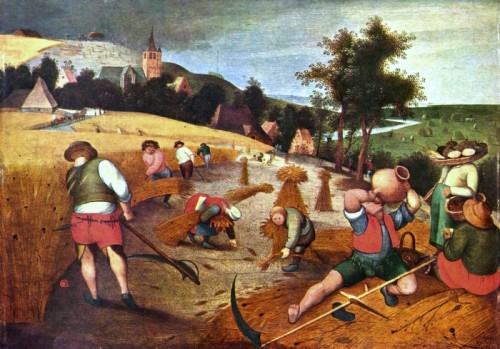 Commissioning the Seventy – the roots of the early church are in this story. The harvest is ready but the laborers are few, Jesus said, and sent them out to reap the world. Sending out this group, by twos and threes, to operate independently, was an organizational strategy of brilliance, in the learned opinion of New Testament scholar John Dominic Crossan. John the Baptist’s movement was ended with the single sword stroke that decapitated him, Crossan points out. Herod and Caesar had no trouble ending John’s power and dispersing his followers. But Jesus decentralized his movement, and became unstoppable.
By the time Jesus was crucified Crossan estimates there were hundreds of commissioned ministers, scattered all over, in places of their own discernment. The news that Jesus was dead would have reached them slowly over weeks of time. And they would have responded by saying what the seventy said on their return from that first test run, in today’s reading, The blind see, the lame walk, the spirit is with us, Christ is alive. So there was no stopping Jesus’ movement. Pentecost will confirm this strategy, this model, and this unstoppability, in a huge crowd of people who will disperse all over the Mediterranean world.
 This is not easy joy. There is pain and anxiety in Jesus’ commissioning, and he crescendos into anger in the verses the lectionary omits, 12 – 16. He sends the seventy out in wariness: they are going as lambs in the midst of wolves, he says, and he warns them that they will not be welcomed everywhere. He instructs them to expect that and to be ready to move on. In the omitted verses he speaks damningly of several towns, Chorazin, Bethsaida, Capernaum.
We know of his rejection in his home town, how they drove him from the synagogue and wanted to hurl him from the cliff, but he slipped away. We must assume similar rejections have taken place in these towns, and Jesus, stung by them, carries the hurt and disappointment still. Now he has set his face toward Jerusalem where he knows a sinister unwelcome awaits. And he says in his commissioning of the seventy, a poor welcome is possible everywhere, and will be mixed in with receptivity.
Perhaps the crucifixion story lures us into thinking the angry rejectors are not us. For we do cherish the illusion that, in the church, there is a green oasis of kindness and welcome, and outside the church the going gets tough. The crucifixion story tells us that outsiders, Caesar and his legions, Herod and his sychophants, political enemies of Jesus’ movement, were the rejectors. But Jesus, in the commissioning of the seventy, makes it clear that rejection is more intimate and more prevalent than most of us want to believe, that it happens intensely at home.
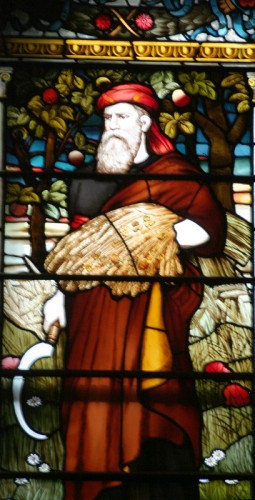 The seventy, giddy with the thrill of first endeavors, do not take his warnings to heart. They bring back their joy. With glee they recount their successes, saying demons submit to them. And Jesus tells them he has watched Satan fall from heaven (but he knows what awaits him in Jerusalem), and urges them not to rejoice in these experiences of power, but instead to hold as their joy that their names are written in heaven.
Like most of us, they go forth filled with a hope that it may all be joy. But there is a harvest of tears waiting in the world, and the seventy are sent for that, too.
Dietrich Bonhoeffer, who commissioned his students in the Underground Church to go forth into the Third Reich and proclaim the gospel while facing the possibility of death, made the distinction between cheap grace and costly grace, the grace which is truly from Christ. Cheap grace, he said, expects endless pleasantness, and is unwilling to confront powers and principalities. True grace knows the cross is part of life in Christ.
Frederick Buechner reminds us that Jesus horrified all Jericho by spending the night there not with the local rabbi or some prominent Pharisee but with Zaccheus, of all people, the crooked tax collector. And when Simon the Pharisee laid into him for letting a streetwalker dry his feet with her hair, Jesus said, “I tell you her sins, which are many, are forgiven, for she loved much.” It is no wonder that from the very start of his ministry the forces of Jewish morality and of Roman law were both out to get him . . . .
This past week the Supreme Court has overturned DOMA and restored same-gender marriage to California, and also overturned African American Voting Rights in a number of southern states, rights that have been hard-won after centuries of abuse. The deciding votes for overturning Voting Rights were those of devout Christians, some of them the same Christians who could indeed see the suffering of gays and lesbians in California, but could not see the suffering of poor black voters in Mississippi and Alabama. The articulate Ruth Bader Ginsberg, Jewish, a woman, widowed, afflicted with cancer, and in all these things rejected as unclean by some, could see clearly, and spoke with courage in her minority report.
Sadly, the loudest weepers over the rightful joy of same-gender couples are Christians, whose blindness to Jesus’ embrace of sexuality outside the rules seems to be permanent. Will these Christians work as hard to restore voting rights to African Americans as they have worked to deny marriage rights to gays?
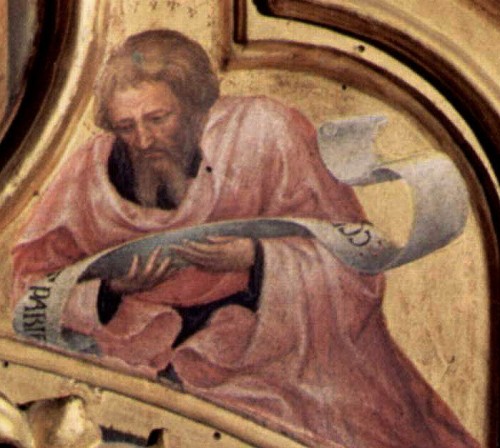 It is preaching that challenges morality that is as unwelcome now as it is welcome in this world. All of Jesus’ preaching was about this, about embracing those who are pushed aside and considered unworthy.
Isaiah’s work as prophet begins with hearing the question, Whom shall I send and who will go for me? Isaiah answers, Here am I, send me. Jesus began his ministry by reading Isaiah, and declaring that he has come to bring good news to the cast aside, the unclean, the reviled. He ends by becoming them.
Grace, he teaches, is for sinners. who are welcomed in the wisdom that love does not deride the beloved. And that their names are written in heaven.
__________________________________________________
Illustrations
1. Harvest. Abel Grimmer, 1607 Antwerp, Belgium.
Vanderbilt Divinity School Library, Art in the Christian Tradition.
2. Plow Marche. Limbourg Brothers. Tres Riche Heures. from Suzanne Guthrie’s blog, Edge of Enclosure.
3. Reaping. Stained Glass Window, Trinity Church, Boston, MA.
Vanderbilt Divinity School Library, Art in the Christian Tradition.
4. Isaiah. Gentile da Fabriano, 1423, Uffizi Gallery, Florence
Vanderbilt Divinity School Library, Art in the Christian Tradition.
Previous Post

June 23, 2013
Midsummer Wisdom
Next Post
July 1, 2013 The Test
Browse Our Archives
Select a Category Bites Uncategorized
Select a Month December 2017 November 2017 October 2017 September 2017 August 2017 July 2017 June 2017 May 2017 April 2017 March 2017 February 2017 January 2017 December 2016 November 2016 October 2016 September 2016 August 2016 July 2016 June 2016 May 2016 April 2016 March 2016 February 2016 January 2016 December 2015 November 2015 October 2015 September 2015 August 2015 July 2015 June 2015 May 2015 April 2015 March 2015 February 2015 January 2015 December 2014 November 2014 October 2014 September 2014 August 2014 July 2014 June 2014 May 2014 April 2014 March 2014 February 2014 January 2014 December 2013 November 2013 October 2013 September 2013 August 2013 July 2013 June 2013 May 2013 April 2013 March 2013 February 2013 January 2013 December 2012
Follow Us!
TAKE THE
Religious Wisdom Quiz
What was the role of the "scribe" against whom Jesus often taught?
Select your answer to see how you score.
Soldier Temple guard Tax collector Interpreter of the law
Related posts from The Bite in the Apple




TRENDING AT PATHEOS Progressive Christian

Why Christians Have a Sacred Duty to Vote:...
The Bible offers strong support for the sacred duty to vote. Here...

What Being a Modern-Day Apostle Means to Me
In my last column, I discussed the ins and outs of modern-day...

Did Ancient China Once Worship the God of...
Across human history, a common thread weaves through the origins of the...

Love Your Neighbor – Including Earth-Kin: Lev. 19,...
God’s command to love your neighbor means acting in an ethical and...

Lead a Church Study of “Jesus and Lao...
Guest writer Jack Thomas (The Irreverent Reverend) reflects on leading his church...

Principles for Understanding the Apostolic Ministry Today
Whenever people discover that my formal ministry title is "apostle," as in...
view all Progressive Christian blogs
Ad-Free & Subscriber Log-In Subscription Support
- About Us
- 2026 Calendar
- Videos
- Podcasts
- Library of World Religions
- Faith In Media Tracker
- Advertise With Us
- Write for Us
- Privacy Policy
- Terms of Service
- Do Not Sell My Data
- Contact Us
- Radiant Digital
- Manage Newsletter Subscriptions
- Unsubscribe From Notifications
- Sitemap
Copyright 2008-2026, Patheos. All rights reserved.
Subscription Support Ad-Free & Subscriber Log-In
Follow Patheos