
BuddhistCatholicContemplativeEvangelicalGeneral ChristianHinduJewishLatter-day SaintMuslimNew VisionsProgressive Christian
Beliefs
- Buddhist
- Catholic
- Contemplative
- Evangelical
- General Christian
- Hindu
- Jewish
- Latter-day Saint
- More Voices
- Muslim
- New Visions
- Pagan
- Progressive Christian
Topics
- Religion News
- Food and Religion
- Sports and Religion
- Religious Art
- Religious Music and Entertainment
- Religious Events
- History and Religion
- Style and Religion
- Politics and Religion
- Women in Religion
- Recreation Outdoors and Religion
- Business Finance and Religion
- Careers Workplace and Religion
- Education and Religion
- Family Parenting and Religion
- Health Fitness and Religion
- Home and Religion
- Relationships and Religion
- Technology and Religion
- Travel and Religion
Columnists
- Buddhist Columnists
- Business Finance and Religion Columnists
- Careers Workplace and Religion Columnists
- Catholic Columnists
- Contemplative Columnists
- Education and Religion Columnists
- Evangelists Columnists
- Family Parenting and Religion Columnists
- General Christian Columnists
- Health Fitness and Religion Columnists
- Hindu Columnists
- History and Religion Columnists
- Home and Religion Columnists
- Jewish Columnists
- More Voices Columnists
- Latter Day Columnists
- Muslim Columnists
- New Visions Columnists
- Nonreligious Columnists
- Pagan Columnists
- Politics and Religion Columnists
- Progressive Columnists
- Recreation Outdoors and Religion Columnists
- Relationships and Religion Columnists
- Religion News Columnists
- Religious Art Columnists
- Religious Events Columnists
- Religious Music and Entertainment Columnists
- Sports and Religion Columnists
- Style and Religion Columnists
- Technology and Religion Columnists
- Travel and Religion Columnists
- Women in Religion Columnists
Resource Library
- 2026 Calendar
- Library of World Religions
- The 100 Most Holy Places on Earth
- Patheos Answers
- Podcasts
- Videos
- Faith Leaders Database
- Anglican Episcopalian
- Bahai
- Baptist
- Buddhism
- Christianity
- Confucianism
- Eastern Orthodoxy
- Hinduism
- Holiness and Pentecostal
- ISKCON
- Islam
- Judaism
- Lutheran
- Methodist
- The Church of Jesus Christ of Latter-day Saints
- New Age
- Paganism
- Presbytarian and Reformed
- Protestantism
- Religion Behind the Scenes
- Roman Catholic
- Scientology
- Shia Islam
- Sikhism
- Sufism
- Sunni Islam
- Taoism
- Zen
- See all religions
Research Tools
 Ad-Free & Subscriber Log-In Subscription Support
Ad-Free & Subscriber Log-In Subscription Support
Follow Patheos 

- Trending:
- Forgiveness
- |
- Marriage
- |
- Consciousness
- |
- Death Penalty
- |
- Election
- |
- Halloween
 The Bite in the Apple
- Home
- Progressive Christian
- Hunger
Hunger
Last updated on: July 27, 2015 at 1:17 pm by Nancy Rockwell
Hunger 2015-07-27T13:17:46-04:00 Nancy Rockwell
Patheos Explore the world's faith through different perspectives on religion and spirituality! Patheos has the views of the prevalent religions and spiritualities of the world.
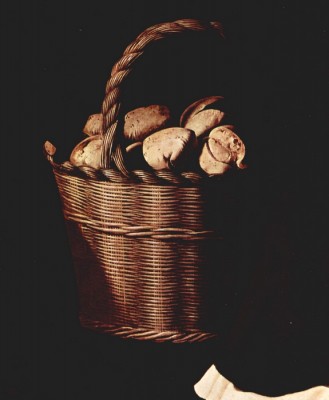 For a month of Sundays the readings are a drama of holy bread, miracle bread, bread that came down from heaven, bread, Jesus said, that gives life to the world. And the world, so the story says, did not expect this bread – and misunderstood it.
Over the centuries Christians have called this bread by a number of names: bread broken and shared – the bread of heaven – the bread of life – the bread of redemption. Eucharistic bread is now the name most Christians use, from a Greek word for thanksgiving. The decision to use this name arose to change the emphasis away from shadows that loomed large over the table, shadows that made this bread a gloomy gift, a gift you approached through beating your breast and declaring your utter unworthiness.
Various things had grown these shadows:
Our perpetual habit of changing details into pieties and over-worshipping them.
Heated theological arguments and scalding sermons, marking historical change with theological controversy.
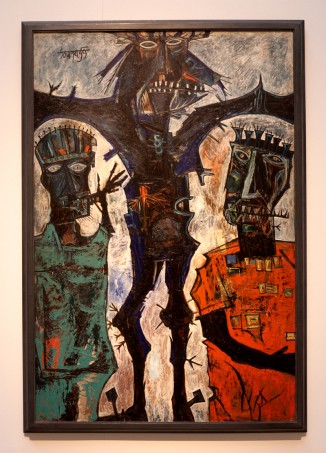 The black death (for which many thought sacred bread would be a cure). And popular medieval practices like crawling on one’s knees to the altar down the stone-floored aisles of cathedrals while reciting the rosary as proof of sincere penitence.
All this had dimmed the joy this bread brings to human journeys.
Christ’s bread is inseparable from the manna in the wilderness, which came down from heaven and fed the hungers and soothed the fears of people who had left the only home they had ever known, Egypt, with its plentiful food and plentiful cruelty, shame and humiliation for immigrants who, after ten generations, could not stop being aliens there and were not seen as Egyptian. In Egypt, they had no hope of a better life.
They left in search of a place to call home, where they could, in fact, rejoice in their lives. And the manna came when they were not there yet. It came when they were overwhelmed by hunger and there was no food in sight. It came when they gave up hope and wished they had never left. And the bread that came to them each day was an assurance that they would find a home where they belonged. A promised land.
 So the manna was bread of rejoicing, it was Eucharistic bread, bread of heaven, that brought them life and filled their hunger.
But I wonder, now that our table emphasis is on joy, how artificial this seems when we neglect to name there our deep hungers, our long search, the ways in which we still homelessly wander in this world as we eat this bread?
Sunday I sat with a man whose wife of 64 years had just died the night before. We sat in their home, which was the house he had grown up in, an old farmhouse on an older farm. It was the only home he had ever known, and over the years he had seen all the farms disappear as the economy changed, and he had sold his own milk cows. But he still had her, his beloved. And now the house is empty of any scrap of feeling like home, because she is not there.
People brought food, he said he wasn’t hungry. He did take a cookie from a 5 year old great-grandson who had something of her in his eyes, as well as a bit of a troubled look, as he watched the old man, seeing real sorrow. The boy’s parents have separated, he spends alternate weekends at his great-grandad’s house with his mom. He has his own pain, so he knows pain.
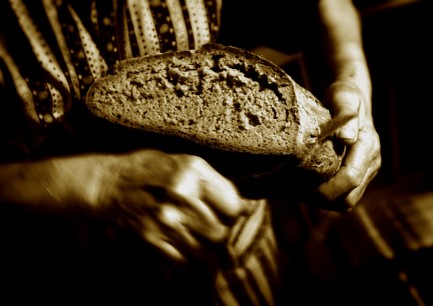 Most of us come to the table aware of some urgent hunger in our lives and trying to stifle it in order to be thankful in the moment, and we go away feeling strangely empty, because our hunger is still there. My own longings are confusing, mixing real needs with false ones, as the Israelites did in the wilderness when they tried to store the manna in jars. Home is a place for storing things, stuff, secrets, misery. And home is a place where we have more control than anywhere else in the world. Home is a place where we hoard and hide. Home is where our hearts are, the place we most wish to leave, the place we most want to return to.
When the Israelites left Egypt, as refugees, as emigrants, placing their hope in an unknown land, and leaving behind them all their front doors and back bedrooms, and all the things you cannot carry on your back, baby clothes your mother knitted long ago, a worn collar from a long-dead dog, a gold star from third grade, a letter and a picture from a WW2 soldier who died on D Day, grammar school report cards. When the Israelites left Egypt, they were like refugees now.
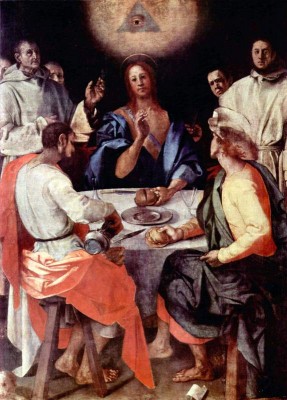 Like African people, arriving on the Italian island of Lampedusa in pitifully inadequate boats, hundreds of them drowning in the sea. Like Central American children at the doorstep of the USA. Like the Greeks, pouring into the streets to protest their lack of food and jobs in a crushing economy. Like black Americans, asking if black lives have worth in the USA. Like strugglers and stragglers everywhere: in animal shelters, homeless shelters, refugee camps, rehab hospitals. All reaching for a sign, that there is reason to hope in tomorrow, to keep going on the long journey.
Jesus urges, do not eat your fill of loaves and then want more, but eat the bread that satisfies your hunger. And we keep saying, what is it, give it to us. And he said he was that bread. He understood that real hunger must be fed with hope, not merely with grain. And to offer hope, you have to see, and know and name and be lost in the shadows in which hope has been lost, and where it can be found.
Ours is a hasty meal. We need to be up again and off, on our way. This is a canteen, not a fine restaurant. It satisfies us – for now.
__________________________________________________________
Illustrations:
1. Basket of Bread. Francisco de Zurbaran, 1639, Guadalupe, Spain, Vanderbilt Divinity School Library, Art in the Christian Tradition.
2. Crucifixion. Souza, F.N. 1959. Vanderbilt Divinity School Library, Art in the Christian Tradition.
3. Our Daily Bread. Zorn, Anders. 1886. Stockholm, Sweden. Vanderbilt Divinity School Library, Art in the Christian Tradition.
4. Bread of Life. Photo. Vanderbilt Divinity School Library, Art in the Christian Tradition.
5. Supper at Emaus. Pontormo, Jacopo da. Galleria-dell’Accademia, Florence, Italy Vanderbilt Divinity School Library, Art in the Christian Tradition.
Previous Post

July 19, 2015
Fragments
Next Post
August 2, 2015 Rain and Bread
Browse Our Archives
Select a Category Bites Uncategorized
Select a Month December 2017 November 2017 October 2017 September 2017 August 2017 July 2017 June 2017 May 2017 April 2017 March 2017 February 2017 January 2017 December 2016 November 2016 October 2016 September 2016 August 2016 July 2016 June 2016 May 2016 April 2016 March 2016 February 2016 January 2016 December 2015 November 2015 October 2015 September 2015 August 2015 July 2015 June 2015 May 2015 April 2015 March 2015 February 2015 January 2015 December 2014 November 2014 October 2014 September 2014 August 2014 July 2014 June 2014 May 2014 April 2014 March 2014 February 2014 January 2014 December 2013 November 2013 October 2013 September 2013 August 2013 July 2013 June 2013 May 2013 April 2013 March 2013 February 2013 January 2013 December 2012
Follow Us!
TAKE THE
Religious Wisdom Quiz
How many years between Abraham and David?
Select your answer to see how you score.
800 years 1000 years 600 years 1200 years
Related posts from The Bite in the Apple




TRENDING AT PATHEOS Progressive Christian

Why Christians Have a Sacred Duty to Vote:...
The Bible offers strong support for the sacred duty to vote. Here...

What Being a Modern-Day Apostle Means to Me
In my last column, I discussed the ins and outs of modern-day...

Did Ancient China Once Worship the God of...
Across human history, a common thread weaves through the origins of the...

Love Your Neighbor – Including Earth-Kin: Lev. 19,...
God’s command to love your neighbor means acting in an ethical and...

Lead a Church Study of “Jesus and Lao...
Guest writer Jack Thomas (The Irreverent Reverend) reflects on leading his church...

Principles for Understanding the Apostolic Ministry Today
Whenever people discover that my formal ministry title is "apostle," as in...
view all Progressive Christian blogs
Ad-Free & Subscriber Log-In Subscription Support
- About Us
- 2026 Calendar
- Videos
- Podcasts
- Library of World Religions
- Faith In Media Tracker
- Advertise With Us
- Write for Us
- Privacy Policy
- Terms of Service
- Do Not Sell My Data
- Contact Us
- Radiant Digital
- Manage Newsletter Subscriptions
- Unsubscribe From Notifications
- Sitemap
Copyright 2008-2026, Patheos. All rights reserved.
Subscription Support Ad-Free & Subscriber Log-In
Follow Patheos