
BuddhistCatholicContemplativeEvangelicalGeneral ChristianHinduJewishLatter-day SaintMuslimNew VisionsProgressive Christian
Beliefs
- Buddhist
- Catholic
- Contemplative
- Evangelical
- General Christian
- Hindu
- Jewish
- Latter-day Saint
- More Voices
- Muslim
- New Visions
- Pagan
- Progressive Christian
Topics
- Religion News
- Food and Religion
- Sports and Religion
- Religious Art
- Religious Music and Entertainment
- Religious Events
- History and Religion
- Style and Religion
- Politics and Religion
- Women in Religion
- Recreation Outdoors and Religion
- Business Finance and Religion
- Careers Workplace and Religion
- Education and Religion
- Family Parenting and Religion
- Health Fitness and Religion
- Home and Religion
- Relationships and Religion
- Technology and Religion
- Travel and Religion
Columnists
- Buddhist Columnists
- Business Finance and Religion Columnists
- Careers Workplace and Religion Columnists
- Catholic Columnists
- Contemplative Columnists
- Education and Religion Columnists
- Evangelists Columnists
- Family Parenting and Religion Columnists
- General Christian Columnists
- Health Fitness and Religion Columnists
- Hindu Columnists
- History and Religion Columnists
- Home and Religion Columnists
- Jewish Columnists
- More Voices Columnists
- Latter Day Columnists
- Muslim Columnists
- New Visions Columnists
- Nonreligious Columnists
- Pagan Columnists
- Politics and Religion Columnists
- Progressive Columnists
- Recreation Outdoors and Religion Columnists
- Relationships and Religion Columnists
- Religion News Columnists
- Religious Art Columnists
- Religious Events Columnists
- Religious Music and Entertainment Columnists
- Sports and Religion Columnists
- Style and Religion Columnists
- Technology and Religion Columnists
- Travel and Religion Columnists
- Women in Religion Columnists
Resource Library
- 2026 Calendar
- Library of World Religions
- The 100 Most Holy Places on Earth
- Patheos Answers
- Podcasts
- Videos
- Faith Leaders Database
- Anglican Episcopalian
- Bahai
- Baptist
- Buddhism
- Christianity
- Confucianism
- Eastern Orthodoxy
- Hinduism
- Holiness and Pentecostal
- ISKCON
- Islam
- Judaism
- Lutheran
- Methodist
- The Church of Jesus Christ of Latter-day Saints
- New Age
- Paganism
- Presbytarian and Reformed
- Protestantism
- Religion Behind the Scenes
- Roman Catholic
- Scientology
- Shia Islam
- Sikhism
- Sufism
- Sunni Islam
- Taoism
- Zen
- See all religions
Research Tools
 Ad-Free & Subscriber Log-In Subscription Support
Ad-Free & Subscriber Log-In Subscription Support
Follow Patheos 

- Trending:
- Forgiveness
- |
- Marriage
- |
- Consciousness
- |
- Death Penalty
- |
- Election
- |
- Halloween
 The Bite in the Apple
- Home
- Progressive Christian
- Forgiving
Forgiving
Last updated on: September 6, 2014 at 10:17 pm by Nancy Rockwell
Forgiving 2014-09-06T22:17:04-04:00 Nancy Rockwell
Patheos Explore the world's faith through different perspectives on religion and spirituality! Patheos has the views of the prevalent religions and spiritualities of the world.
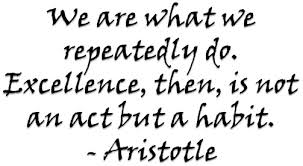 Ingrained. Deep in the bone.
Things that I have done one hundred and forty times are like that – they are ingrained. They have become habitual.
We all have some of those habits, those ingrained things we do that are so deep they are way beyond conscious decision making, and they are not prompted responses to feelings – though there is a thread of thought in them, and a persistently vague feeling that the absence of doing them is not alright.
 Brushing teeth, for instance. On good days and bad, when ill, when exhausted, when so eager for my bed my body no longer wants to stand up, still I floss and brush. It’s a habit I acquired. I dimly remember star charts in the bathroom and my mother holding out the box of gold stars as a lure.
Good habits are hard to acquire, I’ve found. Take gym routines. How I can make excuses, put off till later, then later still . . . It takes something more than knowing the good in good habits, and more than wanting those habits, to ingrain them.
And bad habits are hard to undo. Ask any smoker, any drinker, any dieter, any worrier. These are not casual desires or fleeting fears. Habits can be defensive and comforting, or preparatory (worst casers are always prepared) or impulsive (saying a reflexive No to new things).
All habits have power. And we come to be known by the habits we develop, our odd, particular, useful, self-destructive patterns.
Jesus advised Peter that forgiveness was to be ingrained in this way, habitually*. Shall we forgive seven times? he asked, and Jesus said, No, seventy times seven.* Seven times often seems over generous to me. And sometimes once seems too hard. One hundred and forty is beyond counting, really. And it goes beyond the offender. Such a large number, beyond thinking about the offense or the person, goes to the ingrained place where choice is no longer an activity but a reflex, our way of being in this world.
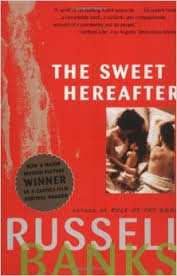 Russell Banks, in The Sweet Hereafter, has school-bus driver Dolores Driscoll confide to us how she waits every day for the same three siblings, who are always late. Time and again she had chided them, but when nothing changed in them she changed herself, turning those extra minutes into a meditative time for sipping coffee and thinking about her life. And so she forgave them, and set herself free.
For many Catholics, saying the rosary is this kind of self-change, this kind of letting-go of past offenses, this kind of deep-in-the-bone recitation that needs no thought at all, but aids in the necessary draining of the spirit, letting resentment and offenses slowly empty, letting body and soul recover from bruising, regain elasticity, reclaim connection to hope and confidence.
Many years ago, as a young chaplain in Boston City Hospital, nurses asked me for help with a woman who had been badly burned in a fire, had been alcoholic for years, and was dying. The drugs she had been given for pain, together with the alcohol withdrawal, had produced delusions, and she was yelling, screaming, and inconsolable, often talking to people no one else could see. I went into the room and could barely get the woman’s attention, let alone converse. So, because I could think of nothing else to do, I began reciting the Lord’s Prayer, and she turned her face toward me, and after a moment, joined me in it. The Lord’s prayer lived in a deeper place in her than her demons, than her pain, than her fear. I said it again,  and so did she. We kept repeating and repeating that prayer. When I left the room she was still reciting it, and after a while, fell asleep. When she awoke, the process needed to be repeated, but it did calm her, and keep her, for the last two days of her life, from being consumed be her demons. Forgive us our sins . . .
In the Catholic tradition habit has occupied a premiere position in the religious life. Prayers from the rosary have been assigned as acts of penance for centuries by Catholic priests, and the cycle of habitual prayers marks the hours of every day in the Catholic breviary. Giving up personality and choice in favor of habit has been encouraged. And I both agree and disagree. What love is there without imagination? But forgiveness, at best, is not a response, it is an imbedded part of who we are.
And so much of life falls outside the protection habits offer. So much of life is horrifying, unexpected, and beyond mild words of forgiveness. How could survivors of the German death camps be protected by forgiveness, or even asked to forgive? And yet, for some of them the emphasizing of memories of kindnesses given and received, among prisoners, and from German people whose compassion withstood the rule of evil, became a help in surviving.
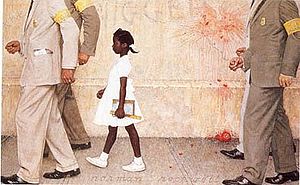 In the 1960s, six year old Ruby Bridges integrated an all-white school by herself, walking there every day with two federal escorts in front of her and two more behind her, while around her an angry crowd of white adults heaped abuses on her little head. Child psychiatrist Robert Coles noticed her lips were moving as she walked, and asked her, in her home, what she was saying. She said she was praying, Father, forgive them for they know not what they do. Her parents hoped, by giving her this prayer, she could shield her mind and heart, and walk unscathed through her daily hell.
Nelson Mandela, after 27 years in a South African prison, said, Forgiveness liberates the soul. It removes fear. That’s why it is such a powerful weapon. When asked about his jailers, he responded that forgiving them was a choice to set himself free. He could leave those guards there in the prison instead of remembering them always by nursing resentment. And soon after his release, before his election, when he came to Boston, he danced a little freedom dance for all of us to see.
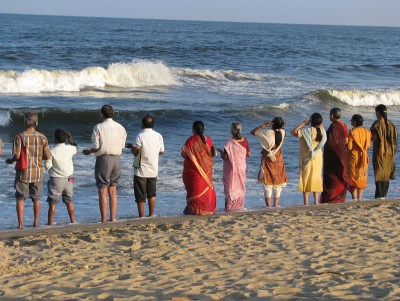 Forgiving, then, is separate from loving the other, separate from liking, separate from restoring trust in relationship, and certainly separate from forgetting. If we make forgiveness a habit, it becomes rooted far deeper inside us than liking, trusting or forgetting can be. And it becomes about loving God and ourselves, not about loving the offender.
Forgiveness, the best power we have, is about survival and freedom. Amen to that power.
__________________________________________________________
Illustrations:
1. Aristotle Poster. Google Images.
2. Toothbrushes. Image from Commons, Wikipedia.org.
3. The Sweet Hereafter book cover. Google Images.
4. Rosary. Google Images.
5. The Problem We All Live With, 1964, by Norman Rockwell. Image from Wikipedia page for the painting.
6. Family Giving Thanks to the Ocean. 2008. Tiruvanimayur, Chennai. MacKay Savage. Vanderbilt Divinity School Library, Art in the Christian Tradition.
Previous Post

August 31, 2014
The Power of Words
Next Post
September 14, 2014 Money, Manna, Marriage, Mercy
Browse Our Archives
Select a Category Bites Uncategorized
Select a Month December 2017 November 2017 October 2017 September 2017 August 2017 July 2017 June 2017 May 2017 April 2017 March 2017 February 2017 January 2017 December 2016 November 2016 October 2016 September 2016 August 2016 July 2016 June 2016 May 2016 April 2016 March 2016 February 2016 January 2016 December 2015 November 2015 October 2015 September 2015 August 2015 July 2015 June 2015 May 2015 April 2015 March 2015 February 2015 January 2015 December 2014 November 2014 October 2014 September 2014 August 2014 July 2014 June 2014 May 2014 April 2014 March 2014 February 2014 January 2014 December 2013 November 2013 October 2013 September 2013 August 2013 July 2013 June 2013 May 2013 April 2013 March 2013 February 2013 January 2013 December 2012
Follow Us!
TAKE THE
Religious Wisdom Quiz
Who dreamed of a ladder reaching to heaven?
Select your answer to see how you score.
Isaac Joseph Jacob Simeon
Related posts from The Bite in the Apple




TRENDING AT PATHEOS Progressive Christian

Why Christians Have a Sacred Duty to Vote:...
The Bible offers strong support for the sacred duty to vote. Here...

What Being a Modern-Day Apostle Means to Me
In my last column, I discussed the ins and outs of modern-day...

Did Ancient China Once Worship the God of...
Across human history, a common thread weaves through the origins of the...

Love Your Neighbor – Including Earth-Kin: Lev. 19,...
God’s command to love your neighbor means acting in an ethical and...

Lead a Church Study of “Jesus and Lao...
Guest writer Jack Thomas (The Irreverent Reverend) reflects on leading his church...

Principles for Understanding the Apostolic Ministry Today
Whenever people discover that my formal ministry title is "apostle," as in...
view all Progressive Christian blogs
Ad-Free & Subscriber Log-In Subscription Support
- About Us
- 2026 Calendar
- Videos
- Podcasts
- Library of World Religions
- Faith In Media Tracker
- Advertise With Us
- Write for Us
- Privacy Policy
- Terms of Service
- Do Not Sell My Data
- Contact Us
- Radiant Digital
- Manage Newsletter Subscriptions
- Unsubscribe From Notifications
- Sitemap
Copyright 2008-2026, Patheos. All rights reserved.
Subscription Support Ad-Free & Subscriber Log-In
Follow Patheos