
BuddhistCatholicContemplativeEvangelicalGeneral ChristianHinduJewishLatter-day SaintMuslimNew VisionsProgressive Christian
Beliefs
- Buddhist
- Catholic
- Contemplative
- Evangelical
- General Christian
- Hindu
- Jewish
- Latter-day Saint
- More Voices
- Muslim
- New Visions
- Pagan
- Progressive Christian
Topics
- Religion News
- Food and Religion
- Sports and Religion
- Religious Art
- Religious Music and Entertainment
- Religious Events
- History and Religion
- Style and Religion
- Politics and Religion
- Women in Religion
- Recreation Outdoors and Religion
- Business Finance and Religion
- Careers Workplace and Religion
- Education and Religion
- Family Parenting and Religion
- Health Fitness and Religion
- Home and Religion
- Relationships and Religion
- Technology and Religion
- Travel and Religion
Columnists
- Buddhist Columnists
- Business Finance and Religion Columnists
- Careers Workplace and Religion Columnists
- Catholic Columnists
- Contemplative Columnists
- Education and Religion Columnists
- Evangelists Columnists
- Family Parenting and Religion Columnists
- General Christian Columnists
- Health Fitness and Religion Columnists
- Hindu Columnists
- History and Religion Columnists
- Home and Religion Columnists
- Jewish Columnists
- More Voices Columnists
- Latter Day Columnists
- Muslim Columnists
- New Visions Columnists
- Nonreligious Columnists
- Pagan Columnists
- Politics and Religion Columnists
- Progressive Columnists
- Recreation Outdoors and Religion Columnists
- Relationships and Religion Columnists
- Religion News Columnists
- Religious Art Columnists
- Religious Events Columnists
- Religious Music and Entertainment Columnists
- Sports and Religion Columnists
- Style and Religion Columnists
- Technology and Religion Columnists
- Travel and Religion Columnists
- Women in Religion Columnists
Resource Library
- 2026 Calendar
- Library of World Religions
- The 100 Most Holy Places on Earth
- Patheos Answers
- Podcasts
- Videos
- Faith Leaders Database
- Anglican Episcopalian
- Bahai
- Baptist
- Buddhism
- Christianity
- Confucianism
- Eastern Orthodoxy
- Hinduism
- Holiness and Pentecostal
- ISKCON
- Islam
- Judaism
- Lutheran
- Methodist
- The Church of Jesus Christ of Latter-day Saints
- New Age
- Paganism
- Presbytarian and Reformed
- Protestantism
- Religion Behind the Scenes
- Roman Catholic
- Scientology
- Shia Islam
- Sikhism
- Sufism
- Sunni Islam
- Taoism
- Zen
- See all religions
Research Tools
 Ad-Free & Subscriber Log-In Subscription Support
Ad-Free & Subscriber Log-In Subscription Support
Follow Patheos 

- Trending:
- Forgiveness
- |
- Marriage
- |
- Consciousness
- |
- Death Penalty
- |
- Election
- |
- Halloween
 The Bite in the Apple
- Home
- Progressive Christian
- Faith – an Unslaked Thirst
Faith – an Unslaked Thirst
Last updated on: September 28, 2013 at 4:06 pm by Nancy Rockwell
Faith – an Unslaked Thirst 2013-09-28T16:06:38-04:00 Nancy Rockwell
Patheos Explore the world's faith through different perspectives on religion and spirituality! Patheos has the views of the prevalent religions and spiritualities of the world.
 Hope is the thing with feathers
That perches in the soul –
And sings the tune without the words –
And never stops – at all.
–Emily Dickinson
Increase our faith, they implored him, these followers who had given up everything in their world for Jesus and found themselves stumbling in doubts and lost in muddlement.
If you had faith, even as tiny as a mustard seed, Jesus replied, you could say to a mulberry tree, ‘Be uprooted and planted in the sea,’ and it would obey you.
Astonishing words ! At once, he offers them tantalizing possibility and strips them of whatever faith they thought they had. They can’t command trees, so clearly they do not have even a mustard seed size grain of faith. Yet Jesus never did such things: did not fling the barren fig tree into the sea, did not plant anything in the sea except his footsteps which disappeared on the waves. He did not remove mountains from their accustomed places in this world, even though that image of faith was common in Jewish tradition. Jesus did not sweep the mountains of Herod and Pilate’s obstinacy away.
When Satan urged Jesus to fly from the Temple tower, to turn stones into bread, to rule the cities of the world, Jesus named these temptations, and, in faith, turned away to the harder work of enduring a difficult time.
 What, then is faith? It defies definition. Is it a feeling, and therefore rooted in the heart? Is it a bedrock of doctrine, and therefore rooted in the mind? Is it about the known world, or the unknown? Is it a mystery or a wisdom? At times it is hope, yet not always. At times, trust, but in a devious time faith can be fundamental suspicion . At times, faith is serenity, courage, peace – or rage.
But faith is not unshakable confidence, the thing most often prayed for as the opposite of doubt and fear. Jesus had his famously shaky moments, and they were remembered.
In this same paragraph of conversation in Luke, Jesus turned from the mulberry tree to the life of a slave, saying, as part of his answer about faith, Would you say to a slave who has come in from hard work, Sit down and eat? No, you would say, Prepare food for me, after that you may eat. Do you thank your slave? So you also, when you have done your work, should say to yourselves, we have done what we ought to have done, and no more.
 I shrink from these tough words, in which I, in faith, will not be gently treated, a sweet lamb held in loving arms. And even in my shrinking, I hear Jesus saying faith is not something to have, but something to be. Faith is a worker who expects neither praise nor reward, but understands the work itself as what I am. And faith is the mulberry tree leaving the ground in which it has always stood, to live in an ocean of windswept water, because it is a faithful tree. So an increase of faith would be the extra work demanded of the tired worker, would be the tree surviving longer in the alien element. Not joyful certainty, which is what I want it to be. Instead, a shaky setting of my feet in whatever the day brings.
Colum McCann, in his novel Let the Great World Spin, writes of Corrigan, an angry 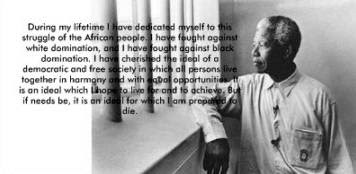 and devoted young religious Irishman who chooses the company of drunkards and the poor: (he) wanted a fully believable God, one you could find in the grime of the everyday. The comfort he got from the hard, cold truth – the filth, the war, the poverty – was that life could be capable of small beauties. He wasn’t interested in the glorious tales of the afterlife or the notions of a honey-soaked heaven. To him that was a dressing room for hell. Rather he consoled himself with the fact that, in the real world, when he looked closely into the darkness he might find the presence of a light, damaged and bruised, but a little light all the same. He wanted, quite simply, for the world to be a better place, and he was in the habit of hoping for it. Out of that came some sort of triumph that went beyond theological proof, a cause for optimism against all the evidence. Someday the meek might actually want it, he said.
Corrigan’s thirst for faith drives him out of his home and into flophouses, monasteries, asceticism, alcohol, books, pacifism, foolhardiness, New York City and more, more, in the days he is given. His life, then, is not unlike the lives of Christ’s disciples, who, though they cannot move mulberry trees into the sea, are themselves moved by Christ to uproot their lives and put down roots in an ocean of unknown world waters. In alien places they then uprooted empires and flung down thrones. Millions, following them, have planted their roots in the waters of the fonts of hope. So the disciples did command the trees of this world, but not in an instant – their moment has stretched through centuries of work and uprooting, stretched like the long days of slaves.
 Mary Oliver writes of such thirst:
Another morning and I wake with thirst
for the goodness I do not have. I walk
out to the pond and all the way God has
given us such beautiful lessons. Oh Lord,
I was never a quick scholar but sulked
and hunched over my books past the
hour and the bell; grant me, in your
mercy, a little more time. Love for the
earth and love for you are having such a
long conversation in my heart. Who
knows what will finally happen or
where I will be sent, yet already I have
given a great many things away, expec-
ing to be told to pack nothing, except the
prayers which, with this thirst, I am
slowly learning.
________________________________________
Illustrations:
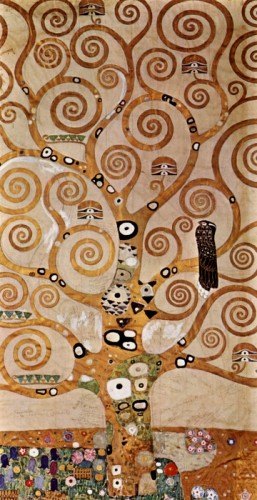
1. The Tree of Life from the Stoclet Frieze 1905-1911, Gustav Klimt, Brussels, Belgium. Vanderbilt Divinity School Library, Art in the Christian Tradition.
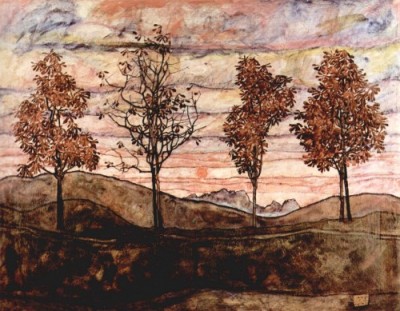
2. Four Trees, 1917, EgonSchiele, Vienna Austria. Vanderbilt Divinity School Library, Art in the Christian Tradition.
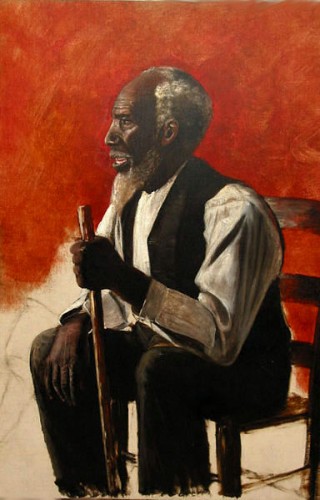
3. Uncle Andrew, a Slave born at The Hermitage (Pres. Andrew Jackson’s home), set free in his fifties, who remained there as Caretaker the rest of his life. Kentucky, US. Vanderbilt Divinity School Library, Art in the Christian Tradition.
4. Nelson Mandela in Prison at Robben Island. Photo by Jurgen Schadeburg. Poster.
5. Family Giving Thanks to the Ocean.** Photo by Tiruvanimayur. Chennai, India. Vanderbilt Divinity School Library, Art in the Christian Tradition.
Previous Post

September 22, 2013
Dives
Next Post
October 5, 2013 How Does the Creature Say Thanks
Browse Our Archives
Select a Category Bites Uncategorized
Select a Month December 2017 November 2017 October 2017 September 2017 August 2017 July 2017 June 2017 May 2017 April 2017 March 2017 February 2017 January 2017 December 2016 November 2016 October 2016 September 2016 August 2016 July 2016 June 2016 May 2016 April 2016 March 2016 February 2016 January 2016 December 2015 November 2015 October 2015 September 2015 August 2015 July 2015 June 2015 May 2015 April 2015 March 2015 February 2015 January 2015 December 2014 November 2014 October 2014 September 2014 August 2014 July 2014 June 2014 May 2014 April 2014 March 2014 February 2014 January 2014 December 2013 November 2013 October 2013 September 2013 August 2013 July 2013 June 2013 May 2013 April 2013 March 2013 February 2013 January 2013 December 2012
Follow Us!
TAKE THE
Religious Wisdom Quiz
Who said, "The battle is not yours, but God's"?
Select your answer to see how you score.
Jehoshaphat Moses Joshua David
Related posts from The Bite in the Apple




TRENDING AT PATHEOS Progressive Christian

Why Christians Have a Sacred Duty to Vote:...
The Bible offers strong support for the sacred duty to vote. Here...

What Being a Modern-Day Apostle Means to Me
In my last column, I discussed the ins and outs of modern-day...

Did Ancient China Once Worship the God of...
Across human history, a common thread weaves through the origins of the...

Love Your Neighbor – Including Earth-Kin: Lev. 19,...
God’s command to love your neighbor means acting in an ethical and...

Lead a Church Study of “Jesus and Lao...
Guest writer Jack Thomas (The Irreverent Reverend) reflects on leading his church...

Principles for Understanding the Apostolic Ministry Today
Whenever people discover that my formal ministry title is "apostle," as in...
view all Progressive Christian blogs
Ad-Free & Subscriber Log-In Subscription Support
- About Us
- 2026 Calendar
- Videos
- Podcasts
- Library of World Religions
- Faith In Media Tracker
- Advertise With Us
- Write for Us
- Privacy Policy
- Terms of Service
- Do Not Sell My Data
- Contact Us
- Radiant Digital
- Manage Newsletter Subscriptions
- Unsubscribe From Notifications
- Sitemap
Copyright 2008-2026, Patheos. All rights reserved.
Subscription Support Ad-Free & Subscriber Log-In
Follow Patheos