
BuddhistCatholicContemplativeEvangelicalGeneral ChristianHinduJewishLatter-day SaintMuslimNew VisionsProgressive Christian
Beliefs
- Buddhist
- Catholic
- Contemplative
- Evangelical
- General Christian
- Hindu
- Jewish
- Latter-day Saint
- More Voices
- Muslim
- New Visions
- Pagan
- Progressive Christian
Topics
- Religion News
- Food and Religion
- Sports and Religion
- Religious Art
- Religious Music and Entertainment
- Religious Events
- History and Religion
- Style and Religion
- Politics and Religion
- Women in Religion
- Recreation Outdoors and Religion
- Business Finance and Religion
- Careers Workplace and Religion
- Education and Religion
- Family Parenting and Religion
- Health Fitness and Religion
- Home and Religion
- Relationships and Religion
- Technology and Religion
- Travel and Religion
Columnists
- Buddhist Columnists
- Business Finance and Religion Columnists
- Careers Workplace and Religion Columnists
- Catholic Columnists
- Contemplative Columnists
- Education and Religion Columnists
- Evangelists Columnists
- Family Parenting and Religion Columnists
- General Christian Columnists
- Health Fitness and Religion Columnists
- Hindu Columnists
- History and Religion Columnists
- Home and Religion Columnists
- Jewish Columnists
- More Voices Columnists
- Latter Day Columnists
- Muslim Columnists
- New Visions Columnists
- Nonreligious Columnists
- Pagan Columnists
- Politics and Religion Columnists
- Progressive Columnists
- Recreation Outdoors and Religion Columnists
- Relationships and Religion Columnists
- Religion News Columnists
- Religious Art Columnists
- Religious Events Columnists
- Religious Music and Entertainment Columnists
- Sports and Religion Columnists
- Style and Religion Columnists
- Technology and Religion Columnists
- Travel and Religion Columnists
- Women in Religion Columnists
Resource Library
- 2026 Calendar
- Library of World Religions
- The 100 Most Holy Places on Earth
- Patheos Answers
- Podcasts
- Videos
- Faith Leaders Database
- Anglican Episcopalian
- Bahai
- Baptist
- Buddhism
- Christianity
- Confucianism
- Eastern Orthodoxy
- Hinduism
- Holiness and Pentecostal
- ISKCON
- Islam
- Judaism
- Lutheran
- Methodist
- The Church of Jesus Christ of Latter-day Saints
- New Age
- Paganism
- Presbytarian and Reformed
- Protestantism
- Religion Behind the Scenes
- Roman Catholic
- Scientology
- Shia Islam
- Sikhism
- Sufism
- Sunni Islam
- Taoism
- Zen
- See all religions
Research Tools
 Ad-Free & Subscriber Log-In Subscription Support
Ad-Free & Subscriber Log-In Subscription Support
Follow Patheos 

- Trending:
- Forgiveness
- |
- Marriage
- |
- Consciousness
- |
- Death Penalty
- |
- Election
- |
- Halloween
 The Bite in the Apple
- Home
- Progressive Christian
- Can You Hear Me Now? The Lost Sheep at the Oscars
Can You Hear Me Now? The Lost Sheep at the Oscars
Last updated on: February 25, 2016 at 9:01 pm by Nancy Rockwell
Can You Hear Me Now? The Lost Sheep at the Oscars 2016-02-25T21:01:47-04:00 Nancy Rockwell
Patheos Explore the world's faith through different perspectives on religion and spirituality! Patheos has the views of the prevalent religions and spiritualities of the world.
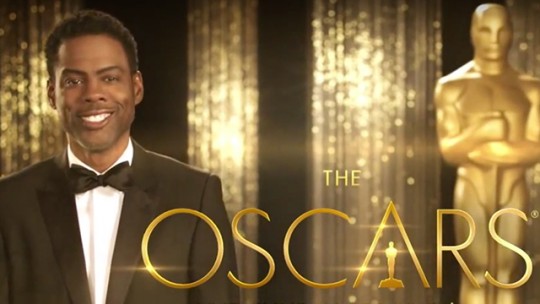 The Red Carpet. The fabulous stars. Millions of dollars’ worth of couturier gowns. Jewels that spend most of the year locked away in safes. The buzz about who came with a new man, whose marriage is on the rocks, who brought mom. And all this is before you enter the great hall where the Oscars will be awarded, for the Best Actors, Film, Scripts, Song.
The whole thing reeks of money, power, bling – it’s a palace of pretenses. But not one to ignore, for it is built on the money all of us have paid, ten dollars at a time, to see the stories we need, the endless American narrative that tells us who we are in this world.
Who am I? It’s the hardest of questions, and the answer is always ongoing. Who am I in the midst of this life I am struggling through? The movies are the national campfire, where we all gather to try to figure out a few things.
We call it entertainment, this storytelling. But it is vital to being human. We are narrative creatures, we need our stories. Every candidate, every ethnic group, every lover, has to have one.
This year the top eight films include one about the arrival of an Irish girl in America, one about breaking the story of child abuse in the Irish Catholic Church in Boston, and one about our national mortgage scandal.
There’s one about drug-trafficking, one about a kidnapped, imprisoned mother and her child, two about survival by men left for dead, an astronaut on Mars, and a scout in the wilderness in settler days; betrayal is a theme in both films, real betrayal and resisting the temptation to betray.
One film is about an unsung hero of the Cold War Days. And for the life of me, though I’ve seen it, I’m not sure what Mad Max: The Fury Road is really about – other than how hard it is to survive in a violent world where nature is ruined.
The point is this: all these stories are about white people, about the pain white people feel, and God knows there is a lot of pain and it takes a lot of films to portray it. Each film asks that old communications question, Can you hear me now? And each Oscar is a Yes. Yes, we can.
But what about African Americans, Latinos, Asians, Arabs, Native Americans? Where are their stories, and why aren’t we listening, watching, wanting to know them, these neighbors, these Americans?
Why aren’t we paying attention to their pain that we don’t really understand – their coming of age, loving, working, failing, dying, being betrayed in families and neighborhoods that mingle America with another culture besides Ireland, and do it here, in the midst of most of us, who don’t give them a glance and don’t think well of them?
For decades, there has been murmuring about the near-absence of black American stories, black actors and actresses, in the Oscars. Yes, a few have risen, briefly, for one nomination or one prize. But Jennifer Lawrence has been nominated seven times, and she isn’t out of her twenties yet. That’s the kind of myopia in our seeing, the kind of selectivity in our hearing, that is at issue in our American story-telling.
In one way or another all this year’s films are about the parable that undergirds our culture: the parable of the lost sheep and the Good Shepherd. 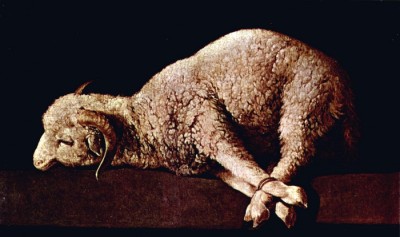
Lost – it’s one of Jesus’ repeated themes. Lost sheep, lost coins, lost sons, lost souls, lost hope, lost faith, lost love, lost chances, lost sense. And we all know we are lost, at some point in every day we feel it, the deep ache for which there are no words, our awareness that we cannot see the road ahead.
And Jesus tells us what the Good Shepherd, good housewife, good father of prodigals, good Samaritan, does for and with the lost. We have the courage to tell these stories. But Jesus also talks about the Bad Shepherd. About the men who passed by the beaten man in the road and didn’t stop. About the fellow who almost cut down his fig tree in anger at its fruitlessness, until the gardener stopped him.
And that seems to be the story we do not wish to tell – the story in which we are the betrayer, the thief, the mean elder brother, Pharoah in someone else’s freedom struggle.
Who are we? Really, who? In truth, we live all the roles. On Sunday, host Chris Rock, with the help of the Holy Spirit, will be asking, Can You Hear Me Now? And Jesus, who repeatedly said, Those who have ears, let them hear, will be saying Amen.
_____________________________________________________________________
Images:
1. 2016 Oscars Poster with host Chris Rock. oscars.go.com
2. Lamb. by Francisco de Zurbaran, 1638. Madrid, Spain. Vanderbilt Divinity School Library, Art in the Christian Tradition.
Previous Post

February 21, 2016
The Pornography of Pessimism
Next Post

February 28, 2016 Prodigals: Are We The Older Brothers or The Party Friends?
Browse Our Archives
Select a Category Bites Uncategorized
Select a Month December 2017 November 2017 October 2017 September 2017 August 2017 July 2017 June 2017 May 2017 April 2017 March 2017 February 2017 January 2017 December 2016 November 2016 October 2016 September 2016 August 2016 July 2016 June 2016 May 2016 April 2016 March 2016 February 2016 January 2016 December 2015 November 2015 October 2015 September 2015 August 2015 July 2015 June 2015 May 2015 April 2015 March 2015 February 2015 January 2015 December 2014 November 2014 October 2014 September 2014 August 2014 July 2014 June 2014 May 2014 April 2014 March 2014 February 2014 January 2014 December 2013 November 2013 October 2013 September 2013 August 2013 July 2013 June 2013 May 2013 April 2013 March 2013 February 2013 January 2013 December 2012
Follow Us!
TAKE THE
Religious Wisdom Quiz
Who was Paul's mentor mentioned in his letters to Timothy?
Select your answer to see how you score.
Silas Onesimus Lois Phoebe
Related posts from The Bite in the Apple



TRENDING AT PATHEOS Progressive Christian

Why Christians Have a Sacred Duty to Vote:...
The Bible offers strong support for the sacred duty to vote. Here...

What Being a Modern-Day Apostle Means to Me
In my last column, I discussed the ins and outs of modern-day...

Did Ancient China Once Worship the God of...
Across human history, a common thread weaves through the origins of the...

Love Your Neighbor – Including Earth-Kin: Lev. 19,...
God’s command to love your neighbor means acting in an ethical and...

Lead a Church Study of “Jesus and Lao...
Guest writer Jack Thomas (The Irreverent Reverend) reflects on leading his church...

Principles for Understanding the Apostolic Ministry Today
Whenever people discover that my formal ministry title is "apostle," as in...
view all Progressive Christian blogs
Ad-Free & Subscriber Log-In Subscription Support
- About Us
- 2026 Calendar
- Videos
- Podcasts
- Library of World Religions
- Faith In Media Tracker
- Advertise With Us
- Write for Us
- Privacy Policy
- Terms of Service
- Do Not Sell My Data
- Contact Us
- Radiant Digital
- Manage Newsletter Subscriptions
- Unsubscribe From Notifications
- Sitemap
Copyright 2008-2026, Patheos. All rights reserved.
Subscription Support Ad-Free & Subscriber Log-In
Follow Patheos