
BuddhistCatholicContemplativeEvangelicalGeneral ChristianHinduJewishLatter-day SaintMuslimNew VisionsProgressive Christian
Beliefs
- Buddhist
- Catholic
- Contemplative
- Evangelical
- General Christian
- Hindu
- Jewish
- Latter-day Saint
- More Voices
- Muslim
- New Visions
- Pagan
- Progressive Christian
Topics
- Religion News
- Food and Religion
- Sports and Religion
- Religious Art
- Religious Music and Entertainment
- Religious Events
- History and Religion
- Style and Religion
- Politics and Religion
- Women in Religion
- Recreation Outdoors and Religion
- Business Finance and Religion
- Careers Workplace and Religion
- Education and Religion
- Family Parenting and Religion
- Health Fitness and Religion
- Home and Religion
- Relationships and Religion
- Technology and Religion
- Travel and Religion
Columnists
- Buddhist Columnists
- Business Finance and Religion Columnists
- Careers Workplace and Religion Columnists
- Catholic Columnists
- Contemplative Columnists
- Education and Religion Columnists
- Evangelists Columnists
- Family Parenting and Religion Columnists
- General Christian Columnists
- Health Fitness and Religion Columnists
- Hindu Columnists
- History and Religion Columnists
- Home and Religion Columnists
- Jewish Columnists
- More Voices Columnists
- Latter Day Columnists
- Muslim Columnists
- New Visions Columnists
- Nonreligious Columnists
- Pagan Columnists
- Politics and Religion Columnists
- Progressive Columnists
- Recreation Outdoors and Religion Columnists
- Relationships and Religion Columnists
- Religion News Columnists
- Religious Art Columnists
- Religious Events Columnists
- Religious Music and Entertainment Columnists
- Sports and Religion Columnists
- Style and Religion Columnists
- Technology and Religion Columnists
- Travel and Religion Columnists
- Women in Religion Columnists
Resource Library
- 2026 Calendar
- Library of World Religions
- The 100 Most Holy Places on Earth
- Patheos Answers
- Podcasts
- Videos
- Faith Leaders Database
- Anglican Episcopalian
- Bahai
- Baptist
- Buddhism
- Christianity
- Confucianism
- Eastern Orthodoxy
- Hinduism
- Holiness and Pentecostal
- ISKCON
- Islam
- Judaism
- Lutheran
- Methodist
- The Church of Jesus Christ of Latter-day Saints
- New Age
- Paganism
- Presbytarian and Reformed
- Protestantism
- Religion Behind the Scenes
- Roman Catholic
- Scientology
- Shia Islam
- Sikhism
- Sufism
- Sunni Islam
- Taoism
- Zen
- See all religions
Research Tools
 Ad-Free & Subscriber Log-In Subscription Support
Ad-Free & Subscriber Log-In Subscription Support
Follow Patheos 

- Trending:
- Forgiveness
- |
- Marriage
- |
- Consciousness
- |
- Death Penalty
- |
- Election
- |
- Halloween

- Home
- Catholic
- Politics and Religion
- What Does the Gospel Say About the Market?
What Does the Gospel Say About the Market?
Last updated on: September 5, 2025 at 10:21 am by Billy Kangas
What Does the Gospel Say About the Market? 2025-09-05T10:21:41-04:00 Billy Kangas
Patheos Explore the world's faith through different perspectives on religion and spirituality! Patheos has the views of the prevalent religions and spiritualities of the world.

Allegory of Good Government – Lorenzetti (1338)
In an age of deep political division and economic confusion, many Catholics find themselves caught between ideologies that feel increasingly incompatible with the gospel. We are often labeled “political orphans”—not because we lack conviction, but because our deepest allegiance is to Christ, not to party platforms. Yet this identity is not a weakness. It’s a prophetic call.
The intersection of Catholic social doctrine with economic and political policy is one of the most urgent—and most misunderstood—frontiers of discipleship today. It’s not enough to keep our faith confined to Sunday liturgies or private devotions. The gospel demands more. It speaks into boardrooms and ballot boxes, into budgets and bureaucracies. And if we’re not listening, we risk surrendering the public square to forces that distort human dignity and ignore the common good.
I didn’t fully grasp the tension between faith and public policy until I spent several years working in Washington, D.C.—a city where ideology often speaks louder than theology, and where the gospel must fight to be heard amid the noise of partisanship and power. It was during my fellowship with Bread for the World that this lesson came into sharp focus.
Bread for the World is a Christian advocacy organization committed to ending hunger through policy change. It’s not a food pantry or a relief agency—it’s a movement that believes lobbying Congress can be an act of love.
But I quickly learned that this is no easy marriage.
Working in D.C., I saw firsthand how difficult it is to bring faith into the halls of power without it being diluted, distorted, or dismissed. The temptation to compromise—to soften the gospel for the sake of political access—is real. And yet, the opposite temptation is just as dangerous: to retreat entirely, to declare politics “dirty” and unworthy of Christian engagement. Both extremes fail the test of Catholic social doctrine, which calls us to be present, prophetic, and prudent.
The intersection of Catholic social doctrine with economic and political policy presents a crucial and often misunderstood area for followers of Jesus Christ. As “political orphans,” Catholics are called to transcend partisan divides, seeking instead the glory of God and the enactment of biblical principles in public life. This perspective became particularly relevant following recent administrative changes, such as President Donald Trump’s revocation of Executive Order 14014-O36, which had been signed by Joe Biden in 2021. Trump’s action aimed to reduce government involvement in free-market policies, while Biden’s order had allowed for greater government oversight. Understanding these actions requires a deep engagement with Catholic teaching, which offers a balanced approach to the economy and government regulation, emphasizing that faith must inform every aspect of life.
A significant challenge for many Catholics is the tendency to segment life into individuated buckets, separating spiritual life from economic or political considerations. This heresy of our own time leads to a dangerous imbalance. If spiritual life is confined to mere biblical study or church activities, it becomes limited to a syllabus of a curriculum, failing to recognize that the gospel speaks into every area of life. Conversely, approaching economics or government regulation without acknowledging their connection to virtue, ethics, and individual persons is equally perilous. Unfettered bureaucracy and unfettered capitalism are both incredibly destructive beasts because they lack souls and a moral compass, ultimately becoming tyrants and sociopaths. A society that fails to integrate faith into its public life risks devolving into something destructive, possessed by a demonic spirit of destruction where ideological appetites become all consuming.
God, as Lord over all creation, has established morals and ethics to govern even economics, politics, and culture. This understanding compels Catholics to be actively involved in these spheres, guided by their faith. However, a widespread reluctance exists among many Catholics to engage in this way. This reticence often stems from a historical push to separate faith from the public square, perhaps initially rooted in good intentions to prevent religious persecution. Yet, this separation has gone too far, leading to accusations of “Christian nationalism” if one’s decisions are openly informed by conscience or faith. Fear of such attacks often prevents faithful Catholics from asserting that their belief in Jesus has something vital to contribute to contemporary issues.
Catholic social doctrine provides a crucial framework for navigating the complexities of economic and governmental policies, offering wisdom that transcends partisan alignment. For instance, while Biden’s executive order aimed for greater government involvement in the market, the Catholic view requires a nuanced approach. It necessitates balancing different goods in an appropriate hierarchy. Freedom, for example, is a good, fostering adaptability, innovation, and preventing high market prices. However, a free market that is untempered by an understanding or heart for solidarity can become a ravaging beast. Without moral guidance, economic systems can become destructive, ignoring human dignity and the common good. The morals rooted in God, family, and community must hold a pride of place in our evaluation of economic systems.
Conversely, excessive government overreach also presents significant dangers. While government can function as a bridle for the market, it too must be subservient to a hierarchy of needs. Bureaucracy for bureaucracy’s sake can become blind to the needs of individuals and communities. For example, in efforts to achieve maximally effective outcomes for the greatest population, individuals whose needs don’t fit the bureaucratic structure can become completely trodden under and ignored, forming a new marginalized class. This highlights that neither unfettered capitalism, which can create corporations that are overtly bureaucratized and forget the marginalized, nor extreme government control is acceptable, as both violate the principle of the common good.
The writer G.K. Chesterton offers a vivid illustration of this dilemma. He critiques capitalism by likening a pickpocket, who champions free enterprise for himself but disrespects private property for others. Chesterton suggests that capitalism instinctively makes a virtue out of the pickpocket or the pirate. On the other hand, a system like communism or excessive bureaucracy might simply forbid the use of pockets altogether, an equally inappropriate response. Neither extreme, which both represent a lack of balance and moral grounding, offers a truly human-centered solution.
Catholic social doctrine, particularly the principles of solidarity and subsidiarity, offers a path forward. An economy, as Benedict XVI articulated in Caritas in Veritate, “needs ethics in order to function correctly,” and specifically, “not any ethics, but an ethics which is people centered”. This means that the response to complex economic and political issues must not be found solely in large structures, but also rooted in individuals. Catholics are called to examine their own hearts, asking if the leaven of the gospel is taking root in them. This includes evaluating their use of capital, ensuring it’s in right proportion and in service to the gospel, holding possessions with open hands to avoid the sin of untethered capitalism in their own lives.
Moreover, individuals must resist the victim narrative or that has infected the waters. Looking to bureaucracy as the sole source of hope can be a trap, creating a mentality of entitlement that disintegrates the bonds of charity and hinders genuine relationships of mutual help. Instead, the gospel compels us to create avenues for the flourishing of others.
The Church further emphasizes the dignity of work through feasts like the Feast of Saint Joseph the Worker, established in 1955. This feast offers a powerful response, valuing the worker and rooting dignity in service and love, rather than in an antagonistic relationship between capital and labor. In our current time, there is tremendous opportunity for small business and innovation that is not captivated and captured by these corporate bodies focused primarily on stockholder returns. Individuals can and should start businesses founded on values if such ventures don’t already exist. This entrepreneurial vigor allows for adaptation and compassionate responsiveness to individuals, preventing the market from dominating the entire worldview.
Ultimately, the Catholic perspective calls for a profound reorientation. The victory that Catholics always turn to is not one that happens in a political election, but that happened on the Easter Sunday. Christ is king, and all individuals, including those in power, are accountable morally to Christ. Viewing all other victories or defeats through the lens of Christ’s ultimate triumph, Catholics are called to live lives totally conformed to the cross so that we might be united to the resurrection. This conformity, guided by virtues rather than solely by big government, has historically compelled Christians to engage with the free market while upholding sanctification and holiness. Our response in every moment should recognize that all we have is a gift, meant to be offered in love for others, as Christ did. This means approaching our spirituality with an openness to the Holy Spirit, embodying love and generosity, receiving gifts with gratitude, and offering what we have freely. By doing so, Catholics can allow their values to form a constellation that forms the image of Christ, even if it means remaining political orphans in a world often divided by secular ideologies.
Recent Segment on Ave Maria in the Afternoon I recently had the opportunity to discuss this very topic—Catholic social teaching and its intersection with economic and political life—on Ave Maria in the Afternoon. It was a rich conversation exploring how our faith calls us to engage the public square with both conviction and compassion.
I’ve included the segment below for those who’d like to listen in and reflect further. I hope it sparks deeper thought and fruitful dialogue as we continue this journey together.
Progressive Christian
Politics and Religion
Previous Post

August 20, 2025
A Psalm for Beleaguered
Next Post
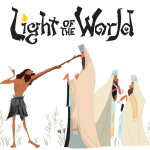
September 5, 2025 My Kids Couldn’t Stop Talking About This Jesus Film
Recent Comments
"hate disqualifies you totally. I became a Catholic because I saw too many like you. ..."
Porcine obtuseness Sniffer Dog
Controversial Celebrity Religious Conversions: Who Switched ..."
"'Stop hiding your gifts' is a productive invitation. Novices leave behind their loved ones and ..."
Stop Hiding Your Gifts: Lessons from ..."
"Bending low, he uplifted the lowly. Joseph Cafasso continues to inspire men and women of ..."
Not Grand, But Great: Legacy Through ..."
"Does Jesus dwell within you, or is it a comforting delusion?A new counter-apologetic method exposes ..."
Browse Our Archives
Select a Category Art Bible Books CCC Prayer Christmas Current Events Family Film Free Photo Fridays Humor hunger liturgical calendar liturgy Music Photos pope Prayer Prayerful Leader questions Quotes Review Saints Satire Scripture SYNOD SYNOD FOR THE FAMILY teaching Uncategorized video Weekly Round Up
Select a Month October 2026 September 2026 August 2026 July 2026 April 2026 February 2026 December 2025 November 2025 October 2025 September 2025 August 2025 July 2025 June 2025 May 2025 April 2025 February 2025 January 2025 September 2024 June 2024 May 2024 February 2024 December 2023 August 2023 May 2023 February 2023 November 2022 July 2022 June 2022 May 2022 March 2022 May 2021 April 2021 March 2021 February 2021 January 2021 September 2020 April 2020 March 2020 February 2020 January 2020 December 2019 November 2019 October 2019 August 2019 June 2019 May 2019 March 2019 January 2019 December 2018 August 2018 June 2018 April 2018 March 2018 February 2018 December 2017 November 2017 September 2017 August 2017 July 2017 June 2017 April 2017 March 2017 February 2017 December 2016 November 2016 February 2016 January 2016 November 2015 October 2015 August 2015 July 2015 June 2015 May 2015 April 2015 March 2015 February 2015 January 2015 December 2014 November 2014 October 2014 September 2014 August 2014 July 2014 June 2014 May 2014 April 2014 March 2014 February 2014 January 2014 December 2013 November 2013 October 2013 September 2013 August 2013 July 2013 June 2013 May 2013 April 2013 March 2013 February 2013 January 2013 December 2012 November 2012 October 2012 August 2012 July 2012 June 2012 May 2012 April 2012 March 2012 February 2012 January 2012 December 2011 November 2011 October 2011 September 2011 August 2011 July 2011 June 2011 May 2011 April 2011 March 2011 February 2011 January 2011 December 2010 November 2010 October 2010 September 2010 August 2010 July 2010 June 2010 May 2010 April 2010 March 2010 February 2010 January 2010 December 2009 November 2009 October 2009 September 2009 August 2009 July 2009 June 2009 April 2009 March 2009 February 2009 January 2009 October 2008 August 2008 June 2008 May 2008 April 2008 March 2008 February 2008 January 2008 December 2007 November 2007
Follow Us!
TAKE THE
Religious Wisdom Quiz
What is the first book of the New Testament?
Select your answer to see how you score.
Matthew Luke John Mark
Related posts from The Orant


What If You Are God’s Currency?

TRENDING AT PATHEOS Catholic

'Super Scam Me' Exposes AI Jon Bon Jovi...
Leslie Pickett believed she was in a relationship with Jon Bon Jovi....

The Brazilian Remake of Kendricks' 'Flywheel' Opens in...
“Flywheel,” the story that launched the Kendrick Brothers’ filmmaking career is getting...

The Dangers of Gradual Accommodation (Winking at Sin)
Recently, the “law of gradualness” resurfaced during the opening of a weeklong,...

The Iron Gates and the Lion of the...
Yesterday, I didn't finish my report about, well, yesterday. So I'll...

The Image: On the Horror of Capitalism and...
The Image Then went the Pharisees, and took counsel how they might...

We are approaching the date of our new American national holiday: October...
view all Catholic blogs
What Are Your Thoughts?leave a comment
Ad-Free & Subscriber Log-In Subscription Support
- About Us
- 2026 Calendar
- Videos
- Podcasts
- Library of World Religions
- Faith In Media Tracker
- Advertise With Us
- Write for Us
- Privacy Policy
- Terms of Service
- Do Not Sell My Data
- Contact Us
- Radiant Digital
- Manage Newsletter Subscriptions
- Unsubscribe From Notifications
- Sitemap
Copyright 2008-2026, Patheos. All rights reserved.
Subscription Support Ad-Free & Subscriber Log-In
Follow Patheos