
BuddhistCatholicContemplativeEvangelicalGeneral ChristianHinduJewishLatter-day SaintMuslimNew VisionsProgressive Christian
Beliefs
- Buddhist
- Catholic
- Contemplative
- Evangelical
- General Christian
- Hindu
- Jewish
- Latter-day Saint
- More Voices
- Muslim
- New Visions
- Pagan
- Progressive Christian
Topics
- Religion News
- Food and Religion
- Sports and Religion
- Religious Art
- Religious Music and Entertainment
- Religious Events
- History and Religion
- Style and Religion
- Politics and Religion
- Women in Religion
- Recreation Outdoors and Religion
- Business Finance and Religion
- Careers Workplace and Religion
- Education and Religion
- Family Parenting and Religion
- Health Fitness and Religion
- Home and Religion
- Relationships and Religion
- Technology and Religion
- Travel and Religion
Columnists
- Buddhist Columnists
- Business Finance and Religion Columnists
- Careers Workplace and Religion Columnists
- Catholic Columnists
- Contemplative Columnists
- Education and Religion Columnists
- Evangelists Columnists
- Family Parenting and Religion Columnists
- General Christian Columnists
- Health Fitness and Religion Columnists
- Hindu Columnists
- History and Religion Columnists
- Home and Religion Columnists
- Jewish Columnists
- More Voices Columnists
- Latter Day Columnists
- Muslim Columnists
- New Visions Columnists
- Nonreligious Columnists
- Pagan Columnists
- Politics and Religion Columnists
- Progressive Columnists
- Recreation Outdoors and Religion Columnists
- Relationships and Religion Columnists
- Religion News Columnists
- Religious Art Columnists
- Religious Events Columnists
- Religious Music and Entertainment Columnists
- Sports and Religion Columnists
- Style and Religion Columnists
- Technology and Religion Columnists
- Travel and Religion Columnists
- Women in Religion Columnists
Resource Library
- 2026 Calendar
- Library of World Religions
- The 100 Most Holy Places on Earth
- Patheos Answers
- Podcasts
- Videos
- Faith Leaders Database
- Anglican Episcopalian
- Bahai
- Baptist
- Buddhism
- Christianity
- Confucianism
- Eastern Orthodoxy
- Hinduism
- Holiness and Pentecostal
- ISKCON
- Islam
- Judaism
- Lutheran
- Methodist
- The Church of Jesus Christ of Latter-day Saints
- New Age
- Paganism
- Presbytarian and Reformed
- Protestantism
- Religion Behind the Scenes
- Roman Catholic
- Scientology
- Shia Islam
- Sikhism
- Sufism
- Sunni Islam
- Taoism
- Zen
- See all religions
Research Tools
 Ad-Free & Subscriber Log-In Subscription Support
Ad-Free & Subscriber Log-In Subscription Support
Follow Patheos 

- Trending:
- Forgiveness
- |
- Marriage
- |
- Consciousness
- |
- Death Penalty
- |
- Election
- |
- Halloween

- Home
- Catholic
- Day Two: North American Academy of Liturgy 2020 #NAAL2020
Day Two: North American Academy of Liturgy 2020 #NAAL2020
Last updated on: January 4, 2020 at 10:02 am by Billy Kangas
Day Two: North American Academy of Liturgy 2020 #NAAL2020 2020-01-04T10:02:49-04:00 Billy Kangas
Patheos Explore the world's faith through different perspectives on religion and spirituality! Patheos has the views of the prevalent religions and spiritualities of the world.
Yesterday we continued to explore liturgy at the North American Academy of Liturgy. I’ve included some highlights from my seminar which is “Exploring Contemporary & Alternative Worship”
“Exploring Contemporary & Alternative Worship” Session 1
Taylor Burton Edwards – “Shame in the CCLI Top 100”
This is the third year Taylor Burton Edwards has presented on his work looking at the CCLI. This year we took some time to look at “shame.” I found it completely fascinating and very helpful. Here are some highlights from the presentation:
- Taylor Burton Edwards started with a grounding the concept of shame from a stance of empathy that we can all relate to. We all have experienced shame and can’t escape it.
- Shame is rooted is a social status that is perceived as lower. Jesus takes on shame. He meets people at the bottom of the social hierarchy. Taking on our shame.
- We explored the concept of shame in 19th-century hymnody; where people sang about joining Jesus in his shame… joining him in the lowest social position. He bowed down and so we bow down.
- We then reviewed this talk by Brene Brown
https://ted.com/talks/brene_brown_listening_to_shame/transcript?language=en… - shame is not guilt It’s not thinking you did something bad It’s believing you ARE bad it’s rooted in the question: who do you think you are? and the belief that you’re not good enough.
- There is no cure for shame, but there is an antidote: Empathy Empathy can help to detoxify the venom of isolation that shame brings with it.
- When looking at some contemporary songs Dr. Edwards notices that when older hymns are adapted the concept of shame disappears. No longer do we talk about Christ as an antidote for shame; but instead a cure.
- With this shift, there is a loss in the call for us to follow the example of Christ to join empathetically with those who experience shame; to dwell in solidarity with those on the bottom of our social hierarchies.
- We then went through all the usage of shame in the CCLI top 100. In most of the songs, shame is not taken particularly seriously as a differentiated concept. Often it’s used as vaguely bad thing that is used because it rhymes with “name.”
- In places where it’s taken seriously as a concept, he notices some differences in the way shame is talked about. Male-led songs talk about God “breaking” shame Female-led songs talk about Jesus’ name as a solution to shame.
Emily Snyder Andrews – “The Worship-Rooted Lifestyle: Exploring Evangelical Ethics at Bethel Church at Redding California”
In session two of the “Exploring Contemporary & Alternative Worship Seminar” at #NAAL2020 we listened to Emily Snider Andrews talk about her research of Bethel. This time she is focusing on Ethics.
- She shares all about the “Bethel Effect” that has taken place in Redding, CA Bethel believes that helping renew their community is an extension of their worship. They have served in their community in many ways and this has had a significant impact on the life of the city.
- At the same time, they have engaged in the promotion of their ethics in the promotion of a conservative political agenda. This is also seen as an extension of their life of worship.
- In all of this Bethel Church believes that cultivating culture is the natural extension to a lifestyle of worship that impacts every area of life. This orients it’s 11,000+ members towards “Christian living”
- Dr. Andrews than highlights that “Christian living” is not really well defined. This can create problems. When compassionate care of the poor is situated in a context of conservative ideology and is promoted through a message of prosperity by wealthy white & powerful individuals.
- She mentions that there seems to be competing narratives and a tension in motivating factors. The community lives in the tension between intrinsic generational and cultural divides on what faithfulness looks like in the public arena.
Field Trip to the King Center
At mid-day, the whole academy took a trip to the King Center and participated in mid-day prayer at Our Lady of Lourdes. I found the experience moving. We were able to visit King’s birth home as well as the Church where his Grandfather, Father and himself served. It was a palpable reminder of the call to ensure all people are given access to liturgy.
I was struck that within those walls, a modern prophet and martyr found his call and his voice. A potent reminder of the power a church can have to form people who use their gifting and calling for lives of significance and service.
“Exploring Contemporary & Alternative Worship” Session 2
Swee Hong Lim
“Exploring Contemporary & Alternative Worship” Session 2 at #NAAL2020 started with a presentation from Swee Hong Lim on waves of music of Contemporary Worship in the Chinese Language
- He contextualizes the development of Chinese language contemporary worship music into three waves.
- In the first wave, English Songs came into Chinese language groups through missions to China and the melodies remained the same but the lyrics were changed. 80% of the worship music remains in this vein.
- In the second wave, there was an influx of immigrants to North America that maintained strong ties to the Homeland. Both the melodies and the lyrics were Asian, but the instrumentation was western. This becomes popular in the 1980s and 1990s
- Things begin to change in 1996 when the children of the immigrants come of age. Music geared towards the Asian market begins to be developed by this Generation. This is exemplified by “Streams of Praise” which is based in LA and is rapidly expanding into all Chinese markets
- This music is a hybrid. It incorporates both Western and Chinese instrumentation and melodies. It also incorporates more strings, often having children play in the orchestra.
- Interestingly Swee Hong Lim mentions that North American Audiences tend to prefer flower more contemplative music. The Asian markets tend to be younger and like higher energy music.
- The culture of North American Churches still remains connected to the homeland. The American Chinese language Churches tend to be decades behind the mainland however; because of the strong desire to stay connected to the heritage of the community left behind.
- This presentation was so helpful in opening my eyes to the world of Contemporary Worship in the Chinese language.
Haejung Park
Our second presentation this afternoon is from Haejung Park who came all the way from Seoul, where he teaches at the largest Methodist theological university in the world. He shared with us about a worship conference that they organized this past year. I found the presentation a valuable look into what worship looks like in the Korean church.
The conference brought in many liturgical elements with the hope that it would challenge attitudes about liturgy. Generally, Methodists in Korea do not like liturgy; believing it’s too Catholic. They also had a contemporary service & an “emerging” worship service.
There were also some attempts to experiment with Worship in three services. We were able to see video recordings of these experimental services. Some of the moments were truly unique, emotional and visceral.
One highlight was learning about “the Worshippers Movement,” a contemporary music group that mainly spreads the gospel by busking on the streets.
There were also some attempts to experiment with Worship in three services. We were able to see video recordings of these experimental services. Some of the moments were truly unique, emotional and visceral.
There was one in particular where the institution narrative was replaced with a silent intinction of an entire loaf repeatedly in a large vat of wine which left the celebrant covered in the spattering of the liquid.
The words “eat me and drink me” were presented on screens as people approached to receive communion. The experience was stunning to watch on video. Haejung mentioned this one was the most controversial Younger generations loved it but older generations were highly critical
I was grateful to hear perspectives on how Christians in Korea are wrestling to embrace sacramental symbols and liturgical actions in their own context.
“Exploring Contemporary & Alternative Worship” Session 3
Jim Marriott
Session three of the “Contemporary and Alternative” seminar began with Jim Marriott of Concordia Seminary who offered us “Disrupting the Dichotomy: How Intercultural Music Changes the Contemporary/Traditional Conversation.”
He gives us a helpful background of the LCMS worship as a conservative liturgical body that has historically limited their engagement with music to traditional german hymns. Recently, however, the seminary has been receiving intercultural offerings through their sister seminaries in other countries. For a while, they were splitting worship at chapel services into different themes. Sometimes it was traditional, sometimes contemporary, sometimes multi-ethnic.
This year they have abandoned “themed” chapel and are attempting to bring all the complexity of worship together. He asks how to balance the inclusion of new cultures without falling into cultural appropriation. This challenge is difficult in the digital age. Most of the residential students are white, but there is an increasingly diverse community of distant education students.
Jim wants to ensure that the worshiping community gives an authentic space both to the students who show up physically as well as those who are present digitally. The challenge is authenticity. How can he lead students to worship with the necessary personal vulnerability?
Alydia Smith
The second Presentation in session three of the “Contemporary & Alternative” seminar was offered by Alydia Smith of United Church of Canada – She guided us through a new liturgical resource she coauthored entitled “Questioning Worship: Engaging All God’s People Worship.” The goal of the resources was to empower communities of faith to negotiate the complexities of intercultural worship.
It offers a great visual of how intercultural worship is differentiated from monocultural worship, multicultural worship; and cross-cultural worship. I’ve included the diagram here:
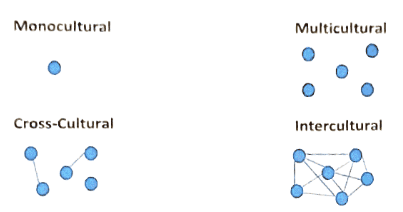
In short, in an intercultural setting, no one is left unchanged. Every culture impacts the others
We had a chance to use some of the resources ourselves; breaking into groups where we talked about our own worshiping communities. I recognized that in my own parish we’re a multi-cultural parish that is increasingly stepping into intercultural spaces.
To step into that space requires the deconstruction and unpacking of the white culture which has dominated the church in the west. This will be painful. It will be a death. It will require us to bear a cross. Thankfully we have a God that meets us at the cross.
Previous Post

January 3, 2020
Day 1: The North American Academy of Liturgy 2020 #NAAL2020
Next Post
February 26, 2020 Welcome to Lent
Browse Our Archives
Select a Category Art Bible Books CCC Prayer Christmas Current Events Family Film Free Photo Fridays Humor hunger liturgical calendar liturgy Music Photos pope Prayer Prayerful Leader questions Quotes Review Saints Satire Scripture SYNOD SYNOD FOR THE FAMILY teaching Uncategorized video Weekly Round Up
Select a Month October 2026 September 2026 August 2026 July 2026 April 2026 February 2026 December 2025 November 2025 October 2025 September 2025 August 2025 July 2025 June 2025 May 2025 April 2025 February 2025 January 2025 September 2024 June 2024 May 2024 February 2024 December 2023 August 2023 May 2023 February 2023 November 2022 July 2022 June 2022 May 2022 March 2022 May 2021 April 2021 March 2021 February 2021 January 2021 September 2020 April 2020 March 2020 February 2020 January 2020 December 2019 November 2019 October 2019 August 2019 June 2019 May 2019 March 2019 January 2019 December 2018 August 2018 June 2018 April 2018 March 2018 February 2018 December 2017 November 2017 September 2017 August 2017 July 2017 June 2017 April 2017 March 2017 February 2017 December 2016 November 2016 February 2016 January 2016 November 2015 October 2015 August 2015 July 2015 June 2015 May 2015 April 2015 March 2015 February 2015 January 2015 December 2014 November 2014 October 2014 September 2014 August 2014 July 2014 June 2014 May 2014 April 2014 March 2014 February 2014 January 2014 December 2013 November 2013 October 2013 September 2013 August 2013 July 2013 June 2013 May 2013 April 2013 March 2013 February 2013 January 2013 December 2012 November 2012 October 2012 August 2012 July 2012 June 2012 May 2012 April 2012 March 2012 February 2012 January 2012 December 2011 November 2011 October 2011 September 2011 August 2011 July 2011 June 2011 May 2011 April 2011 March 2011 February 2011 January 2011 December 2010 November 2010 October 2010 September 2010 August 2010 July 2010 June 2010 May 2010 April 2010 March 2010 February 2010 January 2010 December 2009 November 2009 October 2009 September 2009 August 2009 July 2009 June 2009 April 2009 March 2009 February 2009 January 2009 October 2008 August 2008 June 2008 May 2008 April 2008 March 2008 February 2008 January 2008 December 2007 November 2007
Follow Us!
TAKE THE
Religious Wisdom Quiz
In 1 Peter, what will the proven genuineness of faith result in?
Select your answer to see how you score.
Salvation Eternal life Praise, glory and honor when Jesus is revealed Blessings
Related posts from The Orant

What If You Are God’s Currency?

May Wendell Berry Trouble Your Thoughts Today
TRENDING AT PATHEOS Catholic

In one sense walking into Westminster Abbey is like walking down the...

'Super Scam Me' Exposes AI Jon Bon Jovi...
Leslie Pickett believed she was in a relationship with Jon Bon Jovi....

The Brazilian Remake of Kendricks' 'Flywheel' Opens in...
“Flywheel,” the story that launched the Kendrick Brothers’ filmmaking career is getting...

The Dangers of Gradual Accommodation (Winking at Sin)
Recently, the “law of gradualness” resurfaced during the opening of a weeklong,...

The Iron Gates and the Lion of the...
Yesterday, I didn't finish my report about, well, yesterday. So I'll...

The Image: On the Horror of Capitalism and...
The Image Then went the Pharisees, and took counsel how they might...
view all Catholic blogs
Ad-Free & Subscriber Log-In Subscription Support
- About Us
- 2026 Calendar
- Videos
- Podcasts
- Library of World Religions
- Faith In Media Tracker
- Advertise With Us
- Write for Us
- Privacy Policy
- Terms of Service
- Do Not Sell My Data
- Contact Us
- Radiant Digital
- Manage Newsletter Subscriptions
- Unsubscribe From Notifications
- Sitemap
Copyright 2008-2026, Patheos. All rights reserved.
Subscription Support Ad-Free & Subscriber Log-In
Follow Patheos