
BuddhistCatholicContemplativeEvangelicalGeneral ChristianHinduJewishLatter-day SaintMuslimNew VisionsProgressive Christian
Beliefs
- Buddhist
- Catholic
- Contemplative
- Evangelical
- General Christian
- Hindu
- Jewish
- Latter-day Saint
- More Voices
- Muslim
- New Visions
- Pagan
- Progressive Christian
Topics
- Religion News
- Food and Religion
- Sports and Religion
- Religious Art
- Religious Music and Entertainment
- Religious Events
- History and Religion
- Style and Religion
- Politics and Religion
- Women in Religion
- Recreation Outdoors and Religion
- Business Finance and Religion
- Careers Workplace and Religion
- Education and Religion
- Family Parenting and Religion
- Health Fitness and Religion
- Home and Religion
- Relationships and Religion
- Technology and Religion
- Travel and Religion
Columnists
- Buddhist Columnists
- Business Finance and Religion Columnists
- Careers Workplace and Religion Columnists
- Catholic Columnists
- Contemplative Columnists
- Education and Religion Columnists
- Evangelists Columnists
- Family Parenting and Religion Columnists
- General Christian Columnists
- Health Fitness and Religion Columnists
- Hindu Columnists
- History and Religion Columnists
- Home and Religion Columnists
- Jewish Columnists
- More Voices Columnists
- Latter Day Columnists
- Muslim Columnists
- New Visions Columnists
- Nonreligious Columnists
- Pagan Columnists
- Politics and Religion Columnists
- Progressive Columnists
- Recreation Outdoors and Religion Columnists
- Relationships and Religion Columnists
- Religion News Columnists
- Religious Art Columnists
- Religious Events Columnists
- Religious Music and Entertainment Columnists
- Sports and Religion Columnists
- Style and Religion Columnists
- Technology and Religion Columnists
- Travel and Religion Columnists
- Women in Religion Columnists
Resource Library
- 2026 Calendar
- Library of World Religions
- The 100 Most Holy Places on Earth
- Patheos Answers
- Podcasts
- Videos
- Faith Leaders Database
- Anglican Episcopalian
- Bahai
- Baptist
- Buddhism
- Christianity
- Confucianism
- Eastern Orthodoxy
- Hinduism
- Holiness and Pentecostal
- ISKCON
- Islam
- Judaism
- Lutheran
- Methodist
- The Church of Jesus Christ of Latter-day Saints
- New Age
- Paganism
- Presbytarian and Reformed
- Protestantism
- Religion Behind the Scenes
- Roman Catholic
- Scientology
- Shia Islam
- Sikhism
- Sufism
- Sunni Islam
- Taoism
- Zen
- See all religions
Research Tools
 Ad-Free & Subscriber Log-In Subscription Support
Ad-Free & Subscriber Log-In Subscription Support
Follow Patheos 

- Trending:
- Forgiveness
- |
- Marriage
- |
- Consciousness
- |
- Death Penalty
- |
- Election
- |
- Halloween

- Home
- Catholic
- How to Read the Psalms and other Biblical poetry
How to Read the Psalms and other Biblical poetry
Last updated on: January 17, 2015 at 3:19 pm by Billy Kangas
How to Read the Psalms and other Biblical poetry 2015-01-17T15:19:35-04:00 Billy Kangas
Patheos Explore the world's faith through different perspectives on religion and spirituality! Patheos has the views of the prevalent religions and spiritualities of the world.
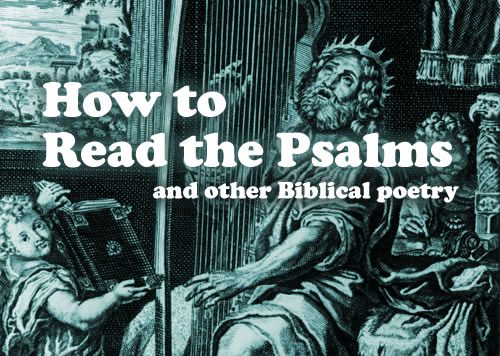
Poetry is a dying art. Few people write it, read it, or would even know how to if they tried. It requires a heart, an imagination, and the ability to sit within a tension. In today’s sound-bite culture people have lost the essential ability to read with the kind of reflection and pacing necessary to read a poem.
This is a deeply tragic cultural illiteracy. Being unable to dwell in poetry means you are unable to dwell in the world of the Bible because so much of the Bible is poetry.
Obviously there are poems that make up the Psalms, but poems also are scattered throughout almost every book of the Bible in one way or another. The prophets are almost entirely written in poetic form and some of the deepest theology in the New Testament is created employing forms of parallelism in the Greek text that dwell on the rich heritage of Hebrew Poetry (look at Philippians 2 for example). Jesus himself used poetry more than any other source to frame and define his action to the Jewish world he inhabited.
Understanding biblical poetry is essential to understanding the Bible as a whole.
I have had difficulty learning how to read poetry in the Bible. For many years I struggled. Biblical poetry doesn’t rhyme. It doesn’t have meter. Even after I learned the original languages of the Bible I found it difficult.
The thing that helped open up the poetry of the Bible was learning about a feature of biblical poetry called parallelism. What parallelism basically means is that one line of poetry has a direct relationship with another line of poetry, and must be read in that relationship in order to be understood. The meaning of the passage is not just in the lines themselves but in the tension created between the two lines. It’s like creating a perception of depth by seeing a truth through both eyes.
Parallelism can function in a number of ways. A few years ago a teacher at seminary, Robert L Hubbard , Jr. helped me to understand this better using the symbols = < and >. I would go through a poem and make one of these three marks next to each line to help me think about the relationship between the two lines. I will explain what each symbol means below:
If a line of poetry is = to the line that follows it then the parts of the lines are interchangeable. The second line ECHOES the first line.
An example of this kind of poetry can be found in Amos 8:10
- I will turn your feasts into mourning
- and all your songs into lamentation;
You could switch Feasts with Songs or Mourning with Lamentations and the meaning stays about the same.
You could also see a form of this kind of comparison where the second line is actually trying to CONTRAST the first line. In this situation the parts are not so much interchangeable but in direct tension with one another semantically. In a case like this you might use the “≠” sign.
If a line of poetry is > to the line that follows it. The second line is used to qualify the first line, and help bring the first line into great clarity or more completeness.
This can be done by qualify the time of the first line, the reason for the first line, or the means of the first line. In other words the second line can show how, why, or when the first line came about.
An example of this is given in Amos 5:20
- Will not the day of the LORD be darkness,
- not light–pitch-dark, without a ray of brightness?
The second line deepens the understanding of the first line
If a line of poetry is < to the line that follows it. The first line is used to introduce the second line, and the second line expands or completes the first line.
This can be used to continue the first line, compare something in the first line, intensify something in the first line, so specify something in the first line (this can be spatial, explanatory, for dramatic effect, or give the purpose of the first line).
An example of this is given in Amos 7:11
- Jeroboam will die by the sword,
- and Israel will surely go into exile, away from their native land
This set of verses lays out a series of events. Line one happens and then line two happens.
This little tool isn’t the end of studying Hebrew poetry, but it has helped me a great deal. Ever since I started reading with these eyes the Psalms have come alive to me. Give it a try print out a psalm and go through each line looking for a matching line before or after it. Try to figure out what relationships are at play. Let me know what your experience is like reading for parallelism in the comments below!
Previous Post

December 30, 2014
10 Ways the Creed Matters to Your Faith
Next Post
January 10, 2015 Eastern Orthodoxy and The Pope: A Brief History
Browse Our Archives
Select a Category Art Bible Books CCC Prayer Christmas Current Events Family Film Free Photo Fridays Humor hunger liturgical calendar liturgy Music Photos pope Prayer Prayerful Leader questions Quotes Review Saints Satire Scripture SYNOD SYNOD FOR THE FAMILY teaching Uncategorized video Weekly Round Up
Select a Month October 2026 September 2026 August 2026 July 2026 April 2026 February 2026 December 2025 November 2025 October 2025 September 2025 August 2025 July 2025 June 2025 May 2025 April 2025 February 2025 January 2025 September 2024 June 2024 May 2024 February 2024 December 2023 August 2023 May 2023 February 2023 November 2022 July 2022 June 2022 May 2022 March 2022 May 2021 April 2021 March 2021 February 2021 January 2021 September 2020 April 2020 March 2020 February 2020 January 2020 December 2019 November 2019 October 2019 August 2019 June 2019 May 2019 March 2019 January 2019 December 2018 August 2018 June 2018 April 2018 March 2018 February 2018 December 2017 November 2017 September 2017 August 2017 July 2017 June 2017 April 2017 March 2017 February 2017 December 2016 November 2016 February 2016 January 2016 November 2015 October 2015 August 2015 July 2015 June 2015 May 2015 April 2015 March 2015 February 2015 January 2015 December 2014 November 2014 October 2014 September 2014 August 2014 July 2014 June 2014 May 2014 April 2014 March 2014 February 2014 January 2014 December 2013 November 2013 October 2013 September 2013 August 2013 July 2013 June 2013 May 2013 April 2013 March 2013 February 2013 January 2013 December 2012 November 2012 October 2012 August 2012 July 2012 June 2012 May 2012 April 2012 March 2012 February 2012 January 2012 December 2011 November 2011 October 2011 September 2011 August 2011 July 2011 June 2011 May 2011 April 2011 March 2011 February 2011 January 2011 December 2010 November 2010 October 2010 September 2010 August 2010 July 2010 June 2010 May 2010 April 2010 March 2010 February 2010 January 2010 December 2009 November 2009 October 2009 September 2009 August 2009 July 2009 June 2009 April 2009 March 2009 February 2009 January 2009 October 2008 August 2008 June 2008 May 2008 April 2008 March 2008 February 2008 January 2008 December 2007 November 2007
Follow Us!
TAKE THE
Religious Wisdom Quiz
What's the main theme of the Book of Job?
Select your answer to see how you score.
Genealogies Exile and return Building a wall Why good people suffer
Related posts from The Orant

What If You Are God’s Currency?

May Wendell Berry Trouble Your Thoughts Today
TRENDING AT PATHEOS Catholic

Emotion in Early Christianity by Andrew Crislip
Andrew Crislip’s Emotion in Early Christianity examines an often overlooked dimension of...

16 Spiritual Touchstones for a More Grounded Life
After decades of spiritual study, here are 16 principles I try...

Catholic Evangelization: Sharing Your Faith Every Day
Welcome back to the Graceful Awakening mini-series called, “From Faith to Mission.” ...

The Pillar of the Boatmen: the Ancient Monument...
The Pillar of the Boatmen is a Romano-Gaulish sculpture that dates from...

In one sense walking into Westminster Abbey is like walking down the...

'Super Scam Me' Exposes AI Jon Bon Jovi...
Leslie Pickett believed she was in a relationship with Jon Bon Jovi....
view all Catholic blogs
Ad-Free & Subscriber Log-In Subscription Support
- About Us
- 2026 Calendar
- Videos
- Podcasts
- Library of World Religions
- Faith In Media Tracker
- Advertise With Us
- Write for Us
- Privacy Policy
- Terms of Service
- Do Not Sell My Data
- Contact Us
- Radiant Digital
- Manage Newsletter Subscriptions
- Unsubscribe From Notifications
- Sitemap
Copyright 2008-2026, Patheos. All rights reserved.
Subscription Support Ad-Free & Subscriber Log-In
Follow Patheos