
BuddhistCatholicContemplativeEvangelicalGeneral ChristianHinduJewishLatter-day SaintMuslimNew VisionsProgressive Christian
Beliefs
- Buddhist
- Catholic
- Contemplative
- Evangelical
- General Christian
- Hindu
- Jewish
- Latter-day Saint
- More Voices
- Muslim
- New Visions
- Pagan
- Progressive Christian
Topics
- Religion News
- Food and Religion
- Sports and Religion
- Religious Art
- Religious Music and Entertainment
- Religious Events
- History and Religion
- Style and Religion
- Politics and Religion
- Women in Religion
- Recreation Outdoors and Religion
- Business Finance and Religion
- Careers Workplace and Religion
- Education and Religion
- Family Parenting and Religion
- Health Fitness and Religion
- Home and Religion
- Relationships and Religion
- Technology and Religion
- Travel and Religion
Columnists
- Buddhist Columnists
- Business Finance and Religion Columnists
- Careers Workplace and Religion Columnists
- Catholic Columnists
- Contemplative Columnists
- Education and Religion Columnists
- Evangelists Columnists
- Family Parenting and Religion Columnists
- General Christian Columnists
- Health Fitness and Religion Columnists
- Hindu Columnists
- History and Religion Columnists
- Home and Religion Columnists
- Jewish Columnists
- More Voices Columnists
- Latter Day Columnists
- Muslim Columnists
- New Visions Columnists
- Nonreligious Columnists
- Pagan Columnists
- Politics and Religion Columnists
- Progressive Columnists
- Recreation Outdoors and Religion Columnists
- Relationships and Religion Columnists
- Religion News Columnists
- Religious Art Columnists
- Religious Events Columnists
- Religious Music and Entertainment Columnists
- Sports and Religion Columnists
- Style and Religion Columnists
- Technology and Religion Columnists
- Travel and Religion Columnists
- Women in Religion Columnists
Resource Library
- 2026 Calendar
- Library of World Religions
- The 100 Most Holy Places on Earth
- Patheos Answers
- Podcasts
- Videos
- Faith Leaders Database
- Anglican Episcopalian
- Bahai
- Baptist
- Buddhism
- Christianity
- Confucianism
- Eastern Orthodoxy
- Hinduism
- Holiness and Pentecostal
- ISKCON
- Islam
- Judaism
- Lutheran
- Methodist
- The Church of Jesus Christ of Latter-day Saints
- New Age
- Paganism
- Presbytarian and Reformed
- Protestantism
- Religion Behind the Scenes
- Roman Catholic
- Scientology
- Shia Islam
- Sikhism
- Sufism
- Sunni Islam
- Taoism
- Zen
- See all religions
Research Tools
 Ad-Free & Subscriber Log-In Subscription Support
Ad-Free & Subscriber Log-In Subscription Support
Follow Patheos 

- Trending:
- Forgiveness
- |
- Marriage
- |
- Consciousness
- |
- Death Penalty
- |
- Election
- |
- Halloween

- Home
- Catholic
- The Call to be Immaculate: Why Holiness Matters
The Call to be Immaculate: Why Holiness Matters
Last updated on: December 8, 2014 at 10:23 am by Billy Kangas
The Call to be Immaculate: Why Holiness Matters 2014-12-08T10:23:14-04:00 Billy Kangas
Patheos Explore the world's faith through different perspectives on religion and spirituality! Patheos has the views of the prevalent religions and spiritualities of the world.
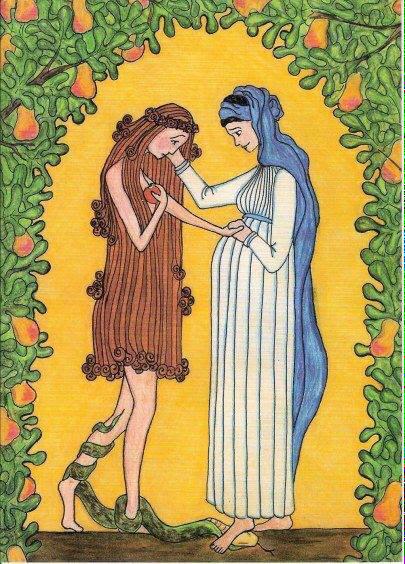 Holiness is a theological concept that under-girds the entire life of the Christian community. It is fundamental to the life and experience of the Church as well as the life of God as revealed to us. Although holiness is an adjective that is used to describe every member of the Trinity, the Creed connects it to the life of the community of faith in the third article as one of the four marks of the Church as an outworking of the life of the Holy Spirit – who is the object of the Creed’s third article. This special ministry of the Holy Spirit offers a way for the Christian Community to be joined in the life of the immanent Trinity through their encounter with the economic Trinity. I think that on this feast of the Immaculate Conception it will do us well to look at holiness. At it’s heart the theological basis of the Immaculate Conception is that Mary, as the one full of Grace, offers us a subjective view of Holiness which we are all called to. So let’s take a look at holiness for a moment together!
A – Holiness as a ministry of the Holy Spirit
The choice to include the holiness of the Church as part of its creedal explication on the Holy Spirit highlights how important the theology of the Holy Spirit is related to the theology of holiness generally. All hope of holiness is rooted in the Holy Spirit’s ministry within the life of the community of faith. To say something is holy is to affirm that it has been touched by God through the Holy Spirit. This is one of the key reasons that in the Eastern Church there developed quite early the tradition of including a pneumatological epiclesis to its Eucharistic anaphora early on; a practice which has now been included in the Western liturgical tradition as well.[1] We make space to affirm the Holy Spirit’s role in our liturgical and sacramental life.
All of the Christian life that is touched by holiness participates in the very holiness of God. This ontological communion is established and vivified by the active working of the Holy Spirit as it incorporates our temporal reality into the eternal perichoresis of the divine community of Father, Son and Holy Spirit. That is to say that God’s life breaks into the life of the Christian community through the ministry of the Holy Spirit. So while the participation of the faithful in God’s essential holiness is necessarily pneumatological in its facility, it is Trinitarian in its ontological grounding. Therefore an examination of Holiness as it relates to the life of the Godhead is also important.
B – The Holy Trinity
In the dogmatic constitution, Lumen Gentium, the Catholic Church grounds its understanding of holiness in the life of the Trinity. Human holiness is the destiny of man and an essential outworking of the divine plan to “raise men to a participation in the divine life.”[2] In other words human beings are created to be holy as God is holy. They are made for worship. As such, any understanding of holiness must be grounded in the theology of the Trinity.
The Catholic Church speaks of our relationship to each member of the Trinity in its theological reflection. In Lumen Gentium it identifies the holiness of the Father as the end of human salvation stating:
Fortified by so many and such powerful means of salvation, all the faithful, whatever their condition or state, are called by the Lord, each in his own way, to that perfect holiness whereby the Father Himself is perfect.[3]
This salvation is accomplished through the Son who offers himself as a model of holiness in which human nature might now participate, through the incarnation.[4] Jesus, in entering into the nature and life of humanity, offers humanity an opportunity for a restoration of the divine plan for human holiness. Through the pascal mystery the Father introduces human nature into the divine life, in the incarnation of Christ, through the working of the Holy Spirit.[5] In Christ, God’s intention for a humanity united in God’s own holiness finds its completion. The vivifying work of the Holy Spirit is expressed as it bonds the faithful into Christ in the new human community, with a divine destination: the Holy Church.
C – The Holy Church
In the mass of the Roman rite, the priest asks God to “confirm in faith and charity your pilgrim Church on earth.” This simple supplication formulates what the Church believes its own path to holiness is.[6] This prayer identifies the Church both as in the world, but also underscores that Church finds its origin and destination in God. In a word, the Church in the location on earth where “the spirit flourishes.”[7] As the St. John Paul II wrote of the Church,
Although the Church possesses a “hierarchical” structure, nevertheless this structure is totally ordered to the holiness of Christ’s members. And holiness is measured according to the “great mystery” in which the Bride responds with the gift of love to the gift of the Bridegroom. She does this “in the Holy Spirit”, since “God’s love has been poured into our hearts through the Holy Spirit who has been given to us.” [8]
We look to the Church as God’s instrument of sanctification in the world. Though there are sinners who serve in the church at every level, though faith, we know that God has ordained the Church as his tool to make a holy people. Therefore the Church remains central in the path to holiness, for it is the path itself.
D – The Saints
The holiness of the Christian Community mirrors the holiness of the Trinity in its incarnational expression. Because the Father draws men and women into his holiness through the Son, as members of the body of Christ are enlivened by the Holy Spirit they too become incarnational beacons of divine holiness in their own particular contexts. This truth is perhaps most powerfully seen in the person and ministry of Mary, the mother of God, who Catholic theology teaches was gifted with an “entirely unique holiness” so that she might become God’s “handmaid” is the “service of redemption.”[9] Mary is a model of what it means to be a “saint,” a word that literally means “holy one.” She is one who is made holy through Christ, in the Spirit, to the Father. As Henri de Lubac highlighted, Mary offers the Church holiness in the subjective form.[10]
Similarly many other men and women have been led into participation in God’s holy life. Some of these have been particularly recognized as “holy” by the Church, and have been formally canonized. Countless more have died without formal recognition, but the Church affirms them liturgically on All Saints Day, which is celebrated on November 1. These men and women offer their lives as concrete example of the continuing work of sanctification that God is extending to humanity through the ministry of Christ and the Holy Spirit in the Church. Through the saints the Holy Spirit “manifests his holiness and continues the work of salvation.”[11]
E – The Universal call to Holiness
The call to holiness does not end with the saints, but extends to all. Lumen Gentium dedicates its fifth chapter to exploring this theme.[12] It states that all members of the Church are called to be holy within the context of their individual lives. Each person is called to share in God’s holy divine nature in whatever way they are called, and gifted; and in whichever situation that they live in. Some are called to live this holiness as priests, others as religious, and others as members of the laity. Each vocation comes with its own challenges and opportunities for laboring in the love of Christ. These sacrifices build up the community of charity, which is the Church, God’s tool of sanctification; as well as witness to Christ to the world. Each person is also called to exercise their gifts and vocation in the liturgical and sacramental life of the Church, where God’s holiness is most readily offered for the life of the world.
Notes:
[1] For an excellent study on the history and theology of the Epiclesis in Christian liturgy, and how it became so closely associated with the role of the Holy Spirit in the sacramental life of the church see John McKenna, The Eucharistic Epiclesis: A Detailed History from the Patristic to the Modern Era (Chicago, IL: Liturgy Training Publications, 2009).
[2] Lumen Gentium (LG), 2
[3] LG, 11
[4] See the Catechism of the Catholic Church (CCC), paragraph 459.
[5] See CCC, 648.
[6] In Latin, “Ecclésiam tuam, peregrinántem in terra, in fide et caritáte firmáre dignéris” see: Catholic Church, Missale Romanum: Ex Decreto Sacrosancti Œcumenici Concilii Vaticani II Instauratum Auctoritate Pauli PP. VI Promulgatum Ioannis Pauli PP. II Cura Recognitum, Editio Typica Tertia (Libreria Editrice Vaticana, 2008), 1005.
[7] A phrase from The Apostolic Tradition, 35; as quoted in CCC, 749.
[8] Mulieris Dignitatem, 27
[9] LG, 56.
[10]For a full exploration by de Lubac on the relationship between Mary and the Church see: Henri de Lubac, The Splendor of the Church, trans. Michael Mason (San Francisco: Ignatius Press, 1999), 314–380.
[11] CCC, 688.
[12]LG, 39-41
Previous Post

December 7, 2014
Getting Fired up, After Burning Out
Next Post
December 11, 2014 Five Things You Don’t Know About Christmas (and probably should)
Browse Our Archives
Select a Category Art Bible Books CCC Prayer Christmas Current Events Family Film Free Photo Fridays Humor hunger liturgical calendar liturgy Music Photos pope Prayer Prayerful Leader questions Quotes Review Saints Satire Scripture SYNOD SYNOD FOR THE FAMILY teaching Uncategorized video Weekly Round Up
Select a Month October 2026 September 2026 August 2026 July 2026 April 2026 February 2026 December 2025 November 2025 October 2025 September 2025 August 2025 July 2025 June 2025 May 2025 April 2025 February 2025 January 2025 September 2024 June 2024 May 2024 February 2024 December 2023 August 2023 May 2023 February 2023 November 2022 July 2022 June 2022 May 2022 March 2022 May 2021 April 2021 March 2021 February 2021 January 2021 September 2020 April 2020 March 2020 February 2020 January 2020 December 2019 November 2019 October 2019 August 2019 June 2019 May 2019 March 2019 January 2019 December 2018 August 2018 June 2018 April 2018 March 2018 February 2018 December 2017 November 2017 September 2017 August 2017 July 2017 June 2017 April 2017 March 2017 February 2017 December 2016 November 2016 February 2016 January 2016 November 2015 October 2015 August 2015 July 2015 June 2015 May 2015 April 2015 March 2015 February 2015 January 2015 December 2014 November 2014 October 2014 September 2014 August 2014 July 2014 June 2014 May 2014 April 2014 March 2014 February 2014 January 2014 December 2013 November 2013 October 2013 September 2013 August 2013 July 2013 June 2013 May 2013 April 2013 March 2013 February 2013 January 2013 December 2012 November 2012 October 2012 August 2012 July 2012 June 2012 May 2012 April 2012 March 2012 February 2012 January 2012 December 2011 November 2011 October 2011 September 2011 August 2011 July 2011 June 2011 May 2011 April 2011 March 2011 February 2011 January 2011 December 2010 November 2010 October 2010 September 2010 August 2010 July 2010 June 2010 May 2010 April 2010 March 2010 February 2010 January 2010 December 2009 November 2009 October 2009 September 2009 August 2009 July 2009 June 2009 April 2009 March 2009 February 2009 January 2009 October 2008 August 2008 June 2008 May 2008 April 2008 March 2008 February 2008 January 2008 December 2007 November 2007
Follow Us!
TAKE THE
Religious Wisdom Quiz
How long was Jonah in the belly of the great fish?
Select your answer to see how you score.
Three days and nights Seven nights One day Ten days
Related posts from The Orant

What If You Are God’s Currency?
May Wendell Berry Trouble Your Thoughts Today
TRENDING AT PATHEOS Catholic

Catholic Evangelization: Sharing Your Faith Every Day
Welcome back to the Graceful Awakening mini-series called, “From Faith to Mission.” ...

The Pillar of the Boatmen: the Ancient Monument...
The Pillar of the Boatmen is a Romano-Gaulish sculpture that dates from...

In one sense walking into Westminster Abbey is like walking down the...

'Super Scam Me' Exposes AI Jon Bon Jovi...
Leslie Pickett believed she was in a relationship with Jon Bon Jovi....

The Brazilian Remake of Kendricks' 'Flywheel' Opens in...
“Flywheel,” the story that launched the Kendrick Brothers’ filmmaking career is getting...

The Dangers of Gradual Accommodation (Winking at Sin)
Recently, the “law of gradualness” resurfaced during the opening of a weeklong,...
view all Catholic blogs
Ad-Free & Subscriber Log-In Subscription Support
- About Us
- 2026 Calendar
- Videos
- Podcasts
- Library of World Religions
- Faith In Media Tracker
- Advertise With Us
- Write for Us
- Privacy Policy
- Terms of Service
- Do Not Sell My Data
- Contact Us
- Radiant Digital
- Manage Newsletter Subscriptions
- Unsubscribe From Notifications
- Sitemap
Copyright 2008-2026, Patheos. All rights reserved.
Subscription Support Ad-Free & Subscriber Log-In
Follow Patheos