
BuddhistCatholicContemplativeEvangelicalGeneral ChristianHinduJewishLatter-day SaintMuslimNew VisionsProgressive Christian
Beliefs
- Buddhist
- Catholic
- Contemplative
- Evangelical
- General Christian
- Hindu
- Jewish
- Latter-day Saint
- More Voices
- Muslim
- New Visions
- Pagan
- Progressive Christian
Topics
- Religion News
- Food and Religion
- Sports and Religion
- Religious Art
- Religious Music and Entertainment
- Religious Events
- History and Religion
- Style and Religion
- Politics and Religion
- Women in Religion
- Recreation Outdoors and Religion
- Business Finance and Religion
- Careers Workplace and Religion
- Education and Religion
- Family Parenting and Religion
- Health Fitness and Religion
- Home and Religion
- Relationships and Religion
- Technology and Religion
- Travel and Religion
Columnists
- Buddhist Columnists
- Business Finance and Religion Columnists
- Careers Workplace and Religion Columnists
- Catholic Columnists
- Contemplative Columnists
- Education and Religion Columnists
- Evangelists Columnists
- Family Parenting and Religion Columnists
- General Christian Columnists
- Health Fitness and Religion Columnists
- Hindu Columnists
- History and Religion Columnists
- Home and Religion Columnists
- Jewish Columnists
- More Voices Columnists
- Latter Day Columnists
- Muslim Columnists
- New Visions Columnists
- Nonreligious Columnists
- Pagan Columnists
- Politics and Religion Columnists
- Progressive Columnists
- Recreation Outdoors and Religion Columnists
- Relationships and Religion Columnists
- Religion News Columnists
- Religious Art Columnists
- Religious Events Columnists
- Religious Music and Entertainment Columnists
- Sports and Religion Columnists
- Style and Religion Columnists
- Technology and Religion Columnists
- Travel and Religion Columnists
- Women in Religion Columnists
Resource Library
- 2026 Calendar
- Library of World Religions
- The 100 Most Holy Places on Earth
- Patheos Answers
- Podcasts
- Videos
- Faith Leaders Database
- Anglican Episcopalian
- Bahai
- Baptist
- Buddhism
- Christianity
- Confucianism
- Eastern Orthodoxy
- Hinduism
- Holiness and Pentecostal
- ISKCON
- Islam
- Judaism
- Lutheran
- Methodist
- The Church of Jesus Christ of Latter-day Saints
- New Age
- Paganism
- Presbytarian and Reformed
- Protestantism
- Religion Behind the Scenes
- Roman Catholic
- Scientology
- Shia Islam
- Sikhism
- Sufism
- Sunni Islam
- Taoism
- Zen
- See all religions
Research Tools
 Ad-Free & Subscriber Log-In Subscription Support
Ad-Free & Subscriber Log-In Subscription Support
Follow Patheos 

- Trending:
- Forgiveness
- |
- Marriage
- |
- Consciousness
- |
- Death Penalty
- |
- Election
- |
- Halloween

- Home
- Catholic
- 6 Lessons from John of the Cross to Advent Pilgrims
6 Lessons from John of the Cross to Advent Pilgrims
Last updated on: December 6, 2014 at 12:06 pm by Billy Kangas
6 Lessons from John of the Cross to Advent Pilgrims 2014-12-06T12:06:57-04:00 Billy Kangas
Patheos Explore the world's faith through different perspectives on religion and spirituality! Patheos has the views of the prevalent religions and spiritualities of the world.
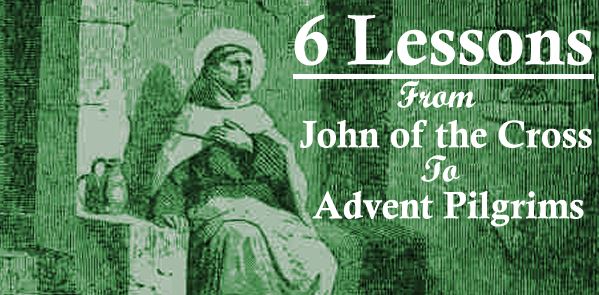 Advent is a season that the christian church has historically used as a time to examine itself, to undergo fasts, and to take time to seek greater union with God. It is rooted in the belief in a radical hope, in spite of a life fulled with trials. There are few guides that I have found more wise and valuable in understanding these values of Advent then Saint John of the Cross. His work is profoundly powerful and also sheds a great deal of light on the profitability of those times that we today often describe as dry, or “wilderness experiences”. St. John of the Cross’ wisdom on this is most clearly seen in his classic work The Dark Night of the Soul. Much of what St. John of the Cross has to say resonates strongly with me. I do not feel as if, at this point in my life, God has allowed me to undergo a purgation of the soul as deep and dark as what John expounds upon in much of the work, however as when I read though the book I confess I am deeply convicted of my own fallenness and need of sanctification on the deepest levels. The journey of life is filled with hardships, and sometimes when we look around at the brokenness of the world, and the fallen people who make up the church we lose our hope in what God is doing. It is out of this pain that our Advent hope in Christ’s coming is rooted. If anyone knew this struggle it was John of the Cross. He was raised in a family that had been disinherited, and lived in poverty after his father died. His efforts to bring reform to his monastic order got him tortured and imprisoned by his fellow monks. Yet John was able to see the work of God in the midst of darkness both outwardly and inwardly. His words still contain many messages I think we can all learn from. Here are six affirmations that John can help us remember in this time of Advent.
1) God is the master and guide. Our relationship with God is just as vulnerable to our own sinfulness as any other relationship. The first part of The Dark Night of the Soul makes this clear as St. John evaluates how each of the seven deadly sins can be seen even within our own spiritual life and practices. If we are relying on our own spiritual disciplines to bring us closer to God we are forgetting who is ultimately responsible for the work. St. John of the Cross describes near the end of the book the ways in which God clothes us and prepares us himself for union with him. It is not our natural intelligence, our memories, or our will that can unite us with God, for according to John, these are only temporal and are to be overcome by the virtues that God provides: faith, hope, and love respectively. As John writes:
If thou wilt, oh soul, unite and wed with me, thou must come clothed interiorly with Faith….
2) The focus of our lives should be more on loving God then theological complexity. This is a lesson I need. Although, there are indeed great works of theology both within the scope of the Canon of scripture, and within the riches of christian tradition, it is easy to get caught up in a quest to understand God in all the right ways. John of the Cross offers a valuable reminder that these things in themselves do not give us a love for God, or a union with him. Love of God should be our aim. Our love for god is rooted deeper then our will or intellect it is planted in our soul. It is good to know and desire God; but our chief aim must be to love God. John Writes:
although [the pilgrim] walks, unstayed by any special interior mental light, or exterior guide, to sustain and encourage her on this lofty road, since the darkness of this night deprives her of all such aid ; still her Love and Faith which ever, like a beacon lights her way, and constantly importune her
3) God is bigger than we see. There is much more of God then either you or I can know. God transcends every method of categorisation. It comes with the territory of being (and allow me to categorize for a moment) an all powerful spirit outside of space and time. We have to be wary of letting our ideas of God become walls that block us from from drawing near to him. How we feel about God can keep us away from him. John of the Cross uses a vocabulary to describe God which is not dialectical but more pictorial. The things of God are beyond words but we can explain them, to a degree, with natural things. John of the Cross describes the wood burning as a metaphor for the difficulty our soul must go through to achieve the light of God. He also meditates upon the way light is better seen in when reflecting off dusty air then when the air is clean, this operates a similitude to show us how much darker our soul seems when seen in the light of God. In this way John reflects on many things. His preferential tendency to quote the prophets and the books of poetry over the Torah or the epistles is certainly marked. This seems to demonstrate John follows in Evagrius Ponticus’ view of theology. Namely, “The theologian is the one who prays truly, and on who prays truly is a theologian.” In this way we see the value of being led into a knowledge of God by God himself, for his is the only testimony that speaks from a true perspicacity.
4) Do not get caught in seeking God only in the ways you have known him in the past. There are times in our faith where things seem dry and perhaps even lifeless. The natural tendency of many is to go back to what has worked before, simply because it is what has worked before. Saint john of the Cross likens this to a man who leaves a building only to enter it again. He compares us to children who are weaned from the breast so that we might partake in solid food. This process is indeed dark and painful to the child, and so it it is with us. John of the Cross recommends we allow God to transform our spiritual practices as he transforms our state with him. Instead of viewing times of comfort in our prayer life as a sign that we have pleased God through what we have done, John recommends we look at them a time to see all that God has done to work his own light in our hearts just as a refiner or blacksmith removes a metal from the scorching flames to survey the work of his hands. Comfort is not a sign of accomplishment any more then difficulty is a sign of failure. Let both the sweetness and the hardship of the christian life assure you that God is carrying out his good work in your life.
5) Stay connected to the people of faith who have come before you. As our spiritual life grows difficult it is important to converse with those who have gone before through troubles and tribulations. The most cursory glance and the scriptures will show that being called by God is not always a really nice thing for the one who is called. St. John of the cross guides us through the lives and prayers of many people of God who have suffered in their journey to follow God. We see the cries of David, Jeremiah, Job, and many others. It is these lives and prayers I find solace and an assurance that if a hero of faith can cry out “the pains of hell surrounded me.” (Psalm 18:5) I can find assurance of God’s sanctifying work in my life in the midst of despair.
6) No matter how you feel, God has not thrown you away. The strongest current we can recognize in The Dark night of the Soul is that suffering is one of the ways that God draws us to himself. He desires to make us holy and humble. Even if that means that for times in our life we are not happy. The humility God seeks to work in us is not achieved by the building up of good things, but in seeing that in our own strength our lives are immersed in evils. It is because our sin is so deep that God allows us to go through the “grave and piteous griefs” and the feelings that God has forsaken us. The struggles we often associate with a lost of our spiritual unity with God are often times the means that God helps us grow into a greater union with him. According to John, our sensuality is purified by aridity, our faculties made holy through an emptiness of perceptions, and our spirit is cleansed in darkness. It is important to remember through it all that God loves you deeply and is working in you though all these things. It is not our greatness that God uses and works with, but our smallness. John writes:
To be taken with love for a soul, God does not look on its greatness, but the greatness of its humility.
As we continue through this season of Advent my prayer is that I might have the wisdom to see the work of God not just in joys of my walk with him, but also in the death we are baptized into. The season of Advent itself exists in great part because followers of Jesus recognized the need for a hope beyond their circumstances. It may not be a time of gratification, but I do feel it is a great season for cultivation, and one in which I am glad to have John of the Cross as a consort.
Previous Post

December 4, 2014
A Theological Survey of Holiness
Next Post
December 7, 2014 Getting Fired up, After Burning Out
Browse Our Archives
Select a Category Art Bible Books CCC Prayer Christmas Current Events Family Film Free Photo Fridays Humor hunger liturgical calendar liturgy Music Photos pope Prayer Prayerful Leader questions Quotes Review Saints Satire Scripture SYNOD SYNOD FOR THE FAMILY teaching Uncategorized video Weekly Round Up
Select a Month October 2026 September 2026 August 2026 July 2026 April 2026 February 2026 December 2025 November 2025 October 2025 September 2025 August 2025 July 2025 June 2025 May 2025 April 2025 February 2025 January 2025 September 2024 June 2024 May 2024 February 2024 December 2023 August 2023 May 2023 February 2023 November 2022 July 2022 June 2022 May 2022 March 2022 May 2021 April 2021 March 2021 February 2021 January 2021 September 2020 April 2020 March 2020 February 2020 January 2020 December 2019 November 2019 October 2019 August 2019 June 2019 May 2019 March 2019 January 2019 December 2018 August 2018 June 2018 April 2018 March 2018 February 2018 December 2017 November 2017 September 2017 August 2017 July 2017 June 2017 April 2017 March 2017 February 2017 December 2016 November 2016 February 2016 January 2016 November 2015 October 2015 August 2015 July 2015 June 2015 May 2015 April 2015 March 2015 February 2015 January 2015 December 2014 November 2014 October 2014 September 2014 August 2014 July 2014 June 2014 May 2014 April 2014 March 2014 February 2014 January 2014 December 2013 November 2013 October 2013 September 2013 August 2013 July 2013 June 2013 May 2013 April 2013 March 2013 February 2013 January 2013 December 2012 November 2012 October 2012 August 2012 July 2012 June 2012 May 2012 April 2012 March 2012 February 2012 January 2012 December 2011 November 2011 October 2011 September 2011 August 2011 July 2011 June 2011 May 2011 April 2011 March 2011 February 2011 January 2011 December 2010 November 2010 October 2010 September 2010 August 2010 July 2010 June 2010 May 2010 April 2010 March 2010 February 2010 January 2010 December 2009 November 2009 October 2009 September 2009 August 2009 July 2009 June 2009 April 2009 March 2009 February 2009 January 2009 October 2008 August 2008 June 2008 May 2008 April 2008 March 2008 February 2008 January 2008 December 2007 November 2007
Follow Us!
TAKE THE
Religious Wisdom Quiz
What does the Bible teach about giving to the poor?
Select your answer to see how you score.
Ignore them Take from them Be generous Insult them
Related posts from The Orant

What If You Are God’s Currency?

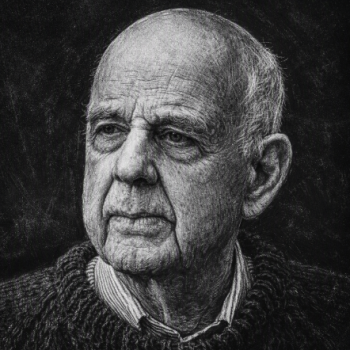
May Wendell Berry Trouble Your Thoughts Today
TRENDING AT PATHEOS Catholic

Emotion in Early Christianity by Andrew Crislip
Andrew Crislip’s Emotion in Early Christianity examines an often overlooked dimension of...

16 Spiritual Touchstones for a More Grounded Life
After decades of spiritual study, here are 16 principles I try...

Catholic Evangelization: Sharing Your Faith Every Day
Welcome back to the Graceful Awakening mini-series called, “From Faith to Mission.” ...

The Pillar of the Boatmen: the Ancient Monument...
The Pillar of the Boatmen is a Romano-Gaulish sculpture that dates from...

In one sense walking into Westminster Abbey is like walking down the...

'Super Scam Me' Exposes AI Jon Bon Jovi...
Leslie Pickett believed she was in a relationship with Jon Bon Jovi....
view all Catholic blogs
Ad-Free & Subscriber Log-In Subscription Support
- About Us
- 2026 Calendar
- Videos
- Podcasts
- Library of World Religions
- Faith In Media Tracker
- Advertise With Us
- Write for Us
- Privacy Policy
- Terms of Service
- Do Not Sell My Data
- Contact Us
- Radiant Digital
- Manage Newsletter Subscriptions
- Unsubscribe From Notifications
- Sitemap
Copyright 2008-2026, Patheos. All rights reserved.
Subscription Support Ad-Free & Subscriber Log-In
Follow Patheos