
BuddhistCatholicContemplativeEvangelicalGeneral ChristianHinduJewishLatter-day SaintMuslimNew VisionsProgressive Christian
Beliefs
- Buddhist
- Catholic
- Contemplative
- Evangelical
- General Christian
- Hindu
- Jewish
- Latter-day Saint
- More Voices
- Muslim
- New Visions
- Pagan
- Progressive Christian
Topics
- Religion News
- Food and Religion
- Sports and Religion
- Religious Art
- Religious Music and Entertainment
- Religious Events
- History and Religion
- Style and Religion
- Politics and Religion
- Women in Religion
- Recreation Outdoors and Religion
- Business Finance and Religion
- Careers Workplace and Religion
- Education and Religion
- Family Parenting and Religion
- Health Fitness and Religion
- Home and Religion
- Relationships and Religion
- Technology and Religion
- Travel and Religion
Columnists
- Buddhist Columnists
- Business Finance and Religion Columnists
- Careers Workplace and Religion Columnists
- Catholic Columnists
- Contemplative Columnists
- Education and Religion Columnists
- Evangelists Columnists
- Family Parenting and Religion Columnists
- General Christian Columnists
- Health Fitness and Religion Columnists
- Hindu Columnists
- History and Religion Columnists
- Home and Religion Columnists
- Jewish Columnists
- More Voices Columnists
- Latter Day Columnists
- Muslim Columnists
- New Visions Columnists
- Nonreligious Columnists
- Pagan Columnists
- Politics and Religion Columnists
- Progressive Columnists
- Recreation Outdoors and Religion Columnists
- Relationships and Religion Columnists
- Religion News Columnists
- Religious Art Columnists
- Religious Events Columnists
- Religious Music and Entertainment Columnists
- Sports and Religion Columnists
- Style and Religion Columnists
- Technology and Religion Columnists
- Travel and Religion Columnists
- Women in Religion Columnists
Resource Library
- 2026 Calendar
- Library of World Religions
- The 100 Most Holy Places on Earth
- Patheos Answers
- Podcasts
- Videos
- Faith Leaders Database
- Anglican Episcopalian
- Bahai
- Baptist
- Buddhism
- Christianity
- Confucianism
- Eastern Orthodoxy
- Hinduism
- Holiness and Pentecostal
- ISKCON
- Islam
- Judaism
- Lutheran
- Methodist
- The Church of Jesus Christ of Latter-day Saints
- New Age
- Paganism
- Presbytarian and Reformed
- Protestantism
- Religion Behind the Scenes
- Roman Catholic
- Scientology
- Shia Islam
- Sikhism
- Sufism
- Sunni Islam
- Taoism
- Zen
- See all religions
Research Tools
 Ad-Free & Subscriber Log-In Subscription Support
Ad-Free & Subscriber Log-In Subscription Support
Follow Patheos 

- Trending:
- Forgiveness
- |
- Marriage
- |
- Consciousness
- |
- Death Penalty
- |
- Election
- |
- Halloween

- Home
- Catholic
- Why is Bassano’s Baptism painting set at night?
Why is Bassano’s Baptism painting set at night?
Last updated on: August 26, 2014 at 3:03 pm by Billy Kangas
Why is Bassano’s Baptism painting set at night? 2014-08-26T15:03:51-04:00 Billy Kangas
Patheos Explore the world's faith through different perspectives on religion and spirituality! Patheos has the views of the prevalent religions and spiritualities of the world.
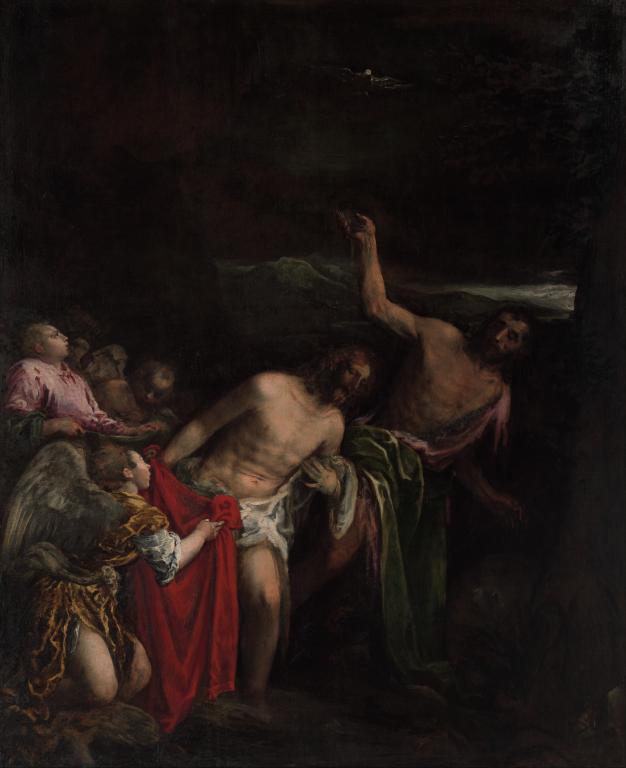
I have always been intrigued by the setting of the great Venetian painter Jacopo Bassano’s depiction of Jesus’ baptism. For some reason Bassano painted the baptism at night. I found the move intriguing. It seemed full of poetic potential. I recently ran into some analysis of the work which I found particularly interesting. Here’s Paolo Berdini on the painting:
In Bassano’s Baptism of Christ, the night obscures those
elements—the trees, the water of the Jordan River, and the river
bank—that traditionally provide the beholder with the identifying
circumstances of the event. The truncated tree at the right edge of the
canvas for example, an monographic attribute of the Baptist, is
rendered barely visible by a dash of white paint signalling its profile
against the dark background. By undermining the elements on which
an iconographic reconstruction of the narrative depends, the darkness
detours the beholder’s response towards the illuminated bodies of the
figures. Specifically, the nocturnal illumination emphasizes the perception
that the body of Christ is a suffering body. In Bassano’s image
Christ carries his body with difficulty: he is pale, unsteady on his legs,
out of breath, and dark in the face. His inclining posture represents
quite literally the theological notion of submission to God’s design
that Emile Male has characterized as “the voluntary submission of
Christ” [Tabaissementvolontaire du Christ”].Whereas throughout the Renaissance the figure of Christ at his
baptism had been consistently represented as hieratic, frontal, and
vertical as in Piero’s famous picture, in Bassano’s painting the figure of
Christ has undergone a rotation resulting in a posture that is now
semi-frontal and inclined. If we observe carefully and deconstruct, so
to speak, the new stance, we will discern a dual force at play: a movement
downwards in response to the pressure of light, which irradiates
from the dove above, and a lateral thrust initiated by John the Baptist.
The bowl per infusionem that the Baptist holds between the head of
Christ and the radiant dove establishes the vertical axis of descent to
which the lateral thrust of ascent operates as a counterpoint. The two
forces that determine the instability of the new posture are indicative
of Christ’s dual attitude: the vertical of humility in accepting baptism,
the lateral of submission to God the Father’s design. The lateral thrust
also emphasizes the Baptist’s role in leading Christ into the wilderness,
and represents the fulfillment of his role as the last prophet of the Old
Testament, which Christ’s baptism brings to an end. Entrance into the
wilderness effectively introduces the story of Christ as a story of his
passion. The lateral thrust indicates that Christ has begun his Passion;
figuratively he is about to assume the profile of the carrier of the cross.
In Bassano’s picture it is darkness itself, which the reader of the Gospel
knows to be conclusive, that confirms the allusions to the Passion, and
acts as the sign of the incumbent tragedy of the cross.In summary:
both Christ’s suffering body and the darkness of the image conspire to
alert the beholder that certain dimensions of the Baptism, extra-narratival
and metaphorical, are present and in need of explanation.
That the regeneration alluded to by baptism was the result of
Christ’s sacrifice on the cross, and that immersion in baptismal water
was a sign of participation (or co-action) in Christ’s death was stated
by Paul in one of the most controversial lines of the entire New
Testament: “Do you know that all of us who have been baptized into
Christ were baptized into his death?” (Rom 6:3). This was further
clarified by Origen, who considered baptism a sacramental gift that
should be conceived of, and accepted, as an anticipatory participation
in the sacrifice of the cross. In discussing the Baptism of Christ in the
Jordan River, Ambrose notes that after his death on the cross, Christ
had descended into Hades. His consequent ascent, the resurrection,
was made equivalent to the regeneration that baptism gives the catechumen.
Ambrose speaks of baptism as an act of “imitation” of
Christ’s death, and of the catechumen as being “co-crucified,” and in
full accordance with Paul, conceives of baptism as the sacrament of the
cross.
(From the Article “Jacopo Bassano: A Case for Painting as Visual Exegesis” found in Interpreting Christian Art)
Previous Post

August 19, 2014
Podcast: What is the Liturgy
Next Post
September 3, 2014 Understanding Agriculture in the Developing World
Browse Our Archives
Select a Category Art Bible Books CCC Prayer Christmas Current Events Family Film Free Photo Fridays Humor hunger liturgical calendar liturgy Music Photos pope Prayer Prayerful Leader questions Quotes Review Saints Satire Scripture SYNOD SYNOD FOR THE FAMILY teaching Uncategorized video Weekly Round Up
Select a Month October 2026 September 2026 August 2026 July 2026 April 2026 February 2026 December 2025 November 2025 October 2025 September 2025 August 2025 July 2025 June 2025 May 2025 April 2025 February 2025 January 2025 September 2024 June 2024 May 2024 February 2024 December 2023 August 2023 May 2023 February 2023 November 2022 July 2022 June 2022 May 2022 March 2022 May 2021 April 2021 March 2021 February 2021 January 2021 September 2020 April 2020 March 2020 February 2020 January 2020 December 2019 November 2019 October 2019 August 2019 June 2019 May 2019 March 2019 January 2019 December 2018 August 2018 June 2018 April 2018 March 2018 February 2018 December 2017 November 2017 September 2017 August 2017 July 2017 June 2017 April 2017 March 2017 February 2017 December 2016 November 2016 February 2016 January 2016 November 2015 October 2015 August 2015 July 2015 June 2015 May 2015 April 2015 March 2015 February 2015 January 2015 December 2014 November 2014 October 2014 September 2014 August 2014 July 2014 June 2014 May 2014 April 2014 March 2014 February 2014 January 2014 December 2013 November 2013 October 2013 September 2013 August 2013 July 2013 June 2013 May 2013 April 2013 March 2013 February 2013 January 2013 December 2012 November 2012 October 2012 August 2012 July 2012 June 2012 May 2012 April 2012 March 2012 February 2012 January 2012 December 2011 November 2011 October 2011 September 2011 August 2011 July 2011 June 2011 May 2011 April 2011 March 2011 February 2011 January 2011 December 2010 November 2010 October 2010 September 2010 August 2010 July 2010 June 2010 May 2010 April 2010 March 2010 February 2010 January 2010 December 2009 November 2009 October 2009 September 2009 August 2009 July 2009 June 2009 April 2009 March 2009 February 2009 January 2009 October 2008 August 2008 June 2008 May 2008 April 2008 March 2008 February 2008 January 2008 December 2007 November 2007
Follow Us!
TAKE THE
Religious Wisdom Quiz
Who interpreted Nebuchadnezzar's dream of a statue of gold, silver, bronze, iron, and clay?
Select your answer to see how you score.
Obadiah Daniel Hosea Ezekiel
Related posts from The Orant

What If You Are God’s Currency?
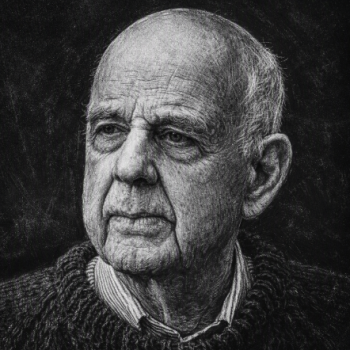
May Wendell Berry Trouble Your Thoughts Today
TRENDING AT PATHEOS Catholic

Emotion in Early Christianity by Andrew Crislip
Andrew Crislip’s Emotion in Early Christianity examines an often overlooked dimension of...

16 Spiritual Touchstones for a More Grounded Life
After decades of spiritual study, here are 16 principles I try...

Catholic Evangelization: Sharing Your Faith Every Day
Welcome back to the Graceful Awakening mini-series called, “From Faith to Mission.” ...

The Pillar of the Boatmen: the Ancient Monument...
The Pillar of the Boatmen is a Romano-Gaulish sculpture that dates from...

In one sense walking into Westminster Abbey is like walking down the...

'Super Scam Me' Exposes AI Jon Bon Jovi...
Leslie Pickett believed she was in a relationship with Jon Bon Jovi....
view all Catholic blogs
Ad-Free & Subscriber Log-In Subscription Support
- About Us
- 2026 Calendar
- Videos
- Podcasts
- Library of World Religions
- Faith In Media Tracker
- Advertise With Us
- Write for Us
- Privacy Policy
- Terms of Service
- Do Not Sell My Data
- Contact Us
- Radiant Digital
- Manage Newsletter Subscriptions
- Unsubscribe From Notifications
- Sitemap
Copyright 2008-2026, Patheos. All rights reserved.
Subscription Support Ad-Free & Subscriber Log-In
Follow Patheos