
BuddhistCatholicContemplativeEvangelicalGeneral ChristianHinduJewishLatter-day SaintMuslimNew VisionsProgressive Christian
Beliefs
- Buddhist
- Catholic
- Contemplative
- Evangelical
- General Christian
- Hindu
- Jewish
- Latter-day Saint
- More Voices
- Muslim
- New Visions
- Pagan
- Progressive Christian
Topics
- Religion News
- Food and Religion
- Sports and Religion
- Religious Art
- Religious Music and Entertainment
- Religious Events
- History and Religion
- Style and Religion
- Politics and Religion
- Women in Religion
- Recreation Outdoors and Religion
- Business Finance and Religion
- Careers Workplace and Religion
- Education and Religion
- Family Parenting and Religion
- Health Fitness and Religion
- Home and Religion
- Relationships and Religion
- Technology and Religion
- Travel and Religion
Columnists
- Buddhist Columnists
- Business Finance and Religion Columnists
- Careers Workplace and Religion Columnists
- Catholic Columnists
- Contemplative Columnists
- Education and Religion Columnists
- Evangelists Columnists
- Family Parenting and Religion Columnists
- General Christian Columnists
- Health Fitness and Religion Columnists
- Hindu Columnists
- History and Religion Columnists
- Home and Religion Columnists
- Jewish Columnists
- More Voices Columnists
- Latter Day Columnists
- Muslim Columnists
- New Visions Columnists
- Nonreligious Columnists
- Pagan Columnists
- Politics and Religion Columnists
- Progressive Columnists
- Recreation Outdoors and Religion Columnists
- Relationships and Religion Columnists
- Religion News Columnists
- Religious Art Columnists
- Religious Events Columnists
- Religious Music and Entertainment Columnists
- Sports and Religion Columnists
- Style and Religion Columnists
- Technology and Religion Columnists
- Travel and Religion Columnists
- Women in Religion Columnists
Resource Library
- 2026 Calendar
- Library of World Religions
- The 100 Most Holy Places on Earth
- Patheos Answers
- Podcasts
- Videos
- Faith Leaders Database
- Anglican Episcopalian
- Bahai
- Baptist
- Buddhism
- Christianity
- Confucianism
- Eastern Orthodoxy
- Hinduism
- Holiness and Pentecostal
- ISKCON
- Islam
- Judaism
- Lutheran
- Methodist
- The Church of Jesus Christ of Latter-day Saints
- New Age
- Paganism
- Presbytarian and Reformed
- Protestantism
- Religion Behind the Scenes
- Roman Catholic
- Scientology
- Shia Islam
- Sikhism
- Sufism
- Sunni Islam
- Taoism
- Zen
- See all religions
Research Tools
 Ad-Free & Subscriber Log-In Subscription Support
Ad-Free & Subscriber Log-In Subscription Support
Follow Patheos 

- Trending:
- Forgiveness
- |
- Marriage
- |
- Consciousness
- |
- Death Penalty
- |
- Election
- |
- Halloween

- Home
- Catholic
- 5 Guys from Early Christian History You Should Get to Know
5 Guys from Early Christian History You Should Get to Know
Last updated on: November 22, 2013 at 4:27 pm by Zach Perkins
5 Guys from Early Christian History You Should Get to Know 2013-11-22T16:27:25-04:00 Zach Perkins
Patheos Explore the world's faith through different perspectives on religion and spirituality! Patheos has the views of the prevalent religions and spiritualities of the world.

By Zachary K. Perkins
Freelance writer, blogger, full-time husband and father of three. Trying to navigate Christianity as a Millennial through the traditions of the Church.
This may not come as a surprise to you, but Christianity is a two thousand year-old religion. For much of my life in Protestantism this little fact was completely off my radar. Two thousand years is actually a really long time and considering that the period after the Reformation makes up only one-fourth of that actual timeline of the church, I believe it’s worth it for all Christians (Protestant, Catholic and Eastern Orthodox) to always try and learn more about those voices of faith who helped guide the church through it’s early struggles to the place it is today.
So I present to you 5 notable people from the 1st through 4th centuries who I consider to be essential.
Polycarp of Smyrna (69 AD)
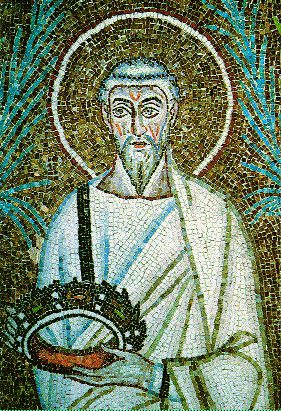 Polycarp was ordained the bishop of Smyrna by John. That’s right –John, the disciple of Jesus. Not much is known about Polycarp’s early life, but the story goes that he was a slave to two men when a godly woman by the name of Callisto redeemed Polycarp, took him into her home and taught him about Jesus Christ. As he grew in compassion and virtue, he decided to serve the Church. In his early teens, he went to learn under John and served under him for 20 years.
Polycarp started as a deacon in the church, doing work to care for the poor, the sick, the widow and the orphaned. Not long afterwards, he was so well-liked by the congregation he became a priest in his local church and was considered an invaluable pastor to his flock.
Polycarp was around 85 years old when he was taken to his death. Christians already weren’t the most liked people in the Roman Empire and mobs had begun to form in Smyrna calling for the heads of any Christian within distance. Fourteen Christians were dragged into the town arena and fed to the lions. But the mobs wanted more, so they called for the death of Polycarp, who was in hiding during that time. The town guard was sent to find him. They finally managed to find him and brought him to the arena. He was then repeatedly asked to declare allegiance to Caesar and deny Christ. With firm conviction, Polycarp declared over and over again his allegiance to Christ, until he was ordered to be burned at the stake.
The crowd setup the fire and Polycarp told the magistrate that they didn’t even need to tie him to the stake because he wouldn’t bother struggling. The flames burned around him for well over an hour without consuming him before he was finally stabbed in the chest by a soldier.
Why he’s important: Besides being one of the very first martyrs, Polycarp was one of the first bishops of the church, showing an early line of succession through ordination from the Apostles themselves to later elders and bishops. He also influenced many other faithful men who we have writings from now
Ignatius of Antioch (35 AD)
 Ignatius came to be a Christian at a very young age. Similar to Polycarp (of whom Ignatius was a friend), Ignatius devoted himself to life in the church and studied under John as well. After some time, he rose to Bishop of Antioch, being ordained by Peter himself according to tradition.
Ignatius was arrested several times by Roman authorities while traveling. It’s during this time he wrote several epistles, some of which survive to this day.
At the turn of the 2nd century, Ignatius was sentenced to be eaten by lions in the famous Colosseum in Rome. His bones were sent to Antioch and they now reside in Rome to this day.
Why he’s important: His epistles are some of the first records about early Christian theology and church life that we have to this day. Largely considered to be authentic, the seven preserved letters of Ignatius show affirmations of Christ’s deity, how to sort out disputes between the presbytery and the importance of the Eucharist, calling it “medicine of immortality” (To the Ephesians 20:2). If any Christian seeks to find the roots of Christianity, the epistles of Ignatius are very important to read.
Irenaeus of Lyons (2nd century)
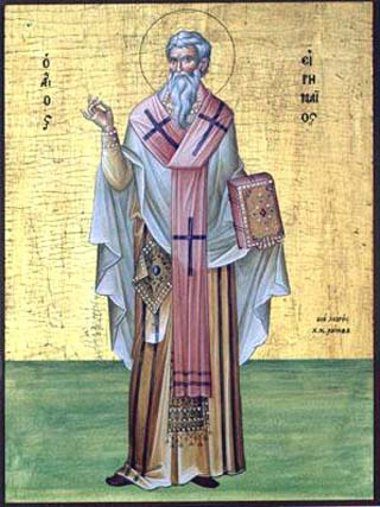 Irenaeus grew up in the 2nd century in the Gaul region, which is now known as France. He studied under Polycarp and is considered one of the greatest theologians that ever lived.
He was also raised in a Christian home. He studied theology from a young age and in his adult years wrote numerous letters against heresies that were continuing to crop up in the church, such as Gnosticism and Montanism. One of his greatest works is called Against Heresies, in which he battles the Gnostic arguments against the church and the divinity of Christ in that day. He continued this work even after being ordained Bishop of Lyons.
Not much is known about his death, but it’s guessed that he died near the end of the 2nd century as a martyr.
Why he’s important: His impact on exploring the theological foundation of Christianity cannot be stressed enough. His work has been referenced centuries after his death. His works also provide a solid foundation for exploring the unity and goodness of God. With the popularity of the “Gnostic Gospels” these days, which are false gospels written by the Gnostic sect in order to shore up their beliefs, it’s important to revisit Irenaeus because he directly addresses Gnostic gospels, such as the Gospel of Judas and dispels the myths propagated in these books. He’s also one of the first individuals in the Church to record down a canon of the many writings we now consider scripture today.
Athanasius of Alexandria (4th Century)
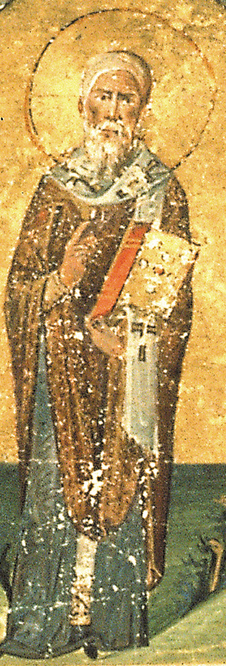 Athanasius is one of the most renowned saints in all of Christian history. He was a bishop during a time of great change in Christianity, wrote the definitive work on the Incarnation of Christ and managed to save Christianity form being overrun by heresy.
Athanasius grew up in a wealthy Christian home and received a prominent education in a Roman school. His intelligence served him well in later years when his skills of persuasion were needed during the Arian controversy. Before that time, Athanasius wrote his definitive works, Against the Heathen and On the Incarnation.
He later became bishop of Alexandria during Constantine’s reign, when Christianity was finally legalized. In 325 AD, he attended the first council of Nicea to settle the Arian controversy. Arius was a Libyan bishop who taught that Jesus Christ was a created being and therefore not co-substantial with God, ergo, Jesus is not God. Athanasius’ arguments at the council are considered to have tipped the scales of opinion amongst the Arian-leaning bishops and under Constantine’s urging, the council created the Nicene Creed.
For a while, Arius and his followers were exiled from the region, but when Constantine died several years later, his nephew Julian, brought back the exiled Arian bishops and a PR campaign was waged against Athanasius and his followers. The Arians started to take over and Athanasius was forced into exile off and on for a total of 17 years. He spent the rest of his life helping heal the wounds in the church after the controversy and died of old age in his home.
Why he’s important: It could be said that Christianity would never be the same if Athanasius had not stood his ground at Nicea and against the Arians. His writing, On the Incarnation is considered the definitive work on the divinity of Jesus Christ. To understand the Trinity and the importance of Jesus’ Godhood, this is the book you have to read.
John Chrysostom (349 AD)
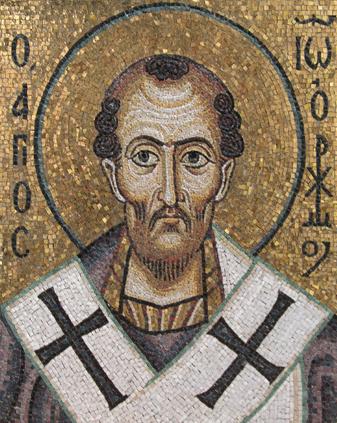 John, Archbishop of Constantinople, nicknamed “Chrysostom” which means “golden tongue” in Greek. He was given this nickname through his great oratory style. He’s considered one of the greatest theologians and preachers of all time. His love of the scriptures and great attention to what the scriptures have to say for every Christian have influenced many Christians throughout the ages.
John’s father died when he was very young and his mother raised him. He grew up fairly wealthy so he was afforded a good education in Antioch. I his adult years, he became deeply committed to Christianity and after studying theology he became a monk and hermit for two years. He had to stop though because his health was deteriorating.
When he arrived back in Antioch, he was ordained an Archbishop and for 12 years he gained notoriety for his speaking. His speaking was well known for calling his congregants to love the poor, spend time in the Holy Scriptures and for calling out corruption amongst church hierarchy.
After a while, John was nominated to be the Archbishop of Constantinople, a very notable position. It wasn’t a position he sought after, but he took it anyway. He kept mostly to himself and lived a simple life, but this didn’t sit well with the political leaders of the time who wanted him under their thumb. He protested quite loudly towards several corrupt leaders, and this eventually got him exiled. He continued to be exiled further and further distances, but at this time he was old and his health could not take it. He died before reaching his destination.
Why he’s important:
John Chrysostom is one of the most influential church fathers in the East. His popularity gave him the ability to break many misconceptions of Christianity people had. After the time Christianity was legalized, many politicians sought to use their Christian status as a way to promote themselves into higher political status. Chrysostom would have none of this. His sermons are timely for our age as they speak to lavish lifestyles and nominal Christianity.
Also, we can learn a lot from reading his homilies and commentaries. Being as masterful and thorough as he was, his exegesis of the scriptures is still used to this day. His most influential works were his homilies, of which we still have many records.
Zachary K. Perkins Freelance writer, blogger, full-time husband and father of three. Trying to navigate Christianity as a Millennial through the traditions of the Church. You can find him on Twitter or his blog.
Previous Post

November 21, 2013
Licking My Wounds
Next Post
November 22, 2013 Question Friday: What media makes you weep?
Browse Our Archives
Select a Category Art Bible Books CCC Prayer Christmas Current Events Family Film Free Photo Fridays Humor hunger liturgical calendar liturgy Music Photos pope Prayer Prayerful Leader questions Quotes Review Saints Satire Scripture SYNOD SYNOD FOR THE FAMILY teaching Uncategorized video Weekly Round Up
Select a Month October 2026 September 2026 August 2026 July 2026 April 2026 February 2026 December 2025 November 2025 October 2025 September 2025 August 2025 July 2025 June 2025 May 2025 April 2025 February 2025 January 2025 September 2024 June 2024 May 2024 February 2024 December 2023 August 2023 May 2023 February 2023 November 2022 July 2022 June 2022 May 2022 March 2022 May 2021 April 2021 March 2021 February 2021 January 2021 September 2020 April 2020 March 2020 February 2020 January 2020 December 2019 November 2019 October 2019 August 2019 June 2019 May 2019 March 2019 January 2019 December 2018 August 2018 June 2018 April 2018 March 2018 February 2018 December 2017 November 2017 September 2017 August 2017 July 2017 June 2017 April 2017 March 2017 February 2017 December 2016 November 2016 February 2016 January 2016 November 2015 October 2015 August 2015 July 2015 June 2015 May 2015 April 2015 March 2015 February 2015 January 2015 December 2014 November 2014 October 2014 September 2014 August 2014 July 2014 June 2014 May 2014 April 2014 March 2014 February 2014 January 2014 December 2013 November 2013 October 2013 September 2013 August 2013 July 2013 June 2013 May 2013 April 2013 March 2013 February 2013 January 2013 December 2012 November 2012 October 2012 August 2012 July 2012 June 2012 May 2012 April 2012 March 2012 February 2012 January 2012 December 2011 November 2011 October 2011 September 2011 August 2011 July 2011 June 2011 May 2011 April 2011 March 2011 February 2011 January 2011 December 2010 November 2010 October 2010 September 2010 August 2010 July 2010 June 2010 May 2010 April 2010 March 2010 February 2010 January 2010 December 2009 November 2009 October 2009 September 2009 August 2009 July 2009 June 2009 April 2009 March 2009 February 2009 January 2009 October 2008 August 2008 June 2008 May 2008 April 2008 March 2008 February 2008 January 2008 December 2007 November 2007
Follow Us!
TAKE THE
Religious Wisdom Quiz
What was the name of the Jewish ruling council in Jesus’ time?
Select your answer to see how you score.
Sanhedrin Sadducees Pharisees Essenes
Related posts from The Orant

What If You Are God’s Currency?
May Wendell Berry Trouble Your Thoughts Today
TRENDING AT PATHEOS Catholic

The Problem with False Prophets
Miller’s Station UMC| 10/18/26| Anchor Verse: Jeremiah 23: 1, 9-23 I...

Emotion in Early Christianity by Andrew Crislip
Andrew Crislip’s Emotion in Early Christianity examines an often overlooked dimension of...

16 Spiritual Touchstones for a More Grounded Life
After decades of spiritual study, here are 16 principles I try...

Catholic Evangelization: Sharing Your Faith Every Day
Welcome back to the Graceful Awakening mini-series called, “From Faith to Mission.” ...

The Pillar of the Boatmen: the Ancient Monument...
The Pillar of the Boatmen is a Romano-Gaulish sculpture that dates from...

In one sense walking into Westminster Abbey is like walking down the...
view all Catholic blogs
Ad-Free & Subscriber Log-In Subscription Support
- About Us
- 2026 Calendar
- Videos
- Podcasts
- Library of World Religions
- Faith In Media Tracker
- Advertise With Us
- Write for Us
- Privacy Policy
- Terms of Service
- Do Not Sell My Data
- Contact Us
- Radiant Digital
- Manage Newsletter Subscriptions
- Unsubscribe From Notifications
- Sitemap
Copyright 2008-2026, Patheos. All rights reserved.
Subscription Support Ad-Free & Subscriber Log-In
Follow Patheos