
BuddhistCatholicContemplativeEvangelicalGeneral ChristianHinduJewishLatter-day SaintMuslimNew VisionsProgressive Christian
Beliefs
- Buddhist
- Catholic
- Contemplative
- Evangelical
- General Christian
- Hindu
- Jewish
- Latter-day Saint
- More Voices
- Muslim
- New Visions
- Pagan
- Progressive Christian
Topics
- Religion News
- Food and Religion
- Sports and Religion
- Religious Art
- Religious Music and Entertainment
- Religious Events
- History and Religion
- Style and Religion
- Politics and Religion
- Women in Religion
- Recreation Outdoors and Religion
- Business Finance and Religion
- Careers Workplace and Religion
- Education and Religion
- Family Parenting and Religion
- Health Fitness and Religion
- Home and Religion
- Relationships and Religion
- Technology and Religion
- Travel and Religion
Columnists
- Buddhist Columnists
- Business Finance and Religion Columnists
- Careers Workplace and Religion Columnists
- Catholic Columnists
- Contemplative Columnists
- Education and Religion Columnists
- Evangelists Columnists
- Family Parenting and Religion Columnists
- General Christian Columnists
- Health Fitness and Religion Columnists
- Hindu Columnists
- History and Religion Columnists
- Home and Religion Columnists
- Jewish Columnists
- More Voices Columnists
- Latter Day Columnists
- Muslim Columnists
- New Visions Columnists
- Nonreligious Columnists
- Pagan Columnists
- Politics and Religion Columnists
- Progressive Columnists
- Recreation Outdoors and Religion Columnists
- Relationships and Religion Columnists
- Religion News Columnists
- Religious Art Columnists
- Religious Events Columnists
- Religious Music and Entertainment Columnists
- Sports and Religion Columnists
- Style and Religion Columnists
- Technology and Religion Columnists
- Travel and Religion Columnists
- Women in Religion Columnists
Resource Library
- 2026 Calendar
- Library of World Religions
- The 100 Most Holy Places on Earth
- Patheos Answers
- Podcasts
- Videos
- Faith Leaders Database
- Anglican Episcopalian
- Bahai
- Baptist
- Buddhism
- Christianity
- Confucianism
- Eastern Orthodoxy
- Hinduism
- Holiness and Pentecostal
- ISKCON
- Islam
- Judaism
- Lutheran
- Methodist
- The Church of Jesus Christ of Latter-day Saints
- New Age
- Paganism
- Presbytarian and Reformed
- Protestantism
- Religion Behind the Scenes
- Roman Catholic
- Scientology
- Shia Islam
- Sikhism
- Sufism
- Sunni Islam
- Taoism
- Zen
- See all religions
Research Tools
 Ad-Free & Subscriber Log-In Subscription Support
Ad-Free & Subscriber Log-In Subscription Support
Follow Patheos 

- Trending:
- Forgiveness
- |
- Marriage
- |
- Consciousness
- |
- Death Penalty
- |
- Election
- |
- Halloween

- Home
- Evangelical
- N.T. Wright’s Galatians– Part Thirty Four
N.T. Wright’s Galatians– Part Thirty Four
Last updated on: August 9, 2021 at 1:53 am by Ben Witherington
N.T. Wright’s Galatians– Part Thirty Four 2021-06-23T09:54:28-04:00 Ben Witherington
Patheos Explore the world's faith through different perspectives on religion and spirituality! Patheos has the views of the prevalent religions and spiritualities of the world.

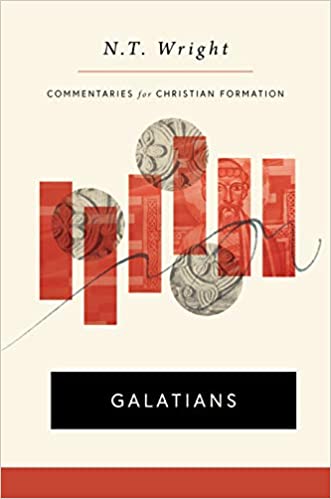
Q. I agree with you that the Sarah and Hagar tour de force in Gal. 4 is not like one of Philo’s allegories, or for that matter like Spencer’s Fairie Queene or Bunyan’s Pilgrim’s Progress. But it is an allegorizing of an historical narrative and the trick is to figure out why certain things are lined up by Paul in the way he does it. What does he mean, for example by the notion of the present Jerusalem being enslaved? Does this have to do with Roman rule? And why would Paul associate Hagar with the location of the giving of the Mosaic Law? I think you did a good job laying out the text critical problems with the text. On any showing, the meaning of this complex passage is debatable.
But let’s talk for a minute about the term Arabia. It seems very clear to me that the Galatians would have understood the term Arabia as a reference to the Nabatean kingdom, which included Mt. Sinai at the time. This is how others in that era understood the term Arabia as referring to Petran Arabia (see Josephus). King Aretas IV was quite the conqueror and he even whipped Herod Antipas and took some of his territory after Herod had dumped Aretas’ daughter in order to marry Herodias. The evidence also suggests that Aretas has taken control as far north as Damascus. I bring all this up because early in Galatians Paul says he left Damascus and went to Arabia. While Mt. Sinai is a place in Arabia, it is far from the capital of Arabia, and I doubt Paul could get into trouble with Aretas by climbing that mountain. But clearly the ethnarch of Aretas was after Paul in Damascus when Paul returned there as 2 Cor. makes clear. Why? The road out of Damascus was part of the spice road that went straight through Petra. I suspect Paul got in hot water with Aretas for attempting to sharing the Gospel with non-Jews there for some period of time. Whether he went on to Mt. Sinai we don’t know. Why is this important? Because Paul quite naturally would associate time in Arabia with negative things including slavery (there was a major slave market in Petra) and with Hagar and her descendants (some claimed she was the ancestor of those who lived in what was later the Nabatean kingdom) and I could go on. The association of Hagar with Mt. Sinai and with slavery makes sense if Paul is talking about the Nabatean kingdom where he got into hot water,and escaped from the ethnarch via basket down a wall in Damascus. Taking all this into account, I think we get a clearer picture that Paul’s allegorizing is not coming out of the blue, but is based in his own previous associations with Arabia perhaps. Does this make sense?
A. Well it might have made sense (though Paul doesn’t mention any of it) were it not for the fact – and it is a fact – that Paul is deliberately echoing the Elijah story at that point (‘extremely zealous’ etc). That colours the whole thing and strongly suggests that Paul went off to Mount Sinai as Elijah had done, then being told ‘return again to Damascus’
like Elijah was. There might be many reasons why Aretas would be cross with Paul – he couldn’t help himself talking about Jesus and it’s highly likely that this got him into trouble simply in Damascus. As with so much in ancient history there are huge gaps; we can speculate but can’t prove things definitely. I prefer to go with what we do know – that Paul was telling his story in such a way as to echo, deliberately, the story of Elijah going to Horeb/Sinai (which as he says in ch 4 is in Arabia). I might ask, why do exegetes (yourself included?) not want to know about Paul role-modelling Elijah?
On the ‘present Jerusalem’ being ‘enslaved’ – well, Ezra and Nehemiah saw it that way, with Jerusalem still under foreign rule; and though the Maccabees had achieved a century of ‘freedom’, that had reverted to type under Rome (and their puppet rulers, the Herods).
Previous Post

August 8, 2021
N.T. Wright's Galatians-- Part Thirty Three
Next Post
August 10, 2021 The True Colors of Greco-Roman Sculpture
Browse Our Archives
Select a Category Uncategorized
Select a Month October 2026 September 2026 August 2026 July 2026 June 2026 May 2026 April 2026 March 2026 February 2026 January 2026 December 2025 November 2025 October 2025 September 2025 August 2025 July 2025 June 2025 May 2025 April 2025 March 2025 February 2025 January 2025 December 2024 November 2024 October 2024 September 2024 August 2024 July 2024 June 2024 May 2024 April 2024 March 2024 February 2024 January 2024 December 2023 November 2023 October 2023 September 2023 August 2023 July 2023 June 2023 May 2023 April 2023 March 2023 February 2023 January 2023 December 2022 November 2022 October 2022 September 2022 August 2022 July 2022 June 2022 May 2022 April 2022 March 2022 February 2022 January 2022 December 2021 November 2021 October 2021 September 2021 August 2021 July 2021 June 2021 May 2021 April 2021 March 2021 February 2021 January 2021 December 2020 November 2020 October 2020 September 2020 August 2020 July 2020 June 2020 May 2020 April 2020 March 2020 February 2020 January 2020 December 2019 November 2019 October 2019 September 2019 August 2019 July 2019 June 2019 May 2019 April 2019 March 2019 February 2019 January 2019 December 2018 November 2018 October 2018 September 2018 August 2018 July 2018 June 2018 May 2018 April 2018 March 2018 February 2018 January 2018 December 2017 November 2017 October 2017 September 2017 August 2017 July 2017 June 2017 May 2017 April 2017 March 2017 February 2017 January 2017 December 2016 November 2016 October 2016 September 2016 August 2016 July 2016 June 2016 May 2016 April 2016 March 2016 February 2016 January 2016 December 2015 November 2015 October 2015 September 2015 August 2015 July 2015 June 2015 May 2015 April 2015 March 2015 February 2015 January 2015 December 2014 November 2014 October 2014 September 2014 August 2014 July 2014 June 2014 May 2014 April 2014 March 2014 February 2014 January 2014 December 2013 November 2013 October 2013 September 2013 August 2013 July 2013 June 2013 May 2013 April 2013 March 2013 February 2013 January 2013 December 2012 November 2012 October 2012 September 2012 August 2012 July 2012 June 2012 May 2012 April 2012 March 2012 February 2012 January 2012 December 2011 November 2011 October 2011 September 2011 August 2011 July 2011 June 2011 May 2011 April 2011 March 2011 February 2011 January 2011
Follow Us!
TAKE THE
Religious Wisdom Quiz
According to Jesus, who will inherit the earth?
Select your answer to see how you score.
The meek The rich The strong The wise
Books by This Author Books by Ben Witherington
Related posts from The Bible and Culture


Methodist Central Hall and Westminster Abbey


TRENDING AT PATHEOS Evangelical

Emotion in Early Christianity by Andrew Crislip
Andrew Crislip’s Emotion in Early Christianity examines an often overlooked dimension of...

16 Spiritual Touchstones for a More Grounded Life
After decades of spiritual study, here are 16 principles I try...

Catholic Evangelization: Sharing Your Faith Every Day
Welcome back to the Graceful Awakening mini-series called, “From Faith to Mission.” ...

The Pillar of the Boatmen: the Ancient Monument...
The Pillar of the Boatmen is a Romano-Gaulish sculpture that dates from...

In one sense walking into Westminster Abbey is like walking down the...

'Super Scam Me' Exposes AI Jon Bon Jovi...
Leslie Pickett believed she was in a relationship with Jon Bon Jovi....
view all Evangelical blogs
Ad-Free & Subscriber Log-In Subscription Support
- About Us
- 2026 Calendar
- Videos
- Podcasts
- Library of World Religions
- Faith In Media Tracker
- Advertise With Us
- Write for Us
- Privacy Policy
- Terms of Service
- Do Not Sell My Data
- Contact Us
- Radiant Digital
- Manage Newsletter Subscriptions
- Unsubscribe From Notifications
- Sitemap
Copyright 2008-2026, Patheos. All rights reserved.
Subscription Support Ad-Free & Subscriber Log-In
Follow Patheos