
BuddhistCatholicContemplativeEvangelicalGeneral ChristianHinduJewishLatter-day SaintMuslimNew VisionsProgressive Christian
Beliefs
- Buddhist
- Catholic
- Contemplative
- Evangelical
- General Christian
- Hindu
- Jewish
- Latter-day Saint
- More Voices
- Muslim
- New Visions
- Pagan
- Progressive Christian
Topics
- Religion News
- Food and Religion
- Sports and Religion
- Religious Art
- Religious Music and Entertainment
- Religious Events
- History and Religion
- Style and Religion
- Politics and Religion
- Women in Religion
- Recreation Outdoors and Religion
- Business Finance and Religion
- Careers Workplace and Religion
- Education and Religion
- Family Parenting and Religion
- Health Fitness and Religion
- Home and Religion
- Relationships and Religion
- Technology and Religion
- Travel and Religion
Columnists
- Buddhist Columnists
- Business Finance and Religion Columnists
- Careers Workplace and Religion Columnists
- Catholic Columnists
- Contemplative Columnists
- Education and Religion Columnists
- Evangelists Columnists
- Family Parenting and Religion Columnists
- General Christian Columnists
- Health Fitness and Religion Columnists
- Hindu Columnists
- History and Religion Columnists
- Home and Religion Columnists
- Jewish Columnists
- More Voices Columnists
- Latter Day Columnists
- Muslim Columnists
- New Visions Columnists
- Nonreligious Columnists
- Pagan Columnists
- Politics and Religion Columnists
- Progressive Columnists
- Recreation Outdoors and Religion Columnists
- Relationships and Religion Columnists
- Religion News Columnists
- Religious Art Columnists
- Religious Events Columnists
- Religious Music and Entertainment Columnists
- Sports and Religion Columnists
- Style and Religion Columnists
- Technology and Religion Columnists
- Travel and Religion Columnists
- Women in Religion Columnists
Resource Library
- 2026 Calendar
- Library of World Religions
- The 100 Most Holy Places on Earth
- Patheos Answers
- Podcasts
- Videos
- Faith Leaders Database
- Anglican Episcopalian
- Bahai
- Baptist
- Buddhism
- Christianity
- Confucianism
- Eastern Orthodoxy
- Hinduism
- Holiness and Pentecostal
- ISKCON
- Islam
- Judaism
- Lutheran
- Methodist
- The Church of Jesus Christ of Latter-day Saints
- New Age
- Paganism
- Presbytarian and Reformed
- Protestantism
- Religion Behind the Scenes
- Roman Catholic
- Scientology
- Shia Islam
- Sikhism
- Sufism
- Sunni Islam
- Taoism
- Zen
- See all religions
Research Tools
 Ad-Free & Subscriber Log-In Subscription Support
Ad-Free & Subscriber Log-In Subscription Support
Follow Patheos 

- Trending:
- Forgiveness
- |
- Marriage
- |
- Consciousness
- |
- Death Penalty
- |
- Election
- |
- Halloween

- Home
- Evangelical
- Education and Religion
- The Content of the Odyssey and the Iliad
The Content of the Odyssey and the Iliad
Last updated on: July 14, 2026 at 1:17 am by Ben Witherington
The Content of the Odyssey and the Iliad 2026-07-07T16:14:47-04:00 Ben Witherington
Patheos Explore the world's faith through different perspectives on religion and spirituality! Patheos has the views of the prevalent religions and spiritualities of the world.
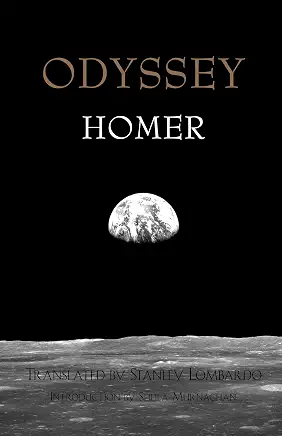
Despite the rather sanitized version of the Iliad in the movie Troy its not a very good representation of that classic. In the movie there are no deities intervening, nor is there anywhere near the amount of gore in the movie that there is in the Iliad– page after page of heads and arms and legs being lopped off, or people being run through with spears etc. The book itself could be triple X rated for vivid violent descriptions again and again. And as Lombardo makes clear, the novel really revolves around Achilles and his anger over Helen being stolen by the Trojans, and over the way matters were handled by Agamemnon, which as the later volume, the Odyssey shows, got his come-upance when he got home to Mycenae and discovered his wife had run off with another man…. and worse.
The Odyssey on the surface is much more interesting, as it is not all blood and guts and is much more diverse. What will it take for Odysseus to get home after 20 years of trying, and when he gets there, will he be able to clean up the mess in his own dining hall? Inquiring minds want to know. Along the way he must deal with Calypso (a femme fatale of a demi-goddess), the Sirens, Scylla and Charybdis, a Cyclops, the loss of his men, and of course his long absence from home, with Penelope and his son Telemachus unable to entirely hold down the fort until he gets there, as Penelope has way too many suitors who are eating her out of house and home. Lombardo’s translation does an excellent job of making clear all the difficulties Odysseus faced on his way home.
There are three themes in both of Homer’s works I want to deal with. Let’s first tackle Hades, not to be equated with Hell. Hades is the land of the spirits of the dead. You have to cross the underground river Styx to get there. The lowest and gloomiest portion of the underworld is called Tartarus, reserved for the worst of the worst among human beings. Interestingly, in the NT it is where the naughty angelic spirits end up (cf Jude and 2 Peter 2). There is no direct mention of Elysium in these two volumes, the idea that there is a paradise island or retreat somewhere in Hades for heroes, and the good and the noble. Clearly, behavior in this life affects the afterlife outcome. There is a particularly touching scene near the end of the Iliad where Patroclus, Achilles best friend and companion, who has been slain by Hector, comes to Achilles in a dream and comforts him and helps him begin to get beyond his grief. One may compare this to the medium of endor story about the spirit or shade of Samuel being consulted. The concept of Sheol in the OT is pretty similar to the Greco-Roman notions about the afterlife in Hades, the land of the dead.
The second thing to deal with is the theology about the gods. There are gods for any and all occasions and varying skills and tasks, but there is one deity that stands above them all, and it is Zeus, or in Roman parallels Jupiter Optimus Maximus. Hermes (=Mercurius in Latin) the messenger god is the mailman among the deities who conveys Zeus’ messages. The gods are not only involved in human affairs, they even take sides in the Trojan War, which is one reason the war just goes on and on and on. But even these lesser gods cannot give a person a reprieve from their fate. Achilles is destined to die much too young, though along the way he is allowed some freedom of choice. Hector likewise had his final outcome determined in advance. Yes, you can butter up one deity or another with delicious sacrifices and gifts and manage to sometimes persuade them to help with this or that, or forestall this or that. Asclepius the healer god can intervene and prevent an early death in some cases. These gods, as have often been noted, behave like spoiled brats at times, and they have way too much power and do what they want– good or bad. Not only are their personal deities of various sorts, both male and female (Athena features prominently in both volumes, as someone looking after Odysseus and the Greeks even though Odysseus is a minor figure in the Iliad), but even the winds and the hours are divinized in Homer’s work. These gods, like humans in these epics highly value honor, and try to avoid shame. Telling the truth is not seen as always the highest of virtues, though when one swears an oath one had better fulfill it. The point of sacrifices is to get on or stay on the good side of this or that deity, which is another way of saying to avoid or propitiate their anger when a human being does something wrong and falls afoul of some god. The problem of course was figuring out who was blessing you and who was cursing you. As Plutarch once remarked (and he was a priest), ‘nowadays Mt Olympus is overcrowded). Pagan religion was an uncertain thing because how was one to know which god needed to be entreated or placated. Yes, you could figure this out in some cases since some gods like Asclepius had specialities— like healing. But most of the time you are not sure. This of course less of a problem in a monotheistic religion, but only in a monotheistic religion do you have one omnipotent deity, which raises the question of theodicy– why do bad things happen to God’s people. A pagan could answer this in a heartbeat— you’ve falled afoul of this or that sometimes malevolent deity.
In addition to all this, there seems to be a sliding scale between deities and humans, because gods sometimes mate with humans, resulting in demi-gods like Hercules (Herakles) or Achilles. There is not a sort of absolute distinction between the Creator and the creature in such theological thinking. The overall impression one gets from reading Homer is that the deities really do care about human beings and their lives and fates, but there are some things Zeus has determined which cannot be changed.
Education and Religion
History and Religion
Previous Post
July 13, 2026
New Article on the Dig at Colossae
Next Post
July 15, 2026 A Brief Explanation of the Odyssey
Browse Our Archives
Select a Category Uncategorized
Select a Month October 2026 September 2026 August 2026 July 2026 June 2026 May 2026 April 2026 March 2026 February 2026 January 2026 December 2025 November 2025 October 2025 September 2025 August 2025 July 2025 June 2025 May 2025 April 2025 March 2025 February 2025 January 2025 December 2024 November 2024 October 2024 September 2024 August 2024 July 2024 June 2024 May 2024 April 2024 March 2024 February 2024 January 2024 December 2023 November 2023 October 2023 September 2023 August 2023 July 2023 June 2023 May 2023 April 2023 March 2023 February 2023 January 2023 December 2022 November 2022 October 2022 September 2022 August 2022 July 2022 June 2022 May 2022 April 2022 March 2022 February 2022 January 2022 December 2021 November 2021 October 2021 September 2021 August 2021 July 2021 June 2021 May 2021 April 2021 March 2021 February 2021 January 2021 December 2020 November 2020 October 2020 September 2020 August 2020 July 2020 June 2020 May 2020 April 2020 March 2020 February 2020 January 2020 December 2019 November 2019 October 2019 September 2019 August 2019 July 2019 June 2019 May 2019 April 2019 March 2019 February 2019 January 2019 December 2018 November 2018 October 2018 September 2018 August 2018 July 2018 June 2018 May 2018 April 2018 March 2018 February 2018 January 2018 December 2017 November 2017 October 2017 September 2017 August 2017 July 2017 June 2017 May 2017 April 2017 March 2017 February 2017 January 2017 December 2016 November 2016 October 2016 September 2016 August 2016 July 2016 June 2016 May 2016 April 2016 March 2016 February 2016 January 2016 December 2015 November 2015 October 2015 September 2015 August 2015 July 2015 June 2015 May 2015 April 2015 March 2015 February 2015 January 2015 December 2014 November 2014 October 2014 September 2014 August 2014 July 2014 June 2014 May 2014 April 2014 March 2014 February 2014 January 2014 December 2013 November 2013 October 2013 September 2013 August 2013 July 2013 June 2013 May 2013 April 2013 March 2013 February 2013 January 2013 December 2012 November 2012 October 2012 September 2012 August 2012 July 2012 June 2012 May 2012 April 2012 March 2012 February 2012 January 2012 December 2011 November 2011 October 2011 September 2011 August 2011 July 2011 June 2011 May 2011 April 2011 March 2011 February 2011 January 2011
Follow Us!
TAKE THE
Religious Wisdom Quiz
What was the sign of the new covenant given in Ezekiel's vision?
Select your answer to see how you score.
Gold in the Temple Rebuilt walls A new heart and new spirit Fiery chariots
Books by This Author Books by Ben Witherington
Related posts from The Bible and Culture


The British Library-- Part Two
The British Library-- Part One
TRENDING AT PATHEOS Evangelical

Nearly every morning, I make the drive to Detroit with my high-school-age...

The Real AI Story Is Adoption Without Trust
Artificial intelligence has crossed a political threshold. It is no longer a...

A new article, written by Jeff Lindsay and Gale L. Pooley,...

Swimfan: Forgotten Aughts Pleasures
This is a recovery effort. In 2002, My Big Fat Greek Wedding...

Top Three Anti-Catholic Lies About Catholicism
This is my initial transcript for the video, "THE 3 WORST...

Pope Leo Celebrates Mass for Nurses & Docs...
I don't have any idea how he did it, but Pope Leo...
view all Evangelical blogs
Ad-Free & Subscriber Log-In Subscription Support
- About Us
- 2026 Calendar
- Videos
- Podcasts
- Library of World Religions
- Faith In Media Tracker
- Advertise With Us
- Write for Us
- Privacy Policy
- Terms of Service
- Do Not Sell My Data
- Contact Us
- Radiant Digital
- Manage Newsletter Subscriptions
- Unsubscribe From Notifications
- Sitemap
Copyright 2008-2026, Patheos. All rights reserved.
Subscription Support Ad-Free & Subscriber Log-In
Follow Patheos