
BuddhistCatholicContemplativeEvangelicalGeneral ChristianHinduJewishLatter-day SaintMuslimNew VisionsProgressive Christian
Beliefs
- Buddhist
- Catholic
- Contemplative
- Evangelical
- General Christian
- Hindu
- Jewish
- Latter-day Saint
- More Voices
- Muslim
- New Visions
- Pagan
- Progressive Christian
Topics
- Religion News
- Food and Religion
- Sports and Religion
- Religious Art
- Religious Music and Entertainment
- Religious Events
- History and Religion
- Style and Religion
- Politics and Religion
- Women in Religion
- Recreation Outdoors and Religion
- Business Finance and Religion
- Careers Workplace and Religion
- Education and Religion
- Family Parenting and Religion
- Health Fitness and Religion
- Home and Religion
- Relationships and Religion
- Technology and Religion
- Travel and Religion
Columnists
- Buddhist Columnists
- Business Finance and Religion Columnists
- Careers Workplace and Religion Columnists
- Catholic Columnists
- Contemplative Columnists
- Education and Religion Columnists
- Evangelists Columnists
- Family Parenting and Religion Columnists
- General Christian Columnists
- Health Fitness and Religion Columnists
- Hindu Columnists
- History and Religion Columnists
- Home and Religion Columnists
- Jewish Columnists
- More Voices Columnists
- Latter Day Columnists
- Muslim Columnists
- New Visions Columnists
- Nonreligious Columnists
- Pagan Columnists
- Politics and Religion Columnists
- Progressive Columnists
- Recreation Outdoors and Religion Columnists
- Relationships and Religion Columnists
- Religion News Columnists
- Religious Art Columnists
- Religious Events Columnists
- Religious Music and Entertainment Columnists
- Sports and Religion Columnists
- Style and Religion Columnists
- Technology and Religion Columnists
- Travel and Religion Columnists
- Women in Religion Columnists
Resource Library
- 2026 Calendar
- Library of World Religions
- The 100 Most Holy Places on Earth
- Patheos Answers
- Podcasts
- Videos
- Faith Leaders Database
- Anglican Episcopalian
- Bahai
- Baptist
- Buddhism
- Christianity
- Confucianism
- Eastern Orthodoxy
- Hinduism
- Holiness and Pentecostal
- ISKCON
- Islam
- Judaism
- Lutheran
- Methodist
- The Church of Jesus Christ of Latter-day Saints
- New Age
- Paganism
- Presbytarian and Reformed
- Protestantism
- Religion Behind the Scenes
- Roman Catholic
- Scientology
- Shia Islam
- Sikhism
- Sufism
- Sunni Islam
- Taoism
- Zen
- See all religions
Research Tools
 Ad-Free & Subscriber Log-In Subscription Support
Ad-Free & Subscriber Log-In Subscription Support
Follow Patheos 

- Trending:
- Forgiveness
- |
- Marriage
- |
- Consciousness
- |
- Death Penalty
- |
- Election
- |
- Halloween

- Home
- Evangelical
- Education and Religion
- Surprise! John is not the Beloved Disciple
Surprise! John is not the Beloved Disciple
Last updated on: December 16, 2025 at 11:08 am by Ben Witherington
Surprise! John is not the Beloved Disciple 2025-12-16T11:08:04-05:00 Ben Witherington
Patheos Explore the world's faith through different perspectives on religion and spirituality! Patheos has the views of the prevalent religions and spiritualities of the world.

WHO IS THE BELOVED DISCIPLE, AND WHY IS THE GOSPEL ATTRIBUTED TO A MAN NAMED JOHN?
While the issue of authorship has been debated throughout church history, and bearing in mind that the header of this Gospel was only added after the fact when the Gospels were combined into one codex, and there was need for the distinctions— ‘according to John’, ‘according to Mark’ etc. In other words, the caption on the fourth Gospel is not part of the inspired and inspiring text which begins with vs. 1. But let us start with the attribution of the Gospel to someone named John. Unfortunately, there are several famous Johns in the NT, not even mentioning John the Baptizer. There is John son of Zebedee, there is John of Patmos, there is an elder (not an apostle or one of the Twelve) mentioned as the writer of 2-3 John. Partly because the Fourth Gospel fell into the hands of the Gnostics, and Irenaeus wanted to rescue the book for orthodox Christianity while writing four tomes dismantling Gnostic thought, he seems to have attributed the Gospel to John son of Zebedee, clearly one of the Twelve, indeed in the inner circle of the three leaders of the Twelve. But there are immediate problems with this ascription: 1) Papias, dwelling in Smyrna with Polycarp, and apparently Irenaeus as well who was taught by Polycarp, says that there were two Johns of important, one was John the elder, who he Papias met, the other was an earlier John about whom Papias could only ask what that man had testified in the past. Polycarp also met this John the elder apparently and later taught Irenaeus about him. He seems to be the one who put together and edited the Fourth Gospel, because in John 21 there is a clear distinction between the Beloved Disciple who wrote down his own eye witness testimony and the community he was a part of ‘for we know that his testimony is true’. The implication in John 21 is not only a distinction between the final editor of the Beloved Disciple’s testimony (hereafter call the BD), but also that the BD is now dead when the Appendix in John 21 is written, hence the denial that Jesus ever said the BD would definitely live unto his Second Coming. More evidence is now available about the fate of the Zebedee brothers, about whom Jesus himself said they would be baptized with the same baptism he was to endure on the cross (namely become martyrs) and we have the witness in Acts 12.1-2 that James Zebedee was killed by Herod Agrippa I.
But furthermore, we now apparently have an Oxyrhynchus papyrus mentioning Papias that testifies to John Zebedee’s death in the apostolic era, but the Fourth Gospel appears to have been written in the 90s, after the Synoptics and during a time when Domitian was the Emperor demanding worship as ‘deus et dominus noster’— ‘our lord and our god’. The confession by Thomas using these terms of Jesus would seem to be a rebuttal of the increasingly strident claims of the emperor cult about the deity of emperors. The Oxyrhynchus papyrus in question is dealt with in detail by M. Oberweis, (“Die Papias-Zeugnis vom Tode des Johannes Zebedai” in Novum Testamentum 38.3 (Jan. 1996), pp. 277-97). But even on the basic principle that the internal evidence of the Gospel itself must trump later attribution of who wrote this Gospel, we can see it surely is not John Zebedee. Why not? Because while this Gospel claims to be by an eyewitness (see John 19-21), THERE ARE NO SPECIAL ZEBEDEE EYEWITNESS STORIES IN THIS GOSPEL—nothing about their being called by Jesus from their nets, nothing about them being present when Jairus’ daughter was raised from the dead, nothing about them seeing the Transfiguration of Jesus, and nothing about them claiming the box seats in the kingdom, and the Zebedees are not even mentioned directly until John 21!!
And besides all this, what sort of person who had been with Jesus for three years and hear him say things like ‘unless you turn and become as a child you shall not enter the Dominion of God’ would go around calling himself Jesus’ favorite— the Beloved Disciple. If an early Christian did that, he would be told to take a humility pill. No, the phrase Beloved Disciple is what his community called him. But again— who is this mystery man, the Beloved Disciple?
Surprisingly, the answer is clear as a bell for one reading closely John 11-21. There are no references to a Beloved Disciple before John 11 where we hear these words from Martha in Bethany: Send a message to Jesus, about the man already identified in John 11.1 as her brother Lazarus (the Latinized form of the name Eliezer), Martha says “Lord, the one whom you love is gravely ill” wanting Jesus to come at once and remedy this problem. Only here in John 11.3 is a particular person in this Gospel called ‘the one whom Jesus loves’. Clearly, this whole family has a pre-existing relationship with Jesus of some duration, perhaps being built on the numerous trips Jesus has taken to the Jerusalem, according to the Fourth Gospel.
Now the story of the raising of Lazarus is the capstone sign or miracle story in the first half of this Gospel which prefigures the raising of Jesus himself in the second half of this Gospel. It is a crucial climactic story, which sends the Jewish authorities into a frenzy in regard to what to do about the rising popularity and following of Jesus. And this lengthy story in John 11 is not found in the Synoptics Gospels anywhere. But then this Gospel is not written from a Galilean disciple perspective at all, unlike the Synoptics. The only Galilean miracle it mentions which is also in the Synoptics is the feeding of the 5,000/walking on water tandem. That’s all. Leaving aside the wedding feast at Cana story in John 2 for a moment (which turns out Mary could have told the BD about later) notice that all the great stories in John are in or around Jerusalem, or in Samaria (John 4), not in Galilee (until John 21). The healing of the paralytic, the healing of the blind man, the raising of Lazarus, the visit with Nicodemus, the visit with the Samaritan woman and much more are stories unique to the Fourth Gospel and they all occur in or near Judaea, as to the confrontations in Jerusalem in and around the Temple, including Jesus nearly getting stoned for some of his claims, and having an anomalous near encounter with ‘the Greeks’ presumably Diaspora Jews who spoke Greek. In short, this Gospel has a Judaean provenance and has a Judaean author to account for that.
If we now track the references to the Beloved Disciple, here are a few of the crucial ones: 1) after Jesus raises Lazarus from the dead, he and some disciples have a meal in the house of Mary. Martha and Lazarus where Jesus was anointed by Mary, and an argument transpired with Judas Iscariot about money. (John 12). We are told in Mk. 14 that this transpired in ‘the house of Simon the Leper’. If so, it might explain why Lazarus died prematurely, why Jesus takes his disciples to the house in Lk. 10.38-42, but apparently only he goes in the have a meal with them, and the disciples apparently stay outside, and it would especially explain why Mary, Martha, and Lazarus, all adults, are not married! The history of contagion in the house would have made marriage to a member of that family unlikely. After the meal in John 12, we have another meal in John 13, where Jesus reclines on a couch with the Beloved Disciple, and also washes the disciple’s feet. This latter story is nowhere to be found in the Synoptics, and this even is said to happen early in the week of Passover, not say on Thursday night, and not within the city walls as was the custom if possible, and which the Synoptics all say was requested and found by the disciples for Jesus in an upper room in the old city. In other words, John 13 is NOT the Johannine version of the Last Supper. No, it’s another meal in Lazarus’ house, with the chief guest on the couch with the newly revived host— the Beloved Disciple. Notice there is no reference at all in this story to what we later call the words of Institution— this is my body broken for you, this is my blood shed for you etc. And surely, if Judas was going to turn Jesus over to the authorities, he would have to make an arrangement with them earlier the week, to go and meet Jesus later in the spot where he and his disciples were camping for the festival, like many many others attending the festival— on the Mt. of Olives.
It is the Beloved Disciple and Peter who go to the house Annas (not Caiaphas) which is where Jesus was taken first, the BD is let in, because he is well known in that house—the Jewish authorities were present at the week long mourning when Jesus raised Lazarus from the dead. They knew his family anyway. Peter, a Galilean was not let into the house, being unknown. Even more tellingly, the Synoptics are clear that none, and I do mean none, of the Twelve were present at the cross when Jesus died— but the BD was, with the three Marys. And Jesus bequeathed his mother whom he loved to the disciple whom he had a special love for while on the cross. Lazarus, thereafter took Mary into his own home in Bethany, and we find Mary still in Jerusalem in Acts 1.14, praying with the other disciples for the Spirit. John 19.26-27 is clear enough the BD is present and Jesus says to Mary—here is your (new) son, and then to the BD—behold your mother. This is in no way surprising since Jesus had been close to that family for a long time, perhaps the whole of his three year ministry. And what this reminds us of is that Jesus had Judaean disciples as well as Galilean ones. Josephus of Arimathea and Nicodemus seem to have been other devotees of Jesus and they took charge of his burial—an event normally Jesus’ brothers would be expected to do, but according to John 7.5 they didn’t believe he was the messiah. They apparently thought he wanted fame and a following and should go do miracles at one of the festivals in Jerusalem—which ironically he did. It took a risen Jesus appearing to his brother James to change that whole attitude (see 1 Cor. 15.7 and the list of appearances).
Fast forward to Easter morning. The women go to the tomb to re-anoint the corpus and change the linen wrappings, only to be confronted with an empty tomb, and an angelic message that they shouldn’t be mourning—Jesus was risen, alive, and well. And then, as both John 20 and Mt. 28 make clear, Jesus appeared to Mary of Migdal and the women with her. Excitement and joy ensued and they went and told the male disciples but they wouldn’t take the women’s word for it. Instead, Peter and ‘the other disciple’ (so called I suspect, here and in the Annas story because he was the leader of the Judaean disciples before his death) run to the tomb and see that it is empty. This leaves Peter scratching his head but notice what is said about the Beloved Disciple— ‘he believed (on the basis of the empty tomb and the wrappings rolled up) for they did not know from Scripture yet that Jesus would rise from the dead’. In other words, this scenario which had recently happened to Lazarus himself, had happened again to Jesus himself, and Lazarus believed it on the empirical evidence and on the basis of his own recent experience.
Lest we leave this trail of evidence too soon, one may ask— why the rumor that the BD would not die again before the return of Christ (as reported in John 21). Surely this is because the community didn’t think a man who Jesus had dramatically raised would die twice before the return of Christ. But they were wrong, and it was after the fact, that John gathered the written down eyewitness testimony of Lazarus, put it together in a Gospel, added some other material and a preface and an Appendix (and various parenthetical remarks along the way for the audience), and so we have a Gospel put together by a man named John. Probably John the elder, as Papias mentions, who may also be John of Patmos, but this is uncertain. More certain is that John the Elder went on the road and visited Smyrna and surely Ephesus where there were many Christians and lived at some point in the community in Ephesus, and was buried there, where the ruins of the church of St. John can be seen today. One last thing, Lazarus is the Anglicized form of the name Eliezer, so the BD was named after a Maccabean war hero, just like Simon Peter was.
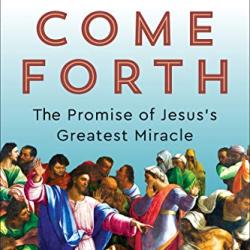
Finally, lest one think that I am a lone voice crying in the wilderness that the BD is Lazarus, you can also now find this view in a full length treatment by the Jesuit scholar James Martin, in a bestselling book entitled Come Forth, (Harper One, 2025), and see also my book What Have They Done with Jesus? (Harper, 2024), and A. T Lincoln, The Gospel according to St. John, (Peabody: Hendrickson, 2005).
Education and Religion
History and Religion
Previous Post

December 9, 2025
Updated Brochure for the All Egypt Tour--- Jan. 13-25 2027
Next Post

December 17, 2025 The Surprises Just Keep on Coming!
Browse Our Archives
Select a Category Uncategorized
Select a Month October 2026 September 2026 August 2026 July 2026 June 2026 May 2026 April 2026 March 2026 February 2026 January 2026 December 2025 November 2025 October 2025 September 2025 August 2025 July 2025 June 2025 May 2025 April 2025 March 2025 February 2025 January 2025 December 2024 November 2024 October 2024 September 2024 August 2024 July 2024 June 2024 May 2024 April 2024 March 2024 February 2024 January 2024 December 2023 November 2023 October 2023 September 2023 August 2023 July 2023 June 2023 May 2023 April 2023 March 2023 February 2023 January 2023 December 2022 November 2022 October 2022 September 2022 August 2022 July 2022 June 2022 May 2022 April 2022 March 2022 February 2022 January 2022 December 2021 November 2021 October 2021 September 2021 August 2021 July 2021 June 2021 May 2021 April 2021 March 2021 February 2021 January 2021 December 2020 November 2020 October 2020 September 2020 August 2020 July 2020 June 2020 May 2020 April 2020 March 2020 February 2020 January 2020 December 2019 November 2019 October 2019 September 2019 August 2019 July 2019 June 2019 May 2019 April 2019 March 2019 February 2019 January 2019 December 2018 November 2018 October 2018 September 2018 August 2018 July 2018 June 2018 May 2018 April 2018 March 2018 February 2018 January 2018 December 2017 November 2017 October 2017 September 2017 August 2017 July 2017 June 2017 May 2017 April 2017 March 2017 February 2017 January 2017 December 2016 November 2016 October 2016 September 2016 August 2016 July 2016 June 2016 May 2016 April 2016 March 2016 February 2016 January 2016 December 2015 November 2015 October 2015 September 2015 August 2015 July 2015 June 2015 May 2015 April 2015 March 2015 February 2015 January 2015 December 2014 November 2014 October 2014 September 2014 August 2014 July 2014 June 2014 May 2014 April 2014 March 2014 February 2014 January 2014 December 2013 November 2013 October 2013 September 2013 August 2013 July 2013 June 2013 May 2013 April 2013 March 2013 February 2013 January 2013 December 2012 November 2012 October 2012 September 2012 August 2012 July 2012 June 2012 May 2012 April 2012 March 2012 February 2012 January 2012 December 2011 November 2011 October 2011 September 2011 August 2011 July 2011 June 2011 May 2011 April 2011 March 2011 February 2011 January 2011
Follow Us!
TAKE THE
Religious Wisdom Quiz
Jesus replied: "‘Love the Lord your God with all your heart and with all your soul and with all your mind.’ This is the first and greatest commandment. And the second is like it: ‘__________________’"
Select your answer to see how you score.
Honor Your Father And Mother Do Not Kill Love Your Neighbor As Yourself Love Others
Books by This Author Books by Ben Witherington
Related posts from The Bible and Culture
Dialogue with Father James Martin on John 11---...


Methodist Central Hall and Westminster Abbey

TRENDING AT PATHEOS Evangelical

Looking at the Largest Orthodox Cathedral on Earth
There is often a considerable amount of anger and, shall we...

The Problem with False Prophets
Miller’s Station UMC| 10/18/26| Anchor Verse: Jeremiah 23: 1, 9-23 I...

Emotion in Early Christianity by Andrew Crislip
Andrew Crislip’s Emotion in Early Christianity examines an often overlooked dimension of...

16 Spiritual Touchstones for a More Grounded Life
After decades of spiritual study, here are 16 principles I try...

Catholic Evangelization: Sharing Your Faith Every Day
Welcome back to the Graceful Awakening mini-series called, “From Faith to Mission.” ...

The Pillar of the Boatmen: the Ancient Monument...
The Pillar of the Boatmen is a Romano-Gaulish sculpture that dates from...
view all Evangelical blogs
Ad-Free & Subscriber Log-In Subscription Support
- About Us
- 2026 Calendar
- Videos
- Podcasts
- Library of World Religions
- Faith In Media Tracker
- Advertise With Us
- Write for Us
- Privacy Policy
- Terms of Service
- Do Not Sell My Data
- Contact Us
- Radiant Digital
- Manage Newsletter Subscriptions
- Unsubscribe From Notifications
- Sitemap
Copyright 2008-2026, Patheos. All rights reserved.
Subscription Support Ad-Free & Subscriber Log-In
Follow Patheos