
BuddhistCatholicContemplativeEvangelicalGeneral ChristianHinduJewishLatter-day SaintMuslimNew VisionsProgressive Christian
Beliefs
- Buddhist
- Catholic
- Contemplative
- Evangelical
- General Christian
- Hindu
- Jewish
- Latter-day Saint
- More Voices
- Muslim
- New Visions
- Pagan
- Progressive Christian
Topics
- Religion News
- Food and Religion
- Sports and Religion
- Religious Art
- Religious Music and Entertainment
- Religious Events
- History and Religion
- Style and Religion
- Politics and Religion
- Women in Religion
- Recreation Outdoors and Religion
- Business Finance and Religion
- Careers Workplace and Religion
- Education and Religion
- Family Parenting and Religion
- Health Fitness and Religion
- Home and Religion
- Relationships and Religion
- Technology and Religion
- Travel and Religion
Columnists
- Buddhist Columnists
- Business Finance and Religion Columnists
- Careers Workplace and Religion Columnists
- Catholic Columnists
- Contemplative Columnists
- Education and Religion Columnists
- Evangelists Columnists
- Family Parenting and Religion Columnists
- General Christian Columnists
- Health Fitness and Religion Columnists
- Hindu Columnists
- History and Religion Columnists
- Home and Religion Columnists
- Jewish Columnists
- More Voices Columnists
- Latter Day Columnists
- Muslim Columnists
- New Visions Columnists
- Nonreligious Columnists
- Pagan Columnists
- Politics and Religion Columnists
- Progressive Columnists
- Recreation Outdoors and Religion Columnists
- Relationships and Religion Columnists
- Religion News Columnists
- Religious Art Columnists
- Religious Events Columnists
- Religious Music and Entertainment Columnists
- Sports and Religion Columnists
- Style and Religion Columnists
- Technology and Religion Columnists
- Travel and Religion Columnists
- Women in Religion Columnists
Resource Library
- 2026 Calendar
- Library of World Religions
- The 100 Most Holy Places on Earth
- Patheos Answers
- Podcasts
- Videos
- Faith Leaders Database
- Anglican Episcopalian
- Bahai
- Baptist
- Buddhism
- Christianity
- Confucianism
- Eastern Orthodoxy
- Hinduism
- Holiness and Pentecostal
- ISKCON
- Islam
- Judaism
- Lutheran
- Methodist
- The Church of Jesus Christ of Latter-day Saints
- New Age
- Paganism
- Presbytarian and Reformed
- Protestantism
- Religion Behind the Scenes
- Roman Catholic
- Scientology
- Shia Islam
- Sikhism
- Sufism
- Sunni Islam
- Taoism
- Zen
- See all religions
Research Tools
 Ad-Free & Subscriber Log-In Subscription Support
Ad-Free & Subscriber Log-In Subscription Support
Follow Patheos 

- Trending:
- Forgiveness
- |
- Marriage
- |
- Consciousness
- |
- Death Penalty
- |
- Election
- |
- Halloween

- Home
- Evangelical
- History and Religion
- Imitation in Early Christianity Part Two
Imitation in Early Christianity Part Two
Last updated on: September 6, 2025 at 1:48 am by Ben Witherington
Imitation in Early Christianity Part Two 2025-08-24T08:38:38-04:00 Ben Witherington
Patheos Explore the world's faith through different perspectives on religion and spirituality! Patheos has the views of the prevalent religions and spiritualities of the world.
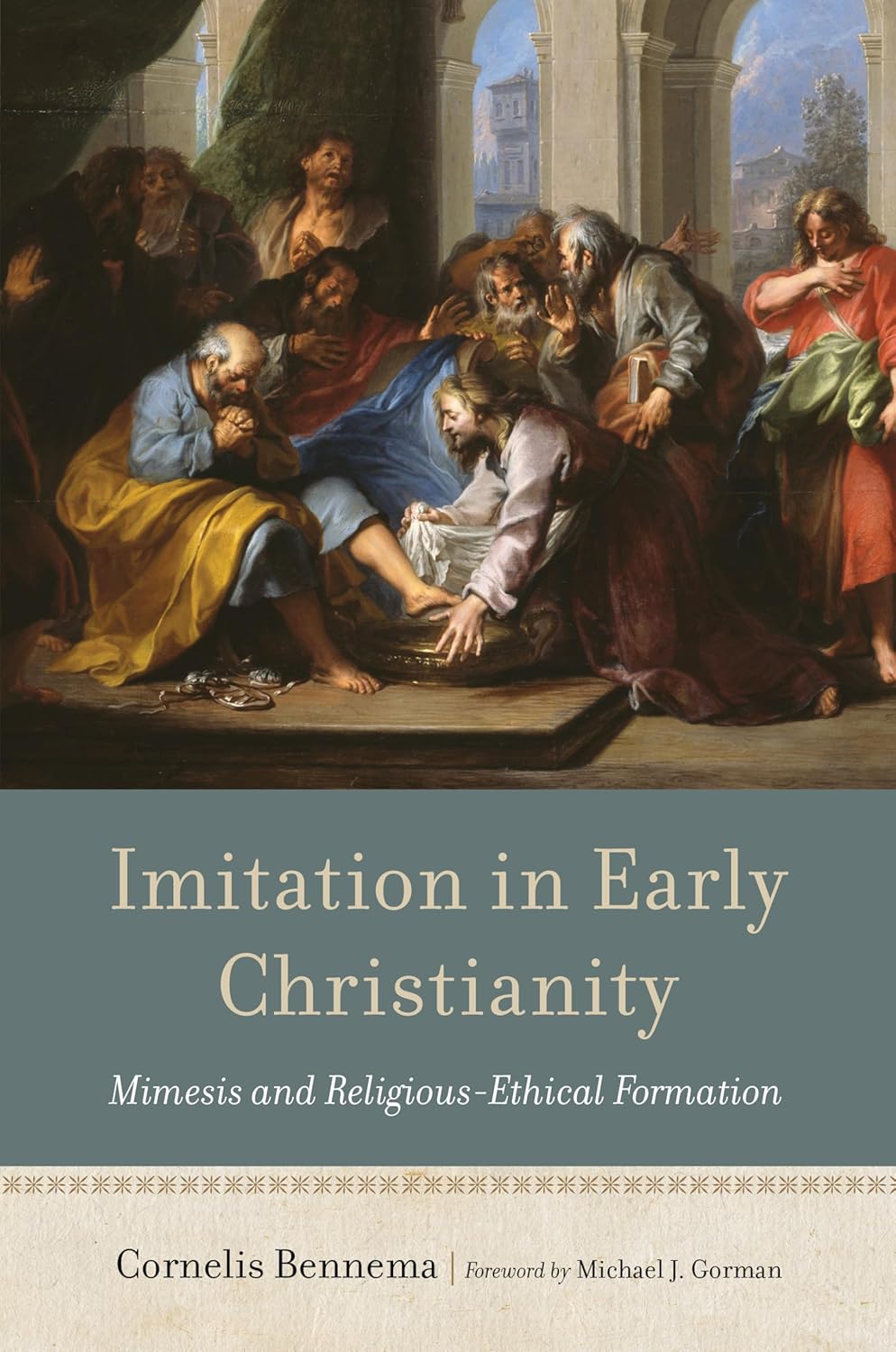
Let us talk perspective for a moment. One of the things I kept looking for in this book is a discussion of eschatology and how it affects the discussion of ethics. For example, when Paul talks about being conformed to the image of Christ, he does not imagine this process could possibly be completed before one is raised from the dead and receives a resurrection body like that of Christs. (see e.g. Rom. 8) and furthermore, he does not see himself as having been fully conformed to Christ’s image as Phil. 3.10-12 says, but he is pressing on wanting to fully know, even in a bodily sense the power of Christ’s resurrection. Especially because eschatology so affected Paul’s discussion of so many things, it needed to be discussed when the subject of mimesis comes up. After all, Paul thinks the ‘schema’ of this world is already being transformed, and he conjures with the possibility that Christ could return from heaven sooner, rather than later, though he can conceive of it going either way in regard to whether he would live to see it or not. Notice the language in 2 Cor. 7 where Paul says that the Christ event, which has already transpired, has ‘shortened’ the time necessary before Christ returns (N.B. it does not say ‘the time is short’. He is talking about the effect of the already transpired eschatological events caused by the first coming of Christ).
I appreciate Cornelius’s frankness that the actual use of imitation language in the NT, and other relevant cognate terms, is not vast, even in the Pauline and Johannine corpus. It is however significant enough and important enough that it deserves the thorough treatment Bennema gives it. Some of the most interesting part of the discussion is when he deals with whether we are talking about imitating the historical Jesus, or the exalted Christ or both. In that sort of discussion Phil. 2.5-11 becomes a crucial text, and Bennema rightly recognizes that in various ways Jesus, and his follower Paul were advocating a counter cultural ethic for all followers of Christ from the most elite to the least, the last, and the lost— all were to model themselves on the behavior of Christ as seen in texts like John 13 or Phil. 2.5-11, which entailed humility and stooping down and serving others, even after the fashion of a slave washing someone’s feet, something that was no part of Greco-Roman ethics for those who were not actual slaves. On the other hand, Paul’s call for the Corinthians to imitate him as he imitates Christ falls right in line with the Greco-Roman practice of having students imitate the behavior (and teachings) of their teachers, and children doing the same with their parents. Bennema is absolutely right that the ethic Jesus and Paul are advocating is an in house, family ethic– it is for followers of Christ, and not meant to be imposed on a pagan world without their first being born again or being new creatures in Christ.
But this brings us to the discussion of theosis. On p. 302 we have the following qualification of the term theosis: “I do not object to using the term ‘theosis’, ‘Christosis’ or ‘deification’ for the believer’s transformation as long as this refers to participation in Christ’s or God’s life and character in order to become like Christ or God (homoiusious) rather than participating in their essence in order to become God (homousios).” If this sounds all too much like the debate about the Son’s relationship with the Father at the Council of Nicaea in 325 A.D. your alarm bells are rightly ringing. Elsewhere Cornelius clearly states that he doesn’t want to eliminate the fundamental creator/creature distinction in his discussion about imitation, but as the book progresses we get closer and closer to that outcome it seems to me. Why for example, if it is indeed the humanity of Christ that we are imitating and the ethics he both modeled and taught whilst on earth aren’t we talking about, to coin a neologism– anthroposis, the imitation of the perfect humanity of Christ?
But there is another problem with this whole topic, namely the way Christians are being conformed to the image of Christ is mainly through the work of the Holy Spirit within the believer, not mainly through ‘imitating’ or theosis. Let’s put the emphasis in the right place– it is the Spirit who is sanctifying the believer over time, and making us not merely new creatures in Christ, but in due course hopefully mature Christians manifesting the values and virtues and teachings and humanity of Christ. Phil. 2.5-11 says absolutely nothing about ‘theosis’ in so far as we are talking about Christ’s being God. He simply was a part of the divine identity as the pre-existent Son. We are supposed to have the same mindset as the pre-existent Christ, orientated to be servants of others, and leave the glorifying to God (and by the way Phil. 2.5-11 is not about Christ being like Adam, who did not pre-exist, nor did he take on the form of a servant, nor was he obedient as Christ was even unto death on the cross). What Philippians does say is that we, a collective we, are to work out our salvation as God works in the midst of the congregation and within the individual to be able to will and do what God commands and wants us to be and do. Yes, we play a role in our own sanctification, and ‘imitation’ of Christ or various godly Christian exemplars is an important part of that.
Without question both Christ and Paul played the roles of exemplars for their followers– they did not return abuse with more abuse, they did not return physical acts of violence with physical acts. What they did do was provide a robust work ethic, including even taking on menial tasks to set a good example to their followers. And of course their devotion to God was a constant example for their disciples to follow.
One of the things that becomes confusing in this whole mimesis discussion is how to draw a distinction between analogies (‘your devotion to God is like a constant source of joy to you and others’) and following (take up your cross daily and follow me– presumably being willing to suffer, or even die for one’s loyalty to Christ and his Gospel), and finally imitation. These three things are not simply synonyms, and Bennema tries to help us see the distinction. For instance he rightly reminds us that he is not talking about just any sort of mimesis, but rather only ethical mimesis and “the aim of ethical mimesis is moral transformation (the imitator seeks to become like the exemplar)”. p. 22.
The point is not to set up a reciprocity cycle like those that existed in the Greco-Roman world especially between patrons and clients, although that reciprocity happens when God loves us, and we love God. But the emphasis is on responding to God’s grace with gratitude and service. Salvation is by grace and through faith, but it also involves the believers role in their own sanctification. This is because salvation has three tenses in the NT– I have been saved (justification and the new birth), I am being saved and am working out my salvation as God works in us to will and to do (sanctification), and finally I will be saved (when I’m raised from the dead and fully conformed to the image of Christ through the resurrection).
It is the mark of a really good book, that it makes you think hard, and revisit your own previous assumptions and convictions. This book certainly does that, and in various ways helps clarify for us all, what the NT is really talking about when the subject is imitation of Christ or God, or Paul or other mature Christians. Thank you Cornelius for all your many years of hard working laboring in the mimetic vineyard.
History and Religion
Education and Religion
Previous Post
September 5, 2025
Imitation in Early Christianity Part One-- A Review
Next Post

September 8, 2025 Small Town North Carolina in the 1930s
Browse Our Archives
Select a Category Uncategorized
Select a Month October 2026 September 2026 August 2026 July 2026 June 2026 May 2026 April 2026 March 2026 February 2026 January 2026 December 2025 November 2025 October 2025 September 2025 August 2025 July 2025 June 2025 May 2025 April 2025 March 2025 February 2025 January 2025 December 2024 November 2024 October 2024 September 2024 August 2024 July 2024 June 2024 May 2024 April 2024 March 2024 February 2024 January 2024 December 2023 November 2023 October 2023 September 2023 August 2023 July 2023 June 2023 May 2023 April 2023 March 2023 February 2023 January 2023 December 2022 November 2022 October 2022 September 2022 August 2022 July 2022 June 2022 May 2022 April 2022 March 2022 February 2022 January 2022 December 2021 November 2021 October 2021 September 2021 August 2021 July 2021 June 2021 May 2021 April 2021 March 2021 February 2021 January 2021 December 2020 November 2020 October 2020 September 2020 August 2020 July 2020 June 2020 May 2020 April 2020 March 2020 February 2020 January 2020 December 2019 November 2019 October 2019 September 2019 August 2019 July 2019 June 2019 May 2019 April 2019 March 2019 February 2019 January 2019 December 2018 November 2018 October 2018 September 2018 August 2018 July 2018 June 2018 May 2018 April 2018 March 2018 February 2018 January 2018 December 2017 November 2017 October 2017 September 2017 August 2017 July 2017 June 2017 May 2017 April 2017 March 2017 February 2017 January 2017 December 2016 November 2016 October 2016 September 2016 August 2016 July 2016 June 2016 May 2016 April 2016 March 2016 February 2016 January 2016 December 2015 November 2015 October 2015 September 2015 August 2015 July 2015 June 2015 May 2015 April 2015 March 2015 February 2015 January 2015 December 2014 November 2014 October 2014 September 2014 August 2014 July 2014 June 2014 May 2014 April 2014 March 2014 February 2014 January 2014 December 2013 November 2013 October 2013 September 2013 August 2013 July 2013 June 2013 May 2013 April 2013 March 2013 February 2013 January 2013 December 2012 November 2012 October 2012 September 2012 August 2012 July 2012 June 2012 May 2012 April 2012 March 2012 February 2012 January 2012 December 2011 November 2011 October 2011 September 2011 August 2011 July 2011 June 2011 May 2011 April 2011 March 2011 February 2011 January 2011
Follow Us!
TAKE THE
Religious Wisdom Quiz
What was the name of the field bought with Judas' betrayal money?
Select your answer to see how you score.
Golgotha Field of Blood Potter's Field Aceldama
Books by This Author Books by Ben Witherington
Related posts from The Bible and Culture


Methodist Central Hall and Westminster Abbey


TRENDING AT PATHEOS Evangelical

Emotion in Early Christianity by Andrew Crislip
Andrew Crislip’s Emotion in Early Christianity examines an often overlooked dimension of...

16 Spiritual Touchstones for a More Grounded Life
After decades of spiritual study, here are 16 principles I try...

Catholic Evangelization: Sharing Your Faith Every Day
Welcome back to the Graceful Awakening mini-series called, “From Faith to Mission.” ...

The Pillar of the Boatmen: the Ancient Monument...
The Pillar of the Boatmen is a Romano-Gaulish sculpture that dates from...

In one sense walking into Westminster Abbey is like walking down the...

'Super Scam Me' Exposes AI Jon Bon Jovi...
Leslie Pickett believed she was in a relationship with Jon Bon Jovi....
view all Evangelical blogs
Ad-Free & Subscriber Log-In Subscription Support
- About Us
- 2026 Calendar
- Videos
- Podcasts
- Library of World Religions
- Faith In Media Tracker
- Advertise With Us
- Write for Us
- Privacy Policy
- Terms of Service
- Do Not Sell My Data
- Contact Us
- Radiant Digital
- Manage Newsletter Subscriptions
- Unsubscribe From Notifications
- Sitemap
Copyright 2008-2026, Patheos. All rights reserved.
Subscription Support Ad-Free & Subscriber Log-In
Follow Patheos