
BuddhistCatholicContemplativeEvangelicalGeneral ChristianHinduJewishLatter-day SaintMuslimNew VisionsProgressive Christian
Beliefs
- Buddhist
- Catholic
- Contemplative
- Evangelical
- General Christian
- Hindu
- Jewish
- Latter-day Saint
- More Voices
- Muslim
- New Visions
- Pagan
- Progressive Christian
Topics
- Religion News
- Food and Religion
- Sports and Religion
- Religious Art
- Religious Music and Entertainment
- Religious Events
- History and Religion
- Style and Religion
- Politics and Religion
- Women in Religion
- Recreation Outdoors and Religion
- Business Finance and Religion
- Careers Workplace and Religion
- Education and Religion
- Family Parenting and Religion
- Health Fitness and Religion
- Home and Religion
- Relationships and Religion
- Technology and Religion
- Travel and Religion
Columnists
- Buddhist Columnists
- Business Finance and Religion Columnists
- Careers Workplace and Religion Columnists
- Catholic Columnists
- Contemplative Columnists
- Education and Religion Columnists
- Evangelists Columnists
- Family Parenting and Religion Columnists
- General Christian Columnists
- Health Fitness and Religion Columnists
- Hindu Columnists
- History and Religion Columnists
- Home and Religion Columnists
- Jewish Columnists
- More Voices Columnists
- Latter Day Columnists
- Muslim Columnists
- New Visions Columnists
- Nonreligious Columnists
- Pagan Columnists
- Politics and Religion Columnists
- Progressive Columnists
- Recreation Outdoors and Religion Columnists
- Relationships and Religion Columnists
- Religion News Columnists
- Religious Art Columnists
- Religious Events Columnists
- Religious Music and Entertainment Columnists
- Sports and Religion Columnists
- Style and Religion Columnists
- Technology and Religion Columnists
- Travel and Religion Columnists
- Women in Religion Columnists
Resource Library
- 2026 Calendar
- Library of World Religions
- The 100 Most Holy Places on Earth
- Patheos Answers
- Podcasts
- Videos
- Faith Leaders Database
- Anglican Episcopalian
- Bahai
- Baptist
- Buddhism
- Christianity
- Confucianism
- Eastern Orthodoxy
- Hinduism
- Holiness and Pentecostal
- ISKCON
- Islam
- Judaism
- Lutheran
- Methodist
- The Church of Jesus Christ of Latter-day Saints
- New Age
- Paganism
- Presbytarian and Reformed
- Protestantism
- Religion Behind the Scenes
- Roman Catholic
- Scientology
- Shia Islam
- Sikhism
- Sufism
- Sunni Islam
- Taoism
- Zen
- See all religions
Research Tools
 Ad-Free & Subscriber Log-In Subscription Support
Ad-Free & Subscriber Log-In Subscription Support
Follow Patheos 

- Trending:
- Forgiveness
- |
- Marriage
- |
- Consciousness
- |
- Death Penalty
- |
- Election
- |
- Halloween

- Home
- Evangelical
- Careers, Workplace and Religion
- Wisdom Literature–Part Six
Wisdom Literature–Part Six
Last updated on: June 13, 2025 at 1:14 am by Ben Witherington
Wisdom Literature–Part Six 2025-05-17T10:12:56-04:00 Ben Witherington
Patheos Explore the world's faith through different perspectives on religion and spirituality! Patheos has the views of the prevalent religions and spiritualities of the world.
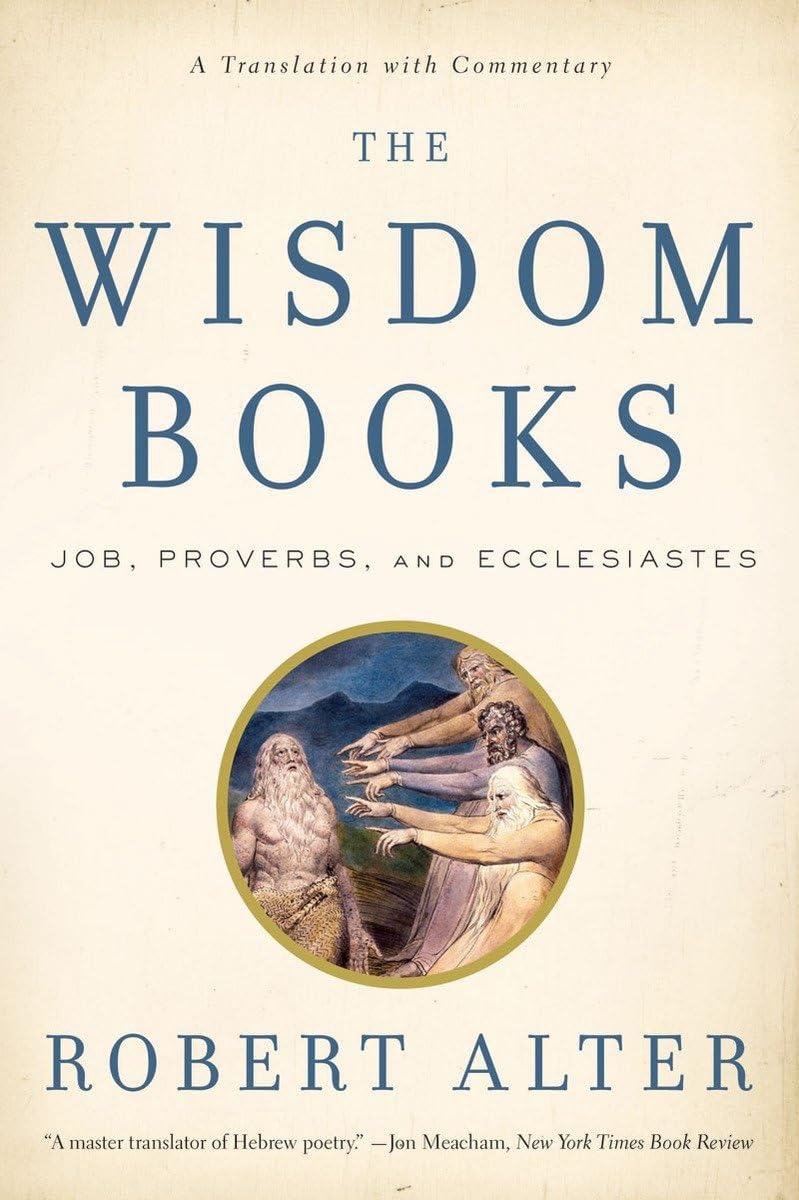
Some of the proverbs involve interesting analogies, for instance Prov. 19.12-13– “A roar like a lion, the wrath of the king, but like dew on the grass, his favor.’ Disaster to his father, a foolish son/ and a maddening drip, a nagging wife.’ Or in some cases personification gets a point across— ‘Wine is a scoffer, hard drink is rowdy; all who dote on them get no wisdom.” (20.1).
Sometimes one gets the impression that the author of these proverbs, while acknowledging human wickedness, does not think that humans are inherently sinners or fallen creatures. But then one runs into a saying like Prov. 20.9–‘Who can say ‘ I declare [or I have made] my heart pure, I am clean of my offense.’ Later Jewish theology taught the notion of the yetzer hara and the yetzer tov being in all persons, that is the inclination to do either evil or good is in all humankind. The problem with idea is it does not explain why all human beings choose sin at various points in time. If they have equal inclinations in either direction, why is it true ‘that all have sinned’. The theology in Rom. 1.18-32 and 5.21ff. makes better sense.
‘Laying bare secrets,the gossip goes around; don’t trust yourself to a blabbermouth.’ (20.19).
“Do not say ‘Let me pay back evil; Hope for the Lord, that he gives you victory.’ (20.22). This proverb is similar to ‘Vengeance is mine says the Lord, I will repay’. So the sage is teaching that one should trust in the God of justice, rather than taking matters into one’s own hands.
There is a repeated theme warning against unfair business practices, like using cheating scales, or two different weighing stones (20.23).
‘The splendor of young men is their strength/and the glory of elders their gray hair.’ (20.29). This is also a repeated theme in Proverbs. The other day I was at the car wash, in line and an attractive young lady was taking my credit card. When I thanked her for her service, she said ‘well its a pleasure to serve a silver fox like you’. This not only surprised me, it made my day. The elderly don’t often get such compliments.
At 21.3 we hear another repeated theme: ‘Doing righteousness and justice is choicer/more important to the Lord than sacrifices’. This is a theme the prophets like Amos will pick up and amplify, and for that matter so does Jesus in his critique of the Pharisees.
“Better to dwell in the corner of a roof, than in a spacious house with a quarrelsome wife.’ (21.9). Lest we see this as an unkind caricature of all women, which it isn’t (its more like Shakespeare’s The Taming of the Shrew) there are also various proverbs praising a wife as in Prov. 31. But notice the parallel to vs. 9 in vs. 19 “Better to dwell in a desert land/than with a quarrelsome angry wife.’
On the sovereignty of God, “A horse is readied for the day of battle/but victory is the Lord’s’ (21.31). In light of other proverbs this cannot be taken to mean– ‘don’t go to war, let God sort things out.’
Prov. 22.6 is one of the most well known of the proverbs “Train up a lad in the way that he should go [or according to his ways]/ and when he grows old, he will still not swerve from it”. As I have noted before, these proverbs are generalizations that are often true, but they are not always true.
There are a couple of interesting sayings that remind us of the rules of those societies. Exod.22.25-26 makes clear that one is not to confiscate a poor man’s bedding just because he can’t pay a debt. The proverb is ‘If you have nothing with which to pay, why should your bedding be taken from under you? (22.27).
“Do not shift the age-old boundary stone/that your forefathers set up”. (22.28). This reminds us that owned property should be inalienable and not be taken away by subterfuge. Cf. 23.10 which adds to this injunction “and do not enter the field of orphans, for their redeemer is strong, he will argue their case against you.” Redeemer here is a translation of goel, which could refer to a kinsman redeemer who comes to protect the orphan and his property, but it could also refer to the Lord.
“Do not be with the guzzlers of wine/with those who gorge on meat. For the guzzler and the gorger will lose all/and slumber will cloth him in rags.” (23.20-21).
There are numerous exhortations in the proverbs about using physical punishment on one’s son (vss.13-14). The reason is to prevent the child from going morally astray or engaging in dangerous activities which could land him in Sheol– the land of the dead.
Careers, Workplace and Religion
Family, Parenting and Religion
How long will you lie there o sluggard
Previous Post

June 11, 2025
Wisdom Literature-- Part Five
Next Post
June 14, 2025 Wisdom Literature-- Part Seven
Browse Our Archives
Select a Category Uncategorized
Select a Month October 2026 September 2026 August 2026 July 2026 June 2026 May 2026 April 2026 March 2026 February 2026 January 2026 December 2025 November 2025 October 2025 September 2025 August 2025 July 2025 June 2025 May 2025 April 2025 March 2025 February 2025 January 2025 December 2024 November 2024 October 2024 September 2024 August 2024 July 2024 June 2024 May 2024 April 2024 March 2024 February 2024 January 2024 December 2023 November 2023 October 2023 September 2023 August 2023 July 2023 June 2023 May 2023 April 2023 March 2023 February 2023 January 2023 December 2022 November 2022 October 2022 September 2022 August 2022 July 2022 June 2022 May 2022 April 2022 March 2022 February 2022 January 2022 December 2021 November 2021 October 2021 September 2021 August 2021 July 2021 June 2021 May 2021 April 2021 March 2021 February 2021 January 2021 December 2020 November 2020 October 2020 September 2020 August 2020 July 2020 June 2020 May 2020 April 2020 March 2020 February 2020 January 2020 December 2019 November 2019 October 2019 September 2019 August 2019 July 2019 June 2019 May 2019 April 2019 March 2019 February 2019 January 2019 December 2018 November 2018 October 2018 September 2018 August 2018 July 2018 June 2018 May 2018 April 2018 March 2018 February 2018 January 2018 December 2017 November 2017 October 2017 September 2017 August 2017 July 2017 June 2017 May 2017 April 2017 March 2017 February 2017 January 2017 December 2016 November 2016 October 2016 September 2016 August 2016 July 2016 June 2016 May 2016 April 2016 March 2016 February 2016 January 2016 December 2015 November 2015 October 2015 September 2015 August 2015 July 2015 June 2015 May 2015 April 2015 March 2015 February 2015 January 2015 December 2014 November 2014 October 2014 September 2014 August 2014 July 2014 June 2014 May 2014 April 2014 March 2014 February 2014 January 2014 December 2013 November 2013 October 2013 September 2013 August 2013 July 2013 June 2013 May 2013 April 2013 March 2013 February 2013 January 2013 December 2012 November 2012 October 2012 September 2012 August 2012 July 2012 June 2012 May 2012 April 2012 March 2012 February 2012 January 2012 December 2011 November 2011 October 2011 September 2011 August 2011 July 2011 June 2011 May 2011 April 2011 March 2011 February 2011 January 2011
Follow Us!
TAKE THE
Religious Wisdom Quiz
Which book comes before Amos in the Old Testament?
Select your answer to see how you score.
Joel Micah Hosea Obadiah
Books by This Author Books by Ben Witherington
Related posts from The Bible and Culture


Methodist Central Hall and Westminster Abbey


TRENDING AT PATHEOS Evangelical

Looking at the Largest Orthodox Cathedral on Earth
There is often a considerable amount of anger and, shall we...

The Problem with False Prophets
Miller’s Station UMC| 10/18/26| Anchor Verse: Jeremiah 23: 1, 9-23 I...

Emotion in Early Christianity by Andrew Crislip
Andrew Crislip’s Emotion in Early Christianity examines an often overlooked dimension of...

16 Spiritual Touchstones for a More Grounded Life
After decades of spiritual study, here are 16 principles I try...

Catholic Evangelization: Sharing Your Faith Every Day
Welcome back to the Graceful Awakening mini-series called, “From Faith to Mission.” ...

The Pillar of the Boatmen: the Ancient Monument...
The Pillar of the Boatmen is a Romano-Gaulish sculpture that dates from...
view all Evangelical blogs
Ad-Free & Subscriber Log-In Subscription Support
- About Us
- 2026 Calendar
- Videos
- Podcasts
- Library of World Religions
- Faith In Media Tracker
- Advertise With Us
- Write for Us
- Privacy Policy
- Terms of Service
- Do Not Sell My Data
- Contact Us
- Radiant Digital
- Manage Newsletter Subscriptions
- Unsubscribe From Notifications
- Sitemap
Copyright 2008-2026, Patheos. All rights reserved.
Subscription Support Ad-Free & Subscriber Log-In
Follow Patheos