
BuddhistCatholicContemplativeEvangelicalGeneral ChristianHinduJewishLatter-day SaintMuslimNew VisionsProgressive Christian
Beliefs
- Buddhist
- Catholic
- Contemplative
- Evangelical
- General Christian
- Hindu
- Jewish
- Latter-day Saint
- More Voices
- Muslim
- New Visions
- Pagan
- Progressive Christian
Topics
- Religion News
- Food and Religion
- Sports and Religion
- Religious Art
- Religious Music and Entertainment
- Religious Events
- History and Religion
- Style and Religion
- Politics and Religion
- Women in Religion
- Recreation Outdoors and Religion
- Business Finance and Religion
- Careers Workplace and Religion
- Education and Religion
- Family Parenting and Religion
- Health Fitness and Religion
- Home and Religion
- Relationships and Religion
- Technology and Religion
- Travel and Religion
Columnists
- Buddhist Columnists
- Business Finance and Religion Columnists
- Careers Workplace and Religion Columnists
- Catholic Columnists
- Contemplative Columnists
- Education and Religion Columnists
- Evangelists Columnists
- Family Parenting and Religion Columnists
- General Christian Columnists
- Health Fitness and Religion Columnists
- Hindu Columnists
- History and Religion Columnists
- Home and Religion Columnists
- Jewish Columnists
- More Voices Columnists
- Latter Day Columnists
- Muslim Columnists
- New Visions Columnists
- Nonreligious Columnists
- Pagan Columnists
- Politics and Religion Columnists
- Progressive Columnists
- Recreation Outdoors and Religion Columnists
- Relationships and Religion Columnists
- Religion News Columnists
- Religious Art Columnists
- Religious Events Columnists
- Religious Music and Entertainment Columnists
- Sports and Religion Columnists
- Style and Religion Columnists
- Technology and Religion Columnists
- Travel and Religion Columnists
- Women in Religion Columnists
Resource Library
- 2026 Calendar
- Library of World Religions
- The 100 Most Holy Places on Earth
- Patheos Answers
- Podcasts
- Videos
- Faith Leaders Database
- Anglican Episcopalian
- Bahai
- Baptist
- Buddhism
- Christianity
- Confucianism
- Eastern Orthodoxy
- Hinduism
- Holiness and Pentecostal
- ISKCON
- Islam
- Judaism
- Lutheran
- Methodist
- The Church of Jesus Christ of Latter-day Saints
- New Age
- Paganism
- Presbytarian and Reformed
- Protestantism
- Religion Behind the Scenes
- Roman Catholic
- Scientology
- Shia Islam
- Sikhism
- Sufism
- Sunni Islam
- Taoism
- Zen
- See all religions
Research Tools
 Ad-Free & Subscriber Log-In Subscription Support
Ad-Free & Subscriber Log-In Subscription Support
Follow Patheos 

- Trending:
- Forgiveness
- |
- Marriage
- |
- Consciousness
- |
- Death Penalty
- |
- Election
- |
- Halloween

- Home
- Evangelical
- Education and Religion
- A Fine Article on the Hagia Sophia
A Fine Article on the Hagia Sophia
Last updated on: May 5, 2025 at 1:08 am by Ben Witherington
A Fine Article on the Hagia Sophia 2025-04-28T20:11:08-04:00 Ben Witherington
Patheos Explore the world's faith through different perspectives on religion and spirituality! Patheos has the views of the prevalent religions and spiritualities of the world.
This article appeared a while back on the CNN website.
Hagia Sophia: Secrets of the 1,600-year-old megastructure that has survived the collapse of empires
By Ali Halit Diker, CNN
9 minute read
Published 5:19 AM EDT, Mon April 28, 2025
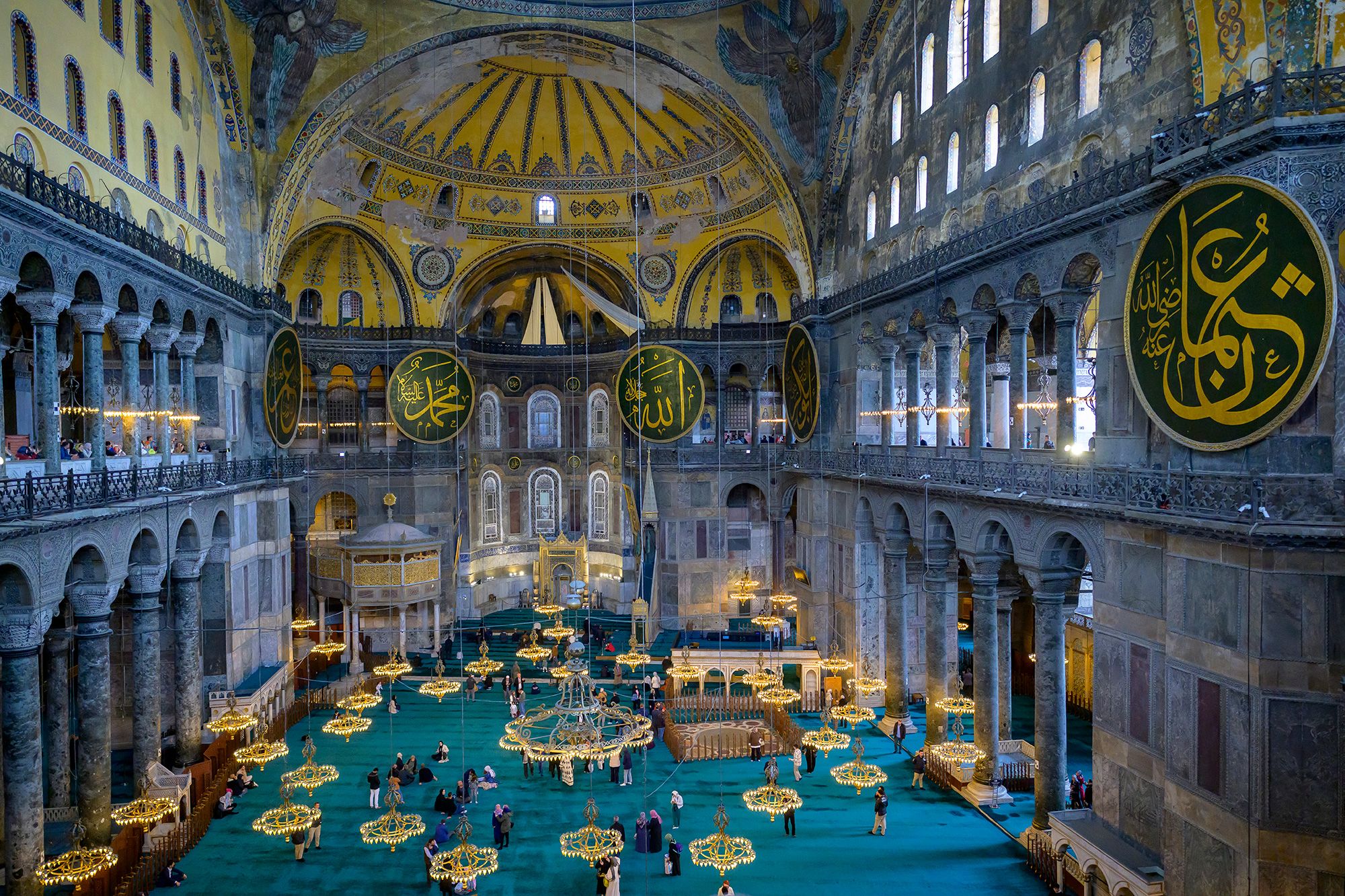
Hagia Sophia was built as a church over a Roman temple, and was subsequently converted into a mosque and then a museum. Since 2020 it is used as a mosque once more.
Yasin Akgul/AFP/Getty Images
Editor’s Note: This CNN series is, or was, sponsored by the country it highlights. CNN retains full editorial control over subject matter, reporting and frequency of the articles and videos within the sponsorship, in compliance with our policy.
Istanbul, TurkeyCNN —
Whether you’re a believer or not, visiting Hagia Sophia is a spiritual experience. The architectural genius of this place of worship — which was built as a church in 537CE before its conversion into a mosque in 1453 — creates an illusion of vastness. It feels like the space starts to expand when you enter the building.
Acoustic alchemy transforms visitors’ murmurs into shimmering sounds, suspended weightless in the air, like echoes of a prayer in an ancient language.
The art inside the building is a testament to coexistence. There is no other place on Earth where Christian mosaics of saints and Byzantine rulers are juxtaposed with Islamic calligraphy, also known as Hüsn-i Hat — large roundels displaying the names of Allah (God), the prophet Mohammed and the four caliphs, the leaders of Islam following the death of Mohammed.
ADVERTISING
Today, Hagia Sophia is one of the world’s most extraordinary mosques — but it’s more than that. It’s also a symbol, a cultural phenomenon, and a monument.
Naturally, like most monumental structures, Hagia Sophia has its own mythology. Of the many stories about the building, some are true, some are exaggerations, and some are outright fantasies.
Bigger and better
The current Hagia Sophia was built in the 6th century when Constantinople — as Istanbul was then called — was the heart of the Orthodox Christian Byzantine Empire that emerged as Ancient Rome’s domination dwindled and ruled swathes of Europe and northern Africa, as far away as modern-day Spain, Libya, Egypt, and Turkey, until the city fell to the Ottomans in 1453.
The building we see today isn’t original, having been preceded by two earlier churches at the same location — which were themselves built over a pagan temple.
The first was said to have been commissioned by Constantine, the Roman emperor who converted to Christianity and moved the Roman Empire’s center to Constantinople, ushering in the Byzantine era.
Called “Magna Ecclesia” — Latin for “Great Church” — it was inaugurated by Constantine’s son, Constantius II, in 360 CE. It was later destroyed by followers of Saint John Chrysostom, a former archbishop of Constantinople who was banished from the city. Its second iteration was inaugurated in 415 CE by the emperor Theodosius II, but was burned down again in 532 CE.
The third church, today’s Hagia Sophia, was built by Justinian I, an ambitious emperor who ordered its construction on 23 February 523 CE.
If an anonymous historical source quoted in the “Istanbul Encyclopedia” by the 20th-century historian Reşad Ekrem Koçu is to be believed, Justinian wanted his church to be larger and more ornate than Jerusalem’s Temple of Solomon, the legendary resting place of the Ark of the Covenant, said to have been built in the 10th century BCE.
During its five-year construction, Justinian instructed his provincial governors to send the most exquisite artifacts from ancient ruins in their territories to Constantinople for use in Hagia Sophia.
This, apparently, did the job. That same anonymous source says Justinian was struck by awe when he first entered. He ran to the altar, looked up to thank God for giving him the chance to build such a wonder — and screamed, “I surpassed you, Solomon!”
Related articleWhy scientists say this stunning ancient lake in Turkey might as well be on Mars
It’s a wonderful story — but one that historian and Hagia Sophia expert Sedat Bornovalı says is untrue.
That anonymously sourced intel was written roughly 300 years after Hagia Sophia’s construction. The anecdote never appears in the works of Procopius, Justinian’s official historian, who also wrote a critical book about the emperor, “Secret History.”
“If these claims were true, we would see them either in ‘Buildings’ or in his ‘Secret History,’” says Bornovalı, who adds that Procopius would have written something stinging like, “The presumptuous man compared himself to the prophet Solomon.”
However, while his “Secret History” shows the historian’s disdain for Justinian and his wife, Procopius still writes about Hagia Sophia with admiration.
A legendarily expensive build
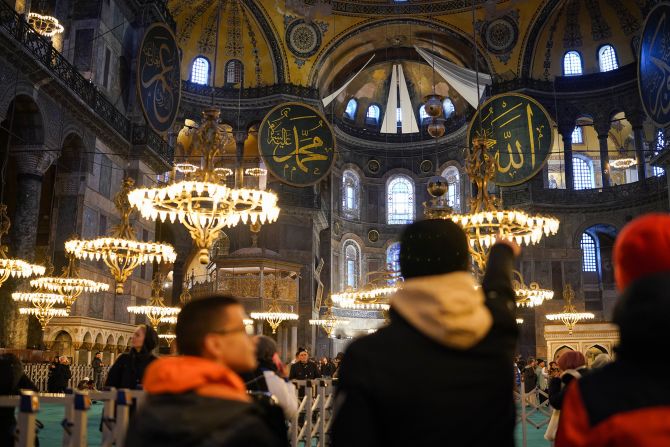
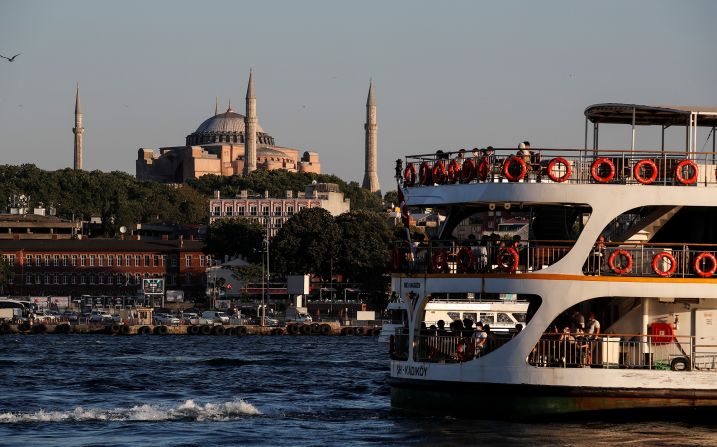
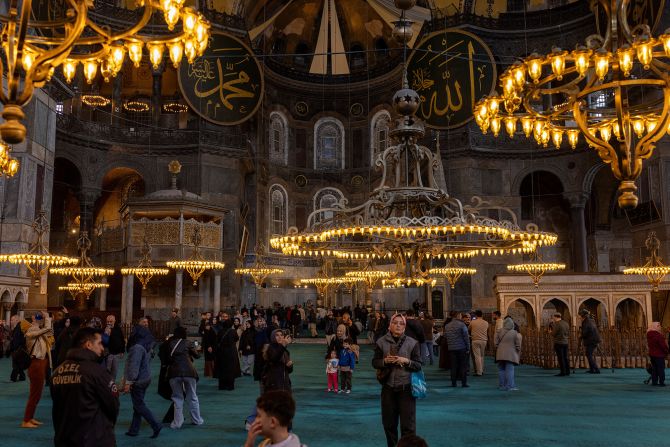
Layers of history: Today, Hagia Sophia is once more a mosque, though its original Christian imagery is still visible.
Umit Bektas/Reuters
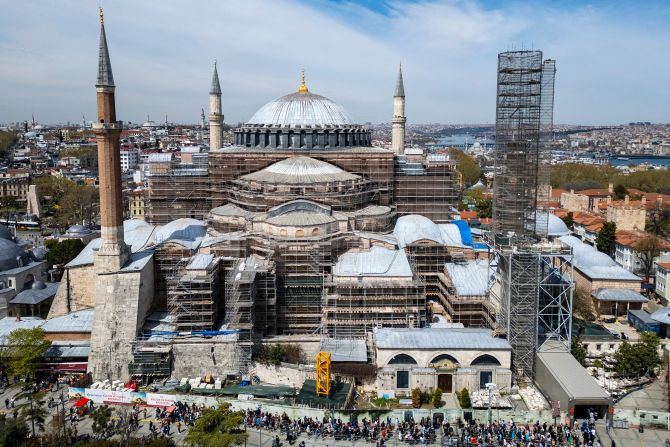
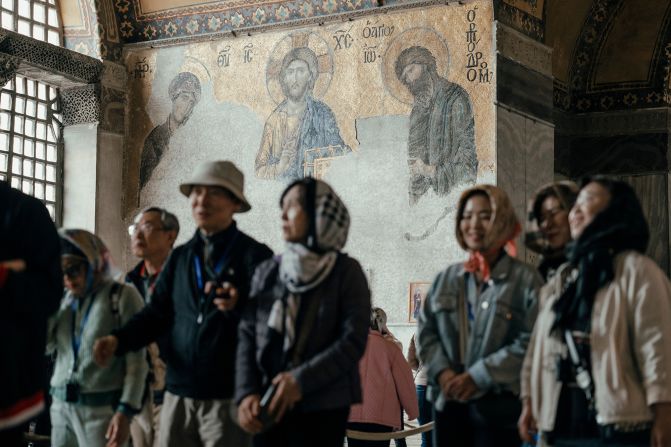
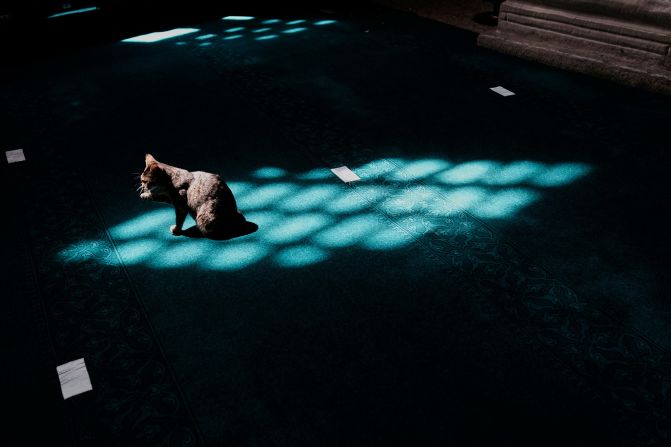
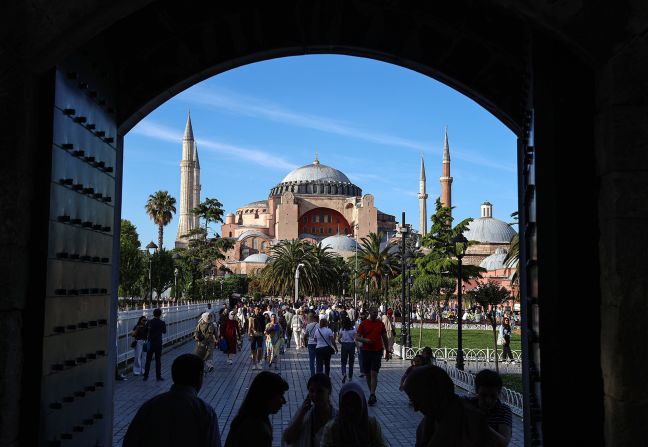
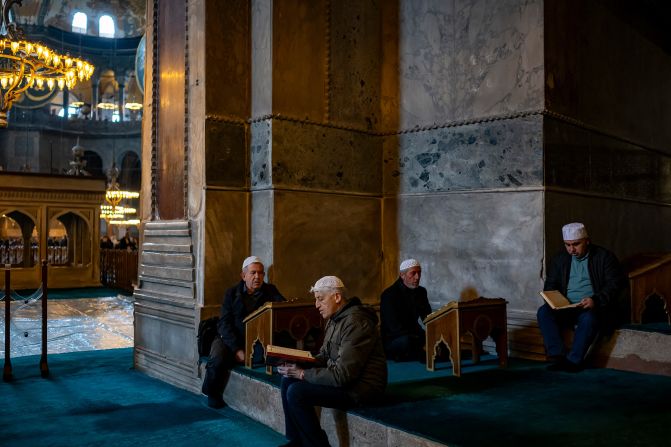
Hagia Sophia’s incredible history
1 of 8
PrevNext
Whatever the motivations behind it, the cost of the project and the hurry to begin the construction of what was one of the megastructures of its time also have almost mythical status.
The price tag was said to be astronomical. In his book “The Fall of the Roman Empire, A New History of Rome and the Barbarians,” historian Peter Heather said Justinian paid “15-20,000 pounds of gold.” The “Istanbul Encyclopedia” of 1945 puts it at a more modest, but still breathtaking $75 million, equivalent to $1.3 billion today. That’s more than the $1 billion cost to rebuild Notre Dame.
The construction of the church started only weeks after the Nika Revolt, a devastating rebellion against Justinian that destroyed most of Constantinople, including the second Hagia Sophia.
Bornovalı thinks it’s possible that Justinian seized the property of his political opponents and collected a vast amount of taxes to finance the construction. “How it was possible to create such a complex design and resolve the logistical issues within [weeks] remains among the unanswered questions,” he writes in his book, “History’s Longest Poem.”
Not least because, he says, it “would have taken years to deliver the stones and other building materials.”
He thinks the budget and plans were probably ready, and Justinian took advantage of the aftermath of the Nika Revolt to start building Hagia Sophia where it is now.
“If the previous Hagia Sophia had not been destroyed, Justinian would have ordered a new version to be built elsewhere anyway,” says Bornovalı.
A mosque with Christian imagery
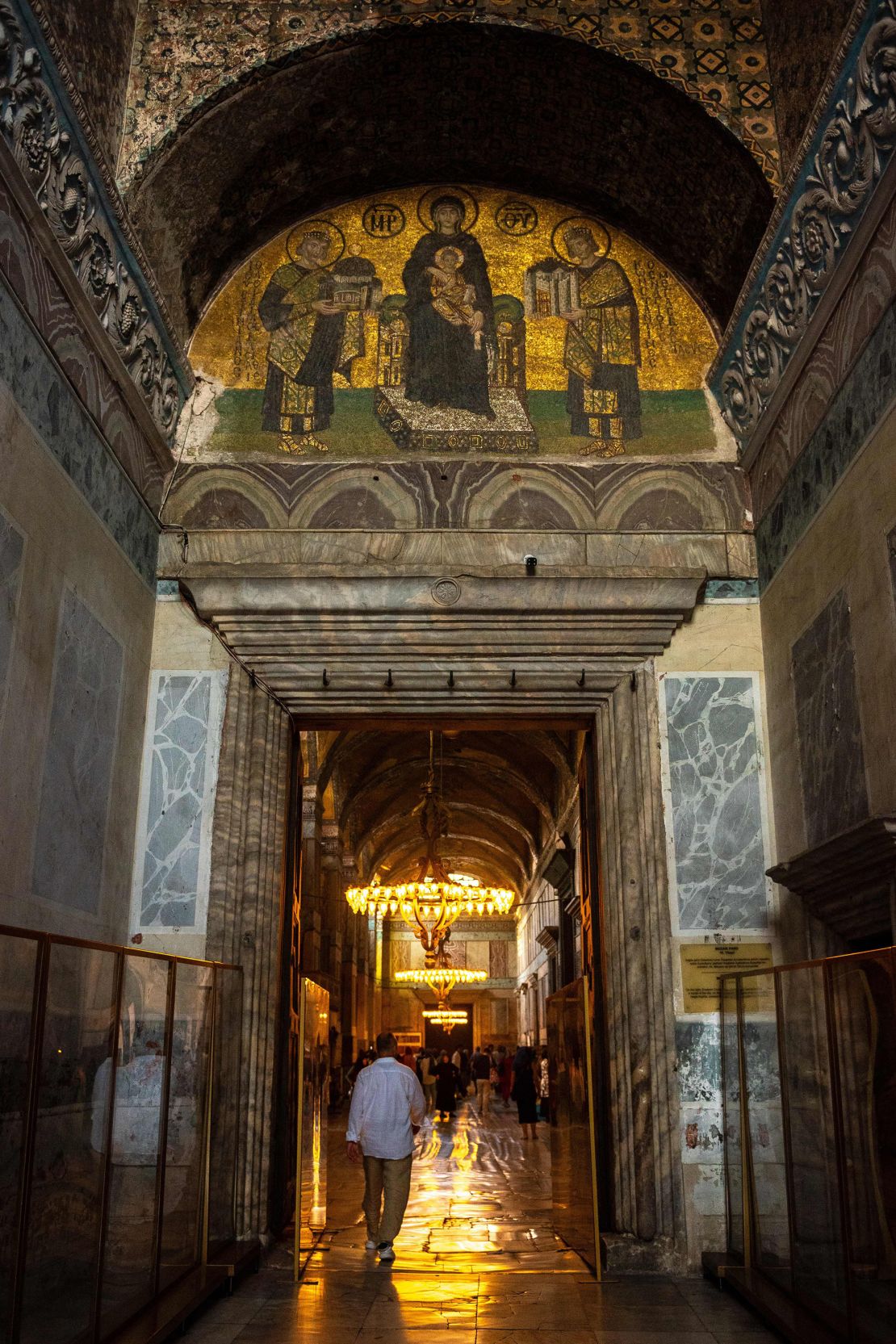
The shimmering mosaics are one of the finest examples of Byzantine artwork.
Saeid Arabzadeh/Middle East Images/AFP/Getty Images
Under the Byzantines, Hagia Sophia became the hub of Orthodox Christianity and the last standing symbol of their empire. But in 1453, when Ottoman sultan Mehmed II (a.k.a. Mehmed the Conqueror) captured Constantinople, his victory paved the way for the Ottoman Empire, which would last until 1922.
To suggest to the world not only Islam’s superiority but also that the Ottomans were the true heirs of the Romans, Mehmed converted Hagia Sophia to a mosque — but kept its original name. Although “Hagia Sophia” sounds as if it was named for a Christian saint, it actually means “Holy Wisdom” in Greek.
After conquering Constantinople, the young sultan — he was only 21 — performed his first Friday prayer here, starting a tradition for all subsequent sultans of the Ottoman Empire.

Related articleTurkey’s ‘mad honey’ has been folk medicine for millennia, but there’s a sting in its tail
“There were three steps that defined the reign of the sultans,” says Turkish historian A. Çağrı Başkurt. “The first is to take the throne in the palace, the second is to wield a sword in Eyüp [an historic district in Istanbul], and the third is to perform the first Friday prayer in Hagia Sophia.”
Mehmed also claimed the title “Caesar of Rome” (Qaisar-e-Rum or Kaiser-i Rum) upon taking Constantinople. His successors continued to use the title until Mustafa Kemal Atatürk abolished the sultanate in 1922, creating the modern state of Turkey a year later.
Protecting a unique cultural heritage
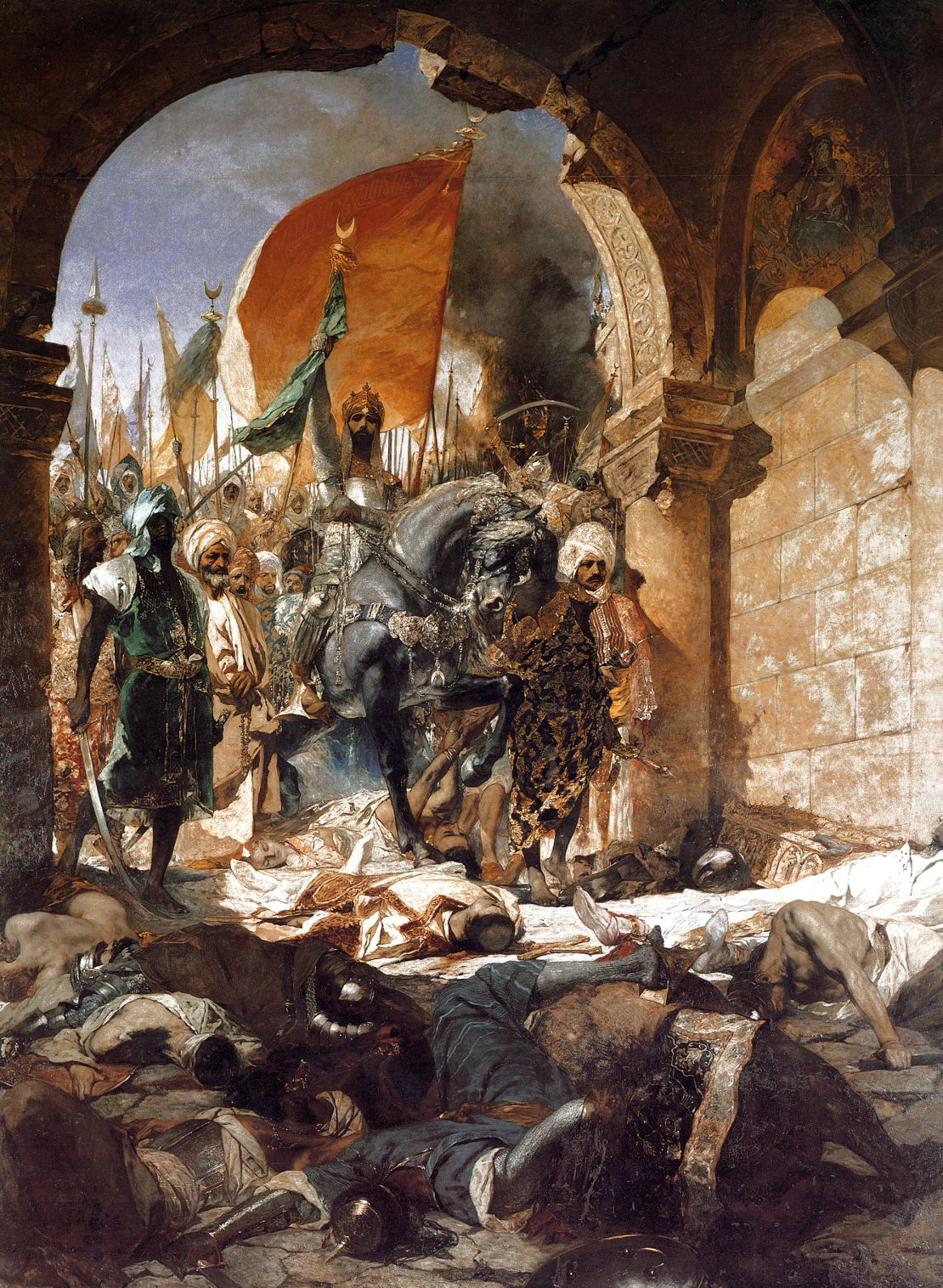
Mehmet II ended the Byzantine empire and paved the way for the Ottoman one. He converted Hagia Sophia into a mosque.
Photo 12/Universal Images Group/Getty Images
Hagia Sofia has withstood many revolutions, occupations, riots, plunderings, and natural disasters (its construction on a base of solid rock is said to have helped it survive earthquakes). Few buildings of its age have been preserved as flawlessly and in such a complete state.
The Ottoman dynasty, particularly Mehmed II, played a pivotal role in its preservation. “[Mehmed] told his army that if they conquer the city, the city is theirs for three days with the exception of Hagia Sophia,” says editor and urban researcher Hasan Mert Kaya.
Koçu writes in the “Istanbul Encyclopedia” that Mehmed didn’t order the Christian mosaics to be covered despite the fact that Islam bans figurative art in religious contexts.
However, a century later, sultan Suleiman I had them plastered over.
It’s thanks to the creation of the Turkish Republic created by Atatürk, a secularist, that we can see them today. In 1926, the authorities undertook a comprehensive renovation after European media claims that Hagia Sophia was in danger of collapsing.
The building was closed to the public in the early 1930s for restorations, then converted into a museum in 1935 as part of a decree by Atatürk. He also commissioned the uncovering and restoration of the Byzantine mosaics.
From mosque to museum… and mosque again
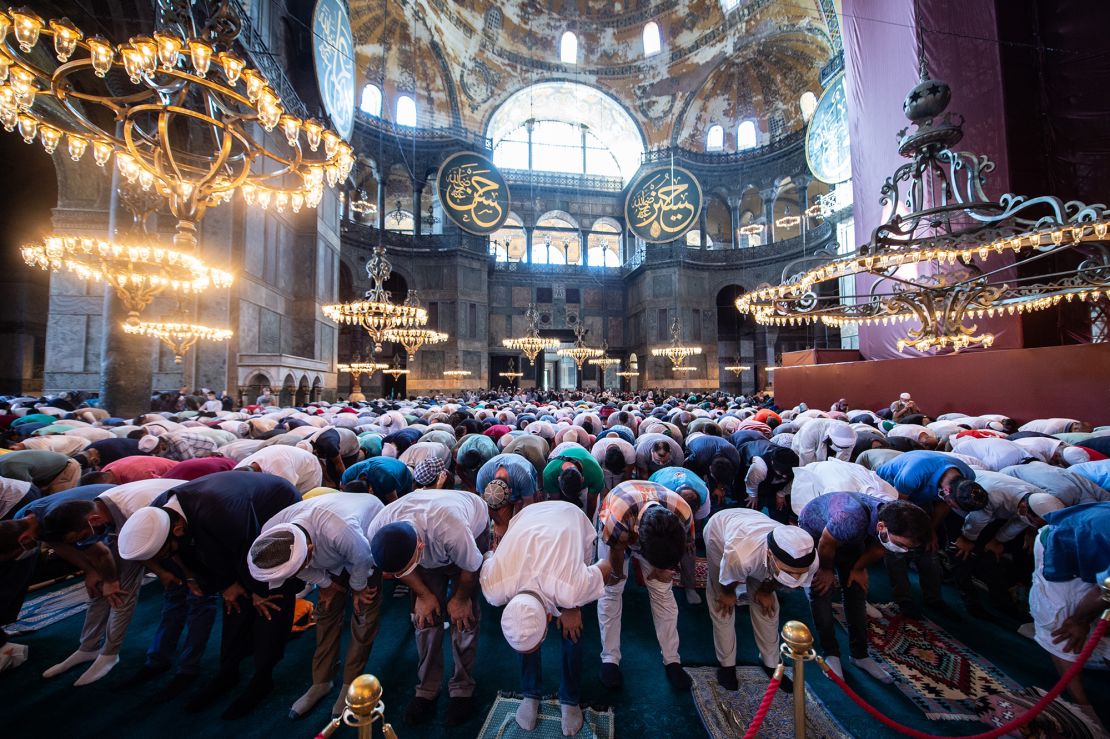
The Turkish government controversially converted the building back into a mosque in 2020. Hagia Sophia had previously been deemed a museum when the secular Turkish state was created.
Burak Kara/Getty Images
In a controversial move, in 2020, it was converted back into a mosque. The decision, involving one of the city’s most important landmarks and a UNESCO World Heritage site, was criticized by international religious and political leaders, with UNESCO, the UN’s cultural agency, and the pope among those voicing concern, though the move did not prompt wide opposition within Turkey.
However, the second floor has been serving as a museum since 2024. Tourists can buy tickets to enter the gallery and see the prayer floor from up above. The Byzantine mosaics and images are still visible during visiting hours, and are covered with special lighting effects during worship and prayer hours.
Whether Hagia Sophia should be a mosque or a museum is still debated. While some argue it should be converted back to a museum and never used for worship, others, like urban researcher Kaya, think it should stay as a place of worship — though only up to a point.
—
Ben Witherington, III
Amos Professor of NT for Doctoral Studies
Asbury Theological Seminary
Doctoral Faculty, St. Andrews University, Scotland
Education and Religion
History and Religion
The basilica of Holy Wisdom=Christ
Previous Post

May 4, 2025
Thunderbolts--- the New Avengers
Next Post
May 6, 2025 The Zondervan Compact Lexicon
Browse Our Archives
Select a Category Uncategorized
Select a Month October 2026 September 2026 August 2026 July 2026 June 2026 May 2026 April 2026 March 2026 February 2026 January 2026 December 2025 November 2025 October 2025 September 2025 August 2025 July 2025 June 2025 May 2025 April 2025 March 2025 February 2025 January 2025 December 2024 November 2024 October 2024 September 2024 August 2024 July 2024 June 2024 May 2024 April 2024 March 2024 February 2024 January 2024 December 2023 November 2023 October 2023 September 2023 August 2023 July 2023 June 2023 May 2023 April 2023 March 2023 February 2023 January 2023 December 2022 November 2022 October 2022 September 2022 August 2022 July 2022 June 2022 May 2022 April 2022 March 2022 February 2022 January 2022 December 2021 November 2021 October 2021 September 2021 August 2021 July 2021 June 2021 May 2021 April 2021 March 2021 February 2021 January 2021 December 2020 November 2020 October 2020 September 2020 August 2020 July 2020 June 2020 May 2020 April 2020 March 2020 February 2020 January 2020 December 2019 November 2019 October 2019 September 2019 August 2019 July 2019 June 2019 May 2019 April 2019 March 2019 February 2019 January 2019 December 2018 November 2018 October 2018 September 2018 August 2018 July 2018 June 2018 May 2018 April 2018 March 2018 February 2018 January 2018 December 2017 November 2017 October 2017 September 2017 August 2017 July 2017 June 2017 May 2017 April 2017 March 2017 February 2017 January 2017 December 2016 November 2016 October 2016 September 2016 August 2016 July 2016 June 2016 May 2016 April 2016 March 2016 February 2016 January 2016 December 2015 November 2015 October 2015 September 2015 August 2015 July 2015 June 2015 May 2015 April 2015 March 2015 February 2015 January 2015 December 2014 November 2014 October 2014 September 2014 August 2014 July 2014 June 2014 May 2014 April 2014 March 2014 February 2014 January 2014 December 2013 November 2013 October 2013 September 2013 August 2013 July 2013 June 2013 May 2013 April 2013 March 2013 February 2013 January 2013 December 2012 November 2012 October 2012 September 2012 August 2012 July 2012 June 2012 May 2012 April 2012 March 2012 February 2012 January 2012 December 2011 November 2011 October 2011 September 2011 August 2011 July 2011 June 2011 May 2011 April 2011 March 2011 February 2011 January 2011
Follow Us!
TAKE THE
Religious Wisdom Quiz
What was the primary trade good in Biblical times?
Select your answer to see how you score.
Olive oil Purple cloth Wheat Spices
Books by This Author Books by Ben Witherington
Related posts from The Bible and Culture


Methodist Central Hall and Westminster Abbey


TRENDING AT PATHEOS Evangelical

The Problem with False Prophets
Miller’s Station UMC| 10/18/26| Anchor Verse: Jeremiah 23: 1, 9-23 I...

Emotion in Early Christianity by Andrew Crislip
Andrew Crislip’s Emotion in Early Christianity examines an often overlooked dimension of...

16 Spiritual Touchstones for a More Grounded Life
After decades of spiritual study, here are 16 principles I try...

Catholic Evangelization: Sharing Your Faith Every Day
Welcome back to the Graceful Awakening mini-series called, “From Faith to Mission.” ...

The Pillar of the Boatmen: the Ancient Monument...
The Pillar of the Boatmen is a Romano-Gaulish sculpture that dates from...

In one sense walking into Westminster Abbey is like walking down the...
view all Evangelical blogs
Ad-Free & Subscriber Log-In Subscription Support
- About Us
- 2026 Calendar
- Videos
- Podcasts
- Library of World Religions
- Faith In Media Tracker
- Advertise With Us
- Write for Us
- Privacy Policy
- Terms of Service
- Do Not Sell My Data
- Contact Us
- Radiant Digital
- Manage Newsletter Subscriptions
- Unsubscribe From Notifications
- Sitemap
Copyright 2008-2026, Patheos. All rights reserved.
Subscription Support Ad-Free & Subscriber Log-In
Follow Patheos