
BuddhistCatholicContemplativeEvangelicalGeneral ChristianHinduJewishLatter-day SaintMuslimNew VisionsProgressive Christian
Beliefs
- Buddhist
- Catholic
- Contemplative
- Evangelical
- General Christian
- Hindu
- Jewish
- Latter-day Saint
- More Voices
- Muslim
- New Visions
- Pagan
- Progressive Christian
Topics
- Religion News
- Food and Religion
- Sports and Religion
- Religious Art
- Religious Music and Entertainment
- Religious Events
- History and Religion
- Style and Religion
- Politics and Religion
- Women in Religion
- Recreation Outdoors and Religion
- Business Finance and Religion
- Careers Workplace and Religion
- Education and Religion
- Family Parenting and Religion
- Health Fitness and Religion
- Home and Religion
- Relationships and Religion
- Technology and Religion
- Travel and Religion
Columnists
- Buddhist Columnists
- Business Finance and Religion Columnists
- Careers Workplace and Religion Columnists
- Catholic Columnists
- Contemplative Columnists
- Education and Religion Columnists
- Evangelists Columnists
- Family Parenting and Religion Columnists
- General Christian Columnists
- Health Fitness and Religion Columnists
- Hindu Columnists
- History and Religion Columnists
- Home and Religion Columnists
- Jewish Columnists
- More Voices Columnists
- Latter Day Columnists
- Muslim Columnists
- New Visions Columnists
- Nonreligious Columnists
- Pagan Columnists
- Politics and Religion Columnists
- Progressive Columnists
- Recreation Outdoors and Religion Columnists
- Relationships and Religion Columnists
- Religion News Columnists
- Religious Art Columnists
- Religious Events Columnists
- Religious Music and Entertainment Columnists
- Sports and Religion Columnists
- Style and Religion Columnists
- Technology and Religion Columnists
- Travel and Religion Columnists
- Women in Religion Columnists
Resource Library
- 2026 Calendar
- Library of World Religions
- The 100 Most Holy Places on Earth
- Patheos Answers
- Podcasts
- Videos
- Faith Leaders Database
- Anglican Episcopalian
- Bahai
- Baptist
- Buddhism
- Christianity
- Confucianism
- Eastern Orthodoxy
- Hinduism
- Holiness and Pentecostal
- ISKCON
- Islam
- Judaism
- Lutheran
- Methodist
- The Church of Jesus Christ of Latter-day Saints
- New Age
- Paganism
- Presbytarian and Reformed
- Protestantism
- Religion Behind the Scenes
- Roman Catholic
- Scientology
- Shia Islam
- Sikhism
- Sufism
- Sunni Islam
- Taoism
- Zen
- See all religions
Research Tools
 Ad-Free & Subscriber Log-In Subscription Support
Ad-Free & Subscriber Log-In Subscription Support
Follow Patheos 

- Trending:
- Forgiveness
- |
- Marriage
- |
- Consciousness
- |
- Death Penalty
- |
- Election
- |
- Halloween

- Home
- Evangelical
- Education and Religion
- Biblical Interpretation–2
Biblical Interpretation–2
Last updated on: April 22, 2025 at 1:00 am by Ben Witherington
Biblical Interpretation–2 2025-04-08T10:48:56-04:00 Ben Witherington
Patheos Explore the world's faith through different perspectives on religion and spirituality! Patheos has the views of the prevalent religions and spiritualities of the world.

One of the main things that stands out about the early church fathers was how concerned they were to make sure they used the Bible so it would be a word on target for their own audiences. But very often, these audiences lived in very different contexts to that of the original recipients of the NT documents and had different needs and interests. There was always a danger to assume that an application or significance of the text for a later context was in accord with its original meaning, or worse still that God in the person of the Spirit, had now given it a meaning at variance with the original inspired authors of the text. What compounded the problem was that not many of the church fathers actually knew the Hebrew OT and took a Greek translation of it to be the unquestioned version of choice for Christian use. This only further promoted the reading the OT not merely in the light of the Christ event, but as part of the story, not merely the prequel or back story, of the Christ event.
Origen basically talks about ‘not only the obvious meaning of a text’ but also the hidden meaning, hidden from most readers, except perhaps the very pious. Piety is seen as a pre-requisite for reading the text properly to get at the deeper meaning and encounter the divine mystery, or even God himself through the text. The problem with this inherent two levels to the text, is that it suggests that God is speaking through the text to the reader, in ways that go beyond God speaking in the text. But what exactly does it mean in 2 Tim, 3.16 that all Scripture itself is God-breathed and profitable to teaching and training in righteousness? The Bible is not supposed to be viewed as some sort of ink blot ot Rorschach text which you must ponder to get at the hidden meaning. One thing the piety requirement ignores is how many thousands of times pagans and even anti-Christians of various sorts have picked up the Bible and been convicted, convinced, and converted through the reading of the Word under the guidance of the Parakletos— the Holy Spirit.
Vatican 2 did a great service to the Catholic in helping it to refocus on the original inspired meaning of Biblical texts, as the statement in Dei Verbum “Since God speaks in Sacred Scriptures through human beingz, in a human fashion, the interpreter of Sacred Scripture, in order to see clearly what God wanted to communicate to us, should carefully investigate what meaning the sacred writers really intended, and what God wanted to manifest by means of their words.” (cited in Daley, p. 39). It is precisely because God acted in a specific way and time in history through specific persons and then through specific Christians writers who were inspired to write what they did about the Gospel of Jesus Christ, and not only so, but because Christ really came and acted in human history, really died on a cross and rose from the dead, that the proper historical interpretation of these seminal events is so critical. It is quite unacceptable, and would have been to Paul and others, to assume that the meaning of the text only finally ‘jelled’ when the church fathers got hold of the NT documents or when the canon showed up in the 4th century. NO, the NT documents had meanings for their original historical audiences, and that meaning has not changed over time. What the original inspired writer meant back then is still what it means today. Let’s take one small example. Some cessationist interpreters have taken 1 Cor. 13 .8-10 says “As for prophecies, they will pass away; as for tongues, they will cease; as for knowledge, it will pass away. 9 For we know in part and we prophesy in part, 10 but when the perfect comes, the partial will pass away.” The cessationist argues that ‘the perfect’ refers to the completed canon of Scripture, and therefore the gifts of prophecy, tongues etc. while characteristic of the apostolic age, did not continue beyond that period. But even a moments reflection will tell you that by the ‘perfect’. Paul could not be referring to the Bible itself, but surely to the return of Christ at the eschaton, which other texts in 1 Corinthians make evident (see 1 Cor. 15). Furthermore, Paul’s audience in Corinth could not possibly have understood Paul to be referring to a book that had not yet been fully written, never mind completed and available in the church in Corinth. Paul’s subject matter in 1 Cor. 13, as for instance 1 Cor. 13.1-2 shows is the spiritual gifts, including speaking to angelic tongues, NOT the assembling of the Bible. (see the whole context in 1 Cor. 12-14) . The great sin of so many of the church fathers was to read the NT anachronistically, reading back into the text, later ideas, later theologies, not to mention later hermeneutical principles for interpreting the Bible. In the end, the church fathers need to be read with a good historically critical eye, just as the. Bible should be.
Education and Religion
History and Religion
and do the church fathers help us?
Previous Post
April 21, 2025
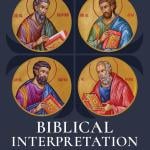
Biblical Interpretation and Doctrine in Early Christianity-1
Next Post

April 23, 2025 Keith Jarrett-- The Master Improviser
Browse Our Archives
Select a Category Uncategorized
Select a Month October 2026 September 2026 August 2026 July 2026 June 2026 May 2026 April 2026 March 2026 February 2026 January 2026 December 2025 November 2025 October 2025 September 2025 August 2025 July 2025 June 2025 May 2025 April 2025 March 2025 February 2025 January 2025 December 2024 November 2024 October 2024 September 2024 August 2024 July 2024 June 2024 May 2024 April 2024 March 2024 February 2024 January 2024 December 2023 November 2023 October 2023 September 2023 August 2023 July 2023 June 2023 May 2023 April 2023 March 2023 February 2023 January 2023 December 2022 November 2022 October 2022 September 2022 August 2022 July 2022 June 2022 May 2022 April 2022 March 2022 February 2022 January 2022 December 2021 November 2021 October 2021 September 2021 August 2021 July 2021 June 2021 May 2021 April 2021 March 2021 February 2021 January 2021 December 2020 November 2020 October 2020 September 2020 August 2020 July 2020 June 2020 May 2020 April 2020 March 2020 February 2020 January 2020 December 2019 November 2019 October 2019 September 2019 August 2019 July 2019 June 2019 May 2019 April 2019 March 2019 February 2019 January 2019 December 2018 November 2018 October 2018 September 2018 August 2018 July 2018 June 2018 May 2018 April 2018 March 2018 February 2018 January 2018 December 2017 November 2017 October 2017 September 2017 August 2017 July 2017 June 2017 May 2017 April 2017 March 2017 February 2017 January 2017 December 2016 November 2016 October 2016 September 2016 August 2016 July 2016 June 2016 May 2016 April 2016 March 2016 February 2016 January 2016 December 2015 November 2015 October 2015 September 2015 August 2015 July 2015 June 2015 May 2015 April 2015 March 2015 February 2015 January 2015 December 2014 November 2014 October 2014 September 2014 August 2014 July 2014 June 2014 May 2014 April 2014 March 2014 February 2014 January 2014 December 2013 November 2013 October 2013 September 2013 August 2013 July 2013 June 2013 May 2013 April 2013 March 2013 February 2013 January 2013 December 2012 November 2012 October 2012 September 2012 August 2012 July 2012 June 2012 May 2012 April 2012 March 2012 February 2012 January 2012 December 2011 November 2011 October 2011 September 2011 August 2011 July 2011 June 2011 May 2011 April 2011 March 2011 February 2011 January 2011
Follow Us!
TAKE THE
Religious Wisdom Quiz
Who was Mary's cousin?
Select your answer to see how you score.
Leah Sarah Rachel Elizabeth
Books by This Author Books by Ben Witherington
Related posts from The Bible and Culture


Methodist Central Hall and Westminster Abbey


TRENDING AT PATHEOS Evangelical

Catholic Evangelization: Sharing Your Faith Every Day
Welcome back to the Graceful Awakening mini-series called, “From Faith to Mission.” ...

The Pillar of the Boatmen: the Ancient Monument...
The Pillar of the Boatmen is a Romano-Gaulish sculpture that dates from...

In one sense walking into Westminster Abbey is like walking down the...

'Super Scam Me' Exposes AI Jon Bon Jovi...
Leslie Pickett believed she was in a relationship with Jon Bon Jovi....

The Brazilian Remake of Kendricks' 'Flywheel' Opens in...
“Flywheel,” the story that launched the Kendrick Brothers’ filmmaking career is getting...

The Dangers of Gradual Accommodation (Winking at Sin)
Recently, the “law of gradualness” resurfaced during the opening of a weeklong,...
view all Evangelical blogs
Ad-Free & Subscriber Log-In Subscription Support
- About Us
- 2026 Calendar
- Videos
- Podcasts
- Library of World Religions
- Faith In Media Tracker
- Advertise With Us
- Write for Us
- Privacy Policy
- Terms of Service
- Do Not Sell My Data
- Contact Us
- Radiant Digital
- Manage Newsletter Subscriptions
- Unsubscribe From Notifications
- Sitemap
Copyright 2008-2026, Patheos. All rights reserved.
Subscription Support Ad-Free & Subscriber Log-In
Follow Patheos