
BuddhistCatholicContemplativeEvangelicalGeneral ChristianHinduJewishLatter-day SaintMuslimNew VisionsProgressive Christian
Beliefs
- Buddhist
- Catholic
- Contemplative
- Evangelical
- General Christian
- Hindu
- Jewish
- Latter-day Saint
- More Voices
- Muslim
- New Visions
- Pagan
- Progressive Christian
Topics
- Religion News
- Food and Religion
- Sports and Religion
- Religious Art
- Religious Music and Entertainment
- Religious Events
- History and Religion
- Style and Religion
- Politics and Religion
- Women in Religion
- Recreation Outdoors and Religion
- Business Finance and Religion
- Careers Workplace and Religion
- Education and Religion
- Family Parenting and Religion
- Health Fitness and Religion
- Home and Religion
- Relationships and Religion
- Technology and Religion
- Travel and Religion
Columnists
- Buddhist Columnists
- Business Finance and Religion Columnists
- Careers Workplace and Religion Columnists
- Catholic Columnists
- Contemplative Columnists
- Education and Religion Columnists
- Evangelists Columnists
- Family Parenting and Religion Columnists
- General Christian Columnists
- Health Fitness and Religion Columnists
- Hindu Columnists
- History and Religion Columnists
- Home and Religion Columnists
- Jewish Columnists
- More Voices Columnists
- Latter Day Columnists
- Muslim Columnists
- New Visions Columnists
- Nonreligious Columnists
- Pagan Columnists
- Politics and Religion Columnists
- Progressive Columnists
- Recreation Outdoors and Religion Columnists
- Relationships and Religion Columnists
- Religion News Columnists
- Religious Art Columnists
- Religious Events Columnists
- Religious Music and Entertainment Columnists
- Sports and Religion Columnists
- Style and Religion Columnists
- Technology and Religion Columnists
- Travel and Religion Columnists
- Women in Religion Columnists
Resource Library
- 2026 Calendar
- Library of World Religions
- The 100 Most Holy Places on Earth
- Patheos Answers
- Podcasts
- Videos
- Faith Leaders Database
- Anglican Episcopalian
- Bahai
- Baptist
- Buddhism
- Christianity
- Confucianism
- Eastern Orthodoxy
- Hinduism
- Holiness and Pentecostal
- ISKCON
- Islam
- Judaism
- Lutheran
- Methodist
- The Church of Jesus Christ of Latter-day Saints
- New Age
- Paganism
- Presbytarian and Reformed
- Protestantism
- Religion Behind the Scenes
- Roman Catholic
- Scientology
- Shia Islam
- Sikhism
- Sufism
- Sunni Islam
- Taoism
- Zen
- See all religions
Research Tools
 Ad-Free & Subscriber Log-In Subscription Support
Ad-Free & Subscriber Log-In Subscription Support
Follow Patheos 

- Trending:
- Forgiveness
- |
- Marriage
- |
- Consciousness
- |
- Death Penalty
- |
- Election
- |
- Halloween

- Home
- Evangelical
- Education and Religion
- Gerald Bray’s Athens and Jerusalem– Part Nine
Gerald Bray’s Athens and Jerusalem– Part Nine
Last updated on: April 13, 2025 at 1:36 am by Ben Witherington
Gerald Bray’s Athens and Jerusalem– Part Nine 2025-04-04T17:16:04-04:00 Ben Witherington
Patheos Explore the world's faith through different perspectives on religion and spirituality! Patheos has the views of the prevalent religions and spiritualities of the world.
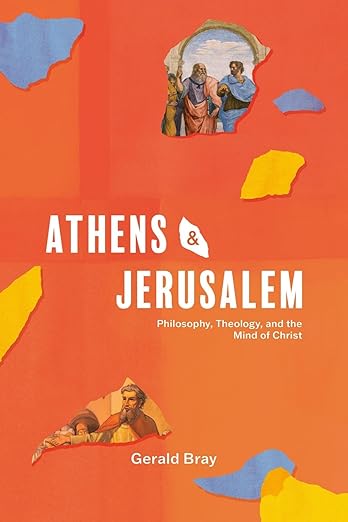
It was not until about 1200 A.D. that we had universities to house and promote the acquiring of knowledge and wisdom, but there were precursors who made clear that such institutions were needed what with the developments of disciplines such as the study of law, or medicine, as well as theology. One leading theologian who helped to pave the way forward was indeed Anselm of Canterbury (1033-1109), perhaps the first really great English speaking theologian. Anselm believed that the law of God was what united the revealed truths of the Bible with what was discoverable in nature. Both the Bible and Nature addressed human reason, as Bray points out. Of course Anselm became famous for his proof for the existence of God– ‘God is a being greater than which cannot be conceived’, a truly ontological sort of argument. I once did a graduate paper on this very theory, that my professor said was the most profound of all the so-called proofs for God’s existence. Be that as it may, Anselm was perhaps best known for his motto– fides quaerens intellectum, faith seeking understanding, which I have often adopted as my own approach to life. Why? Because it is not true that ‘seeing is believing’ in every case. Sometimes seeing may lead to believing, but in regard to the higher truths, especially about God, it is believing that leads to seeing and understanding. Remember what was said about Abraham in Genesis, namely ‘Abraham trusted/believed God and it was credited to him as righteousness’.
The discussion of predestination which of course especially goes back to Paul, and perhaps before him as well in the Bible, and this is picked up by Augustine and his Augustinian successors such as the Augustinian monk Luther, and of course Calvin as well and his successors, has been with us since Biblical times, and Bray has an interesting take on this conundrum. “Some people want to say that God foreknows what will happen but does not cause it, and so is not responsible for what might go wrong. Others say he predestines some to eternal life but leaves the rest to their own devices. Neither of these positions make any sense at least not if we are prepared to accept divine sovereignty over creation. Either he is in control or he is not God in the Biblical sense, and so logic compels us to accept that everything that happens good or bad is somehow the fruit of his will. At the same time, God hates nothing that he has made, and he does not force his creatures to act against his will. The terrible truth is that we are naturally rebellious and deserve only condemnation. The idea that going to heaven is some form of entitlement which so many today seem to think is completely alien to the Bible which teaches that our salvation is an act of God’s grace , extended to those whom he has chosen for reasons that are beyond our understanding.” (p. 117).
There are however some serious flaws in this argument, and by flaws I mean, it does not make sense of the whole of the Biblical witness: 1) Rom. 9-11 indicates that God foreknows, but does not cause human evil, so God’s knowing something is not what causes it to happen. Knowing is one thing, willing is another even with God; 2) as we hear in the Pastorals, Christ died as a ransom for all of humanity ( 1 Tim. 2.6), died for the sins of the world, not just the chosen few. Indeed as John 3.16 God loves the world, all the world of humanity, which why he sent his Son to save it; 3) salvation happens by grace through faith in Christ. It is not the result of some being predestined to do something. The discussion of predestination in Rom. 8 has to do with the destiny of those who love God, and as a result are called unto his purpose and kingdom. Those who love God are the called and those destined to be conformed to the image of Christ; 4) election is one thing and is a corporate concept, involving a chosen people Israel, and a chosen person Christ and those who are ‘in Christ’ salvation is something else. Notice that Christ, as God’s chosen one does not need to be saved, rather he becomes the means of salvation. It was Christ who pre-existed and was destined by God to be the world’s savior. We did not pre-exist and so were not there to be chosen in advance. 5) God has provided both angels and humans with a modicum of freedom, which means the power of contrary choice. And as Bray says, God does not force his creatures to act against his will by some eternal (or is it infernal) decree. Just so. Had he done so he would have been acting against his own character,6) for as 1 John 4 says God is love, not merely loving, but the essence of love. And in light of the great commandment to love God and neighbor, we should bear in mind that love cannot be coerced, forced, predestined. It has to be freely received from God, and freely given. (on all of this see my Biblical Theology, and my little book on God’s character entitled Who God Is).
Education and Religion
History and Religion
Previous Post
April 12, 2025
Gerald Bray's Athens and Jerusalem-- Part Eight
Next Post
April 14, 2025 Gerald Bray's Athens and Jerusalem-- Part Ten
Browse Our Archives
Select a Category Uncategorized
Select a Month October 2026 September 2026 August 2026 July 2026 June 2026 May 2026 April 2026 March 2026 February 2026 January 2026 December 2025 November 2025 October 2025 September 2025 August 2025 July 2025 June 2025 May 2025 April 2025 March 2025 February 2025 January 2025 December 2024 November 2024 October 2024 September 2024 August 2024 July 2024 June 2024 May 2024 April 2024 March 2024 February 2024 January 2024 December 2023 November 2023 October 2023 September 2023 August 2023 July 2023 June 2023 May 2023 April 2023 March 2023 February 2023 January 2023 December 2022 November 2022 October 2022 September 2022 August 2022 July 2022 June 2022 May 2022 April 2022 March 2022 February 2022 January 2022 December 2021 November 2021 October 2021 September 2021 August 2021 July 2021 June 2021 May 2021 April 2021 March 2021 February 2021 January 2021 December 2020 November 2020 October 2020 September 2020 August 2020 July 2020 June 2020 May 2020 April 2020 March 2020 February 2020 January 2020 December 2019 November 2019 October 2019 September 2019 August 2019 July 2019 June 2019 May 2019 April 2019 March 2019 February 2019 January 2019 December 2018 November 2018 October 2018 September 2018 August 2018 July 2018 June 2018 May 2018 April 2018 March 2018 February 2018 January 2018 December 2017 November 2017 October 2017 September 2017 August 2017 July 2017 June 2017 May 2017 April 2017 March 2017 February 2017 January 2017 December 2016 November 2016 October 2016 September 2016 August 2016 July 2016 June 2016 May 2016 April 2016 March 2016 February 2016 January 2016 December 2015 November 2015 October 2015 September 2015 August 2015 July 2015 June 2015 May 2015 April 2015 March 2015 February 2015 January 2015 December 2014 November 2014 October 2014 September 2014 August 2014 July 2014 June 2014 May 2014 April 2014 March 2014 February 2014 January 2014 December 2013 November 2013 October 2013 September 2013 August 2013 July 2013 June 2013 May 2013 April 2013 March 2013 February 2013 January 2013 December 2012 November 2012 October 2012 September 2012 August 2012 July 2012 June 2012 May 2012 April 2012 March 2012 February 2012 January 2012 December 2011 November 2011 October 2011 September 2011 August 2011 July 2011 June 2011 May 2011 April 2011 March 2011 February 2011 January 2011
Follow Us!
TAKE THE
Religious Wisdom Quiz
What was the primary trade good in Biblical times?
Select your answer to see how you score.
Olive oil Purple cloth Wheat Spices
Books by This Author Books by Ben Witherington
Related posts from The Bible and Culture


Methodist Central Hall and Westminster Abbey

TRENDING AT PATHEOS Evangelical

The Problem with False Prophets
Miller’s Station UMC| 10/18/26| Anchor Verse: Jeremiah 23: 1, 9-23 I...

Emotion in Early Christianity by Andrew Crislip
Andrew Crislip’s Emotion in Early Christianity examines an often overlooked dimension of...

16 Spiritual Touchstones for a More Grounded Life
After decades of spiritual study, here are 16 principles I try...

Catholic Evangelization: Sharing Your Faith Every Day
Welcome back to the Graceful Awakening mini-series called, “From Faith to Mission.” ...

The Pillar of the Boatmen: the Ancient Monument...
The Pillar of the Boatmen is a Romano-Gaulish sculpture that dates from...

In one sense walking into Westminster Abbey is like walking down the...
view all Evangelical blogs
Ad-Free & Subscriber Log-In Subscription Support
- About Us
- 2026 Calendar
- Videos
- Podcasts
- Library of World Religions
- Faith In Media Tracker
- Advertise With Us
- Write for Us
- Privacy Policy
- Terms of Service
- Do Not Sell My Data
- Contact Us
- Radiant Digital
- Manage Newsletter Subscriptions
- Unsubscribe From Notifications
- Sitemap
Copyright 2008-2026, Patheos. All rights reserved.
Subscription Support Ad-Free & Subscriber Log-In
Follow Patheos