
BuddhistCatholicContemplativeEvangelicalGeneral ChristianHinduJewishLatter-day SaintMuslimNew VisionsProgressive Christian
Beliefs
- Buddhist
- Catholic
- Contemplative
- Evangelical
- General Christian
- Hindu
- Jewish
- Latter-day Saint
- More Voices
- Muslim
- New Visions
- Pagan
- Progressive Christian
Topics
- Religion News
- Food and Religion
- Sports and Religion
- Religious Art
- Religious Music and Entertainment
- Religious Events
- History and Religion
- Style and Religion
- Politics and Religion
- Women in Religion
- Recreation Outdoors and Religion
- Business Finance and Religion
- Careers Workplace and Religion
- Education and Religion
- Family Parenting and Religion
- Health Fitness and Religion
- Home and Religion
- Relationships and Religion
- Technology and Religion
- Travel and Religion
Columnists
- Buddhist Columnists
- Business Finance and Religion Columnists
- Careers Workplace and Religion Columnists
- Catholic Columnists
- Contemplative Columnists
- Education and Religion Columnists
- Evangelists Columnists
- Family Parenting and Religion Columnists
- General Christian Columnists
- Health Fitness and Religion Columnists
- Hindu Columnists
- History and Religion Columnists
- Home and Religion Columnists
- Jewish Columnists
- More Voices Columnists
- Latter Day Columnists
- Muslim Columnists
- New Visions Columnists
- Nonreligious Columnists
- Pagan Columnists
- Politics and Religion Columnists
- Progressive Columnists
- Recreation Outdoors and Religion Columnists
- Relationships and Religion Columnists
- Religion News Columnists
- Religious Art Columnists
- Religious Events Columnists
- Religious Music and Entertainment Columnists
- Sports and Religion Columnists
- Style and Religion Columnists
- Technology and Religion Columnists
- Travel and Religion Columnists
- Women in Religion Columnists
Resource Library
- 2026 Calendar
- Library of World Religions
- The 100 Most Holy Places on Earth
- Patheos Answers
- Podcasts
- Videos
- Faith Leaders Database
- Anglican Episcopalian
- Bahai
- Baptist
- Buddhism
- Christianity
- Confucianism
- Eastern Orthodoxy
- Hinduism
- Holiness and Pentecostal
- ISKCON
- Islam
- Judaism
- Lutheran
- Methodist
- The Church of Jesus Christ of Latter-day Saints
- New Age
- Paganism
- Presbytarian and Reformed
- Protestantism
- Religion Behind the Scenes
- Roman Catholic
- Scientology
- Shia Islam
- Sikhism
- Sufism
- Sunni Islam
- Taoism
- Zen
- See all religions
Research Tools
 Ad-Free & Subscriber Log-In Subscription Support
Ad-Free & Subscriber Log-In Subscription Support
Follow Patheos 

- Trending:
- Forgiveness
- |
- Marriage
- |
- Consciousness
- |
- Death Penalty
- |
- Election
- |
- Halloween

- Home
- Evangelical
- History and Religion
- Gerald Bray’s– Athens and Jerusalem– Part Seven
Gerald Bray’s– Athens and Jerusalem– Part Seven
Last updated on: April 11, 2025 at 1:10 am by Ben Witherington
Gerald Bray’s– Athens and Jerusalem– Part Seven 2025-04-04T13:30:58-04:00 Ben Witherington
Patheos Explore the world's faith through different perspectives on religion and spirituality! Patheos has the views of the prevalent religions and spiritualities of the world.
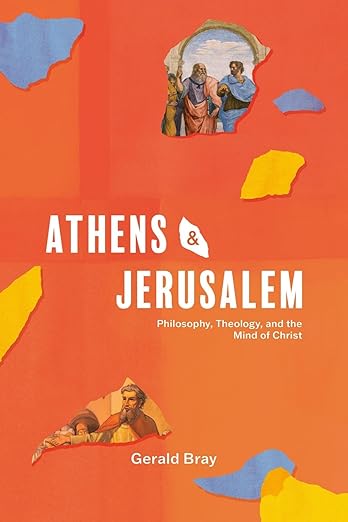
A.D. 529 is when the Christian emperor closed the philosophical schools in Athens. But all sorts of philosophical debates were going on in the church surrounding the two natures of Christ. Part of the discussion led to the discussion that Christ must have had two wills– one human one divine. This is where I agree with Richard Bauckham, that we should be talking about Christ being part of the divine identity, not be talking about two natures in Christ. This sort of dualistic thinking leads to the following: “A real human being must have a rational soul [or a human spirit] and so the Incarnate Son of God had one, too. But could a man die and return to life with a new nature? Here the answer was yes , because the man is a person and a person controls its nature– not the other way around. Just as the Son of God could take on a second nature without losing or compromising his first (divine) one, so he could die in that second nature and return from the dead without ceasing to be himself.” (p.89).
Here it would be appropriate to say that what John 1 says is that ‘the Word took on flesh’, it does not say he took on a whole new and different nature. And what this surely meant was the Son of God took on a human body and became a human being, without ceasing to be the Son of God. It was an additive process, not a substitutionary process. One of the problems with over-defining things is one risks distortion, and for sure when you are dealing with Greek words like ‘ousia’ ‘physis’, and ‘hypostasis’, and ‘prospon’ a term that came not from philosophy but from the theater referring to a person, in this case one of the actors, distortion and misunderstanding was likely.
One of the most important points Bray makes in regard to the filoque controversy (did the Spirit proceed from both the Father and the Son or, just from the Father) which divided the eastern and western churches is this on p. 92:
“From a philosophical standpoint, it is easy to see that the Eastern position is grounded in a concept of monotheism that insists that all things must derive from a single source– in this case the Father. It is not an adoption of any particular philosophical doctrine but is intelligible to anyone schooled in NeoPlatonism. The Western view is more complex. It does not deny monotheism but maintains that the one God is a community of person into which those who are saved are integrated. …The practical result of this is that Eastern theological thought concentrates on the concept of what has come to be called ‘theosis’ (deification), which involves a transformation of human nature into something approximating the divine, whereas the Western equivalent focuses on justification. This [latter] means that the Father accepts sinners as they are, without any transformation of their nature, because their sins have been paid for by the atoning blood of Christ.”
In fact there are problems with both sides of this discussion: 1) 2 Peter 1 says “he has given us his very great and precious promises, so that through them you may participate in the divine nature, having escaped the corruption in the world caused by evil desires” which surely refers to the moral reform of the sinner, not that they have become deified or god-like. 2) on the other side of the equation, justification has to do with being given right standing with God, and is coincident with the new birth. Because it involves both there is a transformation of human nature when one becomes a new creature in Christ, working out their salvation with fear and trembling. In short, justification never stands alone, it always also is accompanied by the new birth, so the notion of imputed righteousness is not the basis of acceptance– right standing and the new birth by grace through faith in Jesus is. In short, God is concerned with imparted righteousness– which is what sanctification is about.
But what about the notion of God’s impassibility— Bray says “The classical mind thought of impassability in terms of God’s immunity to external influences– he could not be swayed or harmed by any power outside himself. But today most people who think about impassibility view the question as one which affects the internal being of God. Its not so much a matter of whether God can suffer pain himself as whether he can feel our pain. If he can, then it seems natural to say that he suffers not physically but mentally and spiritually. That is the modern approach and in essence it can be traced back to Augustine.” (p. 93).
But can one really define God in human terms through the use of philosophy? “Properly understood and used the, philosophy points beyond itself and gives the intellect a thirst for the knowledge of God that can only come through revelation. In this respect, the apophatic [i.e. negative] approach of Pseudo-Dionysius represented a turning point in the relationship between theology and philosophy that is still of fundamental importance today.” (p. 102). Philosophy becomes a preparation Evangelicii– a preparation for the Gospel.
History and Religion
Education and Religion
The impossible impassible dilemma.
Previous Post
April 10, 2025
Gerald Bray's Athens and Jerusalme-- Part Six
Next Post
April 12, 2025 Gerald Bray's Athens and Jerusalem-- Part Eight
Browse Our Archives
Select a Category Uncategorized
Select a Month October 2026 September 2026 August 2026 July 2026 June 2026 May 2026 April 2026 March 2026 February 2026 January 2026 December 2025 November 2025 October 2025 September 2025 August 2025 July 2025 June 2025 May 2025 April 2025 March 2025 February 2025 January 2025 December 2024 November 2024 October 2024 September 2024 August 2024 July 2024 June 2024 May 2024 April 2024 March 2024 February 2024 January 2024 December 2023 November 2023 October 2023 September 2023 August 2023 July 2023 June 2023 May 2023 April 2023 March 2023 February 2023 January 2023 December 2022 November 2022 October 2022 September 2022 August 2022 July 2022 June 2022 May 2022 April 2022 March 2022 February 2022 January 2022 December 2021 November 2021 October 2021 September 2021 August 2021 July 2021 June 2021 May 2021 April 2021 March 2021 February 2021 January 2021 December 2020 November 2020 October 2020 September 2020 August 2020 July 2020 June 2020 May 2020 April 2020 March 2020 February 2020 January 2020 December 2019 November 2019 October 2019 September 2019 August 2019 July 2019 June 2019 May 2019 April 2019 March 2019 February 2019 January 2019 December 2018 November 2018 October 2018 September 2018 August 2018 July 2018 June 2018 May 2018 April 2018 March 2018 February 2018 January 2018 December 2017 November 2017 October 2017 September 2017 August 2017 July 2017 June 2017 May 2017 April 2017 March 2017 February 2017 January 2017 December 2016 November 2016 October 2016 September 2016 August 2016 July 2016 June 2016 May 2016 April 2016 March 2016 February 2016 January 2016 December 2015 November 2015 October 2015 September 2015 August 2015 July 2015 June 2015 May 2015 April 2015 March 2015 February 2015 January 2015 December 2014 November 2014 October 2014 September 2014 August 2014 July 2014 June 2014 May 2014 April 2014 March 2014 February 2014 January 2014 December 2013 November 2013 October 2013 September 2013 August 2013 July 2013 June 2013 May 2013 April 2013 March 2013 February 2013 January 2013 December 2012 November 2012 October 2012 September 2012 August 2012 July 2012 June 2012 May 2012 April 2012 March 2012 February 2012 January 2012 December 2011 November 2011 October 2011 September 2011 August 2011 July 2011 June 2011 May 2011 April 2011 March 2011 February 2011 January 2011
Follow Us!
TAKE THE
Religious Wisdom Quiz
Who was crucified and rose again after three days?
Select your answer to see how you score.
Paul John the Baptist Jesus Moses
Books by This Author Books by Ben Witherington
Related posts from The Bible and Culture


Methodist Central Hall and Westminster Abbey


TRENDING AT PATHEOS Evangelical

Looking at the Largest Orthodox Cathedral on Earth
There is often a considerable amount of anger and, shall we...

The Problem with False Prophets
Miller’s Station UMC| 10/18/26| Anchor Verse: Jeremiah 23: 1, 9-23 I...

Emotion in Early Christianity by Andrew Crislip
Andrew Crislip’s Emotion in Early Christianity examines an often overlooked dimension of...

16 Spiritual Touchstones for a More Grounded Life
After decades of spiritual study, here are 16 principles I try...

Catholic Evangelization: Sharing Your Faith Every Day
Welcome back to the Graceful Awakening mini-series called, “From Faith to Mission.” ...

The Pillar of the Boatmen: the Ancient Monument...
The Pillar of the Boatmen is a Romano-Gaulish sculpture that dates from...
view all Evangelical blogs
Ad-Free & Subscriber Log-In Subscription Support
- About Us
- 2026 Calendar
- Videos
- Podcasts
- Library of World Religions
- Faith In Media Tracker
- Advertise With Us
- Write for Us
- Privacy Policy
- Terms of Service
- Do Not Sell My Data
- Contact Us
- Radiant Digital
- Manage Newsletter Subscriptions
- Unsubscribe From Notifications
- Sitemap
Copyright 2008-2026, Patheos. All rights reserved.
Subscription Support Ad-Free & Subscriber Log-In
Follow Patheos