
BuddhistCatholicContemplativeEvangelicalGeneral ChristianHinduJewishLatter-day SaintMuslimNew VisionsProgressive Christian
Beliefs
- Buddhist
- Catholic
- Contemplative
- Evangelical
- General Christian
- Hindu
- Jewish
- Latter-day Saint
- More Voices
- Muslim
- New Visions
- Pagan
- Progressive Christian
Topics
- Religion News
- Food and Religion
- Sports and Religion
- Religious Art
- Religious Music and Entertainment
- Religious Events
- History and Religion
- Style and Religion
- Politics and Religion
- Women in Religion
- Recreation Outdoors and Religion
- Business Finance and Religion
- Careers Workplace and Religion
- Education and Religion
- Family Parenting and Religion
- Health Fitness and Religion
- Home and Religion
- Relationships and Religion
- Technology and Religion
- Travel and Religion
Columnists
- Buddhist Columnists
- Business Finance and Religion Columnists
- Careers Workplace and Religion Columnists
- Catholic Columnists
- Contemplative Columnists
- Education and Religion Columnists
- Evangelists Columnists
- Family Parenting and Religion Columnists
- General Christian Columnists
- Health Fitness and Religion Columnists
- Hindu Columnists
- History and Religion Columnists
- Home and Religion Columnists
- Jewish Columnists
- More Voices Columnists
- Latter Day Columnists
- Muslim Columnists
- New Visions Columnists
- Nonreligious Columnists
- Pagan Columnists
- Politics and Religion Columnists
- Progressive Columnists
- Recreation Outdoors and Religion Columnists
- Relationships and Religion Columnists
- Religion News Columnists
- Religious Art Columnists
- Religious Events Columnists
- Religious Music and Entertainment Columnists
- Sports and Religion Columnists
- Style and Religion Columnists
- Technology and Religion Columnists
- Travel and Religion Columnists
- Women in Religion Columnists
Resource Library
- 2026 Calendar
- Library of World Religions
- The 100 Most Holy Places on Earth
- Patheos Answers
- Podcasts
- Videos
- Faith Leaders Database
- Anglican Episcopalian
- Bahai
- Baptist
- Buddhism
- Christianity
- Confucianism
- Eastern Orthodoxy
- Hinduism
- Holiness and Pentecostal
- ISKCON
- Islam
- Judaism
- Lutheran
- Methodist
- The Church of Jesus Christ of Latter-day Saints
- New Age
- Paganism
- Presbytarian and Reformed
- Protestantism
- Religion Behind the Scenes
- Roman Catholic
- Scientology
- Shia Islam
- Sikhism
- Sufism
- Sunni Islam
- Taoism
- Zen
- See all religions
Research Tools
 Ad-Free & Subscriber Log-In Subscription Support
Follow Patheos 

- Trending:
- Advent
- |
- Forgiveness
- |
- Thanksgiving
- |
- Election
- |
- Seasonal Holidays
- |
- Marriage

- Home
- Evangelical
- History and Religion
- Rhetorical Resources— Part Eight
Rhetorical Resources— Part Eight
Last updated on: February 22, 2023 at 1:10 am by Ben Witherington
Rhetorical Resources— Part Eight 2022-12-16T14:26:45-05:00 Ben Witherington
Patheos Explore the world's faith through different perspectives on religion and spirituality! Patheos has the views of the prevalent religions and spiritualities of the world.
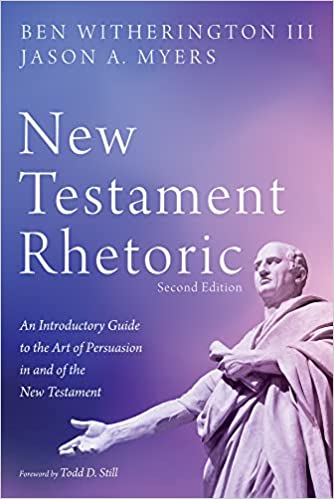
I am leaving the discussion of Quintilian who of course also features in these Cambridge Classics volumes until later in the Spring because soon I should have the brand new Loeb volumes providing us with Quintilian’s declamations themselves. Here I’m going to deal with the further discussion of books, codexes, and the book trade offered by P.E. Easterling one of the editors of Volume 1 Part 2.
Somewhere in the late 8th century B.C. Greek as we know it in the Hellenistic and Roman periods was invented by borrowing a Phoenician system used in Syria, which in turn was based on Semitic languages. Previous attempts at adaptations for the writing of Greek had not been entirely successful, even at Mycenae and even so then the language was for specialists, keepers of records etc. While the Semitic system was purely consonantly there were vowel sounds that went with it, but the Greeks created forms for the vowels and the language became the first real, detailed ‘western language’ with a full alphabet. According to legend Cadmus of Tyre brought alphabetic letters to Thebes, and originally according to Herodotus (5.58), the father of Greek history the letters were known as phoinikeia. Interestingly, the Greek we find on the earliest potsherds etc. still followed the Semitic practice of letters read from right to left. Not surprisingly, the earliest documents like the recording of Homer’s epic poems, originated in oral performances, and then were written down. They remained oral texts. It is also not clear exactly when papyrus first showed up in Greece, but I would wager it was a Mycenae since we know they traded with Egypt, and there is evidence of Egyptian influence not only there but in places like Heraklion on Crete, and on the island of Santorini. What we do know is there is evidence of papyri already in use in Greece in the 6th century B.C.
The first clear traces of what we would call books, and a book trade shows up in Athens in the last quarter of the 5th century B.C. part of the Golden Age of Greece and the rise of Athenian democracy. Mostly, we are talking about poetry being written down in the early period, including of course Homer. (cf. Hesiod’s Work and Days as an early document). It is also in the 5th or 6th century B.C. that we hear about elementary schools in Greece, but Solon had already set up laws about such things. At the outset book reading was a communal affair, with skilled readers and various listeners. Books were read aloud and written with full awareness of that fact. “The book at this early stage of transition from a fully oral to a fully literate society, serves as a script for recital rather than a text for individual study; though now written literature is still a communal experience and its direct, powerful impact on the emotions of its audience [is] vividly described in Plato’s Ion (535e).” (p. 160).
The production of books for public sale to whomever does not seem to have begun until the late fifth century in Athens where we discover they are being sold in the stalls, next to the garlic and the spices (Eupolis frag. 304K) and this is also the period when we first hear the term bookseller (‘bibliopolai’). Socrates Apol.26d-e mentions books sold for a drachma (i.e. the daily wage of a blue collar worker, or a hoplite). Not surprisingly Athens became the center of Greek book production (Greek tragedies and comedies were in much demand) and merchants crated them up and sold them in the rest of the Greek speaking world. Xenephon Anabasis 7.5.14 mentions a shipwreck off the coast of Thrace, and one of the valuable things that washed up on shore was crates of books.
One of things to surface even during the First Sophistic, the age of Gorgias, is rhetorical tracts on incidental things— for example an encomium in praise of salt! (Plato, Sympos. 177B) which Plato dismisses as too trivial for any study, but notice he does mention it. Plato also mentions a whole string of rhetorical handbooks whose authors he could name. One gets the impression that apart from rolls which contained Greek drama, medical treatises and rhetorical handbooks were the most widely printed volumes. It was when Aristotle set up his school, the Lyceum, that we hear about the first ‘public’ library with books. Strabo even calls Aristotle ‘the first to collect books’ (13.608). Easterling says that Aristotle’. Rhetoric is the first place where we find comments about a text as a visual thing, not merely a record of something oral and aural in character. For instance, he complains that the work he is consulting is a text by Heraclitus difficult to punctuate. Nevertheless, all documents which had any pretense of being literary were meant to be read aloud, even to the point that Isocrates, who did not publicly declaim nonetheless instructed readers of his Antidosis
how they were to read it out loud (Antidosis 12). From this earliest period documents, like inscriptions were written in capital Greek letters with no separation of words, and no punctuation.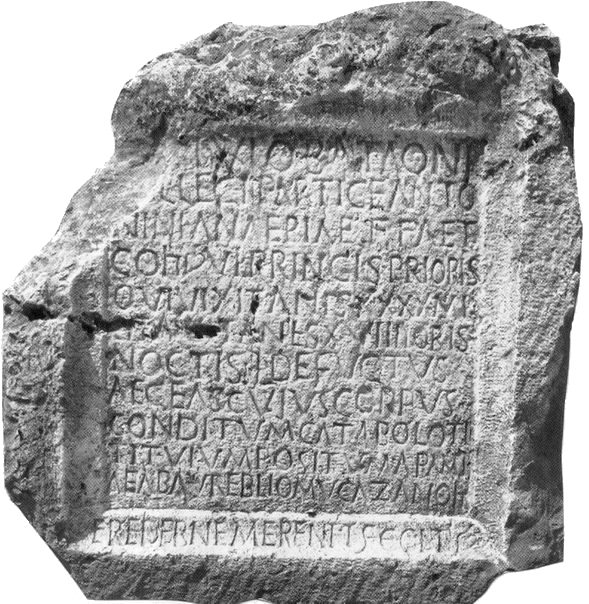
Scribes followed standardized practices, and they seem to have been paid by how many hundred lines they had copied, as the line count at the end of some documents indicates. Some scribes were quite careful and meticulous, some were not, depending on how much work they had, how much they were paid, how much skill they had and various other factors. It was neither the author nor the scribe who really made money on books, but rather the booksellers. There was no such thing as an author having copyright in this era. Alas, there was also money in forgeries, especially of more ancient famous texts like the Iliad. Dio Chrysostom (21.12) tells of how a roll which was not ancient, could be made to look ancient by burying it in grain for a time, and so turning the papyrus more brown. The socially elite were sometimes collectors of famous books, and could be tricked into paying ridiculous sums for ancient copies of classics, like Xenephon’s Anabasis. Galen had to publish a tract explaining which books available were actually by him, and which were forgeries! To have a short work copied in a fair hand on papyrus however might not have cost more than 6-8 drachmas, not an exorbitant sum.
The rise of genuine public libraries we owe to the spread of Hellenism with its focus on one world language and culture, and the founding the world’s greatest library in antiquity at Alexandria which amassed literally thousands of papyrus rolls. Following as a distant second was the library in Pergamon, and others elsewhere, but people kept founding them, for example even on the island of Kos there is evidence of a library with an initial gift of 100 scrolls, and then other patrons chipped in money and scrolls as well. And I am not even mentioning personal libraries like for instance Cicero had. There is much more in Easterling’s fine essay, but the above is enough to whet the appetite.
History and Religion
Education and Religion
Previous Post

February 21, 2023
SEEN AT THE DAYTONA 500
Next Post
February 23, 2023 What Are We to Make of Jesus Christ?--- C.S. Lewis
Browse Our Archives
Select a Category Uncategorized
Select a Month November 2026 October 2026 September 2026 August 2026 July 2026 June 2026 May 2026 April 2026 March 2026 February 2026 January 2026 December 2025 November 2025 October 2025 September 2025 August 2025 July 2025 June 2025 May 2025 April 2025 March 2025 February 2025 January 2025 December 2024 November 2024 October 2024 September 2024 August 2024 July 2024 June 2024 May 2024 April 2024 March 2024 February 2024 January 2024 December 2023 November 2023 October 2023 September 2023 August 2023 July 2023 June 2023 May 2023 April 2023 March 2023 February 2023 January 2023 December 2022 November 2022 October 2022 September 2022 August 2022 July 2022 June 2022 May 2022 April 2022 March 2022 February 2022 January 2022 December 2021 November 2021 October 2021 September 2021 August 2021 July 2021 June 2021 May 2021 April 2021 March 2021 February 2021 January 2021 December 2020 November 2020 October 2020 September 2020 August 2020 July 2020 June 2020 May 2020 April 2020 March 2020 February 2020 January 2020 December 2019 November 2019 October 2019 September 2019 August 2019 July 2019 June 2019 May 2019 April 2019 March 2019 February 2019 January 2019 December 2018 November 2018 October 2018 September 2018 August 2018 July 2018 June 2018 May 2018 April 2018 March 2018 February 2018 January 2018 December 2017 November 2017 October 2017 September 2017 August 2017 July 2017 June 2017 May 2017 April 2017 March 2017 February 2017 January 2017 December 2016 November 2016 October 2016 September 2016 August 2016 July 2016 June 2016 May 2016 April 2016 March 2016 February 2016 January 2016 December 2015 November 2015 October 2015 September 2015 August 2015 July 2015 June 2015 May 2015 April 2015 March 2015 February 2015 January 2015 December 2014 November 2014 October 2014 September 2014 August 2014 July 2014 June 2014 May 2014 April 2014 March 2014 February 2014 January 2014 December 2013 November 2013 October 2013 September 2013 August 2013 July 2013 June 2013 May 2013 April 2013 March 2013 February 2013 January 2013 December 2012 November 2012 October 2012 September 2012 August 2012 July 2012 June 2012 May 2012 April 2012 March 2012 February 2012 January 2012 December 2011 November 2011 October 2011 September 2011 August 2011 July 2011 June 2011 May 2011 April 2011 March 2011 February 2011 January 2011
Follow Us!
TAKE THE
Religious Wisdom Quiz
Who said: "You are a chosen people, a royal priesthood, a holy nation, God's special possession"?
Select your answer to see how you score.
Moses Peter Paul James
Books by This Author Books by Ben Witherington
Related posts from The Bible and Culture
Jesus is Coming with Glory and Power

Rock N' Roll-- Morphing into/for a New Generation...

Salisbury Cathedral (outside)-- Part Four

Salisbury Cathedral (the windows)-- Part Three
TRENDING AT PATHEOS Evangelical

Prioritizing Jesus This Advent
Miller’s Station UMC| 29 November 2026| Mathew 19:16-27 When we prioritize Jesus,...

A Subtle Indicator of Legalism
Legalism was invented by pastors who don’t want to be woken up...
The Two Advents of the Babe and the...
We just celebrated the great family holiday of Thanksgiving and after going...

What are your dreams trying to tell you?...
Dreams can seem crazy. You’re suddenly with a person you haven’t seen...

Advent Begins in the Waiting: Preparing for Jesus
The Christmas season seems to arrive earlier every year. Before Halloween decorations...

As was predicted many years ago, the Interpreter Foundation's website is...
view all Evangelical blogs
Ad-Free & Subscriber Log-In Subscription Support
- About Us
- 2026 Calendar
- Videos
- Podcasts
- Library of World Religions
- Faith In Media Tracker
- Advertise With Us
- Write for Us
- Privacy Policy
- Terms of Service
- Do Not Sell My Data
- Contact Us
- Radiant Digital
- Manage Newsletter Subscriptions
- Unsubscribe From Notifications
- Sitemap
Copyright 2008-2026, Patheos, part of the Radiant Digital network of media brands. All rights reserved.
Subscription Support Ad-Free & Subscriber Log-In
Follow Patheos