
BuddhistCatholicContemplativeEvangelicalGeneral ChristianHinduJewishLatter-day SaintMuslimNew VisionsProgressive Christian
Beliefs
- Buddhist
- Catholic
- Contemplative
- Evangelical
- General Christian
- Hindu
- Jewish
- Latter-day Saint
- More Voices
- Muslim
- New Visions
- Pagan
- Progressive Christian
Topics
- Religion News
- Food and Religion
- Sports and Religion
- Religious Art
- Religious Music and Entertainment
- Religious Events
- History and Religion
- Style and Religion
- Politics and Religion
- Women in Religion
- Recreation Outdoors and Religion
- Business Finance and Religion
- Careers Workplace and Religion
- Education and Religion
- Family Parenting and Religion
- Health Fitness and Religion
- Home and Religion
- Relationships and Religion
- Technology and Religion
- Travel and Religion
Columnists
- Buddhist Columnists
- Business Finance and Religion Columnists
- Careers Workplace and Religion Columnists
- Catholic Columnists
- Contemplative Columnists
- Education and Religion Columnists
- Evangelists Columnists
- Family Parenting and Religion Columnists
- General Christian Columnists
- Health Fitness and Religion Columnists
- Hindu Columnists
- History and Religion Columnists
- Home and Religion Columnists
- Jewish Columnists
- More Voices Columnists
- Latter Day Columnists
- Muslim Columnists
- New Visions Columnists
- Nonreligious Columnists
- Pagan Columnists
- Politics and Religion Columnists
- Progressive Columnists
- Recreation Outdoors and Religion Columnists
- Relationships and Religion Columnists
- Religion News Columnists
- Religious Art Columnists
- Religious Events Columnists
- Religious Music and Entertainment Columnists
- Sports and Religion Columnists
- Style and Religion Columnists
- Technology and Religion Columnists
- Travel and Religion Columnists
- Women in Religion Columnists
Resource Library
- 2026 Calendar
- Library of World Religions
- The 100 Most Holy Places on Earth
- Patheos Answers
- Podcasts
- Videos
- Faith Leaders Database
- Anglican Episcopalian
- Bahai
- Baptist
- Buddhism
- Christianity
- Confucianism
- Eastern Orthodoxy
- Hinduism
- Holiness and Pentecostal
- ISKCON
- Islam
- Judaism
- Lutheran
- Methodist
- The Church of Jesus Christ of Latter-day Saints
- New Age
- Paganism
- Presbytarian and Reformed
- Protestantism
- Religion Behind the Scenes
- Roman Catholic
- Scientology
- Shia Islam
- Sikhism
- Sufism
- Sunni Islam
- Taoism
- Zen
- See all religions
Research Tools
 Ad-Free & Subscriber Log-In Subscription Support
Ad-Free & Subscriber Log-In Subscription Support
Follow Patheos 

- Trending:
- Forgiveness
- |
- Marriage
- |
- Consciousness
- |
- Death Penalty
- |
- Election
- |
- Halloween

- Home
- Evangelical
- What Did the Cross Accomplish?— Wright, Gathercole, and Stewart
What Did the Cross Accomplish?— Wright, Gathercole, and Stewart
Last updated on: May 7, 2021 at 1:11 am by Ben Witherington
What Did the Cross Accomplish?— Wright, Gathercole, and Stewart 2021-04-23T14:07:40-04:00 Ben Witherington
Patheos Explore the world's faith through different perspectives on religion and spirituality! Patheos has the views of the prevalent religions and spiritualities of the world.
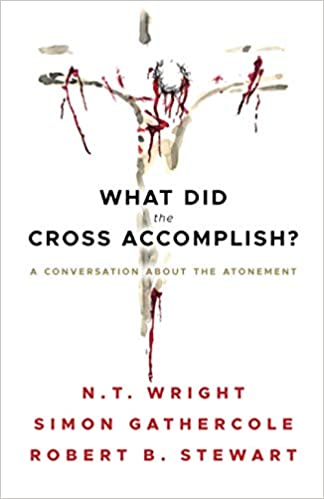
This slender volume records the dialogue and Q and A that took place at the last Greer-Heard Forum at New Orleans Baptist Seminary, and includes a helpful introduction by Bob Stewart of that faculty on worldview and its importance. There were some other interesting papers by Doug Moo, Edith Humphrey, Kevin Vanhoozer and others which unfortunately Westminster-John Knox Press didn’t see fit to include in this volume, and that was a considerable mistake. What one mostly has is Tom Wright’s take on the issue of atonement, and to a considerably lesser degree the take of Simon Gathercole. Because of the sheer disproportion in the discussion, it becomes rather like a horse and rabbit stew, and you can guess which one most flavored the gumbo. Still, there are some interesting and helpful elements in this little volume, though if you are looking for a good extended discussion on atonement read Bill Craig’s book, and the Q+A that volumed on this blog in March and April.
One of the first points that Tom makes is that the term atonement is not self-explanatory, but rather is like a suitcase into which are packed a variety of ideas. I agree with this, and it’s one of the reason for the confusion about what the term actually refers to. On p. 26 Tom lists the Christus Victor (over the powers) theme, the notion of substitution, the idea of Jesus as the representative of his people, and the notion of Jesus as a moral example of self-sacrificial love. What is missing in this is the notion of Jesus bearing the punishment for our sins. On p. 29, Wright says boldly “Here I have changed my mind from all my previous expositions of this passage. Romans 3,24-26 is not speaking about the way sins are propitiated. The hilasterion is the lid of the ark, the place where the covenant God meets in grace with his people.” Frankly, this statement is not correct in what it denies and is only partially right in what it affirms. Any careful study of the hilaster- root and it’s cognates will show that propitiation is involved. Yes, the noun refers to the mercy seat, but not in the abstract. Indeed the very reason it is called the mercy seat is because it is where the atoning blood is applied, not least because it is the place where God’s presence is assumed to be. Nor is it helpful to distinguish between the cleansing effect of the blood, as if this were only about ritual impurity in the holy place, and the sacrifice that had to take place in order for there to be lamb’s blood applied at the mercy seat. The discussion of these matters not just in Rom. 3 but in 1 John and Hebrews makes clear the larger picture. There is no atonement without sacrifice and the shedding and blood. So, both expiation and propitiation are involved. Indeed, there is no expiation or cleansing from sin if God’s righteous judgment on sin isn’t dealt with, and the punishment and even death of the sinner isn’t averted. Furthermore, there is the key mention of ‘let this cup pass from me’ uttered by Jesus himself where he is alluding to the cup of God’s wrath or judgment on sin as various OT passages suggest. Jesus is not quailing at the prospect of death in general, rather he would like to avoid the expression of God’s wrath against sin. This is precisely why Paul later says Jesus was made sin, who knew no sin, so that we might become the righteousness of God. Indeed, Romans is all about the righteousness of God in page after page. Before God can be reconciled with and dwell with human beings, the sin problem has to be dealt with once and for all, not least because God is a holy and righteous God and even his love is a holy love. While many moderns don’t much like the image of the wrath of God, or its being poured out on the Lamb of God who takes away the world’s sin, this is in fact what the NT, well grounded in the sacrificial language of the OT is about.
While Tom is right that Christ’s work is intended to result in the rescue of God’s people and the restoration of creation, those things are the end result of the death and resurrection of Jesus which includes his atonement for sin. While I quite agree that the goal is not ‘dying and going to heaven’ in the first place, but rather God coming to dwell with his people, the question is how exactly is reconciliation between a righteous God and a sinful humanity to be brought about? And it is not helpful to caricature the righteous anger of God against sin as if God were some sort of sadist, looking for an innocent victim to punish instead of sinners. Christ voluntarily sacrificed himself for our sins at the hands of wicked human beings. It was not God who crucified or beat up Jesus. God’s moral character is the same yesterday, today, and forever. God is always righteous and also always loving, he is always holy, and also merciful, he is not merely one or the other, he is always all these things. God’s love is always a holy love, and love that sanctifies not merely forgives. And while we are at it, sin is not just missing the mark, it is also transgression, a willful violation of a known law, indeed of the known character of God. Jesus died for our transgressions, which is precisely why Paul says in Acts 13 we now have forgiveness for sins that could not be dealt with in the sacrificial system in Leviticus (on which see my Biblical Theology). Of course God is angry about sin precisely because it separates him from having a loving and everlasting relationship with sinners. It’s not easy for a holy God to forgive sin— it did indeed cost the death of Jesus on the cross. As Simon Gathercole is later to say in this study (p. 59) “A Trinitarian understanding…is absolutely vital to understanding the biblical statements about atonement because it is not that God is inflicting punishment on a third party. It is God in the person of his Son dying.” (emphasis added). That’s exactly right, and this means that Christ had to come as a human being to represent us to God, as well as mediate God to us. He had to die a human death as a ransom as Mk. 10.45 makes very clear.
There is in addition an interesting discussion by Simon about the varieties of death language in the NT, and about Hell beginning on pp. 63, but one could certainly have wished for considerably more. However, if you use this book as a conversation starter, it does raise many of the right issues, and Bob and his staff has done an excellent job of hosting and putting all the various pieces together.
Previous Post

May 6, 2021
If Even Mona Lisa can Get Vaccinated, So can You
Next Post
May 8, 2021 YOU HAVE TO HAVE 'SOUL'
Browse Our Archives
Select a Category Uncategorized
Select a Month October 2026 September 2026 August 2026 July 2026 June 2026 May 2026 April 2026 March 2026 February 2026 January 2026 December 2025 November 2025 October 2025 September 2025 August 2025 July 2025 June 2025 May 2025 April 2025 March 2025 February 2025 January 2025 December 2024 November 2024 October 2024 September 2024 August 2024 July 2024 June 2024 May 2024 April 2024 March 2024 February 2024 January 2024 December 2023 November 2023 October 2023 September 2023 August 2023 July 2023 June 2023 May 2023 April 2023 March 2023 February 2023 January 2023 December 2022 November 2022 October 2022 September 2022 August 2022 July 2022 June 2022 May 2022 April 2022 March 2022 February 2022 January 2022 December 2021 November 2021 October 2021 September 2021 August 2021 July 2021 June 2021 May 2021 April 2021 March 2021 February 2021 January 2021 December 2020 November 2020 October 2020 September 2020 August 2020 July 2020 June 2020 May 2020 April 2020 March 2020 February 2020 January 2020 December 2019 November 2019 October 2019 September 2019 August 2019 July 2019 June 2019 May 2019 April 2019 March 2019 February 2019 January 2019 December 2018 November 2018 October 2018 September 2018 August 2018 July 2018 June 2018 May 2018 April 2018 March 2018 February 2018 January 2018 December 2017 November 2017 October 2017 September 2017 August 2017 July 2017 June 2017 May 2017 April 2017 March 2017 February 2017 January 2017 December 2016 November 2016 October 2016 September 2016 August 2016 July 2016 June 2016 May 2016 April 2016 March 2016 February 2016 January 2016 December 2015 November 2015 October 2015 September 2015 August 2015 July 2015 June 2015 May 2015 April 2015 March 2015 February 2015 January 2015 December 2014 November 2014 October 2014 September 2014 August 2014 July 2014 June 2014 May 2014 April 2014 March 2014 February 2014 January 2014 December 2013 November 2013 October 2013 September 2013 August 2013 July 2013 June 2013 May 2013 April 2013 March 2013 February 2013 January 2013 December 2012 November 2012 October 2012 September 2012 August 2012 July 2012 June 2012 May 2012 April 2012 March 2012 February 2012 January 2012 December 2011 November 2011 October 2011 September 2011 August 2011 July 2011 June 2011 May 2011 April 2011 March 2011 February 2011 January 2011
Follow Us!
TAKE THE
Religious Wisdom Quiz
How many years between David's reign and the Babylonian exile?
Select your answer to see how you score.
300 years 450 years 500 years 400 years
Books by This Author Books by Ben Witherington
Related posts from The Bible and Culture


Methodist Central Hall and Westminster Abbey


TRENDING AT PATHEOS Evangelical

Jad Gillies on New Hillsong Worship Songs and...
For worship leader Jad Gillies, Hillsong Worship’s next chapter is not about...

Looking at the Largest Orthodox Cathedral on Earth
There is often a considerable amount of anger and, shall we...

The Problem with False Prophets
Miller’s Station UMC| 10/18/26| Anchor Verse: Jeremiah 23: 1, 9-23 I...

Emotion in Early Christianity by Andrew Crislip
Andrew Crislip’s Emotion in Early Christianity examines an often overlooked dimension of...

16 Spiritual Touchstones for a More Grounded Life
After decades of spiritual study, here are 16 principles I try...

Catholic Evangelization: Sharing Your Faith Every Day
Welcome back to the Graceful Awakening mini-series called, “From Faith to Mission.” ...
view all Evangelical blogs
Ad-Free & Subscriber Log-In Subscription Support
- About Us
- 2026 Calendar
- Videos
- Podcasts
- Library of World Religions
- Faith In Media Tracker
- Advertise With Us
- Write for Us
- Privacy Policy
- Terms of Service
- Do Not Sell My Data
- Contact Us
- Radiant Digital
- Manage Newsletter Subscriptions
- Unsubscribe From Notifications
- Sitemap
Copyright 2008-2026, Patheos. All rights reserved.
Subscription Support Ad-Free & Subscriber Log-In
Follow Patheos