
BuddhistCatholicContemplativeEvangelicalGeneral ChristianHinduJewishLatter-day SaintMuslimNew VisionsProgressive Christian
Beliefs
- Buddhist
- Catholic
- Contemplative
- Evangelical
- General Christian
- Hindu
- Jewish
- Latter-day Saint
- More Voices
- Muslim
- New Visions
- Pagan
- Progressive Christian
Topics
- Religion News
- Food and Religion
- Sports and Religion
- Religious Art
- Religious Music and Entertainment
- Religious Events
- History and Religion
- Style and Religion
- Politics and Religion
- Women in Religion
- Recreation Outdoors and Religion
- Business Finance and Religion
- Careers Workplace and Religion
- Education and Religion
- Family Parenting and Religion
- Health Fitness and Religion
- Home and Religion
- Relationships and Religion
- Technology and Religion
- Travel and Religion
Columnists
- Buddhist Columnists
- Business Finance and Religion Columnists
- Careers Workplace and Religion Columnists
- Catholic Columnists
- Contemplative Columnists
- Education and Religion Columnists
- Evangelists Columnists
- Family Parenting and Religion Columnists
- General Christian Columnists
- Health Fitness and Religion Columnists
- Hindu Columnists
- History and Religion Columnists
- Home and Religion Columnists
- Jewish Columnists
- More Voices Columnists
- Latter Day Columnists
- Muslim Columnists
- New Visions Columnists
- Nonreligious Columnists
- Pagan Columnists
- Politics and Religion Columnists
- Progressive Columnists
- Recreation Outdoors and Religion Columnists
- Relationships and Religion Columnists
- Religion News Columnists
- Religious Art Columnists
- Religious Events Columnists
- Religious Music and Entertainment Columnists
- Sports and Religion Columnists
- Style and Religion Columnists
- Technology and Religion Columnists
- Travel and Religion Columnists
- Women in Religion Columnists
Resource Library
- 2026 Calendar
- Library of World Religions
- The 100 Most Holy Places on Earth
- Patheos Answers
- Podcasts
- Videos
- Faith Leaders Database
- Anglican Episcopalian
- Bahai
- Baptist
- Buddhism
- Christianity
- Confucianism
- Eastern Orthodoxy
- Hinduism
- Holiness and Pentecostal
- ISKCON
- Islam
- Judaism
- Lutheran
- Methodist
- The Church of Jesus Christ of Latter-day Saints
- New Age
- Paganism
- Presbytarian and Reformed
- Protestantism
- Religion Behind the Scenes
- Roman Catholic
- Scientology
- Shia Islam
- Sikhism
- Sufism
- Sunni Islam
- Taoism
- Zen
- See all religions
Research Tools
 Ad-Free & Subscriber Log-In Subscription Support
Ad-Free & Subscriber Log-In Subscription Support
Follow Patheos 

- Trending:
- Forgiveness
- |
- Marriage
- |
- Consciousness
- |
- Death Penalty
- |
- Election
- |
- Halloween

- Home
- Evangelical
- Gentile Christian Identity– Part Two
Gentile Christian Identity– Part Two
Last updated on: January 6, 2021 at 1:21 am by Ben Witherington
Gentile Christian Identity– Part Two 2020-12-15T13:47:37-05:00 Ben Witherington
Patheos Explore the world's faith through different perspectives on religion and spirituality! Patheos has the views of the prevalent religions and spiritualities of the world.
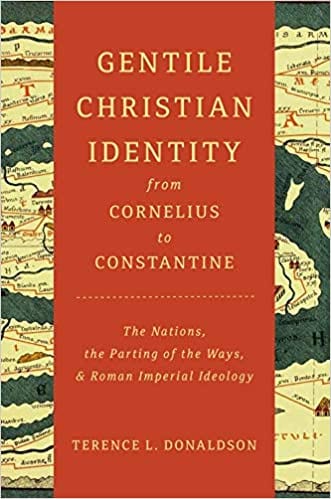
Q. This book reflects an enormous amount of good research and reflection on both primary and secondary sources, though this subject has been treated in part by you in previous monographs. How long did it take you to put this detailed work together, especially considering the substantial discussion of the period beyond the NT era up to Constantine?
A. Thanks for the question, Ben, and for this opportunity to engage in some extended conversation about my book. While I have been working on this as my main research project since 2009 or so, my interest in these questions more generally goes back as far as my first year of theological education in the mid-1970s. In the early stages of a standard survey course on church history, I was suddenly struck by the fact that the major figures under discussion—Justin, Irenaeus, Tertullian, Origen, and so on—were all gentiles. How did it come about, I wondered, that a movement centered on a Jewish Messiah, a movement that consisted entirely of Jewish believers at the outset, had within a century become a largely gentile affair? In the process of working on a term paper, I read Justin’s Dialogue with Trypho and also happened to stumble across James Parkes’s The Conflict of the Church and the Synagogue, and thus encountered the adversus Judaeos tradition (the argument “against the Jews”), which added a troubling dimension to the question. So my interest in what has come to be called “the parting of the ways” and in the “gentilization” of the Christian movement goes back a long way.
As you have noted, I have dealt with various aspects of these questions in my previous work. In that work, though, I came at these questions mostly from the Jewish side, wondering how it was that the early Jewish disciples came so quickly to believe that the message of Jesus as Messiah was something for gentiles as well and how they made theological sense of it all (especially in work on Matthew and Paul). This led me to look at Jewish attitudes towards gentiles more generally, especially the ways in which Jews could conceive of gentiles as standing in a positive relationship with the God of Israel.
Returning to your question more directly, the impetus for this specific project occurred when I was reading Romans 11 for some purpose or other and my attention was caught by the way Paul addresses his readers (or at least some of them) in verse 13: “I am speaking to you gentiles.” Thinking about this from the perspective of non-Jewish listeners, I wondered what they would have made of the term. In Jewish usage, of course, the term ethnē (literally “nations”) was used to refer to non-Jews, outsiders, members of all other ethnic groups. People are generally not inclined to think of themselves in terms of some other group’s term for outsiders, and so it is unlikely that ethnē would have had any intrinsic appeal for non-Jews as an identity term. Non-Jewish Christ-believers, however, found themselves in a social world where “gentiles” (ethnē) was a basic category. Thus the question: What did they make of this ascribed identity?
Fortunately, at about this time I had a full-year sabbatical (most of which was spent at the University of Cambridge), which gave me the opportunity to explore the question in a sustained way. Here it readily became apparent that the question was significant. At the same time, I realized as the project began to take shape that to do it justice, I would need to involve myself in a number of areas where, despite some general familiarity, I could not claim any particular expertise—a list that eventually included ethnicity, social identity theory, post-colonialism, Greco-Roman ethnography, Roman imperial ideology and (to a lesser extent) ante-Nicene literature. This, together with some unexpected administrative responsibilities, meant that it became a ten-year project of research and writing.
Previous Post

January 5, 2021
Gentile Christian Identity--- Part One
Next Post
January 7, 2021 Gentile Christian Identity-- Part Three
Browse Our Archives
Select a Category Uncategorized
Select a Month October 2026 September 2026 August 2026 July 2026 June 2026 May 2026 April 2026 March 2026 February 2026 January 2026 December 2025 November 2025 October 2025 September 2025 August 2025 July 2025 June 2025 May 2025 April 2025 March 2025 February 2025 January 2025 December 2024 November 2024 October 2024 September 2024 August 2024 July 2024 June 2024 May 2024 April 2024 March 2024 February 2024 January 2024 December 2023 November 2023 October 2023 September 2023 August 2023 July 2023 June 2023 May 2023 April 2023 March 2023 February 2023 January 2023 December 2022 November 2022 October 2022 September 2022 August 2022 July 2022 June 2022 May 2022 April 2022 March 2022 February 2022 January 2022 December 2021 November 2021 October 2021 September 2021 August 2021 July 2021 June 2021 May 2021 April 2021 March 2021 February 2021 January 2021 December 2020 November 2020 October 2020 September 2020 August 2020 July 2020 June 2020 May 2020 April 2020 March 2020 February 2020 January 2020 December 2019 November 2019 October 2019 September 2019 August 2019 July 2019 June 2019 May 2019 April 2019 March 2019 February 2019 January 2019 December 2018 November 2018 October 2018 September 2018 August 2018 July 2018 June 2018 May 2018 April 2018 March 2018 February 2018 January 2018 December 2017 November 2017 October 2017 September 2017 August 2017 July 2017 June 2017 May 2017 April 2017 March 2017 February 2017 January 2017 December 2016 November 2016 October 2016 September 2016 August 2016 July 2016 June 2016 May 2016 April 2016 March 2016 February 2016 January 2016 December 2015 November 2015 October 2015 September 2015 August 2015 July 2015 June 2015 May 2015 April 2015 March 2015 February 2015 January 2015 December 2014 November 2014 October 2014 September 2014 August 2014 July 2014 June 2014 May 2014 April 2014 March 2014 February 2014 January 2014 December 2013 November 2013 October 2013 September 2013 August 2013 July 2013 June 2013 May 2013 April 2013 March 2013 February 2013 January 2013 December 2012 November 2012 October 2012 September 2012 August 2012 July 2012 June 2012 May 2012 April 2012 March 2012 February 2012 January 2012 December 2011 November 2011 October 2011 September 2011 August 2011 July 2011 June 2011 May 2011 April 2011 March 2011 February 2011 January 2011
Follow Us!
TAKE THE
Religious Wisdom Quiz
How many jars of water did Jesus turn to wine?
Select your answer to see how you score.
6 4 7 5
Books by This Author Books by Ben Witherington
Related posts from The Bible and Culture


Methodist Central Hall and Westminster Abbey


TRENDING AT PATHEOS Evangelical

The Pillar of the Boatmen: the Ancient Monument...
The Pillar of the Boatmen is a Romano-Gaulish sculpture that dates from...

In one sense walking into Westminster Abbey is like walking down the...

'Super Scam Me' Exposes AI Jon Bon Jovi...
Leslie Pickett believed she was in a relationship with Jon Bon Jovi....

The Brazilian Remake of Kendricks' 'Flywheel' Opens in...
“Flywheel,” the story that launched the Kendrick Brothers’ filmmaking career is getting...

The Dangers of Gradual Accommodation (Winking at Sin)
Recently, the “law of gradualness” resurfaced during the opening of a weeklong,...

The Iron Gates and the Lion of the...
Yesterday, I didn't finish my report about, well, yesterday. So I'll...
view all Evangelical blogs
Ad-Free & Subscriber Log-In Subscription Support
- About Us
- 2026 Calendar
- Videos
- Podcasts
- Library of World Religions
- Faith In Media Tracker
- Advertise With Us
- Write for Us
- Privacy Policy
- Terms of Service
- Do Not Sell My Data
- Contact Us
- Radiant Digital
- Manage Newsletter Subscriptions
- Unsubscribe From Notifications
- Sitemap
Copyright 2008-2026, Patheos. All rights reserved.
Subscription Support Ad-Free & Subscriber Log-In
Follow Patheos