
BuddhistCatholicContemplativeEvangelicalGeneral ChristianHinduJewishLatter-day SaintMuslimNew VisionsProgressive Christian
Beliefs
- Buddhist
- Catholic
- Contemplative
- Evangelical
- General Christian
- Hindu
- Jewish
- Latter-day Saint
- More Voices
- Muslim
- New Visions
- Pagan
- Progressive Christian
Topics
- Religion News
- Food and Religion
- Sports and Religion
- Religious Art
- Religious Music and Entertainment
- Religious Events
- History and Religion
- Style and Religion
- Politics and Religion
- Women in Religion
- Recreation Outdoors and Religion
- Business Finance and Religion
- Careers Workplace and Religion
- Education and Religion
- Family Parenting and Religion
- Health Fitness and Religion
- Home and Religion
- Relationships and Religion
- Technology and Religion
- Travel and Religion
Columnists
- Buddhist Columnists
- Business Finance and Religion Columnists
- Careers Workplace and Religion Columnists
- Catholic Columnists
- Contemplative Columnists
- Education and Religion Columnists
- Evangelists Columnists
- Family Parenting and Religion Columnists
- General Christian Columnists
- Health Fitness and Religion Columnists
- Hindu Columnists
- History and Religion Columnists
- Home and Religion Columnists
- Jewish Columnists
- More Voices Columnists
- Latter Day Columnists
- Muslim Columnists
- New Visions Columnists
- Nonreligious Columnists
- Pagan Columnists
- Politics and Religion Columnists
- Progressive Columnists
- Recreation Outdoors and Religion Columnists
- Relationships and Religion Columnists
- Religion News Columnists
- Religious Art Columnists
- Religious Events Columnists
- Religious Music and Entertainment Columnists
- Sports and Religion Columnists
- Style and Religion Columnists
- Technology and Religion Columnists
- Travel and Religion Columnists
- Women in Religion Columnists
Resource Library
- 2026 Calendar
- Library of World Religions
- The 100 Most Holy Places on Earth
- Patheos Answers
- Podcasts
- Videos
- Faith Leaders Database
- Anglican Episcopalian
- Bahai
- Baptist
- Buddhism
- Christianity
- Confucianism
- Eastern Orthodoxy
- Hinduism
- Holiness and Pentecostal
- ISKCON
- Islam
- Judaism
- Lutheran
- Methodist
- The Church of Jesus Christ of Latter-day Saints
- New Age
- Paganism
- Presbytarian and Reformed
- Protestantism
- Religion Behind the Scenes
- Roman Catholic
- Scientology
- Shia Islam
- Sikhism
- Sufism
- Sunni Islam
- Taoism
- Zen
- See all religions
Research Tools
 Ad-Free & Subscriber Log-In Subscription Support
Ad-Free & Subscriber Log-In Subscription Support
Follow Patheos 

- Trending:
- Forgiveness
- |
- Marriage
- |
- Consciousness
- |
- Death Penalty
- |
- Election
- |
- Halloween

- Home
- Evangelical
- An Unconventional God– Part Nineteen
An Unconventional God– Part Nineteen
Last updated on: November 29, 2020 at 1:37 am by Ben Witherington
An Unconventional God– Part Nineteen 2020-10-28T17:41:19-04:00 Ben Witherington
Patheos Explore the world's faith through different perspectives on religion and spirituality! Patheos has the views of the prevalent religions and spiritualities of the world.
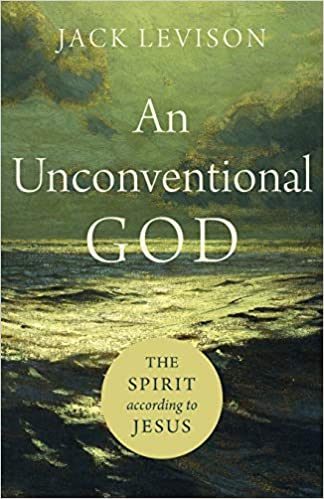
BEN: I appreciate your emphasis on how the church from time to time has domesticated the Spirit, making it rather like Mr. Rogers, rather than a dangerous dynamo. Hard sayings like Mk. 3.29 and par. Warn us against such a misreading. Of course. the BIG question is what is blasphemy against the Holy Spirit? What counts as that terrible eternal sin that won’t be forgiven?
JACK: My mentor, Jerry Hawthorne, once gave this simple definition: attributing to Satan what is God’s by right. To some extent, this is correct, but the issue is much, much, much more complicated than that! (He was speaking to a college sophomore, and probably not the brightest one, at that!) I hope you won’t mind if I refer your readers to a chapter in An Unconventional God, “Spirit and the Threat of Blasphemy” on pages 98-114? I do this because each gospel author grappled with this saying and came to a different interpretation. There is no single definition. Most troubling and challenging for Christians is what Luke does with this saying: he sets it alongside a saying about witness and persecution. According to Mark and Matthew, enemies blaspheme the Holy Spirit; according to Luke, believers do. Frightening! In the end, there is no single definition.
This may have been the hardest chapter of the book to write. I think it is clear—clearer than anything I’ve read on the topic—so I would urge your readers to study that chapter.
BEN: The distinction between Jesus being controlled by Satan and so being ek-stasis, and by contrast being in control of demons through the power of Satan is helpful. I had never looked at the story in Mk. 3 that way, but you are right that these two accusations contradict one another. You take blasphemy of the Spirit, at least in Mark to be “less about false charges against Jesus…than about the inability of his opponents to acknowledge the true source of Jesus’ power” (p. 106), his miracles his Spirit-inspired teaching etc. I agree that the audience realizes that there really are only two options in evaluating Jesus— either he’s an inspired agent of God doing great things, or he’s an agent of Satan. There is no innocuous suggestion, ‘well he’s just a misguided teacher or sage, or a figure like Simon Magus, a power-hungry narcissist. No, the suggestions are more extreme. I do think Jesus really provoked such opposite views… and one is surprised it didn’t get him killed sooner rather than later. Jesus was a danger to the status quo in various ways. The problem of course is, that many today read the harsh criticism of Jesus in the Gospels as later Christian-imposed anti-Semitism. I don’t really agree. How would you respond to the accusation that the Gospel writers were biased against Jews and it shows in the way they handle the Gospel traditions?
JACK: I’d begin by saying the gospel writers were Jews. If they were biased against Jews, it was as Jews. It’s like right-wing evangelical Christians and left-wing liberal Christians. We fight tooth and nail, but, in the end, Jesus rose from the dead, and that binds us together (sometimes it binds us together like a bad lump of cheese rumbling in our stomach, giving us indigestion, but bound we are!). I think one of the most damaging things Christians have done is to read the Christian-Jewish divide back into the gospels and life of Jesus.
One of the most influential articles I’ve read in this respect is Krister Stendahl’s “Paul and the Introspective Conscience of the West” (or was that a book?). Stendahl argued that Lutherans read Luther’s experience into the apostle Paul’s and turned Pauline theology into a battle between works and grace. Stendahl argued that Paul was not converted from one religion to another but called to be a prophet to the nations. Stendahl may be right: Christians too readily read our own agenda into the text.
In the end, the gospels were Jewish compositions written within Jewish communities to Jewish recipients. Even if the recipients were Gentile, as in the possible case of Luke’s gospel, the authors still wrote from the perspective of the Old Testament. Just think of the birth narratives in Luke’s gospel, whose Greek mirrors the Septuagint, or Jesus’ first sermon. Where? In a synagogue? And what? Isaiah 61.
So I’d answer your question by saying that the gospel writers, especially Matthew, may have accentuated the tension between Jesus and his Jewish opponents, but Matthew did not invent them. I agree with you. It is surprising Jesus died somewhat on his in terms and not long before.
Previous Post

November 28, 2020
An Unconventional God-- Part Eighteen
Next Post
November 30, 2020 An Unconventional God-- Part Twenty
Browse Our Archives
Select a Category Uncategorized
Select a Month October 2026 September 2026 August 2026 July 2026 June 2026 May 2026 April 2026 March 2026 February 2026 January 2026 December 2025 November 2025 October 2025 September 2025 August 2025 July 2025 June 2025 May 2025 April 2025 March 2025 February 2025 January 2025 December 2024 November 2024 October 2024 September 2024 August 2024 July 2024 June 2024 May 2024 April 2024 March 2024 February 2024 January 2024 December 2023 November 2023 October 2023 September 2023 August 2023 July 2023 June 2023 May 2023 April 2023 March 2023 February 2023 January 2023 December 2022 November 2022 October 2022 September 2022 August 2022 July 2022 June 2022 May 2022 April 2022 March 2022 February 2022 January 2022 December 2021 November 2021 October 2021 September 2021 August 2021 July 2021 June 2021 May 2021 April 2021 March 2021 February 2021 January 2021 December 2020 November 2020 October 2020 September 2020 August 2020 July 2020 June 2020 May 2020 April 2020 March 2020 February 2020 January 2020 December 2019 November 2019 October 2019 September 2019 August 2019 July 2019 June 2019 May 2019 April 2019 March 2019 February 2019 January 2019 December 2018 November 2018 October 2018 September 2018 August 2018 July 2018 June 2018 May 2018 April 2018 March 2018 February 2018 January 2018 December 2017 November 2017 October 2017 September 2017 August 2017 July 2017 June 2017 May 2017 April 2017 March 2017 February 2017 January 2017 December 2016 November 2016 October 2016 September 2016 August 2016 July 2016 June 2016 May 2016 April 2016 March 2016 February 2016 January 2016 December 2015 November 2015 October 2015 September 2015 August 2015 July 2015 June 2015 May 2015 April 2015 March 2015 February 2015 January 2015 December 2014 November 2014 October 2014 September 2014 August 2014 July 2014 June 2014 May 2014 April 2014 March 2014 February 2014 January 2014 December 2013 November 2013 October 2013 September 2013 August 2013 July 2013 June 2013 May 2013 April 2013 March 2013 February 2013 January 2013 December 2012 November 2012 October 2012 September 2012 August 2012 July 2012 June 2012 May 2012 April 2012 March 2012 February 2012 January 2012 December 2011 November 2011 October 2011 September 2011 August 2011 July 2011 June 2011 May 2011 April 2011 March 2011 February 2011 January 2011
Follow Us!
TAKE THE
Religious Wisdom Quiz
What was the first miracle performed by Elisha?
Select your answer to see how you score.
Healing Naaman’s leprosy Parting the Jordan River Raising a boy from the dead Multiplying oil
Books by This Author Books by Ben Witherington
Related posts from The Bible and Culture


The British Library-- Part Two
The British Library-- Part One
TRENDING AT PATHEOS Evangelical

Pope Leo Celebrates Mass for Nurses & Docs...
I don't have any idea how he did it, but Pope Leo...

The Sermon on the Mount, Part I: Matthew...
The Sermon on the Mount, Part I (Matthew 4:12-5:12) St. Matthew moves...

What's up from Crossway: Reviewing some of their latest A few weeks...

Janie Learns the Way of the Cross: A...
Teaching children about Jesus' Passion can be challenging. Many parents and educators...

Looking For Good Catholic Writing - October 2026
He alone extends the heavens, and he walks upon the waves of...

In "Irreplaceable," our book on vocation and technology, Trevor Sutton and I...
view all Evangelical blogs
Ad-Free & Subscriber Log-In Subscription Support
- About Us
- 2026 Calendar
- Videos
- Podcasts
- Library of World Religions
- Faith In Media Tracker
- Advertise With Us
- Write for Us
- Privacy Policy
- Terms of Service
- Do Not Sell My Data
- Contact Us
- Radiant Digital
- Manage Newsletter Subscriptions
- Unsubscribe From Notifications
- Sitemap
Copyright 2008-2026, Patheos. All rights reserved.
Subscription Support Ad-Free & Subscriber Log-In
Follow Patheos