
BuddhistCatholicContemplativeEvangelicalGeneral ChristianHinduJewishLatter-day SaintMuslimNew VisionsProgressive Christian
Beliefs
- Buddhist
- Catholic
- Contemplative
- Evangelical
- General Christian
- Hindu
- Jewish
- Latter-day Saint
- More Voices
- Muslim
- New Visions
- Pagan
- Progressive Christian
Topics
- Religion News
- Food and Religion
- Sports and Religion
- Religious Art
- Religious Music and Entertainment
- Religious Events
- History and Religion
- Style and Religion
- Politics and Religion
- Women in Religion
- Recreation Outdoors and Religion
- Business Finance and Religion
- Careers Workplace and Religion
- Education and Religion
- Family Parenting and Religion
- Health Fitness and Religion
- Home and Religion
- Relationships and Religion
- Technology and Religion
- Travel and Religion
Columnists
- Buddhist Columnists
- Business Finance and Religion Columnists
- Careers Workplace and Religion Columnists
- Catholic Columnists
- Contemplative Columnists
- Education and Religion Columnists
- Evangelists Columnists
- Family Parenting and Religion Columnists
- General Christian Columnists
- Health Fitness and Religion Columnists
- Hindu Columnists
- History and Religion Columnists
- Home and Religion Columnists
- Jewish Columnists
- More Voices Columnists
- Latter Day Columnists
- Muslim Columnists
- New Visions Columnists
- Nonreligious Columnists
- Pagan Columnists
- Politics and Religion Columnists
- Progressive Columnists
- Recreation Outdoors and Religion Columnists
- Relationships and Religion Columnists
- Religion News Columnists
- Religious Art Columnists
- Religious Events Columnists
- Religious Music and Entertainment Columnists
- Sports and Religion Columnists
- Style and Religion Columnists
- Technology and Religion Columnists
- Travel and Religion Columnists
- Women in Religion Columnists
Resource Library
- 2026 Calendar
- Library of World Religions
- The 100 Most Holy Places on Earth
- Patheos Answers
- Podcasts
- Videos
- Faith Leaders Database
- Anglican Episcopalian
- Bahai
- Baptist
- Buddhism
- Christianity
- Confucianism
- Eastern Orthodoxy
- Hinduism
- Holiness and Pentecostal
- ISKCON
- Islam
- Judaism
- Lutheran
- Methodist
- The Church of Jesus Christ of Latter-day Saints
- New Age
- Paganism
- Presbytarian and Reformed
- Protestantism
- Religion Behind the Scenes
- Roman Catholic
- Scientology
- Shia Islam
- Sikhism
- Sufism
- Sunni Islam
- Taoism
- Zen
- See all religions
Research Tools
 Ad-Free & Subscriber Log-In Subscription Support
Ad-Free & Subscriber Log-In Subscription Support
Follow Patheos 

- Trending:
- Forgiveness
- |
- Marriage
- |
- Consciousness
- |
- Death Penalty
- |
- Election
- |
- Halloween

- Home
- Evangelical
- An Unconventional God– Part Eighteen
An Unconventional God– Part Eighteen
Last updated on: November 28, 2020 at 1:34 am by Ben Witherington
An Unconventional God– Part Eighteen 2020-10-28T17:37:08-04:00 Ben Witherington
Patheos Explore the world's faith through different perspectives on religion and spirituality! Patheos has the views of the prevalent religions and spiritualities of the world.
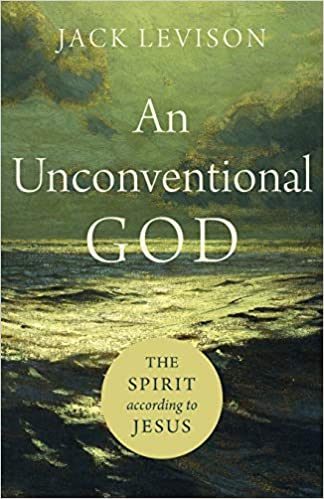
BEN: I think in chapter six you’ve pointed some excellent points about the issue of lying to the Holy Spirit and blasphemy. In regard to the story of Ananias and Sapphira however their main sin was not economic, it was the lies they told about their sale of the property. This very clear on several counts. Peter says to them ‘was the money not yours even after you sold the property’, and the answer to the question he raises is yes. Neither Acts 2 nor Acts 4 advocates that everyone in the community should sell everything and put into the community fund, which the community then will distribute. Rather, what is being said is no one is claiming some sort of individual exclusive right to their property, not least because it’s actually all God’s property, not the individual’s or the community’s property, and it was expected that each would give according to their ability so that no one in the community would go without the necessities of life, hence the setting up of dole for widows and orphans and special ministers to distribute it. No, the major sin of Ananias and Sapphira was lying to God in the person of the Holy Spirit. It was indeed primarily a deeply spiritual issue. Do you disagree?
JACK: I fully agree but would point out that the lie was about money, plain and simple. Plus the the verb, nosphizein, which Luke adopts to describe their holding back, takes us back to the story of Achan in Joshua 7, which is about the illegitimate holding back of possessions. Jesus drew an intimate connection between economics and spirituality; the early church did, too. So I would say I fully agree with you: it was a deeply spiritual issue. But I would disagree with someone who would go on to say: it was not a deeply economic issue. It was both. Then I would add that it was also deeply communal: lying to the community is tantamount in Acts 5 to lying to God.
That is where I would leave it. Their sin violated spirituality. Their sin violated economic transparency. Their sin violated community.
BEN: I like your emphasis on where the Spirit is active, Satan can’t be far away trying to counter the mission, the ministry, the evangelism. This is a rather sobering warning to Christians to watch out when they really are doing God’s work. It suggests that ‘we are not fighting against flesh and blood, but against principalities and powers’. But honestly, there are large parts of the church, especially the more left end of the church that emphasize the social Gospel at the expense of its spiritual roots who either don’t believe in the powers of darkness, or simply have taken this to mean fallen human structures of society, which is not what the NT is talking about by and large (though Revelation suggests that the governing structures can be captive to evil ideas, forces, etc.) Can you help us better balance an approach that takes seriously supernatural evil in the world, without neglecting what Wesley said which was that there is no spiritual holiness without there also being social holiness— caring and serving the least the last and the lost?
JACK: Right now, I am reading C. S. Lewis’ The Great Divorce with a group of undergraduates. Lewis has a profound grasp of evil and good, darkness and light, solidity and ghostliness. At one point, his mentor, the Solid Person George MacDonald, meets Lewis, a ghost on vacation from Hell. They are talking about Heaven and Hell. Lewis says, “Then those people are right who say that Heaven and Hell are only states of mind?” George MacDonald responds, “Hush … Do not blaspheme. Hell is a state of mind—ye never said a truer word. And every state of mind, left to itself, every shutting up of the creature within the dungeon of its own mind—is, in the end, Hell. But Heaven is not a state of mind. Heaven is reality itself. All that is fully real is Heavenly. For all that can be shaken will be shaken and only the unshakeable remains.”
I agree with Lewis to a great extent. I want to underscore the reality of Heaven rather than the existence of Hell, the glory of God rather than the evil of Satan. Yet I believe evil is not just absence, Satan is not just the opposite of all that is good. Satan, if not a person, is a force to be reckoned with, an inevitable inertia that leads us away from God.
I’m finishing a commentary on the ancient Greek Life of Adam and Eve. That’s what preoccupies my research mind these days. In the story, which fancifully retells the story of Adam and Eve, the devil approaches Eve. She worries that God will be angry with her if she eats the fruit. The devil doesn’t go on to say that God won’t be angry. The devil goes on to say that the tree is really valuable. See what happens? Distraction! Inattention! I believe evil is distraction from the Good. I believe Satan is the Master Distractor. I believe we lose our first love not because we mean to but because we become inattentive, distracted.
Social holiness. Personal holiness. These require of us a long obedience in the right direction, as my friend Eugene Peterson titled one of his books. There can be no place for distraction, no foothold for inattention.
Previous Post

November 27, 2020
An Unconventional God-- Part Seventeen
Next Post
November 29, 2020 An Unconventional God-- Part Nineteen
Browse Our Archives
Select a Category Uncategorized
Select a Month October 2026 September 2026 August 2026 July 2026 June 2026 May 2026 April 2026 March 2026 February 2026 January 2026 December 2025 November 2025 October 2025 September 2025 August 2025 July 2025 June 2025 May 2025 April 2025 March 2025 February 2025 January 2025 December 2024 November 2024 October 2024 September 2024 August 2024 July 2024 June 2024 May 2024 April 2024 March 2024 February 2024 January 2024 December 2023 November 2023 October 2023 September 2023 August 2023 July 2023 June 2023 May 2023 April 2023 March 2023 February 2023 January 2023 December 2022 November 2022 October 2022 September 2022 August 2022 July 2022 June 2022 May 2022 April 2022 March 2022 February 2022 January 2022 December 2021 November 2021 October 2021 September 2021 August 2021 July 2021 June 2021 May 2021 April 2021 March 2021 February 2021 January 2021 December 2020 November 2020 October 2020 September 2020 August 2020 July 2020 June 2020 May 2020 April 2020 March 2020 February 2020 January 2020 December 2019 November 2019 October 2019 September 2019 August 2019 July 2019 June 2019 May 2019 April 2019 March 2019 February 2019 January 2019 December 2018 November 2018 October 2018 September 2018 August 2018 July 2018 June 2018 May 2018 April 2018 March 2018 February 2018 January 2018 December 2017 November 2017 October 2017 September 2017 August 2017 July 2017 June 2017 May 2017 April 2017 March 2017 February 2017 January 2017 December 2016 November 2016 October 2016 September 2016 August 2016 July 2016 June 2016 May 2016 April 2016 March 2016 February 2016 January 2016 December 2015 November 2015 October 2015 September 2015 August 2015 July 2015 June 2015 May 2015 April 2015 March 2015 February 2015 January 2015 December 2014 November 2014 October 2014 September 2014 August 2014 July 2014 June 2014 May 2014 April 2014 March 2014 February 2014 January 2014 December 2013 November 2013 October 2013 September 2013 August 2013 July 2013 June 2013 May 2013 April 2013 March 2013 February 2013 January 2013 December 2012 November 2012 October 2012 September 2012 August 2012 July 2012 June 2012 May 2012 April 2012 March 2012 February 2012 January 2012 December 2011 November 2011 October 2011 September 2011 August 2011 July 2011 June 2011 May 2011 April 2011 March 2011 February 2011 January 2011
Follow Us!
TAKE THE
Religious Wisdom Quiz
What does Paul teach about boasting?
Select your answer to see how you score.
Boast in the Lord Boast in riches Boast in yourself Never boast
Books by This Author Books by Ben Witherington
Related posts from The Bible and Culture



The British Library-- Part Two
The British Library-- Part One
TRENDING AT PATHEOS Evangelical

How to Make a Decision When You Can't...
Main point: It’s much more valuable to stay close to God so...

Archdiocese Hosts Military Marriage Retreat in Germany
RASTATT, Germany — The transient military lifestyle, with its frequent deployments and...

Nearly every morning, I make the drive to Detroit with my high-school-age...

The Real AI Story Is Adoption Without Trust
Artificial intelligence has crossed a political threshold. It is no longer a...

A new article, written by Jeff Lindsay and Gale L. Pooley,...

Swimfan: Forgotten Aughts Pleasures
This is a recovery effort. In 2002, My Big Fat Greek Wedding...
view all Evangelical blogs
Ad-Free & Subscriber Log-In Subscription Support
- About Us
- 2026 Calendar
- Videos
- Podcasts
- Library of World Religions
- Faith In Media Tracker
- Advertise With Us
- Write for Us
- Privacy Policy
- Terms of Service
- Do Not Sell My Data
- Contact Us
- Radiant Digital
- Manage Newsletter Subscriptions
- Unsubscribe From Notifications
- Sitemap
Copyright 2008-2026, Patheos. All rights reserved.
Subscription Support Ad-Free & Subscriber Log-In
Follow Patheos