
BuddhistCatholicContemplativeEvangelicalGeneral ChristianHinduJewishLatter-day SaintMuslimNew VisionsProgressive Christian
Beliefs
- Buddhist
- Catholic
- Contemplative
- Evangelical
- General Christian
- Hindu
- Jewish
- Latter-day Saint
- More Voices
- Muslim
- New Visions
- Pagan
- Progressive Christian
Topics
- Religion News
- Food and Religion
- Sports and Religion
- Religious Art
- Religious Music and Entertainment
- Religious Events
- History and Religion
- Style and Religion
- Politics and Religion
- Women in Religion
- Recreation Outdoors and Religion
- Business Finance and Religion
- Careers Workplace and Religion
- Education and Religion
- Family Parenting and Religion
- Health Fitness and Religion
- Home and Religion
- Relationships and Religion
- Technology and Religion
- Travel and Religion
Columnists
- Buddhist Columnists
- Business Finance and Religion Columnists
- Careers Workplace and Religion Columnists
- Catholic Columnists
- Contemplative Columnists
- Education and Religion Columnists
- Evangelists Columnists
- Family Parenting and Religion Columnists
- General Christian Columnists
- Health Fitness and Religion Columnists
- Hindu Columnists
- History and Religion Columnists
- Home and Religion Columnists
- Jewish Columnists
- More Voices Columnists
- Latter Day Columnists
- Muslim Columnists
- New Visions Columnists
- Nonreligious Columnists
- Pagan Columnists
- Politics and Religion Columnists
- Progressive Columnists
- Recreation Outdoors and Religion Columnists
- Relationships and Religion Columnists
- Religion News Columnists
- Religious Art Columnists
- Religious Events Columnists
- Religious Music and Entertainment Columnists
- Sports and Religion Columnists
- Style and Religion Columnists
- Technology and Religion Columnists
- Travel and Religion Columnists
- Women in Religion Columnists
Resource Library
- 2026 Calendar
- Library of World Religions
- The 100 Most Holy Places on Earth
- Patheos Answers
- Podcasts
- Videos
- Faith Leaders Database
- Anglican Episcopalian
- Bahai
- Baptist
- Buddhism
- Christianity
- Confucianism
- Eastern Orthodoxy
- Hinduism
- Holiness and Pentecostal
- ISKCON
- Islam
- Judaism
- Lutheran
- Methodist
- The Church of Jesus Christ of Latter-day Saints
- New Age
- Paganism
- Presbytarian and Reformed
- Protestantism
- Religion Behind the Scenes
- Roman Catholic
- Scientology
- Shia Islam
- Sikhism
- Sufism
- Sunni Islam
- Taoism
- Zen
- See all religions
Research Tools
 Ad-Free & Subscriber Log-In Subscription Support
Ad-Free & Subscriber Log-In Subscription Support
Follow Patheos 

- Trending:
- Forgiveness
- |
- Marriage
- |
- Consciousness
- |
- Death Penalty
- |
- Election
- |
- Halloween

- Home
- Evangelical
- An Unconventional God– Part Seventeen
An Unconventional God– Part Seventeen
Last updated on: November 27, 2020 at 1:31 am by Ben Witherington
An Unconventional God– Part Seventeen 2020-10-28T17:33:31-04:00 Ben Witherington
Patheos Explore the world's faith through different perspectives on religion and spirituality! Patheos has the views of the prevalent religions and spiritualities of the world.
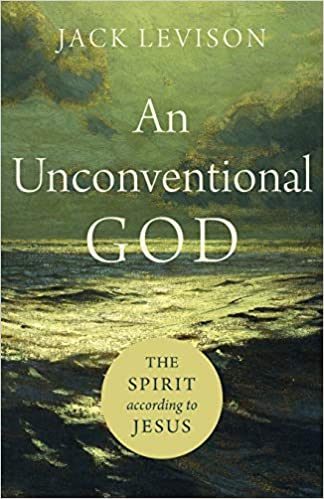
BEN: The prayer life of Jesus (p. 91) is important, not least because it reminds us Jesus is living his life as a genuine human being. He needs to pray to communicate with the Father, even Jesus needs to pray. This I would call another example of his true humanity, and of divine condescension—a refusal to draw on the omnis, in this case omniscience, in order to fully identify with humanity. Does this make sense to you?
JACK: My German friends would say, Einverstanden! Total agreement. I wrote this: “We are told in the gospel of Luke that Jesus prayed. Overwhelmed by the crowds pressuring him, he prayed (Luke 5:16). Confronted by a decision, such as who should accompany him, he prayed (6:12). When he wanted a bead on his followers’ belief, he prayed (9:18). And, of course, in anguish before his death, he prayed (22:44).” Jesus didn’t just pray to look or seem human. Jesus needed to pray.
BEN: One of the most intriguing insights in this whole book is what you say towards the close of chapter 5, namely that when Jesus is on the brink of what humans would call success the Spirit leads him back to the Father, or even leads him into confrontation with the Dark Lord, Satan. It is interesting how Luke characterizes the ongoing battle with Satan and his defeat in the wilderness temptations, and then as a result of the ministry of the 70. It is an ongoing battle, and as one Evangelist says, Satan leaves Jesus until an opportune time. Jesus’ exorcisms are one of the things that truly distinguished Jesus’ ministry from all the ministries of prophets, priests, and kings in the OT and from John the Baptizer’s (not John the Baptist—he was not a member of a Protestant denomination J) ministry as well. Satan has to be sent packing for the kingdom to come and it is an ongoing battle. Perhaps the reason we don’t hear much about the Spirit or Satan in the Gospels on the whole is because the real turning point in the battle against Satan comes not in the exorcisms, or even in the teachings of Jesus but through the death and resurrection of Jesus. When Satan loses the power of death as a threat to human beings including Jesus, D-Day, as Oscar Cullmann once said, has happened on the cross. The turning point in the war with the powers of darkness paradoxically comes in Jesus’ death on the cross. Would you agree with this observation of Cullmann’s?
JACK: How could I ever disagree with Oscar Cullmann? I cut my teeth on his writings at Cambridge. (Priscilla and I even have a little green cooler, which someone gave us for our wedding 38 years ago, called an Oscar and made by Coleman. We call it, without thinking or blinking, the Oscar Cullmann. “Hey, Jack. Don’t forget the Oscar Cullmann!” Priscilla will call down to the garage of our townhouse.)
I actually think we often do too little with the death and resurrection of Jesus in the United Methodist Church. We are great telling the story of God’s love and justice. But for me, everything hangs on the death and resurrection of Jesus. When I look at the world and, I’m sorry to say, the church, not to mention my own foibles and faults, I am tempted to throw my hands up and walk away; then I remind myself he died in tragic love and rose from the dead. Everything changed when that happened. Yes, D-Day—costly, tragic, bloody D-Day—took place, making VE Day inevitable.
The battle is there during the life of Jesus. The difficult (even for Luke, who reframes it) saying about blasphemy, which is found even in the Gnostic Gospel of Thomas, connects exorcism with the Spirit, though certainly not in the clearest way possible. (That chapter took me an awful lot to research and to write.) But, in the end, the death and resurrection signal the death knell for the devil, thank God!
Previous Post

November 26, 2020
An Unconventional God-- Part Sixteen
Next Post
November 28, 2020 An Unconventional God-- Part Eighteen
Browse Our Archives
Select a Category Uncategorized
Select a Month October 2026 September 2026 August 2026 July 2026 June 2026 May 2026 April 2026 March 2026 February 2026 January 2026 December 2025 November 2025 October 2025 September 2025 August 2025 July 2025 June 2025 May 2025 April 2025 March 2025 February 2025 January 2025 December 2024 November 2024 October 2024 September 2024 August 2024 July 2024 June 2024 May 2024 April 2024 March 2024 February 2024 January 2024 December 2023 November 2023 October 2023 September 2023 August 2023 July 2023 June 2023 May 2023 April 2023 March 2023 February 2023 January 2023 December 2022 November 2022 October 2022 September 2022 August 2022 July 2022 June 2022 May 2022 April 2022 March 2022 February 2022 January 2022 December 2021 November 2021 October 2021 September 2021 August 2021 July 2021 June 2021 May 2021 April 2021 March 2021 February 2021 January 2021 December 2020 November 2020 October 2020 September 2020 August 2020 July 2020 June 2020 May 2020 April 2020 March 2020 February 2020 January 2020 December 2019 November 2019 October 2019 September 2019 August 2019 July 2019 June 2019 May 2019 April 2019 March 2019 February 2019 January 2019 December 2018 November 2018 October 2018 September 2018 August 2018 July 2018 June 2018 May 2018 April 2018 March 2018 February 2018 January 2018 December 2017 November 2017 October 2017 September 2017 August 2017 July 2017 June 2017 May 2017 April 2017 March 2017 February 2017 January 2017 December 2016 November 2016 October 2016 September 2016 August 2016 July 2016 June 2016 May 2016 April 2016 March 2016 February 2016 January 2016 December 2015 November 2015 October 2015 September 2015 August 2015 July 2015 June 2015 May 2015 April 2015 March 2015 February 2015 January 2015 December 2014 November 2014 October 2014 September 2014 August 2014 July 2014 June 2014 May 2014 April 2014 March 2014 February 2014 January 2014 December 2013 November 2013 October 2013 September 2013 August 2013 July 2013 June 2013 May 2013 April 2013 March 2013 February 2013 January 2013 December 2012 November 2012 October 2012 September 2012 August 2012 July 2012 June 2012 May 2012 April 2012 March 2012 February 2012 January 2012 December 2011 November 2011 October 2011 September 2011 August 2011 July 2011 June 2011 May 2011 April 2011 March 2011 February 2011 January 2011
Follow Us!
TAKE THE
Religious Wisdom Quiz
What did the Israelites put on their doorposts during Passover?
Select your answer to see how you score.
Olive oil Lamb’s blood Incense Gold dust
Books by This Author Books by Ben Witherington
Related posts from The Bible and Culture


Methodist Central Hall and Westminster Abbey


TRENDING AT PATHEOS Evangelical

The Problem with False Prophets
Miller’s Station UMC| 10/18/26| Anchor Verse: Jeremiah 23: 1, 9-23 I...

Emotion in Early Christianity by Andrew Crislip
Andrew Crislip’s Emotion in Early Christianity examines an often overlooked dimension of...

16 Spiritual Touchstones for a More Grounded Life
After decades of spiritual study, here are 16 principles I try...

Catholic Evangelization: Sharing Your Faith Every Day
Welcome back to the Graceful Awakening mini-series called, “From Faith to Mission.” ...

The Pillar of the Boatmen: the Ancient Monument...
The Pillar of the Boatmen is a Romano-Gaulish sculpture that dates from...

In one sense walking into Westminster Abbey is like walking down the...
view all Evangelical blogs
Ad-Free & Subscriber Log-In Subscription Support
- About Us
- 2026 Calendar
- Videos
- Podcasts
- Library of World Religions
- Faith In Media Tracker
- Advertise With Us
- Write for Us
- Privacy Policy
- Terms of Service
- Do Not Sell My Data
- Contact Us
- Radiant Digital
- Manage Newsletter Subscriptions
- Unsubscribe From Notifications
- Sitemap
Copyright 2008-2026, Patheos. All rights reserved.
Subscription Support Ad-Free & Subscriber Log-In
Follow Patheos