
BuddhistCatholicContemplativeEvangelicalGeneral ChristianHinduJewishLatter-day SaintMuslimNew VisionsProgressive Christian
Beliefs
- Buddhist
- Catholic
- Contemplative
- Evangelical
- General Christian
- Hindu
- Jewish
- Latter-day Saint
- More Voices
- Muslim
- New Visions
- Pagan
- Progressive Christian
Topics
- Religion News
- Food and Religion
- Sports and Religion
- Religious Art
- Religious Music and Entertainment
- Religious Events
- History and Religion
- Style and Religion
- Politics and Religion
- Women in Religion
- Recreation Outdoors and Religion
- Business Finance and Religion
- Careers Workplace and Religion
- Education and Religion
- Family Parenting and Religion
- Health Fitness and Religion
- Home and Religion
- Relationships and Religion
- Technology and Religion
- Travel and Religion
Columnists
- Buddhist Columnists
- Business Finance and Religion Columnists
- Careers Workplace and Religion Columnists
- Catholic Columnists
- Contemplative Columnists
- Education and Religion Columnists
- Evangelists Columnists
- Family Parenting and Religion Columnists
- General Christian Columnists
- Health Fitness and Religion Columnists
- Hindu Columnists
- History and Religion Columnists
- Home and Religion Columnists
- Jewish Columnists
- More Voices Columnists
- Latter Day Columnists
- Muslim Columnists
- New Visions Columnists
- Nonreligious Columnists
- Pagan Columnists
- Politics and Religion Columnists
- Progressive Columnists
- Recreation Outdoors and Religion Columnists
- Relationships and Religion Columnists
- Religion News Columnists
- Religious Art Columnists
- Religious Events Columnists
- Religious Music and Entertainment Columnists
- Sports and Religion Columnists
- Style and Religion Columnists
- Technology and Religion Columnists
- Travel and Religion Columnists
- Women in Religion Columnists
Resource Library
- 2026 Calendar
- Library of World Religions
- The 100 Most Holy Places on Earth
- Patheos Answers
- Podcasts
- Videos
- Faith Leaders Database
- Anglican Episcopalian
- Bahai
- Baptist
- Buddhism
- Christianity
- Confucianism
- Eastern Orthodoxy
- Hinduism
- Holiness and Pentecostal
- ISKCON
- Islam
- Judaism
- Lutheran
- Methodist
- The Church of Jesus Christ of Latter-day Saints
- New Age
- Paganism
- Presbytarian and Reformed
- Protestantism
- Religion Behind the Scenes
- Roman Catholic
- Scientology
- Shia Islam
- Sikhism
- Sufism
- Sunni Islam
- Taoism
- Zen
- See all religions
Research Tools
 Ad-Free & Subscriber Log-In Subscription Support
Ad-Free & Subscriber Log-In Subscription Support
Follow Patheos 

- Trending:
- Forgiveness
- |
- Marriage
- |
- Consciousness
- |
- Death Penalty
- |
- Election
- |
- Halloween

- Home
- Evangelical
- Helen Bond’s The First Biography of Jesus— Part Two
Helen Bond’s The First Biography of Jesus— Part Two
Last updated on: May 8, 2020 at 1:48 am by Ben Witherington
Helen Bond’s The First Biography of Jesus— Part Two 2020-05-05T14:52:11-04:00 Ben Witherington
Patheos Explore the world's faith through different perspectives on religion and spirituality! Patheos has the views of the prevalent religions and spiritualities of the world.
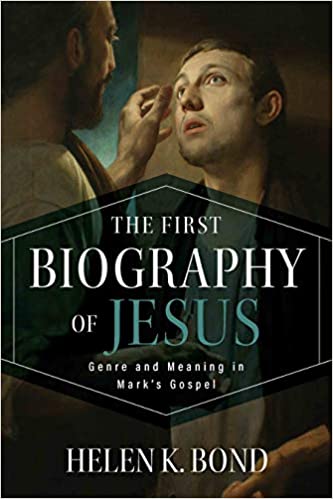
BEN. In the wake of the work of Richard Burridge and others, what was it that prompted you to write this book now? It must have taken a considerable period of time to do this book as it reflects a lot of detailed and helpful interaction with classics and ancient historical scholars. What fresh contribution do you see it making to an already ongoing discussion?
HELEN:
What prompted me to write the book in the first place was actually my work on the historical Jesus. My previous book had been on the historical Jesus in Bloomsbury’s Guide for the Perplexed series (2012) and I wrote a shorter one for SPCK in 2017 (Jesus: A Very Short History). The more I worked on the historical Jesus, the more I realized that what passes for the Jesus of the 30s CE is actually something very similar to Mark’s Jesus. There are of course very good reasons for this – scholars rightly privilege Mark as our earliest source. But there’s also the problem that 40 or so years have passed between Jesus’ death and Mark’s work, and the clear literary and rhetorical themes that permeate the gospel – both of which need to be taken very seriously. I started to wonder about what kind of book Mark thought he was writing. Was historical accuracy even remotely important to him? What were his earliest audience expecting from his work? And how did he go about his craft? I knew that scholars like Richard Burridge and David Aune had done a great deal to establish the current consensus that the gospels are bioi, but no one as far as I could see had answered the ‘so what?’ question. That’s to say, What difference does it make to say that Mark is a biography, rather than anything else? And if genre is important (as all the people in the debate from the 70s onwards had maintained), how does it affect the way that we read Mark?
So that was the task I set myself – essentially to find out how Mark’s earliest audience would have understood his work on the assumption that it was an ancient biography. The book took me a long time to write – probably around seven years in total! The reason was that I felt I knew so little about ancient biographies and wanted to understand them as much as possible. I set myself not only to read all the ones I could get my hands on but also to read at least two pieces of secondary literature on each, just so that I was sure of what Classicists were saying. I was helped enormously by the fact that biographies have been enjoying a certain popularity amongst Classicists for a few decades now. No longer are biographers seen as failed historians but as serious, creative authors in their own right. Tomas Haegg’s excellent book The Art of Biography in Antiquity (CUP, 2012) was a tremendous resource too.
As for contribution, I hope that people will read the book and see that interpreting Mark as an ancient biography helps to put many things into perspective – things that might otherwise strike us as rather odd. I think it makes sense of the rather flat characterization that we get in the gospels (this was a feature of bioi), of Mark’s particular structure with the topical arrangement of the earlier part followed by the chronological account of the hero’s death (again, not uncommon in biography), of Mark’s episodic narrative and fondness for juxtaposition (which I came to see as utterly vital to understanding the work), of the apparently harsh characterization of the disciples (who function as foils to the central character), and the link between Jesus’ central body of teaching and his death. I could go on, but I suspect you’re going to ask about some of these later . . .
Previous Post

May 7, 2020
Helen Bond's-- The First Biography of Jesus Part One
Next Post
May 9, 2020 Helen Bond's The First Biography of Jesus-- Part Three
Browse Our Archives
Select a Category Uncategorized
Select a Month October 2026 September 2026 August 2026 July 2026 June 2026 May 2026 April 2026 March 2026 February 2026 January 2026 December 2025 November 2025 October 2025 September 2025 August 2025 July 2025 June 2025 May 2025 April 2025 March 2025 February 2025 January 2025 December 2024 November 2024 October 2024 September 2024 August 2024 July 2024 June 2024 May 2024 April 2024 March 2024 February 2024 January 2024 December 2023 November 2023 October 2023 September 2023 August 2023 July 2023 June 2023 May 2023 April 2023 March 2023 February 2023 January 2023 December 2022 November 2022 October 2022 September 2022 August 2022 July 2022 June 2022 May 2022 April 2022 March 2022 February 2022 January 2022 December 2021 November 2021 October 2021 September 2021 August 2021 July 2021 June 2021 May 2021 April 2021 March 2021 February 2021 January 2021 December 2020 November 2020 October 2020 September 2020 August 2020 July 2020 June 2020 May 2020 April 2020 March 2020 February 2020 January 2020 December 2019 November 2019 October 2019 September 2019 August 2019 July 2019 June 2019 May 2019 April 2019 March 2019 February 2019 January 2019 December 2018 November 2018 October 2018 September 2018 August 2018 July 2018 June 2018 May 2018 April 2018 March 2018 February 2018 January 2018 December 2017 November 2017 October 2017 September 2017 August 2017 July 2017 June 2017 May 2017 April 2017 March 2017 February 2017 January 2017 December 2016 November 2016 October 2016 September 2016 August 2016 July 2016 June 2016 May 2016 April 2016 March 2016 February 2016 January 2016 December 2015 November 2015 October 2015 September 2015 August 2015 July 2015 June 2015 May 2015 April 2015 March 2015 February 2015 January 2015 December 2014 November 2014 October 2014 September 2014 August 2014 July 2014 June 2014 May 2014 April 2014 March 2014 February 2014 January 2014 December 2013 November 2013 October 2013 September 2013 August 2013 July 2013 June 2013 May 2013 April 2013 March 2013 February 2013 January 2013 December 2012 November 2012 October 2012 September 2012 August 2012 July 2012 June 2012 May 2012 April 2012 March 2012 February 2012 January 2012 December 2011 November 2011 October 2011 September 2011 August 2011 July 2011 June 2011 May 2011 April 2011 March 2011 February 2011 January 2011
Follow Us!
TAKE THE
Religious Wisdom Quiz
According to Paul, nothing in all creation can separate you from me—not death, not life, not angels or demons. What am I?
Select your answer to see how you score.
The love of God God's mercy Salvation God's grace
Books by This Author Books by Ben Witherington
Related posts from The Bible and Culture


The British Library-- Part Two
The British Library-- Part One
TRENDING AT PATHEOS Evangelical

The First Eucharistic Controversy: Christ’s Real Presence
For Catholics, the Eucharist is the source and summit of the Christian...

How to Make a Decision When You Can't...
Main point: It’s much more valuable to stay close to God so...

Archdiocese Hosts Military Marriage Retreat in Germany
RASTATT, Germany — The transient military lifestyle, with its frequent deployments and...

Nearly every morning, I make the drive to Detroit with my high-school-age...

The Real AI Story Is Adoption Without Trust
Artificial intelligence has crossed a political threshold. It is no longer a...

A new article, written by Jeff Lindsay and Gale L. Pooley,...
view all Evangelical blogs
Ad-Free & Subscriber Log-In Subscription Support
- About Us
- 2026 Calendar
- Videos
- Podcasts
- Library of World Religions
- Faith In Media Tracker
- Advertise With Us
- Write for Us
- Privacy Policy
- Terms of Service
- Do Not Sell My Data
- Contact Us
- Radiant Digital
- Manage Newsletter Subscriptions
- Unsubscribe From Notifications
- Sitemap
Copyright 2008-2026, Patheos. All rights reserved.
Subscription Support Ad-Free & Subscriber Log-In
Follow Patheos