
BuddhistCatholicContemplativeEvangelicalGeneral ChristianHinduJewishLatter-day SaintMuslimNew VisionsProgressive Christian
Beliefs
- Buddhist
- Catholic
- Contemplative
- Evangelical
- General Christian
- Hindu
- Jewish
- Latter-day Saint
- More Voices
- Muslim
- New Visions
- Pagan
- Progressive Christian
Topics
- Religion News
- Food and Religion
- Sports and Religion
- Religious Art
- Religious Music and Entertainment
- Religious Events
- History and Religion
- Style and Religion
- Politics and Religion
- Women in Religion
- Recreation Outdoors and Religion
- Business Finance and Religion
- Careers Workplace and Religion
- Education and Religion
- Family Parenting and Religion
- Health Fitness and Religion
- Home and Religion
- Relationships and Religion
- Technology and Religion
- Travel and Religion
Columnists
- Buddhist Columnists
- Business Finance and Religion Columnists
- Careers Workplace and Religion Columnists
- Catholic Columnists
- Contemplative Columnists
- Education and Religion Columnists
- Evangelists Columnists
- Family Parenting and Religion Columnists
- General Christian Columnists
- Health Fitness and Religion Columnists
- Hindu Columnists
- History and Religion Columnists
- Home and Religion Columnists
- Jewish Columnists
- More Voices Columnists
- Latter Day Columnists
- Muslim Columnists
- New Visions Columnists
- Nonreligious Columnists
- Pagan Columnists
- Politics and Religion Columnists
- Progressive Columnists
- Recreation Outdoors and Religion Columnists
- Relationships and Religion Columnists
- Religion News Columnists
- Religious Art Columnists
- Religious Events Columnists
- Religious Music and Entertainment Columnists
- Sports and Religion Columnists
- Style and Religion Columnists
- Technology and Religion Columnists
- Travel and Religion Columnists
- Women in Religion Columnists
Resource Library
- 2026 Calendar
- Library of World Religions
- The 100 Most Holy Places on Earth
- Patheos Answers
- Podcasts
- Videos
- Faith Leaders Database
- Anglican Episcopalian
- Bahai
- Baptist
- Buddhism
- Christianity
- Confucianism
- Eastern Orthodoxy
- Hinduism
- Holiness and Pentecostal
- ISKCON
- Islam
- Judaism
- Lutheran
- Methodist
- The Church of Jesus Christ of Latter-day Saints
- New Age
- Paganism
- Presbytarian and Reformed
- Protestantism
- Religion Behind the Scenes
- Roman Catholic
- Scientology
- Shia Islam
- Sikhism
- Sufism
- Sunni Islam
- Taoism
- Zen
- See all religions
Research Tools
 Ad-Free & Subscriber Log-In Subscription Support
Ad-Free & Subscriber Log-In Subscription Support
Follow Patheos 

- Trending:
- Forgiveness
- |
- Marriage
- |
- Consciousness
- |
- Death Penalty
- |
- Election
- |
- Halloween

- Home
- Evangelical
- When Reviews Get Strange— Philip Jenkins
When Reviews Get Strange— Philip Jenkins
Last updated on: August 8, 2019 at 1:32 am by Ben Witherington
When Reviews Get Strange— Philip Jenkins 2019-07-13T10:38:08-04:00 Ben Witherington
Patheos Explore the world's faith through different perspectives on religion and spirituality! Patheos has the views of the prevalent religions and spiritualities of the world.
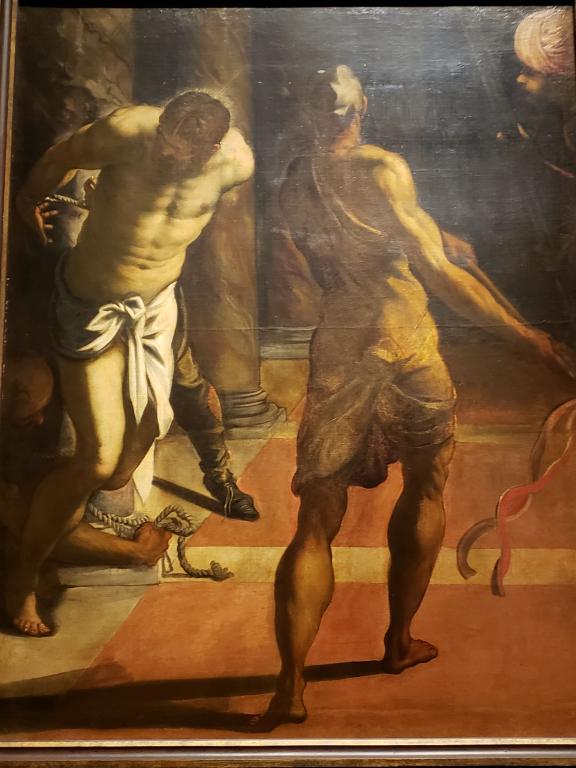
Here’s an excellent critique of a review of John Barton’s recent History of the Bible volume. I entirely agree with Philip about that weird sentence. I also think Bauckham’s book is excellent. BW3
When Reviews Go Strange
JULY 13, 2019 BY PHILIP JENKINS
When I read the excellent reviews offered by the Wall Street Journal, I always enjoy pieces by the versatile, well-informed, and wide-ranging Barton Swaim. I say that before disagreeing with him in a major way on his most recent offering, a highly critical reading of John Barton’s important new book A History of the Bible.
While acknowledging much that is positive about the book, Swaim launches a basic attack on the historical critical method that it exemplifies. His complaint is that if we follow these principles as consistently and logically as John Barton does, we are basically left with nothing. That critical approach is in a sense an exercise in nihilism. Might that description fit such efforts in some cases? Certainly. But they don’t apply to Barton.
Let me offer Exhibit A in John Barton’s defense. Here is Swaim:
Historical-critical theories on the New Testament are a little more amenable to empirical corroboration. The dominant paradigm on the origins of the Gospels, for example, holds that the Synoptic accounts were second-century compilations of rumors and exaggerated tales about Jesus, written and edited long after anybody had any firm information about the man and his deeds. But the Gospels, as Richard Bauckham cogently demonstrated in his 2006 book “Jesus and the Eyewitnesses,” simply aren’t written that way. The Gospel-writers frequently use names, dates, specific locations and odd details, as if to invite readers to verify their claims. Mr. Bauckham’s book shook the field of New Testament studies when it appeared. Mr. Barton, scandalously in my view, doesn’t mention the book or list it in his lengthy bibliography.
You might want to read that again, as it is so off the wall.
Let me begin with Swaim’s “dominant paradigm” sentence, which is simply incorrect at every stage, almost in every word. Please find me a competent scholar on the Synoptics who dates them in the second century. A near universal consensus gives the original date of Mark as around 70-75, and Matthew and Luke in the next twenty years or so, before the mid-90s. And do remember the sheer size of the field we are talking about, which is inconceivably vast.
If there is debate in the field, it is between people like me who hold to the genuine “dominant paradigm” theory of dating (ie 70-90 or so) versus those who favor earlier dates, pre-70. None of those periods counts as second century. Clearly, that goes far beyond a mere chronological quibble. The standard dating for the Synoptics means that they were written at a time when authors or editors had access to direct personal, family, and communal traditions going back to the 30s, which would not be the case if they were second century.
Almost as solid a consensus holds that the Synoptics draw on direct and extensive sources of strictly contemporary information for the events of Jesus’s era. A sizable and respectable group of scholars believes that Mark is drawing on some contact with Peter himself. It is precisely because the apostolic generation is dying out that Mark seemingly determined to collect what could be found of their experiences and stories. By the start of the second century, quotations from all the Synoptics are appearing in Christian writings.
I seriously have no idea where Swaim, who is as I say a smart and curious writer, found that utterly weird “dominant paradigm” sentence, which describes something more like a Da Vinci Code approach than any accurate reflection of Biblical scholarship. The views he portrays are absolutely, categorically, not dominant, or even fringe respectable. Where on earth is he getting this?
I won’t say much about Bauckham here, as he will be the subject of another blog in in the near future. Suffice it to say that I deeply admire all his writings, and that book in particular. But as summarized by Swaim, the account of Eyewitnesses is so generic as to be misleading. It is awfully easy to find ancient writings that “frequently use names, dates, specific locations and odd details, as if to invite readers to verify their claims,” and which turn out to be forged, wrong, or misleading. And while Bauckham’s book was well and respectfully received, it was nothing like the bombshell in the playground of the Biblical scholars that Swaim implies. They read it, admired its intelligence and critical acumen, and absorbed its arguments where appropriate. The contrast that Swaim suggests between Bauckham and the bulk of “historical critical” scholars does not exist.Personally, I would have tended to include Bauckham’s book in the bibliography of a book like this, but the range of possible works from which to choose is, again, enormous.
I have no problems with critical reviews of any book, but they should not make statements that are flat wrong. Why did the Journal let this one through?
—–
My answer to Philip’s last query is— Because the Journal did bother to have a proper NT scholar read the review and fact check it before they published it. Which is not good.
Previous Post

August 7, 2019
A Recent Doctoral Thesis on the Marys in the Fourth Gospel
Next Post
August 9, 2019 Holy Communion on the Moon?
Browse Our Archives
Select a Category Uncategorized
Select a Month October 2026 September 2026 August 2026 July 2026 June 2026 May 2026 April 2026 March 2026 February 2026 January 2026 December 2025 November 2025 October 2025 September 2025 August 2025 July 2025 June 2025 May 2025 April 2025 March 2025 February 2025 January 2025 December 2024 November 2024 October 2024 September 2024 August 2024 July 2024 June 2024 May 2024 April 2024 March 2024 February 2024 January 2024 December 2023 November 2023 October 2023 September 2023 August 2023 July 2023 June 2023 May 2023 April 2023 March 2023 February 2023 January 2023 December 2022 November 2022 October 2022 September 2022 August 2022 July 2022 June 2022 May 2022 April 2022 March 2022 February 2022 January 2022 December 2021 November 2021 October 2021 September 2021 August 2021 July 2021 June 2021 May 2021 April 2021 March 2021 February 2021 January 2021 December 2020 November 2020 October 2020 September 2020 August 2020 July 2020 June 2020 May 2020 April 2020 March 2020 February 2020 January 2020 December 2019 November 2019 October 2019 September 2019 August 2019 July 2019 June 2019 May 2019 April 2019 March 2019 February 2019 January 2019 December 2018 November 2018 October 2018 September 2018 August 2018 July 2018 June 2018 May 2018 April 2018 March 2018 February 2018 January 2018 December 2017 November 2017 October 2017 September 2017 August 2017 July 2017 June 2017 May 2017 April 2017 March 2017 February 2017 January 2017 December 2016 November 2016 October 2016 September 2016 August 2016 July 2016 June 2016 May 2016 April 2016 March 2016 February 2016 January 2016 December 2015 November 2015 October 2015 September 2015 August 2015 July 2015 June 2015 May 2015 April 2015 March 2015 February 2015 January 2015 December 2014 November 2014 October 2014 September 2014 August 2014 July 2014 June 2014 May 2014 April 2014 March 2014 February 2014 January 2014 December 2013 November 2013 October 2013 September 2013 August 2013 July 2013 June 2013 May 2013 April 2013 March 2013 February 2013 January 2013 December 2012 November 2012 October 2012 September 2012 August 2012 July 2012 June 2012 May 2012 April 2012 March 2012 February 2012 January 2012 December 2011 November 2011 October 2011 September 2011 August 2011 July 2011 June 2011 May 2011 April 2011 March 2011 February 2011 January 2011
Follow Us!
TAKE THE
Religious Wisdom Quiz
What does Paul teach about boasting?
Select your answer to see how you score.
Boast in the Lord Boast in riches Boast in yourself Never boast
Books by This Author Books by Ben Witherington
Related posts from The Bible and Culture


The British Library-- Part Two
The British Library-- Part One
TRENDING AT PATHEOS Evangelical

How to Make a Decision When You Can't...
Main point: It’s much more valuable to stay close to God so...

Archdiocese Hosts Military Marriage Retreat in Germany
RASTATT, Germany — The transient military lifestyle, with its frequent deployments and...

Nearly every morning, I make the drive to Detroit with my high-school-age...

The Real AI Story Is Adoption Without Trust
Artificial intelligence has crossed a political threshold. It is no longer a...

A new article, written by Jeff Lindsay and Gale L. Pooley,...

Swimfan: Forgotten Aughts Pleasures
This is a recovery effort. In 2002, My Big Fat Greek Wedding...
view all Evangelical blogs
Ad-Free & Subscriber Log-In Subscription Support
- About Us
- 2026 Calendar
- Videos
- Podcasts
- Library of World Religions
- Faith In Media Tracker
- Advertise With Us
- Write for Us
- Privacy Policy
- Terms of Service
- Do Not Sell My Data
- Contact Us
- Radiant Digital
- Manage Newsletter Subscriptions
- Unsubscribe From Notifications
- Sitemap
Copyright 2008-2026, Patheos. All rights reserved.
Subscription Support Ad-Free & Subscriber Log-In
Follow Patheos