
BuddhistCatholicContemplativeEvangelicalGeneral ChristianHinduJewishLatter-day SaintMuslimNew VisionsProgressive Christian
Beliefs
- Buddhist
- Catholic
- Contemplative
- Evangelical
- General Christian
- Hindu
- Jewish
- Latter-day Saint
- More Voices
- Muslim
- New Visions
- Pagan
- Progressive Christian
Topics
- Religion News
- Food and Religion
- Sports and Religion
- Religious Art
- Religious Music and Entertainment
- Religious Events
- History and Religion
- Style and Religion
- Politics and Religion
- Women in Religion
- Recreation Outdoors and Religion
- Business Finance and Religion
- Careers Workplace and Religion
- Education and Religion
- Family Parenting and Religion
- Health Fitness and Religion
- Home and Religion
- Relationships and Religion
- Technology and Religion
- Travel and Religion
Columnists
- Buddhist Columnists
- Business Finance and Religion Columnists
- Careers Workplace and Religion Columnists
- Catholic Columnists
- Contemplative Columnists
- Education and Religion Columnists
- Evangelists Columnists
- Family Parenting and Religion Columnists
- General Christian Columnists
- Health Fitness and Religion Columnists
- Hindu Columnists
- History and Religion Columnists
- Home and Religion Columnists
- Jewish Columnists
- More Voices Columnists
- Latter Day Columnists
- Muslim Columnists
- New Visions Columnists
- Nonreligious Columnists
- Pagan Columnists
- Politics and Religion Columnists
- Progressive Columnists
- Recreation Outdoors and Religion Columnists
- Relationships and Religion Columnists
- Religion News Columnists
- Religious Art Columnists
- Religious Events Columnists
- Religious Music and Entertainment Columnists
- Sports and Religion Columnists
- Style and Religion Columnists
- Technology and Religion Columnists
- Travel and Religion Columnists
- Women in Religion Columnists
Resource Library
- 2026 Calendar
- Library of World Religions
- The 100 Most Holy Places on Earth
- Patheos Answers
- Podcasts
- Videos
- Faith Leaders Database
- Anglican Episcopalian
- Bahai
- Baptist
- Buddhism
- Christianity
- Confucianism
- Eastern Orthodoxy
- Hinduism
- Holiness and Pentecostal
- ISKCON
- Islam
- Judaism
- Lutheran
- Methodist
- The Church of Jesus Christ of Latter-day Saints
- New Age
- Paganism
- Presbytarian and Reformed
- Protestantism
- Religion Behind the Scenes
- Roman Catholic
- Scientology
- Shia Islam
- Sikhism
- Sufism
- Sunni Islam
- Taoism
- Zen
- See all religions
Research Tools
 Ad-Free & Subscriber Log-In Subscription Support
Follow Patheos 

- Trending:
- Advent
- |
- Forgiveness
- |
- Thanksgiving
- |
- Election
- |
- Seasonal Holidays
- |
- Marriage

- Home
- Evangelical
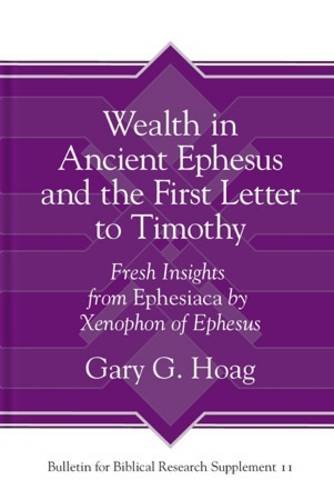
- Gary Hoag’s Wealth in Ancient Ephesus and 1 Timothy– Part Five
Gary Hoag’s Wealth in Ancient Ephesus and 1 Timothy– Part Five
Last updated on: March 23, 2016 at 1:03 am by Ben Witherington
Gary Hoag’s Wealth in Ancient Ephesus and 1 Timothy– Part Five 2016-02-26T19:09:35-05:00 Ben Witherington
Patheos Explore the world's faith through different perspectives on religion and spirituality! Patheos has the views of the prevalent religions and spiritualities of the world.
Q3.BEN: In terms of methodology, you decided to follow the lead of the modern rhetorical approach of Vernon Robbins and his distinguishing of various ‘textures’ in the text (e.g.
ideological texture, sacred texture etc.) as opposed to analyzing the material on the basis of historical rhetorical analysis. In addition on the social front, you have chosen to follow the lead of modern cultural anthropology as applied to the NT by Bruce Malina in his influential NT World volume instead of following the example of the social history analysis approach of Ed Judge and his disciples (e.g. Bruce Winter). Why did you pursue the socio-rhetorical analysis using these more modern methods? I am reminded of the old saying ‘methodology is not an indifferent net, it catches what it is designed to catch’.
A3.GARY: My choices to adapt the modern socio-rhetorical methodology of Vernon Robbins and to employ the cultural fixtures of Bruce Malina were quite intentional. They helped me locate the function and meaning of rare terms and themes that appear in five passages in 1 Tim and Ephesiaca.
I chose the methodology because it was both modern and multi-faceted. As a modern approach I appreciated its value because I was looking for evidence that had evaded others, perhaps because of the limitations of the models and tools that guided their research. Additionally, I believed that because of its multi-faceted nature it would help me accomplish my research objectives. My advisors supported these decisions. Allow me to elaborate on this five-part model.
First, the social and cultural texture forced me to look at ancient material with an Ephesian provenance. This points to the context that preceded the texts of 1 Tim and Ephesiaca. While exploring Greek literature scrutinized by classical scholars, I was fortunate to discover Ephesiaca. The vast exploration of inscriptions, coins, and other extant evidence helped me locate a Sitz im Leben of the wealthy in Ephesus (chapter 2 of BBRS 11).
From there I used the other four textures to guide my comparison of 1 Tim alongside ancient evidence and Ephesiaca: Inner Texture looked at terms and themes in five passages 1 Tim with wealth in view alongside Ephesian evidence in general and Ephesiaca in particular. Intertexture examined closely the function of terms and themes that appear in both 1 Tim and Ephesiaca. Ideological texture moved from the texts of 1 Tim and Ephesiaca to the audience of the texts. In other words, what is the meaning for hearers in this context. Lastly sacred texture considers the divine in the texts of 1 Tim and Ephesiaca, and what God or the gods may be saying to people.
Taken together, I felt these textures would help me catch what I needed to catch.
My affinity for Malina’s models dates back to my M.Div. days when I took a few classes on cross cultural ministry and read some of his writings. His six models (honor / shame, identity, kinship, exchange / benefaction, envy, and purity) illustrate how cultural fixtures shape human behavior. These models or fixtures are affirmed by ancient sources for helping locate meaning.
I believe the decision to use this methodology and employ these models helped me to eliminate bias (they forced me to explore a wide array of ancient evidence) and to illuminate the social and religious realities at play in the ancient Ephesian context (again, my aim was to understand the function and meaning of terms in the context).
Remember the teacher played by Robin Williams in the movie, Dead Poet’s Society? He was famous for making the students stand on their desks so they got a fresh perspective on poetry and the world. While it was a privilege to study the writings of brilliant scholars like Judge, Winter, and so many others on my research journey, and I felt my role was to stand on their proverbial shoulders and get a fresh perspective. That’s what I hope my BBRS volume provides, thanks in part, to the methodology and models that helped guide my research.
Previous Post

March 22, 2016
Changing the Subject-- When Principles are Caricatured as Prejudice
Next Post
March 24, 2016 Hail and Farewell to Downton Abbey
Browse Our Archives
Select a Category Uncategorized
Select a Month November 2026 October 2026 September 2026 August 2026 July 2026 June 2026 May 2026 April 2026 March 2026 February 2026 January 2026 December 2025 November 2025 October 2025 September 2025 August 2025 July 2025 June 2025 May 2025 April 2025 March 2025 February 2025 January 2025 December 2024 November 2024 October 2024 September 2024 August 2024 July 2024 June 2024 May 2024 April 2024 March 2024 February 2024 January 2024 December 2023 November 2023 October 2023 September 2023 August 2023 July 2023 June 2023 May 2023 April 2023 March 2023 February 2023 January 2023 December 2022 November 2022 October 2022 September 2022 August 2022 July 2022 June 2022 May 2022 April 2022 March 2022 February 2022 January 2022 December 2021 November 2021 October 2021 September 2021 August 2021 July 2021 June 2021 May 2021 April 2021 March 2021 February 2021 January 2021 December 2020 November 2020 October 2020 September 2020 August 2020 July 2020 June 2020 May 2020 April 2020 March 2020 February 2020 January 2020 December 2019 November 2019 October 2019 September 2019 August 2019 July 2019 June 2019 May 2019 April 2019 March 2019 February 2019 January 2019 December 2018 November 2018 October 2018 September 2018 August 2018 July 2018 June 2018 May 2018 April 2018 March 2018 February 2018 January 2018 December 2017 November 2017 October 2017 September 2017 August 2017 July 2017 June 2017 May 2017 April 2017 March 2017 February 2017 January 2017 December 2016 November 2016 October 2016 September 2016 August 2016 July 2016 June 2016 May 2016 April 2016 March 2016 February 2016 January 2016 December 2015 November 2015 October 2015 September 2015 August 2015 July 2015 June 2015 May 2015 April 2015 March 2015 February 2015 January 2015 December 2014 November 2014 October 2014 September 2014 August 2014 July 2014 June 2014 May 2014 April 2014 March 2014 February 2014 January 2014 December 2013 November 2013 October 2013 September 2013 August 2013 July 2013 June 2013 May 2013 April 2013 March 2013 February 2013 January 2013 December 2012 November 2012 October 2012 September 2012 August 2012 July 2012 June 2012 May 2012 April 2012 March 2012 February 2012 January 2012 December 2011 November 2011 October 2011 September 2011 August 2011 July 2011 June 2011 May 2011 April 2011 March 2011 February 2011 January 2011
Follow Us!
TAKE THE
Religious Wisdom Quiz
Who told God, "I am slow of speech and of tongue"?
Select your answer to see how you score.
Isaiah Moses Aaron Samuel
Books by This Author Books by Ben Witherington
Related posts from The Bible and Culture

Salisbury Cathedral (outside)-- Part Four

Salisbury Cathedral (the windows)-- Part Three
Salisbury Cathedral-- Part Two

Salisbury: Magna Carta and Magna Steeple---Part One
TRENDING AT PATHEOS Evangelical

The West's Christian Moral Inheritance: A Legacy Denied
Whether we like it or not, our environment matters, shaping us both...

How Does Tôḏâ Connect Florida & Thanksgiving?
The big news this weekend has been about the continued flooding on...

Were Early Christians Drinking Psychedelic Wine?
The Secret Sacrament the Church Took Away The early Christian church was...

As we in the United States approach the national Thanksgiving holiday...

‘Fjord’ Director Mungiu on Religious Family, Bias, Tolerance
Cristian Mungiu’s new film “Fjord” follows a Christian family trying to make...

Miller’s Station UMC| 21 November 2026| Anchor Verse Luke 1: 26-38; 46-56...
view all Evangelical blogs
Ad-Free & Subscriber Log-In Subscription Support
- About Us
- 2026 Calendar
- Videos
- Podcasts
- Library of World Religions
- Faith In Media Tracker
- Advertise With Us
- Write for Us
- Privacy Policy
- Terms of Service
- Do Not Sell My Data
- Contact Us
- Radiant Digital
- Manage Newsletter Subscriptions
- Unsubscribe From Notifications
- Sitemap
Copyright 2008-2026, Patheos. All rights reserved.
Subscription Support Ad-Free & Subscriber Log-In
Follow Patheos