
BuddhistCatholicContemplativeEvangelicalGeneral ChristianHinduJewishLatter-day SaintMuslimNew VisionsProgressive Christian
Beliefs
- Buddhist
- Catholic
- Contemplative
- Evangelical
- General Christian
- Hindu
- Jewish
- Latter-day Saint
- More Voices
- Muslim
- New Visions
- Pagan
- Progressive Christian
Topics
- Religion News
- Food and Religion
- Sports and Religion
- Religious Art
- Religious Music and Entertainment
- Religious Events
- History and Religion
- Style and Religion
- Politics and Religion
- Women in Religion
- Recreation Outdoors and Religion
- Business Finance and Religion
- Careers Workplace and Religion
- Education and Religion
- Family Parenting and Religion
- Health Fitness and Religion
- Home and Religion
- Relationships and Religion
- Technology and Religion
- Travel and Religion
Columnists
- Buddhist Columnists
- Business Finance and Religion Columnists
- Careers Workplace and Religion Columnists
- Catholic Columnists
- Contemplative Columnists
- Education and Religion Columnists
- Evangelists Columnists
- Family Parenting and Religion Columnists
- General Christian Columnists
- Health Fitness and Religion Columnists
- Hindu Columnists
- History and Religion Columnists
- Home and Religion Columnists
- Jewish Columnists
- More Voices Columnists
- Latter Day Columnists
- Muslim Columnists
- New Visions Columnists
- Nonreligious Columnists
- Pagan Columnists
- Politics and Religion Columnists
- Progressive Columnists
- Recreation Outdoors and Religion Columnists
- Relationships and Religion Columnists
- Religion News Columnists
- Religious Art Columnists
- Religious Events Columnists
- Religious Music and Entertainment Columnists
- Sports and Religion Columnists
- Style and Religion Columnists
- Technology and Religion Columnists
- Travel and Religion Columnists
- Women in Religion Columnists
Resource Library
- 2026 Calendar
- Library of World Religions
- The 100 Most Holy Places on Earth
- Patheos Answers
- Podcasts
- Videos
- Faith Leaders Database
- Anglican Episcopalian
- Bahai
- Baptist
- Buddhism
- Christianity
- Confucianism
- Eastern Orthodoxy
- Hinduism
- Holiness and Pentecostal
- ISKCON
- Islam
- Judaism
- Lutheran
- Methodist
- The Church of Jesus Christ of Latter-day Saints
- New Age
- Paganism
- Presbytarian and Reformed
- Protestantism
- Religion Behind the Scenes
- Roman Catholic
- Scientology
- Shia Islam
- Sikhism
- Sufism
- Sunni Islam
- Taoism
- Zen
- See all religions
Research Tools
 Ad-Free & Subscriber Log-In Subscription Support
Follow Patheos 

- Trending:
- Advent
- |
- Forgiveness
- |
- Thanksgiving
- |
- Election
- |
- Seasonal Holidays
- |
- Marriage

- Home
- Evangelical
- The Struggle to Understand Isaiah as Christian Scripture– Part Thirty One
The Struggle to Understand Isaiah as Christian Scripture– Part Thirty One
Last updated on: March 18, 2016 at 1:50 am by Ben Witherington
The Struggle to Understand Isaiah as Christian Scripture– Part Thirty One 2016-02-15T10:51:05-05:00 Ben Witherington
Patheos Explore the world's faith through different perspectives on religion and spirituality! Patheos has the views of the prevalent religions and spiritualities of the world.
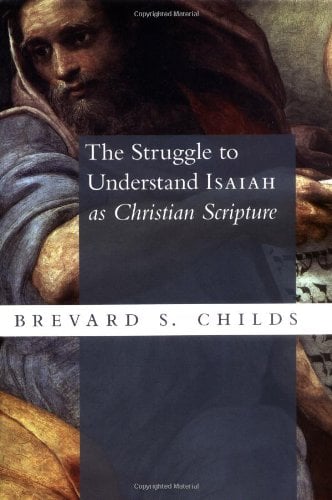
The use of the notion of prophecy and fulfillment has always been a major way of trying to relate the two testaments, and in addition the notions of type and ante-type also aided the attempt to relate the two testaments. Christian thought has always fought to insist that the whole Bible is God’s Word, and no denigration of the OT or neglect of it is adequate as Christian theology. In the name of modern inter-faith dialogue, Brueggemann and R. Rendtorf have insisted that we should hear the voice of the Hebrew text itself independent of the NT and in essence not treat it as the OT. The NT reading of the OT is thereby seen as not normative, it’s just one more imaginative construal which can stand along other imaginative construals by Jewish or secular interpreters which are considered equally valid. Brueggemann denies any organic link between the OT and the NT, and he sees the attempt to make such a link as a political power move by Christians trying to displace Jewish religion and interpretation of their own Scriptures. He also denies there is any salvation history schema that links the testaments. The goal is the acceptance of the dignity and independent value of the Jewish religion and its scripture apart from Christianity.
Childs understands the impetus behind this approach and plea, but in the end rejects it. He says “Although there is a substantive distinction between promise and fulfillment, and between the old and the new covenant, Christians see in the Old Testament a genuine continuity with the New, integral to its textual meaning whether expressed in a pattern of sacred history or of an ontological unity undergirding the two testaments.”
It was Aquinas who first addressed the issue fully of the relationship of the divine and human authors of Scripture. He says God is the author and the human beings the instrumental cause of its being written (Summa 1.1.10), therefore there is no tension. The human authors intended the literal sense of what they wrote, but God who knows all intended more. Calvin used the theory of divine accommodation to explain the very human language and differences in the various texts.
One of the problems facing the Christian interpretation of the OT is the fact that the NT writers often used the LXX version, and it also often differed from the Hebrew text. “The linguistic filter provided by a translation can never exactly reproduce the original. Even when a translation strives for a literal rendering…”
These sorts of issues raise the question of which OT Christians should follow, or should their approach be eclectic, or should we agree with H. Hubner that the OT was authoritative for the Christian church only to the extent of its reinterpretation in the NT. Brueggemann even argues that the free way the NT writers use the OT provides a precedent and warrant for us to engage in equally free and creative construals of the text. Childs responds that the church has always affirmed a two testament canon which has Biblical authority over the life of the church. Each of the two testaments preserve their own integrity and each have their own function in one ongoing divine economy.
“It is a fundamental theological error for postmodernists to seek and analogy between the New Testament’s use of the Old Testament and a modern so-called ‘imaginative construal’ of the Bible. We are neither prophets nor evangelists, but rather our witness is built upon theirs. The function of the Christian canon was to separate the apostolic witness from the ongoing tradition of the church, whose truth was constantly in need of being tested by the apostolic faith….The exegetical task of seeking coherence between the testaments does not lie in ‘Christianizing’ the Old Testament, that is in substituting a New Testament understanding for the Old….The church confesses that the criterion of truth for both the Old Testament and the New Testament is Jesus Christ, the divine reality that undergirds the joint witness of its scriptures.”
He rejects the notion that meaning only emerges as an interaction between reader, text, and context and that all readings are local, not neutral or value free, and therefore all readings are subjective. He rejects the notion that the enterprise of getting at the meaning of the text is never truth seeking, it’s power-seeking, a political ploy. Post-modern interpretation then rejects a definite or absolute meaning in the text. He rejects Brueggemann’s insistence that a text is a neutral passive entity that must be rendered into a meaningful sense by the human endeavor of the interpreter.
In essence Brueggemann is denying that the Bible is God’s Word divinely inspired and that it has an inherent meaning, which it is our task to discern and apply, it is not our task to use the text to create a meaning for ourselves. Childs points out that even in the formation of the canon there were theological reasons for putting Deuteronomy last, and placing the four Gospels together, and finishing the canon with Revelation. According to Isaiah, God has a divine long-range even universal plan involving judgment and redemption of God’s people and of the world and no human beings can ultimately thwart his plan (Is. 14.26-27). As Childs points out, the Heilsgeschichte idea continues to resurface (Martin Kahler, Adolph Schlatter, Gerhard von Rad, and I would add Oscar Cullmann), though in a more critical and theologically profound way, of making sense of the relationship of the two testaments. I would add that the more recent narrative story approaches to the text also help in this endeavor. God’s divine activity in human history can’t simply be fused with nor should it be confused with secular history, but it also can’t be separated from it.
Childs argues that it is one thing to try and understand the OT as the sacred scriptures of the church, and another to study the Bible in a history of religions way. Both tasks are legitimate, but they should not be confused as they have differing aims, goals, and procedures. The history of religions approach implicitly denies that the Bible is divinely inspired and revealing the unique revelation and work of God. It tries to reconstruct Biblical history on the basis of common human experience. The result is two different approaches to exegesis based in two different understandings of history.
Previous Post

March 17, 2016
The Struggle to Understand Isaiah as Christian Scripture--Part Thirty
Next Post
March 19, 2016 Dropping Nets-- A Vital Testimony of Women and Ministry
Browse Our Archives
Select a Category Uncategorized
Select a Month November 2026 October 2026 September 2026 August 2026 July 2026 June 2026 May 2026 April 2026 March 2026 February 2026 January 2026 December 2025 November 2025 October 2025 September 2025 August 2025 July 2025 June 2025 May 2025 April 2025 March 2025 February 2025 January 2025 December 2024 November 2024 October 2024 September 2024 August 2024 July 2024 June 2024 May 2024 April 2024 March 2024 February 2024 January 2024 December 2023 November 2023 October 2023 September 2023 August 2023 July 2023 June 2023 May 2023 April 2023 March 2023 February 2023 January 2023 December 2022 November 2022 October 2022 September 2022 August 2022 July 2022 June 2022 May 2022 April 2022 March 2022 February 2022 January 2022 December 2021 November 2021 October 2021 September 2021 August 2021 July 2021 June 2021 May 2021 April 2021 March 2021 February 2021 January 2021 December 2020 November 2020 October 2020 September 2020 August 2020 July 2020 June 2020 May 2020 April 2020 March 2020 February 2020 January 2020 December 2019 November 2019 October 2019 September 2019 August 2019 July 2019 June 2019 May 2019 April 2019 March 2019 February 2019 January 2019 December 2018 November 2018 October 2018 September 2018 August 2018 July 2018 June 2018 May 2018 April 2018 March 2018 February 2018 January 2018 December 2017 November 2017 October 2017 September 2017 August 2017 July 2017 June 2017 May 2017 April 2017 March 2017 February 2017 January 2017 December 2016 November 2016 October 2016 September 2016 August 2016 July 2016 June 2016 May 2016 April 2016 March 2016 February 2016 January 2016 December 2015 November 2015 October 2015 September 2015 August 2015 July 2015 June 2015 May 2015 April 2015 March 2015 February 2015 January 2015 December 2014 November 2014 October 2014 September 2014 August 2014 July 2014 June 2014 May 2014 April 2014 March 2014 February 2014 January 2014 December 2013 November 2013 October 2013 September 2013 August 2013 July 2013 June 2013 May 2013 April 2013 March 2013 February 2013 January 2013 December 2012 November 2012 October 2012 September 2012 August 2012 July 2012 June 2012 May 2012 April 2012 March 2012 February 2012 January 2012 December 2011 November 2011 October 2011 September 2011 August 2011 July 2011 June 2011 May 2011 April 2011 March 2011 February 2011 January 2011
Follow Us!
TAKE THE
Religious Wisdom Quiz
A woman who had suffered bleeding for twelve years was healed by touching Jesus' what?
Select your answer to see how you score.
His hand His feet His cloak The hairs of his head
Books by This Author Books by Ben Witherington
Related posts from The Bible and Culture

Salisbury Cathedral (outside)-- Part Four
Salisbury Cathedral (the windows)-- Part Three
Salisbury Cathedral-- Part Two

Salisbury: Magna Carta and Magna Steeple---Part One
TRENDING AT PATHEOS Evangelical

How to Have Financial Transparency in Marriage
Despite the fact that financial issues and money problems are the number...
The Healing Power of Forgiveness in Marriage
Learning how to give and accept apologies are essential ingredients of a...

The West's Christian Moral Inheritance: A Legacy Denied
Whether we like it or not, our environment matters, shaping us both...

How Does Tôḏâ Connect Florida & Thanksgiving?
The big news this weekend has been about the continued flooding on...
Were Early Christians Drinking Psychedelic Wine?
The Secret Sacrament the Church Took Away The early Christian church was...

As we in the United States approach the national Thanksgiving holiday...
view all Evangelical blogs
Ad-Free & Subscriber Log-In Subscription Support
- About Us
- 2026 Calendar
- Videos
- Podcasts
- Library of World Religions
- Faith In Media Tracker
- Advertise With Us
- Write for Us
- Privacy Policy
- Terms of Service
- Do Not Sell My Data
- Contact Us
- Radiant Digital
- Manage Newsletter Subscriptions
- Unsubscribe From Notifications
- Sitemap
Copyright 2008-2026, Patheos. All rights reserved.
Subscription Support Ad-Free & Subscriber Log-In
Follow Patheos