
BuddhistCatholicContemplativeEvangelicalGeneral ChristianHinduJewishLatter-day SaintMuslimNew VisionsProgressive Christian
Beliefs
- Buddhist
- Catholic
- Contemplative
- Evangelical
- General Christian
- Hindu
- Jewish
- Latter-day Saint
- More Voices
- Muslim
- New Visions
- Pagan
- Progressive Christian
Topics
- Religion News
- Food and Religion
- Sports and Religion
- Religious Art
- Religious Music and Entertainment
- Religious Events
- History and Religion
- Style and Religion
- Politics and Religion
- Women in Religion
- Recreation Outdoors and Religion
- Business Finance and Religion
- Careers Workplace and Religion
- Education and Religion
- Family Parenting and Religion
- Health Fitness and Religion
- Home and Religion
- Relationships and Religion
- Technology and Religion
- Travel and Religion
Columnists
- Buddhist Columnists
- Business Finance and Religion Columnists
- Careers Workplace and Religion Columnists
- Catholic Columnists
- Contemplative Columnists
- Education and Religion Columnists
- Evangelists Columnists
- Family Parenting and Religion Columnists
- General Christian Columnists
- Health Fitness and Religion Columnists
- Hindu Columnists
- History and Religion Columnists
- Home and Religion Columnists
- Jewish Columnists
- More Voices Columnists
- Latter Day Columnists
- Muslim Columnists
- New Visions Columnists
- Nonreligious Columnists
- Pagan Columnists
- Politics and Religion Columnists
- Progressive Columnists
- Recreation Outdoors and Religion Columnists
- Relationships and Religion Columnists
- Religion News Columnists
- Religious Art Columnists
- Religious Events Columnists
- Religious Music and Entertainment Columnists
- Sports and Religion Columnists
- Style and Religion Columnists
- Technology and Religion Columnists
- Travel and Religion Columnists
- Women in Religion Columnists
Resource Library
- 2026 Calendar
- Library of World Religions
- The 100 Most Holy Places on Earth
- Patheos Answers
- Podcasts
- Videos
- Faith Leaders Database
- Anglican Episcopalian
- Bahai
- Baptist
- Buddhism
- Christianity
- Confucianism
- Eastern Orthodoxy
- Hinduism
- Holiness and Pentecostal
- ISKCON
- Islam
- Judaism
- Lutheran
- Methodist
- The Church of Jesus Christ of Latter-day Saints
- New Age
- Paganism
- Presbytarian and Reformed
- Protestantism
- Religion Behind the Scenes
- Roman Catholic
- Scientology
- Shia Islam
- Sikhism
- Sufism
- Sunni Islam
- Taoism
- Zen
- See all religions
Research Tools
 Ad-Free & Subscriber Log-In Subscription Support
Follow Patheos 

- Trending:
- Advent
- |
- Forgiveness
- |
- Thanksgiving
- |
- Election
- |
- Seasonal Holidays
- |
- Marriage

- Home
- Evangelical
- The Struggle to Understand Isaiah as Christian Scripture–Part Thirty
The Struggle to Understand Isaiah as Christian Scripture–Part Thirty
Last updated on: March 17, 2016 at 1:48 am by Ben Witherington
The Struggle to Understand Isaiah as Christian Scripture–Part Thirty 2016-02-15T10:49:58-05:00 Ben Witherington
Patheos Explore the world's faith through different perspectives on religion and spirituality! Patheos has the views of the prevalent religions and spiritualities of the world.
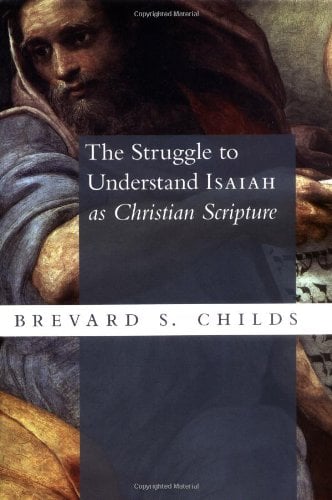
According to Gerhard Ebeling church history is the exposition of Scripture. As Childs says in his conclusions, no one interpretative schema, singular creedal formula, or philosophical or theological system has been employed throughout the ages to make sense of Isaiah. There are however what he calls discernable characteristic features to the way Christians interpret the text, a positive repeated pattern if you will. First, and perhaps most obvious is the assumption that the Bible is the Word of God, inspired by God’s Spirit. Put another way, God is the primary author of the Bible. One of the main reasons the Gnostics are so strongly attacked by Irenaeus is because of their denegration of the OT. It was Irenaeus as well who helped shape the view that there is a single vision in both testaments and one story of salvation progressively revealed from creation to redemption to new creation with the latter two acts of the drama coming through Jesus. The development of the canon between the second and fifth centuries was an attempt to protect the privileged status of the sacred scriptures and make clear to one and all what they were. Notably the post-Reformation debates between Protestants and Catholics were not about the sacred Scriptures themselves so much as about the relationship of later Christian tradition to those Scriptures. What happened in modernity in the academy was that the Bible’s prophetic role was reformulated in that it was said to articulate shared ideals, in particular ethical ones, with non-Biblical sources, giving moral direction and offer values that both human experience and reason could affirm.
Childs argues that one of the most basic assumptions and characteristics of Christian exegesis is that the Bible has both a literal and a spiritual dimension to it (so John 3.14; Mt. 16.4; 1 Cor. 9.9; Rom. 3.31ff.) and that the OT should in the end be interpreted in light of the NT and what the NT writers say about it. Thus it has been said that we find a ‘transformed’ OT in the NT and in the use the NT writers make of it.
In all ages allegory is one tool Christians have always used to discern the mystery of Christ in the OT. But there has been enormous debate about the relationship of the literal and the spiritual sense of the Biblical text. The actual history shows that it is a caricature to say that the Alexandrians were the only allegorizers and that was all they were really interested in, while the Antiochenes were the precursors of modern historical exegesis, sticking strictly to the literal sense of the text. It is however true that the latter group wanted to avoid allegorical excess, and the former group too often imported philosophical notions into the discussion to get at the spiritual sense of the text as if in a Platonic sense it had both a literal level and a higher heavenly level as well. Irenaeus was helpful in providing the framework for a consistent theological interpretation of the whole Biblical story. It was to the Reformers credit that they stressed the plain sense of the text, interpreting it in its original contexts as a way of getting at the author’s real intentions. Calvin insisted that the literal sense was intertwined with its spiritual force and guidance and that the two shouldn’t be separated out from each other.
Childs stresses that there is a good reason for Christians to talk about an OT and a NT, for there is a progressive story with a before and after to it, and those labels help make this clear, especially since we believe there is a unified vision and one ongoing story in it all. Both testaments point forward to the coming final reign of God on earth. God’s relationship with human history, and in particular with his people has a goal, and thus all things leading to the goal have a purpose.
One of the problems with allegorizing of the OT is that it tends to silence the original voice, or overwhelm it, with later Christian ideas. Even calling Isaiah the fifth Gospel tends in this direction. Childs mentions that Luther’s letter vs. spirit, or Law vs. Gospel (where one could find Gospel in the OT as well as Law in the NT, it was a matter of how one read the text) seemed a fruitful way of reading the text to hold the two testaments together. Calvin preferred to say that the substance of God’s revelation in both the OT and NT was the same but the mode or manner of the revelation differed. One had to acknowledge this, and there was no need to allegorize the OT because the Triune God undergirded all, and had simply chosen to focus on basic concepts of justice and mercy and righteousness and faithfulness in relationship to his people in the OT, while reserving the revelation of full salvation and irrevocable forgiveness for later, in the NT.
Next Post

March 18, 2016 The Struggle to Understand Isaiah as Christian Scripture-- Part Thirty One
Browse Our Archives
Select a Category Uncategorized
Select a Month November 2026 October 2026 September 2026 August 2026 July 2026 June 2026 May 2026 April 2026 March 2026 February 2026 January 2026 December 2025 November 2025 October 2025 September 2025 August 2025 July 2025 June 2025 May 2025 April 2025 March 2025 February 2025 January 2025 December 2024 November 2024 October 2024 September 2024 August 2024 July 2024 June 2024 May 2024 April 2024 March 2024 February 2024 January 2024 December 2023 November 2023 October 2023 September 2023 August 2023 July 2023 June 2023 May 2023 April 2023 March 2023 February 2023 January 2023 December 2022 November 2022 October 2022 September 2022 August 2022 July 2022 June 2022 May 2022 April 2022 March 2022 February 2022 January 2022 December 2021 November 2021 October 2021 September 2021 August 2021 July 2021 June 2021 May 2021 April 2021 March 2021 February 2021 January 2021 December 2020 November 2020 October 2020 September 2020 August 2020 July 2020 June 2020 May 2020 April 2020 March 2020 February 2020 January 2020 December 2019 November 2019 October 2019 September 2019 August 2019 July 2019 June 2019 May 2019 April 2019 March 2019 February 2019 January 2019 December 2018 November 2018 October 2018 September 2018 August 2018 July 2018 June 2018 May 2018 April 2018 March 2018 February 2018 January 2018 December 2017 November 2017 October 2017 September 2017 August 2017 July 2017 June 2017 May 2017 April 2017 March 2017 February 2017 January 2017 December 2016 November 2016 October 2016 September 2016 August 2016 July 2016 June 2016 May 2016 April 2016 March 2016 February 2016 January 2016 December 2015 November 2015 October 2015 September 2015 August 2015 July 2015 June 2015 May 2015 April 2015 March 2015 February 2015 January 2015 December 2014 November 2014 October 2014 September 2014 August 2014 July 2014 June 2014 May 2014 April 2014 March 2014 February 2014 January 2014 December 2013 November 2013 October 2013 September 2013 August 2013 July 2013 June 2013 May 2013 April 2013 March 2013 February 2013 January 2013 December 2012 November 2012 October 2012 September 2012 August 2012 July 2012 June 2012 May 2012 April 2012 March 2012 February 2012 January 2012 December 2011 November 2011 October 2011 September 2011 August 2011 July 2011 June 2011 May 2011 April 2011 March 2011 February 2011 January 2011
Follow Us!
TAKE THE
Religious Wisdom Quiz
What does Hebrews say Jesus learned through what he suffered?
Select your answer to see how you score.
Compassion Mercy Humility Obedience
Books by This Author Books by Ben Witherington
Related posts from The Bible and Culture

Salisbury Cathedral (outside)-- Part Four

Salisbury Cathedral (the windows)-- Part Three
Salisbury Cathedral-- Part Two

Salisbury: Magna Carta and Magna Steeple---Part One
TRENDING AT PATHEOS Evangelical

How to Have Financial Transparency in Marriage
Despite the fact that financial issues and money problems are the number...
The Healing Power of Forgiveness in Marriage
Learning how to give and accept apologies are essential ingredients of a...

The West's Christian Moral Inheritance: A Legacy Denied
Whether we like it or not, our environment matters, shaping us both...

How Does Tôḏâ Connect Florida & Thanksgiving?
The big news this weekend has been about the continued flooding on...

Were Early Christians Drinking Psychedelic Wine?
The Secret Sacrament the Church Took Away The early Christian church was...

As we in the United States approach the national Thanksgiving holiday...
view all Evangelical blogs
Ad-Free & Subscriber Log-In Subscription Support
- About Us
- 2026 Calendar
- Videos
- Podcasts
- Library of World Religions
- Faith In Media Tracker
- Advertise With Us
- Write for Us
- Privacy Policy
- Terms of Service
- Do Not Sell My Data
- Contact Us
- Radiant Digital
- Manage Newsletter Subscriptions
- Unsubscribe From Notifications
- Sitemap
Copyright 2008-2026, Patheos. All rights reserved.
Subscription Support Ad-Free & Subscriber Log-In
Follow Patheos